Meaning at a glance
Museum scholarship shows that natural objects such as teeth and shells have long been used in personal adornment; documented meanings change by culture and period. Modern "shark tooth" jewelry mixes genuine teeth, fossil material, and replicas; many contemporary meanings are personal or commercial rather than historic. Ask sellers about origin and treatments, prefer legally and ethically sourced or clearly labeled replicas, and consider recipient beliefs before gifting.
What the historical record tells us
Surveys of jewelry history compiled by established museums show that people have long incorporated natural fragments—teeth, shells, bones, stones—into personal ornaments. The Victoria and Albert Museum's overview of jewellery history emphasizes shifting social contexts and materials across time, from symbolic amulets to fashionable accessories, demonstrating that natural motifs have been repurposed in different eras for different reasons.
That broad museum scholarship establishes a pattern—natural objects were used widely—but it does not support a single, continuous, or universal meaning attached specifically to shark teeth across all cultures and periods. Where researchers and collectors have documented shark teeth or other animal teeth in regional collections, the meanings are specific to those communities, the historic moment of collection, or the collector's interpretation. In other words, documented historical meanings must be tied to a named culture, region, and source rather than generalized.
Distinguishing documented cultural meanings from modern interpretations
Documented meanings. When a museum or ethnographic study documents the use of a tooth as an amulet, pendant, or trade object, the description should specify the culture, time frame, and context. Museum catalogues and historical inventories are the proper place to find documented meanings tied to a named people or period; broad museum essays explain context but typically do not attribute a single meaning to every natural-object ornament.
Modern interpretations. Today, especially since the late 20th century, shark teeth have been adopted widely in popular and fashion cultures with new associations: surf and coastal identity, ruggedness or toughness as a personal metaphor, or trendy vintage looks. These contemporary associations are social and commercial developments rather than universally recorded historic beliefs. Treat such modern meanings as personal or subcultural symbolism unless you can trace them to a named cultural source.
How the motif appears in jewelry
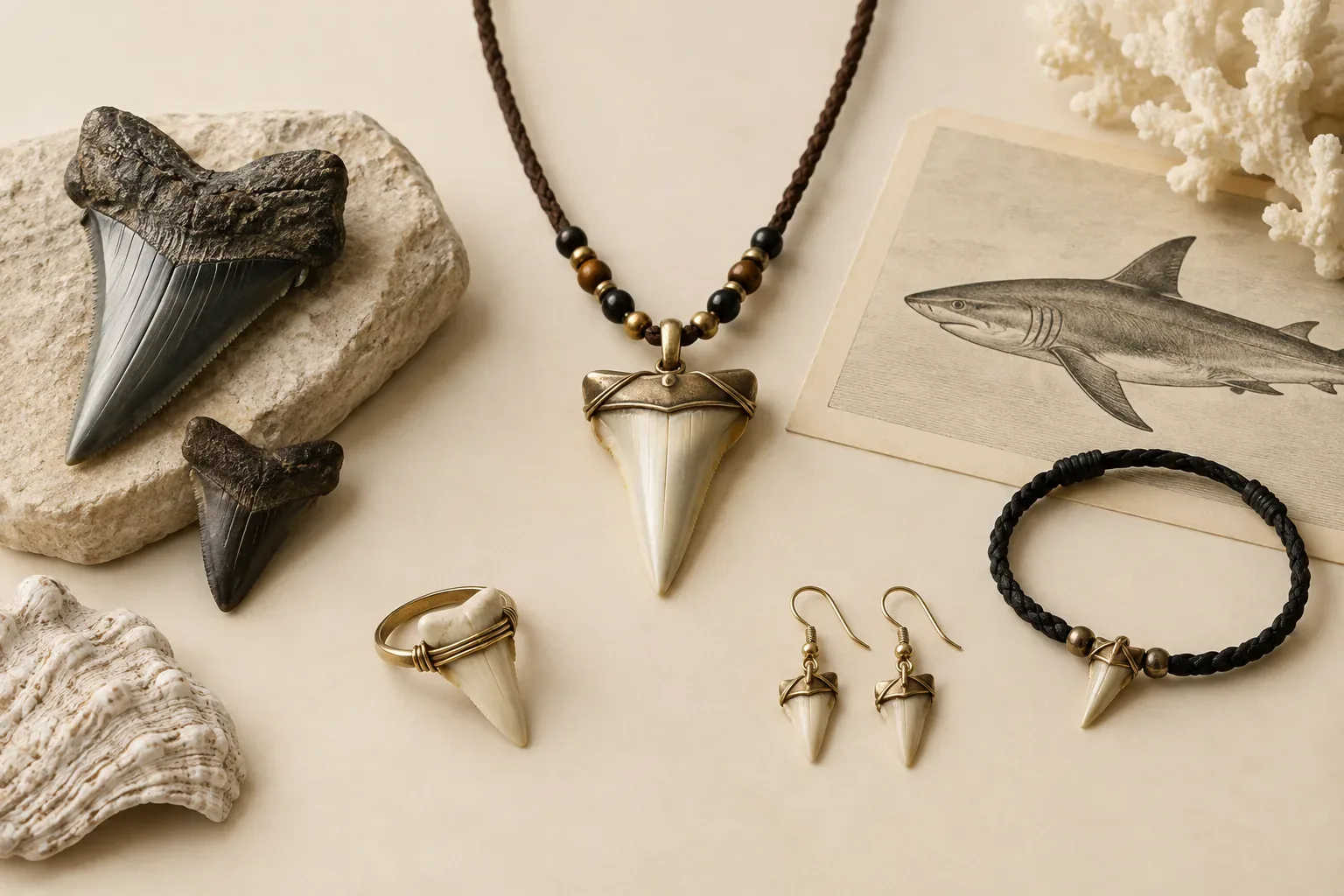
The shark tooth motif appears in several common forms: authentic teeth cleaned and drilled for stringing; fossilized teeth used as pendants; metal or resin casts and replicas that reproduce the triangular tooth silhouette; and teeth incorporated into mixed-material pieces with beads, cords, or metal caps. Designers may set teeth in bezels, cap the root in gold or silver, attach bail fittings, or reproduce the shape entirely in metal or synthetic materials.
From a materials perspective, pieces marketed as "shark tooth jewelry" can therefore be one of five types: modern natural teeth, historic or fossil teeth, stabilized or treated teeth, cast or molded replicas, and purely decorative metal or stone motifs inspired by the tooth silhouette. Labels and seller disclosures are the reliable way to identify which you are buying.
Authenticity, treatments, and disclosure
Because the materials used vary, ask sellers for clear information. The Federal Trade Commission advises that sellers disclose material treatments and whether an item is a natural material or an imitation. For example, a fossil tooth that has been stabilized, a modern tooth that has been whitened or repaired, or a resin cast should be described accurately. If provenance or legal permits are relevant to a piece, a reputable seller will say so.
If a seller cannot or will not provide material details, consider that a red flag. For buyers who care about origin or about owning natural vs. replica items, documented disclosure is essential to make an informed choice.
Legal and ethical considerations (practical guidance)
Laws and ethical norms about collecting or trading animal parts differ by country and by species. Some sellers supply fossil teeth that are millions of years old; others sell modern teeth removed from animals. When the conservation status of the species or local wildlife laws are in play, sellers should be able to describe the legal basis for sale. If you have doubts, prefer fossil pieces with documentation, reputable dealers who provide provenance, or well-made replicas.
Beyond legality, consider ecological and cultural respect. In some coastal communities, natural items have specific meanings or may have been acquired under circumstances that would make their purchase problematic today. When selecting or gifting shark tooth jewelry, prioritize transparent sourcing, and avoid buying items that exploit endangered wildlife or that disregard a community’s expressed wishes about sacred objects.
Choosing and wearing shark tooth jewelry respectfully
Match the piece to the wearer’s values. If your recipient cares about conservation, choose a fossil tooth with provenance or a high-quality replica. If the wearer is strongly connected to a coastal culture, ask whether they’d welcome a tooth motif or would prefer a symbol the community has actively shared for commerce.
Consider style and longevity. A personal, simple pendant may be better suited to everyday wear; a heavily treated or glued novelty piece may not age well. Ask about construction (how the tooth is fixed to the chain), and request clear photographs of attachment points. If you want a piece to last, prioritize solid attachments and the option to have the piece repaired by a jeweller.
Gifting advice: context, conversations, and provenance
When gifting shark tooth jewelry, open a brief conversation about meaning and sourcing rather than assuming the motif’s significance. A small note on origin—"fossil tooth from X with documentation" or "cast replica made locally"—helps recipients understand the gift’s background. If the recipient has a cultural or religious identity linked to marine life, ask before gifting to avoid appropriation or offense.
If you are buying as a symbolic gesture—for strength, adventure, or as a reminder of a seaside memory—consider pairing the tooth with a short personal message that frames your intention as your own interpretation, not an assertion of universal cultural meaning.
Care and maintenance
Care depends on material. Natural teeth and fossil material are mineralized and can be brittle or sensitive to acids, cosmetics, and heat; avoid prolonged exposure to perfumes, pools, or harsh cleaners. Replicas in resin or metal have different needs—follow the maker’s care instructions. For pieces with gold or silver caps, normal jewellery cleaning guidelines apply, but do not soak a glued attachment or natural tooth in cleaning solutions that could loosen adhesive.
For long-term enjoyment, keep jewelry dry when not worn, store it separately to avoid abrasion, and consider professional inspection of attachments if you plan to wear the piece often.
A final, evidence-led note
Scholarly museum surveys remind us that materials and meanings shift with time and place; natural objects have been and continue to be powerful sources of adornment because they carry personal, cultural, and aesthetic associations. Rely on documented provenance for historic claims, accept modern meanings as often personal or subcultural, and prioritize transparent disclosure and ethical sourcing when choosing or gifting shark tooth jewelry. For further reading on how jewellery meanings change across cultures and periods, consult general museum resources on jewellery history and gemstones.
Frequently asked questions
Are shark tooth necklaces historically sacred?
Not universally. Museum surveys show that natural objects have been used in religious and secular jewellery, but whether a specific shark tooth was sacred is a question for the culture and context that produced it. Always check museum catalogues or ethnographic records for claims of sacred use and treat modern attributions of sacred status as needing documentation.
How can I tell if a shark tooth pendant is real or a replica?
Ask the seller for a material description and provenance. The Federal Trade Commission advises sellers to disclose whether an item is a natural material, has been treated, or is an imitation. Photographs, written descriptions, and, for fossils, provenance paperwork help you verify authenticity.
Is it ethical to buy real shark teeth?
Ethical considerations depend on source and legality. Prefer teeth with clear, lawful provenance or well-made replicas to avoid contributing to harmful wildlife trade. If you are unsure about a seller’s claims, choose a fossil with documentation or a high-quality cast instead.
How should I care for shark tooth jewelry?
Care depends on the material. Keep natural and fossil teeth away from harsh chemicals and prolonged moisture, avoid ultrasonic cleaners for glued attachments, and store pieces separately to prevent abrasion. Follow any care guidance provided by the maker or seller.
Is it offensive to wear shark tooth jewelry from another culture?
Possibly. If an item is explicitly sacred or restricted within its originating community, wearing it can be disrespectful. When uncertain, ask the seller about cultural significance and prefer contemporary pieces made with consent or replicas that do not appropriate restricted objects.
Sources and further reading
- Bedazzled: A History of Jewellery — Victoria and Albert Museum
- An A-Z of Gemstones — Victoria and Albert Museum
- Buying Gemstones, Diamonds, and Pearls — Federal Trade Commission