Meaning at a glance
Dinosaur bone jewelry is a modern use of fossil material rather than a long-documented cultural symbol; buyers should prioritize provenance and disclosure, ask about treatments, and follow conservative care and selection practices supported by museum and consumer-protection guidance.
Quick answer — what this buying guide does
This buying guide explains the documented history and changing contexts of dinosaur bone jewelry, separates museum-documented evidence from later popular or personal meanings, and gives practical guidance for choosing, verifying, and caring for dinosaur bone jewelry in the contemporary market.
What the historical evidence shows (and what it does not)
The long sweep of jewellery history has been catalogued by institutions such as the Victoria and Albert Museum, which surveys how societies used minerals, metals, and organic materials for adornment and meaning. Those museum surveys emphasise ancient and historical use of materials like gold, gemstones, shells, pearls, amber and carved bone, and they explain how social context shaped jewellery through time (Victoria and Albert Museum).
By contrast, references to specifically ‘dinosaur bone’ as a recognized historic material or symbolic motif do not appear in the museum surveys that document classical, medieval, or premodern jewellery traditions. In other words, the formal record of jewellery history collected and interpreted by the Victoria and Albert Museum treats fossil and organic materials within broader categories but does not present dinosaur bone as a discrete historic ritual or cultural symbol in the way older materials are documented.
Documented historical meanings versus modern personal interpretations
When museums catalogue the iconography and meaning of jewellery they rely on documented cultural sources: inscriptions, burial contexts, contemporary texts, and known traditions. The Victoria and Albert Museum’s collections and interpretive work show how meaning derives from documented social uses and symbolic systems rather than from later speculative readings.
Dinosaur bone jewellery, as seen in the contemporary market, is best understood as a modern use of fossil material. Modern buyers and wearers ascribe a range of personal meanings to it—for example, connections to deep time, natural history, scientific curiosity, resilience, or simply aesthetic novelty. Those are contemporary, personal, or subcultural interpretations rather than meanings with a documented lineage in historic cultures. Be careful not to present modern symbolism as an ancient or universally shared tradition.
How dinosaur bone and the motif appear in jewelry today
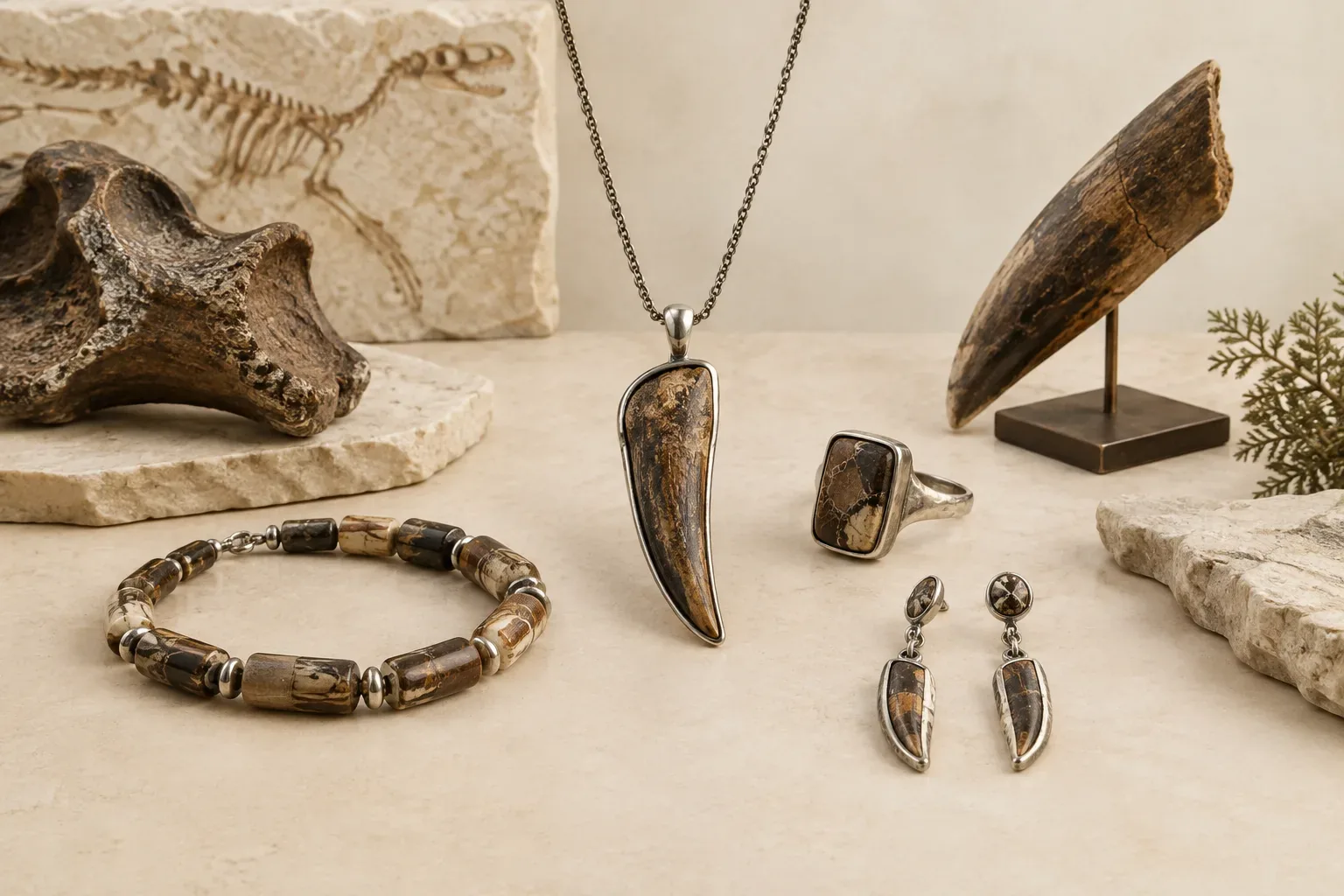
In contemporary jewellery the term ‘dinosaur bone’ generally refers to fossilized bone material worked into wearable forms by modern lapidaries and makers. Designers and artisans commonly present fossil materials as polished cabochons, beads, inlays, pendants, and set stones in rings and bracelets. Separately, dinosaur imagery—silhouettes, skull motifs, and miniature figurines—appears as a motif in charms and pendants that reference paleontology rather than ancient symbolism.
Museums’ general treatments of gemstones and materials explain the wide variety of ways minerals and organic fabrics are prepared and presented in jewellery, which helps contextualize how modern makers incorporate unconventional materials like fossils into contemporary design (Victoria and Albert Museum, An A–Z of Gemstones).
Authenticity: verifying what you’re buying
Ask direct, documented questions of any seller. Request clear provenance information and any lab reports or photographs showing the material before cutting or treatment. Ask whether the piece is genuine fossil bone, an imitation, or stabilized or otherwise treated. The Federal Trade Commission advises consumers to demand full disclosure of treatments and imitations when buying gemstones and related materials and to beware of misrepresentation (Federal Trade Commission).
Photographs from multiple angles, magnified images of surface patterns, and provenance documentation (where available) help establish authenticity. If a seller claims a report from an independent gemological laboratory, request the lab name and report number and verify that the lab exists. For high-value purchases consider an independent assessment by a qualified gemologist or fossil preparator. Keep in mind that some fossil materials are porous and are commonly stabilized; request full disclosure of any resin, dye, or filling used.
Treatments, disclosure, and what to ask the seller
Treatments can affect appearance and long-term durability. The FTC’s guidance on buying gemstones stresses that sellers should disclose treatments and that consumers should ask for details about any enhancement or imitation. When shopping for dinosaur bone jewellery, ask whether the fossil has been impregnated with resin, dyed, stabilized, or combined with other materials to improve polish or color. Get those disclosures in writing when possible.
If a seller markets an item as a natural, untreated fossil, treat that as a claim that should be verifiable. If a seller cannot or will not answer basic provenance and treatment questions, consider that a red flag.
Practical care for fossilized bone jewellery
Fossilized bone, like other organic and porous materials, can be more sensitive than hard gemstones. Handle pieces gently, avoid prolonged exposure to household chemicals, and remove fossil jewellery before bathing, swimming, or cleaning to reduce the risk of damage. Store fossil pieces separately from harder stones and metals to prevent abrasion.
Cleaning should be conservative: wipe gently with a soft, dry cloth and avoid ultrasonic cleaners or harsh chemical cleaners that can strip stabilizing resins or dyes. For heavily soiled pieces, consult a professional conservator or a reputable jeweller with experience handling fossils.
Selection and gifting guidance — respectful and practical choices
Decide what matters most to you or the recipient: scientific provenance, visual character, durability, or symbolic meaning. If provenance is important, seek sellers who can document the source and any legal or export-related paperwork. If the piece is intended as a gift that references science or natural history, choose a design that clearly communicates that contemporary context, rather than implying an historic or cultural lineage that is not documented.
When gifting to someone who values conservation or scientific ethics, ask about the ethical sourcing of fossil material and prefer sellers who explain how specimens were obtained and prepared. If you are uncertain, a modest-priced piece with clear disclosure is usually a better gift than an expensive item whose origin or treatment is opaque.
Value, resale, and insurance considerations
Market value for fossil-based jewellery depends on rarity, aesthetics, craftsmanship, and seller credibility. Documented provenance and independent reports support higher valuations, while undisclosed treatments or unclear origins reduce market confidence. If you plan to insure a dinosaur bone piece, retain invoices and any lab reports and ask your insurer how they classify fossil jewellery for replacement value.
For resale, full disclosure and documented provenance give better outcomes. If you plan to resell later, keep original documentation and photographs that show the piece’s condition when new.
Where to get more trustworthy information
For general historical and material context about jewellery and gem materials, museum resources such as the Victoria and Albert Museum’s surveys and A–Z guides are useful starting points because they document how materials were used and understood in different periods (Victoria and Albert Museum). For consumer-protection advice about disclosure, treatment, and how to avoid misrepresentation when buying gemstones and related materials, consult guidance from the Federal Trade Commission (Federal Trade Commission).
Frequently asked questions
How can I tell if dinosaur bone jewellery is authentic?
Ask the seller for provenance documentation and clear photos showing the material before cutting or finishing. Request written disclosure of any treatments. For higher-value purchases, seek an independent assessment by a qualified gemologist or fossil expert and verify any lab reports by contacting the issuing laboratory. The Federal Trade Commission recommends that sellers fully disclose treatments and imitations when selling gemstone-related materials.
What treatments should I expect and should they be disclosed?
Treatments that change appearance or durability should be disclosed. Ask whether the fossil material has been stabilized, impregnated, dyed, or otherwise altered and request that information in writing. The Federal Trade Commission advises consumers to demand disclosure of any enhancements or imitations when buying gemstones and related materials.
How should I clean and store fossil-based jewellery?
Clean conservatively: wipe gently with a soft, dry cloth, avoid ultrasonic and harsh chemical cleaners, and remove fossil pieces before bathing or swimming. Store fossil jewellery separately from harder stones and metals to prevent scratches, and consult a professional conservator or experienced jeweller for heavily soiled or delicate pieces.
Is dinosaur bone jewellery ethically problematic to buy or gift?
Ethical concerns depend on how the fossil was sourced and prepared. If ethical sourcing matters to you or the recipient, ask sellers about how specimens were collected, prepared, and documented. Prefer sellers who provide transparent information about origin and any legal or export paperwork, and choose pieces with clear disclosure rather than vague provenance claims.
Does the Victoria and Albert Museum document dinosaur bone as a historic jewellery material or symbol?
Museum surveys such as those by the Victoria and Albert Museum document many historic jewellery materials and their social meanings, but they treat fossil and organic materials in broader categories and do not present dinosaur bone as a discrete historic ritual or cultural symbol. Modern symbolic uses of dinosaur bone are contemporary interpretations rather than documented historical traditions.
Sources and further reading
- Bedazzled: A History of Jewellery — Victoria and Albert Museum
- An A-Z of Gemstones — Victoria and Albert Museum
- Buying Gemstones, Diamonds, and Pearls — Federal Trade Commission