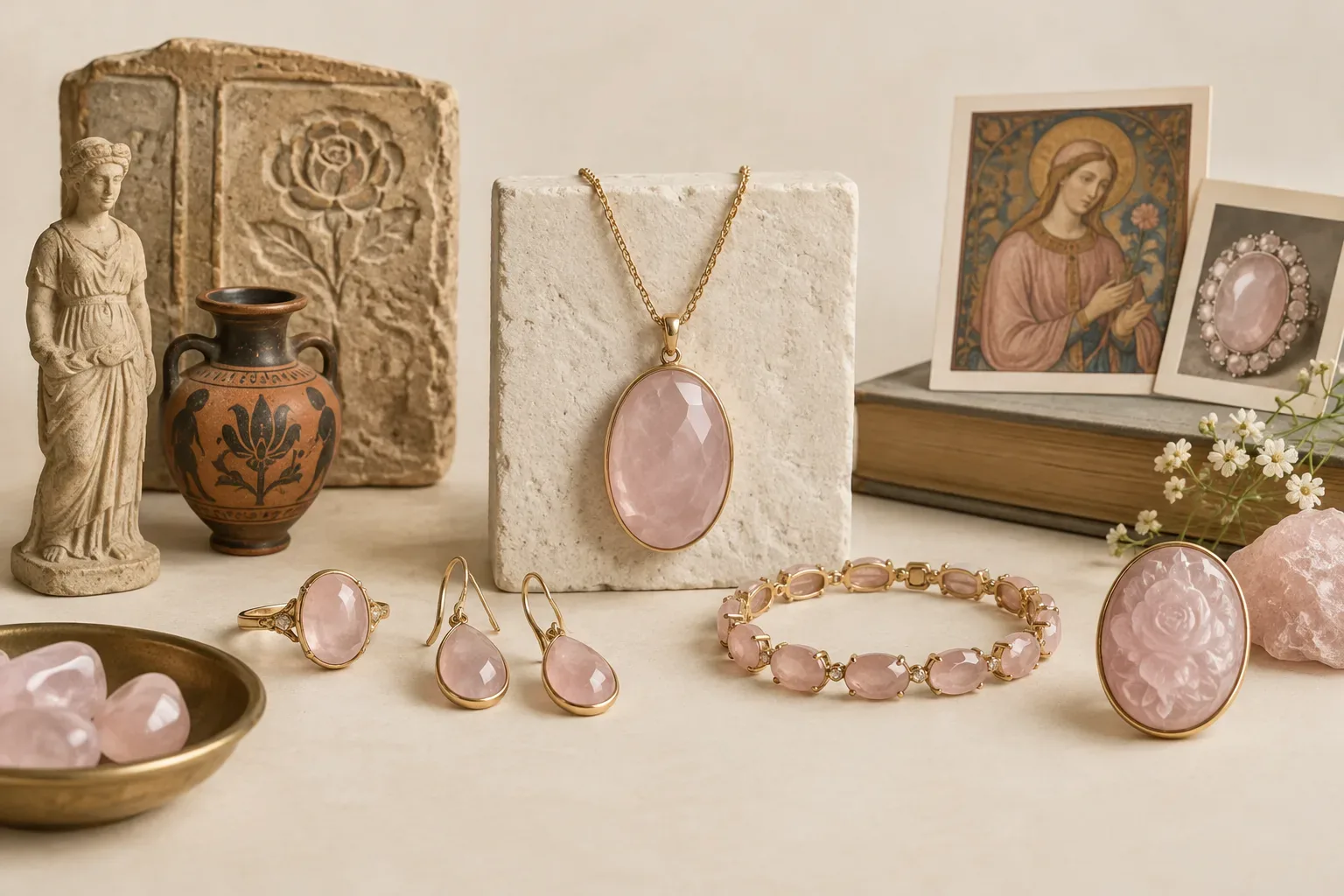
Meaning at a glance
Use historically documented evidence to separate past practices from modern meanings: V&A materials show how craftsmen chose cabochons, beads, and carvings for translucent or included stones and how settings evolved to protect them. Today, choose cuts and protective settings that suit the stone's properties, ask sellers about treatments and imitations per FTC guidance, and match design to the wearer’s lifestyle when gifting.
What the museum record says about rose-coloured stones and jewellery
The Victoria and Albert Museum’s surveys of jewellery history and its A–Z of gemstones place stones like rose quartz within a long, varied tradition of gemstone use and fashion. The V&A highlights that gem cutters and goldsmiths have consistently matched the style of cutting and the style of setting to the material: translucent or included stones were often left in polished, non-faceted forms such as beads, cabochons or carved ornament because those forms best showcased texture and colour and reduced the risk of breakage.
V&A discussion of jewellery history also shows that settings evolved with taste and technology. Historic pieces in museum collections demonstrate bezel and closed-back mounts were frequently used to hold softer or more brittle materials securely, while open prong settings became popular for harder, crystalline stones when faceting technologies advanced. The museum frames these shifts as practical responses to material properties and to the changing social meanings and fashions attached to jewellery.
Documented historical meanings versus modern interpretations
Museum documentation tends to focus on how and why materials were used rather than on single, universal symbolic meanings. The V&A’s treatments of gemstones and jewellery emphasise that meanings vary by time and place and that many symbolic associations recorded today are modern constructions layered onto earlier uses.
Modern popular literature and New Age communities frequently ascribe emotional or healing properties to rose quartz, most commonly linking the stone with love or emotional openness. Those contemporary associations are personal and cultural interpretations rather than stable, universally documented historical facts. When writing about a historical item, the V&A separates recorded uses and crafts practices from later sentimental readings; take modern symbolic claims as contemporary meaning rather than as documented history.
How rose quartz appears in jewellery: cuts and motifs
Because rose quartz commonly shows translucency, cloudiness, or internal inclusions, cutters and designers have historically favoured forms that display colour and resist damage. Museum collections and gemstone guides note frequent use of polished cabochons, beads, cameos and small carvings where the material’s colour and texture are the main attraction. These cuts sit comfortably within pendant, bead-strand and brooch designs where the stone is visually prominent without requiring the precision faceting used for gem-quality transparent stones.
In terms of motifs, the stone has appeared in sentimental and decorative objects such as lockets, beads and intaglios. The V&A connects changes in motif with broader shifts in taste: for example, times and places that favoured carved ornament or portraiture used rose-coloured stones for their visual warmth, while other fashions preferred colourless or highly faceted gems for brilliance. Contemporary makers often reuse historical motifs—hearts, florals, and cabochon-set pendants—while adding modern metalwork or mixed materials.
Settings and durability: practical choices informed by history
Historical practice, as recorded by the V&A, shows that softer or more included stones were usually set in ways that concealed and protected edges. Bezel settings and closed-back mounts are time-tested options because they surround the stone with metal and reduce exposure to knocks and chipping. Low-profile settings that keep the stone close to the metal surface were also favoured historically when a piece needed to be worn daily.
Practical modern settings follow the same reasoning: choose protective mounts for rose quartz if the wearer is active or plans frequent daily wear. High prong, open settings increase the likelihood of catching or chipping a stone with internal fractures; conversely, a well-made bezel or halo that reduces edge exposure and secures the stone’s seat will extend wearable life and preserve the cut’s appearance.
Treatments, imitations and what to ask sellers
The Federal Trade Commission’s consumer guidance on buying gemstones emphasizes the importance of clear disclosure for treatments and imitations. Ask any seller whether a rose quartz has been heat-treated, dyed, stabilized, or combined with other materials, and request written confirmation of any claims. The FTC guidance also stresses that imitations or simulants should be disclosed as such.
A reputable seller should be able to describe how the stone was cut, whether it has surface enhancements, and what kind of setting was chosen and why. When a piece is vintage, ask for provenance or condition details; when a piece is new, ask about warranties, return policies and whether the setting is repairable should the stone need to be re-seated in future.
Selecting and gifting guidance
Match style to lifestyle: select protective settings and lower-lying mounts for an active wearer, and consider showier, more open designs for occasional-wear jewellery. Think about scale and context: larger cabochons make bold pendants and brooches but may be more prone to impact, while smaller beads and cabochons on necklaces and bracelets are easier to wear daily.
Respect meaning and preference: if a recipient values traditional or historical significance, choose a piece that reflects documented practices—such as a carved cameo or a bezel-set pendant—rather than assuming a specific symbolic meaning. If you are drawn to modern interpretations of rose quartz, be explicit that the symbolism you are invoking is contemporary and personal. For all purchases, follow the FTC’s advice and request clear statements on treatments, disclosure of imitations, and return rights before completing a sale.
Care and maintenance in practice
Follow conservative care: historically preferred settings protected stones from daily wear, and modern care follows the same principle. Store rose quartz pieces separately to avoid abrasion from harder gems and remove jewellery before heavy manual work or sports. Clean gently with mild soap and water; avoid abrasive cleaners and high-temperature treatments that could affect surface finishes or glued settings.
For heirloom pieces, consult a qualified jeweller for inspection and conservation if a stone shows chips, scratches, or looseness. Ask the conservator to describe any ethical or material decisions they make—such as re-cutting versus stabilizing—so you understand how the intervention will change the object’s appearance and value.
Final thought
Use the historical record to inform practical decisions about cut and setting: museum documentation shows that cutters and setters have long matched technique to material, and the FTC advises clear buyer disclosure about treatments. Choosing rose quartz jewellery well means balancing aesthetics, durability and the recipient’s personal meaning, while distinguishing historically documented uses from modern symbolic interpretations.
Frequently asked questions
What are the most common cuts used for rose quartz?
Museum guides note that rose quartz is frequently cut as cabochons, beads and small carved pieces because these forms display colour and hide internal inclusions. These cuts are favoured historically for translucent or included stones and remain common in contemporary jewellery.
Which settings best protect rose quartz in everyday wear?
Historical practice recorded by the Victoria and Albert Museum shows that bezel and closed-back settings are effective at protecting softer or included stones. Modern makers follow the same logic: protective, low-profile settings reduce the risk of chips and edge damage for stones like rose quartz.
How can I be sure a rose quartz is natural and untreated?
Follow the Federal Trade Commission’s guidance by asking the seller to disclose any treatments, stabilisation, dyeing or imitations. Reputable dealers should provide written information about treatments and return policies; if in doubt, request an independent gemological report.
Is the association of rose quartz with love a historical fact?
The strong association of rose quartz with love and emotional healing is principally a modern cultural interpretation. Museum documentation emphasises that meanings vary by time and place, and contemporary symbolic claims should not be assumed to represent a single historical meaning.
Should I choose a faceted or cabochon rose quartz for a ring?
Choose a cabochon or low-profile cut for rings intended for frequent wear because these forms are less likely to catch and chip. If you prefer faceting for sparkle, consider a protected mount and limit daily exposure to impact and hard abrasion.
Sources and further reading
- Bedazzled: A History of Jewellery — Victoria and Albert Museum
- An A-Z of Gemstones — Victoria and Albert Museum
- Buying Gemstones, Diamonds, and Pearls — Federal Trade Commission