Meaning at a glance
This article explains the documented history and changing contexts of lapis lazuli cuts and settings, distinguishes historical meanings from later personal interpretations, and gives practical guidance for choosing, wearing, and gifting lapis jewelry with an eye to beauty and durability.
What the historical record documents
Museum research shows lapis lazuli has been valued and worked in many different cultures and periods, and those uses help explain why certain cuts and settings recur. The Victoria and Albert Museum documents lapis as a long-established material in jewellery and decorative arts and discusses how changing social contexts shaped how gems were cut and used. Museum records identify lapis in beads, carved ornaments and inlaid work across ancient and historic collections rather than as a single, continuous symbolic tradition.
The Victoria and Albert Museum describes lapis being used for beads, inlays and carved objects in historical material. Those documented object types explain why flat inlay and rounded, polished cabochons are common historic presentations: inlay suits flat surfaces such as boxes and panels, while rounded cabochons suit beads and intaglio-style carving where polish and color were prized more than faceting. The V&A’s overview of gemstones emphasizes identification and historical context rather than assigning universal meanings to any one stone.
Separating documented historical meanings from modern interpretations
Documented historical meanings are the meanings attached to lapis objects in specific cultures and periods as shown by archaeological finds, written records, and museum collections. The Victoria and Albert Museum’s materials describe how lapis appears in historical contexts and how changes in fashion and technique altered the stone’s uses. When museums report that a culture used lapis in funerary jewellery, inlay, or as a pigment source, that is a record of use and context rather than a universal, permanent symbolism.
Modern personal and popular interpretations—such as new-age claims about particular spiritual properties—are different in kind. Those interpretations belong to contemporary belief systems and personal practice and should not be conflated with the documented uses recorded by museums. It is appropriate to note both kinds of meaning when selecting a piece: you can respect the stone’s historical associations described by institutions like the Victoria and Albert Museum while also recognizing that modern wearers may attach their own, personal meanings.
How lapis lazuli appears as a motif and gemstone in jewellery
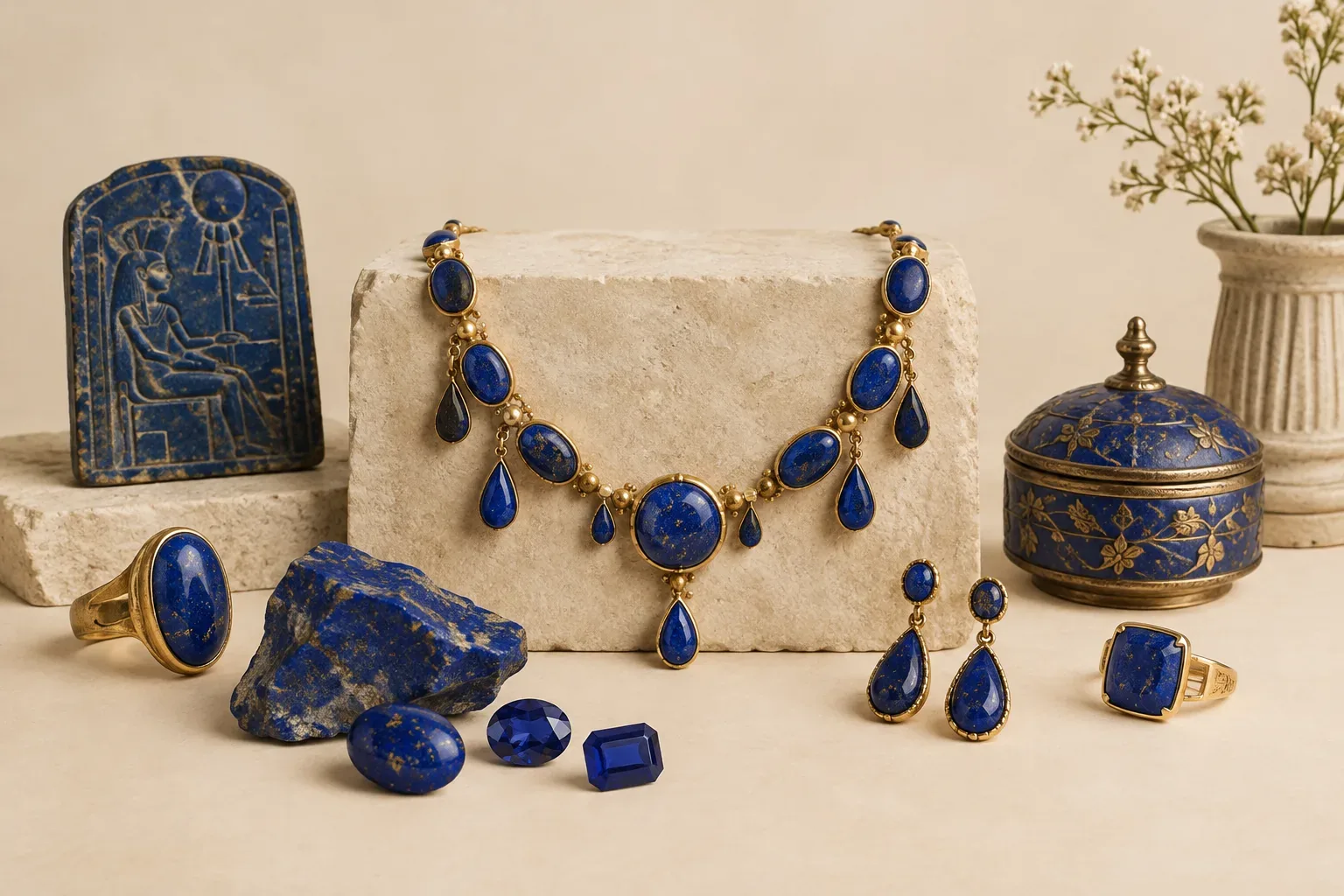
Visually, lapis is prized for its deep blue color, often with gold-coloured flecks from included pyrite, and sometimes with pale calcite veins. Those visual qualities determine common cuts and placements: the opaque, saturated color suits cabochon cuts, carved beads, inlay panels and flat plaques. Because lapis is typically opaque rather than transparent, faceting to enhance brilliance is less common than smooth polishing and carving.
Historically documented object types include beads strung as necklaces, carved amulets and intaglios, flat inlays in decorative metalwork and boxes, and polished cabochons set in rings and brooches. In modern jewellery the same approaches persist: cabochons are frequently bezel-set to protect the edges, flat pieces may be used in inlaid designs or as small plaques in lockets and pendants, and small calibrated pieces are set in cluster or halo designs to combine lapis with other gems and metals.
Cuts and settings: balancing aesthetics and durability
If you want maximum color and recognizable lapis character, choose pieces that show the stone’s blue and pyrite contrasts clearly. For durability, favor traditional cabochon cuts and inlaid pieces because their rounded or flush profiles reduce edge exposure. A well-made bezel setting is especially protective for lapis cabochons used in rings and bracelets. Bezels surround the stone and help prevent chipping and fracture from side impacts.
When lapis is used in rings, select low-profile settings that keep the stone close to the finger to reduce the chance of knocks. For everyday rings consider protective channels or bezels rather than high, open prong settings. For necklaces and earrings you have more flexibility with higher-set stones because the risk of direct impact is lower, but ensuring a secure backplate and tight mount will prevent movement that can lead to stress fractures or loss.
Flat, inlaid lapis makes an excellent choice for objects that encounter surface contact, like signet-style pendants, bracelets with flat surfaces, and boxes. Inlay work can be more resistant to wear because the stone sits flush with surrounding metal. If you prefer carved lapis beads, make sure the stringing and clasp are robust: vibration and wear along the drill hole are common causes of bead failure.
Material treatments, authenticity, and buyer disclosures
Ask any seller whether a lapis piece has been dyed, stabilized, or assembled from multiple layers, and request written disclosure where possible. The United States Federal Trade Commission explains that sellers must disclose treatments and imitations when they affect value, and you should expect honest disclosure about dyed stones, glued doublets, or other enhancements. Clear answers about treatment history protect you both as a buyer and later as a gift-giver.
Because lapis can be dyed or enhanced to strengthen color, verify the finish and back of the stone. A lapis cabochon that is visibly uniform in color but shows dye at drill holes or on the underside may have been treated. If documentation is important to you, ask for a written statement from the seller or an independent gemstone laboratory report.
Care, maintenance and long-term wear
Lapis should be treated with the same caution as other softer, porous gemstones. Avoid exposure to harsh chemicals and household cleaners and do not use steam or ultrasonic cleaners on lapis, because heat and solvents can affect dye and surface polish. Clean gently with a soft cloth and warm, soapy water, and dry thoroughly before storing.
Store lapis pieces separately from harder gems to prevent abrasion and keep them away from prolonged direct sunlight and heat to reduce the risk of fading or damage to any surface treatments. Regularly inspect settings for loose bezels or wear around drill holes and repair them promptly to prevent loss.
Respectful selection and gifting guidance
When buying lapis as a gift, consider the recipient’s lifestyle. Choose protective settings such as bezels or inlaid panels for someone who works with their hands, and consider lower-profile rings for active wearers. If the recipient values historical authenticity, select pieces that reference documented object types—beads, carved pendants or inlaid plaques—and note the V&A’s recorded contexts when explaining the gift.
If you are choosing lapis with cultural or historical motifs—such as designs inspired by a particular period—take the time to learn the object’s origin and context. The Victoria and Albert Museum’s resources help place objects in historical timelines and cultural settings; use that kind of careful research to avoid misrepresenting meaning and to gift respectfully. Finally, ask the seller about any disclosures required by the FTC so you can give an informed present.
Summary and next steps
Select lapis lazuli cuts and settings that balance the stone’s aesthetic strengths—the deep blue and gold-flecked surface—with protective mountings such as bezels, inlays and low-profile settings for daily wear. Use museum-published histories to understand documented historical uses and contexts, and treat modern spiritual or personal meanings as contemporary interpretations rather than archaeological facts.
If you want more practical guidance on researching meaning or choosing a meaningful gift, see related pages on gemstones and how to choose meaningful jewelry, and consult trustworthy seller documentation for any disclosures about treatments or assembled stones.
Frequently asked questions
What are common lapis lazuli cuts and which are most durable?
Common lapis presentations are cabochons, beads, carved plaques and inlay. Cabochons and inlay are typically more durable because they have rounded profiles or sit flush with surrounding metal; bezel-set cabochons and flush inlay work are good choices for everyday wear.
Should I worry about treatments and imitations?
Yes. Ask the seller whether the lapis has been dyed, stabilized, or assembled from multiple pieces and request disclosure. The Federal Trade Commission advises that sellers disclose treatments or imitations that affect value, so clear answers about treatment history are an important part of buying.
Is lapis suitable for an engagement ring or everyday ring?
Lapis can be used for rings but requires protective settings because it is not as hard as many traditional engagement gems. Choose a bezel or low-profile setting for rings intended for frequent wear and avoid high, exposed mounts that increase the risk of chipping.
How should I clean and care for lapis jewelry?
Clean lapis gently with a soft cloth and warm, soapy water; avoid ultrasonic and steam cleaners as well as harsh chemicals that can affect dyes or surface polish. Store lapis separately from harder stones to prevent abrasion and inspect settings regularly for wear.
How can I gift lapis respectfully when it has historical or cultural designs?
Learn the object’s origin and context before gifting, and, where relevant, reference museum-published histories such as those from the Victoria and Albert Museum to avoid misrepresenting meaning. Choose designs that respect the culture and explain the piece’s provenance and symbolism to the recipient.
Sources and further reading
- Bedazzled: A History of Jewellery — Victoria and Albert Museum
- An A-Z of Gemstones — Victoria and Albert Museum
- Buying Gemstones, Diamonds, and Pearls — Federal Trade Commission