Meaning at a glance
Explain the documented history and changing contexts of the moonstone treatments and imitations motif, separate cultural or religious evidence from later popular interpretations, and give practical guidance for choosing and wearing the motif in modern jewelry.
Quick answer
Moonstone treatments and imitations are real concerns for buyers: historically the stone and its visual effect have been valued in different cultures, but many modern pieces may include heat or surface treatments or be made of substitutes. Ask sellers for clear disclosure, provenance, and any laboratory reports; rely on museum studies for historical context and on consumer-protection guidance for disclosure requirements.
What the historical record shows
If you want to understand moonstone in jewelry, start with museum research. The Victoria and Albert Museum documents how gemstones and their meanings change depending on time, place, and social context rather than remaining fixed. Exhibitions and reference material from the Victoria and Albert Museum show that jewellery fashions, the materials used, and the symbolic language attached to stones shift across periods and cultures.
Historically, collections and catalogs described the use of moon-like stones in a variety of decorative contexts. The V&A’s reference articles on gemstones place stones within technical, artistic, and social histories, noting styles, settings, and how makers emphasized particular optical effects for aesthetic reasons. These museum sources provide documented examples of how jewelers selected and displayed stones to achieve a desired look; they do not support a single universal symbolic meaning but show diversity across cultures and eras.
Documented historical meanings versus modern interpretations
Documented historical meanings are those that appear in primary sources, museum labels, inventories, and contemporary accounts. The Victoria and Albert Museum’s work helps identify those documented contexts—such as how a stone was used in a specific period’s fashion or what a period curator described a piece as representing in its social setting. Use those museum records to establish historical usage and context for the stone in a named culture or period.
Modern personal or commercial interpretations are different. Today, many sellers and wearers attach new meanings to moonstone—romantic, spiritual, or metaphysical claims that are contemporary and individual. Those modern meanings may be meaningful to the wearer, but they are not the same as documented historical beliefs. Distinguish carefully between what museum documentation records about past uses and what a modern description or marketing blurb asserts about symbolism or effects.
How moonstone appears in jewelry and why appearance matters
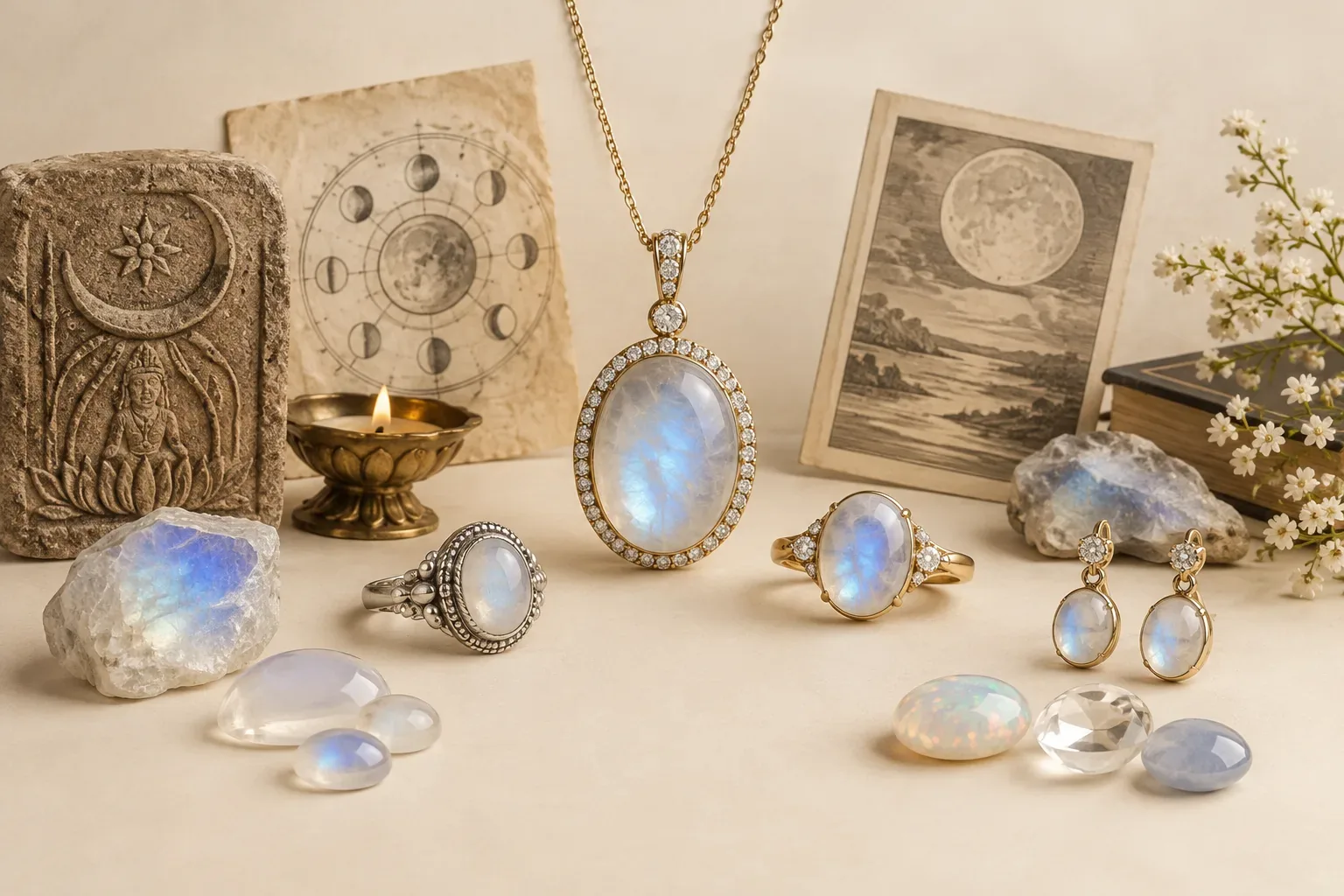
In jewelry, moonstone is prized primarily for its adularescence, a soft, lamp-like sheen that appears to glide beneath the surface when the stone is turned. Jewelers set moonstones in rings, pendants, brooches, and cabochon-centric designs to highlight that visual effect. The Victoria and Albert Museum’s gemstones overview describes how makers have historically emphasized optical properties by choosing particular cuts and settings to showcase them.
Because the visual effect is central to moonstone’s appeal, treatments and imitations often aim to replicate or enhance that sheen. In practice this means a buyer assessing a moonstone piece is assessing both material authenticity and the way the stone has been finished and set. A well-set cabochon on a simple metal bezel can make a modest moonstone read as a refined piece, while ornate settings emphasize the stone as a focal motif in sentimental or fashion jewelry.
Treatments, imitations, and disclosure: what to know
The Federal Trade Commission requires accurate disclosure about treatments and imitations in gemstones. Sellers should clearly state whether a stone has been treated or if an item is an imitation or a simulated material. That is a consumer-protection standard, and the FTC guidance is the practical rule for disclosures in the marketplace.
Treatments and imitations can range from changes to how a material looks to the use of different materials meant to resemble a natural stone. For buyers this creates three important practical distinctions: natural untreated stones, natural stones that have been altered to improve appearance, and materials that imitate the look of moonstone. The first two are different in value and care needs from imitations, so transparent labeling and documentation matter.
How to evaluate and what to ask when buying or gifting
Start by asking straightforward questions. Ask the seller whether the moonstone is natural, whether it has been treated, and whether the piece contains any simulated or man-made materials intended to look like moonstone. Request written confirmation or a sales description that uses clear terms rather than marketing synonyms.
Request provenance and documentation when available. For higher-value pieces, ask for a laboratory report from a recognized gem-testing facility. For less expensive items, ask for the seller’s written statement about materials and any care instructions. If a piece is marketed with a historical association or spiritual claim, ask what evidence supports that claim and whether the description is a modern interpretation rather than a documented historical fact.
Observe the setting and finish. Because moonstone’s effect is an optical one, consider how the stone is cut and set: cabochon cuts and minimal metalwork often highlight the sheen, while certain backings, linings, or settings can alter how the stone appears. If you are comparing pieces, look at them under neutral light and move them to see how the sheen behaves; this is often the clearest way to compare a natural surface effect with one that has been artificially enhanced or simulated.
Selection and gifting guidance that respects history and personal meaning
When choosing a moonstone piece as a gift, think about the recipient’s relationship to the stone’s appearance and any meanings you attach to it. If you want the gift to reference a historical style, consult museum resources—such as the Victoria and Albert Museum’s historical overviews—to identify an accurate period style and then select a piece that reflects that aesthetic. If the meaning you intend is personal or contemporary, be clear that it is a modern interpretation so the recipient understands its provenance.
Be respectful of cultural contexts. Historical uses documented by museums belong to specific cultures and periods; avoid claiming those historical associations as universal truths. If a seller attributes a particular cultural or religious meaning to a stone, ask for the source of that claim. Transparent buying and gifting means recognizing the difference between documented history and modern sentiment.
Caring for treated or imitation materials
Care needs vary depending on whether a stone is natural, treated, or an imitation. Ask the seller for any recommended care instructions and note that treated stones and simulated materials may respond differently to cleaning, heat, and chemicals. Gemstone identification resources and museum articles, including the Victoria and Albert Museum’s notes on gemstone materials, can help you understand how materials were historically worked and why certain care practices are appropriate.
If you are unsure about a stone’s identity or treatment history, consider consulting an independent appraiser or gemological laboratory before performing any aggressive cleaning or repair.
Final checklist for responsible buying
Before you buy or gift, make sure you have clear answers in writing to these: Is the stone natural or a simulant? Has it been treated, and if so, how is that treatment described in writing? Can the seller provide provenance or a lab report for higher-value items? Does the sales description separate documented historical associations from modern marketing language? The FTC’s guidance on disclosure should be the baseline expectation for all answers.
When in doubt, prioritize transparent sellers, reputable retailers, or pieces accompanied by independent reports. Use museum resources for accurate historical context, and use your personal preferences and the recipient’s tastes to determine which aesthetic or symbolic approach is most appropriate.
Frequently asked questions
Are moonstones commonly treated or imitated?
Yes—moonstone’s visual appeal has led some sellers to offer stones that have been enhanced or to use materials that imitate its effect. The Federal Trade Commission requires clear disclosure of treatments and imitations, so always ask the seller for written information about the stone’s identity and any treatments.
How can I tell if a moonstone is natural or a simulant?
Visual inspection under neutral light can show how the sheen behaves, but that alone is not definitive. Ask for written disclosure, request provenance, and for higher-value purchases seek a report from an accredited gem-testing laboratory.
Do museums provide information about historical meanings for moonstone?
Museums such as the Victoria and Albert Museum document how stones were used in different periods and cultures and explain historical contexts. Museum records help distinguish documented historical uses from later or modern interpretations.
What should I ask a seller before buying a moonstone piece?
Ask whether the stone is natural or simulated, whether it has been treated and how, whether there is provenance or a lab report for the piece, and whether any historical or symbolic claims are documented or offered as modern interpretation.
Is it acceptable to give a moonstone with a modern symbolic meaning?
Yes—modern, personal meanings can make a gift deeply meaningful. Just be transparent if you are presenting historical claims: distinguish clearly between documented historical associations and contemporary personal symbolism.
Where can I find more reliable information about moonstone and gemstone care?
Start with museum reference articles on gemstones and consumer-protection guidance from authorities such as the Federal Trade Commission for disclosure standards; for care specifics, ask the seller and consult an independent gemologist when necessary.
Sources and further reading
- Bedazzled: A History of Jewellery — Victoria and Albert Museum
- An A-Z of Gemstones — Victoria and Albert Museum
- Buying Gemstones, Diamonds, and Pearls — Federal Trade Commission