Meaning at a glance
Choose zircon cuts and settings by balancing how you want the stone to look with how you expect to wear it: brighter cuts and open prong settings maximize sparkle but need protection for daily wear, while step cuts and bezel settings reduce chipping risk. Historical use of gemstones in jewelry and changing cutting and setting technologies are documented by the Victoria and Albert Museum; modern treatment and disclosure issues are covered by the Federal Trade Commission, so always ask about treatments and choose settings that suit intended use.
What the historical record shows
Museum research and exhibitions document how gemstones — and the ways they are cut and set — have changed across cultures and periods. The Victoria and Albert Museum’s exhibition material traces jewellery practices from ancient Egypt and classical Rome through medieval and Renaissance Europe, into the Georgian and Victorian periods and the 20th century, showing that technological developments and social context shaped choices about cuts, settings, and the wearing of gems.
Across those periods, gem cutting and mounting choices reflected available tools, prevailing aesthetic ideals, and social meaning. For example, faceting became more precise with improved lapidary tools, permitting cuts that emphasized brilliance; at other times, large cabochons or table cuts were preferred because of cultural taste or the nature of the gem. The V&A’s A–Z of Gemstones provides historical context for how particular stones were valued and used in jewellery across cultures, documenting that choices about how to cut and set a stone have long combined technical possibility with cultural preference.
Documented historical meanings versus modern personal interpretation
Documented meanings from the historical record are those explicitly recorded by museums, inventories, or contemporary texts and are best attributed to specific cultures or periods. The V&A’s resources record that gemstones often signified status, prosperity, or affiliation in particular societies; such meanings are cultural and timebound rather than universal.
Modern personal interpretations — the meanings individuals or groups assign to zircon today — are distinct from those documented historical uses. Contemporary wearers may choose zircon for its color, brilliance, affordability, or personal associations. These modern meanings are valid as personal statements but should not be presented as continuations of a single, unchanging historical tradition. Keep the two strands separate: cite historical uses when discussing the past and describe individual or contemporary symbolic readings as personal or modern interpretations.
How zircon appears in jewellery: common cuts and settings
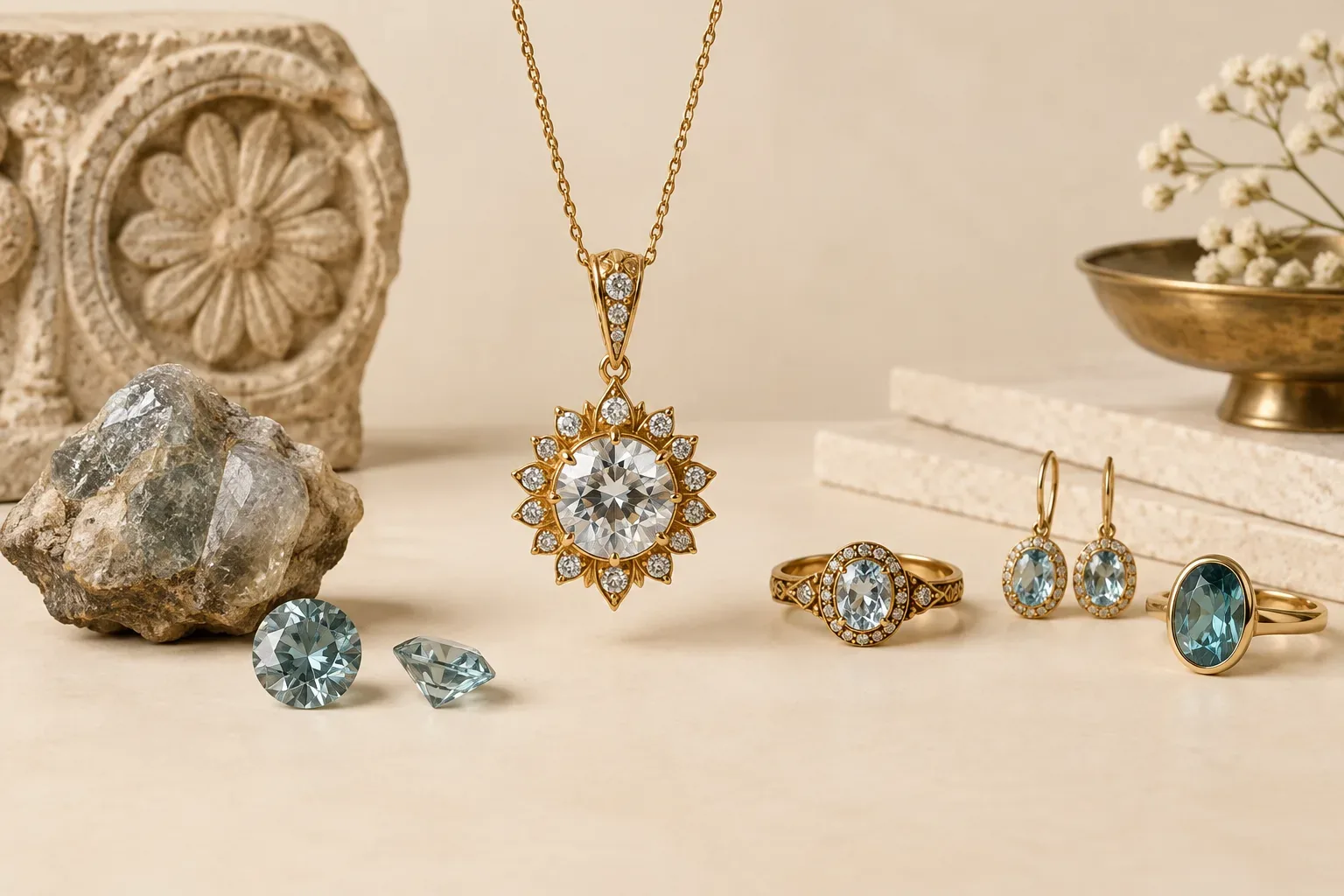
Zircon is used in a variety of cuts and settings to achieve different visual and practical outcomes. Cuts with many facets tend to emphasize fire and sparkle; cuts with broader, larger facets can emphasize color depth and lend a stone a more substantial, classic look. Jewellery traditions and lapidary techniques documented by the V&A show that lapidaries and jewellers have long chosen particular cuts to highlight a gem’s strengths and to fit fashion or function.
Settings also affect both appearance and durability. Open settings such as prongs allow more light to reach the stone, increasing brilliance, while closed or partially enclosed settings such as bezels protect the girdle and edges from knocks. Historically, different eras and cultures preferred different settings: some periods favored secure, protective mountings for daily-wear pieces, while others showcased large, open-set stones for ceremonial or display pieces. That pattern — form following both function and fashion — is evident in the V&A’s accounts of jewellery practice.
When zircon is used in rings, pendants, or earrings, jewellers commonly balance desired sparkle against the risk of impact. For everyday rings a guarded setting with lower profile or a bezel is often chosen to reduce exposure; for occasional-wear pieces, an open prong or halo arrangement will maximize light and visual impact.
Choosing zircon for beauty and durability
Ask first how you will wear the piece. If the jewellery is intended for daily wear, prioritize protective settings and designs that reduce exposure to knocks and abrasion. If the piece is for occasional wear, you can prioritize cuts and settings that maximize brilliance and presence.
Select a cut to suit your goals. Faceted cuts with many small facets will emphasize sparkle and fire and are often preferred for stones set to catch light. Step cuts and larger-facet cuts can hide surface wear better and give a different, often more classical look. In all cases consider the stone’s proportions: shallow or excessively deep cut stones can look smaller face-up or display less favorable optical performance.
Select a setting that suits activity level. Bezel settings wrap metal around the stone’s girdle and provide excellent protection for the edges; flush settings set the stone level to the metal and are low-profile; prong settings lift the stone for more light but expose it to more risk. Balance the desire for sparkle with the wearer’s lifestyle.
Care, treatments, and buying tips
Treatments, enhancements, and imitations are important purchase considerations. The Federal Trade Commission advises consumers that sellers must disclose treatments and whether a stone is natural, synthetic, or an imitation. Ask your dealer or jeweller whether a zircon has been heat-treated, coated, or otherwise altered, and request written disclosure where available.
Because cutting and setting choices affect how a gemstone will age, consider how repairs and maintenance will work with your chosen mount. Protective settings can reduce the frequency of servicing. Clean jewellery gently according to the jeweller’s instructions and inspect settings regularly; a lab or trained professional can advise on how a particular setting will fare over time.
When comparing pieces, look beyond initial appearance to how much of the stone is exposed, how easy it will be to repair the setting, and whether you can obtain documentation about treatments. These practical questions protect both your aesthetic and financial investment.
Respectful selection and gifting guidance
If you are buying or gifting zircon with reference to a cultural, historical, or symbolic idea, take care to be specific and respectful. Acknowledge when a symbolic connection is a modern personal meaning rather than a continuous cultural tradition. Use museum resources, such as the V&A’s interpretive materials, to learn how particular gemstones or motifs were used in given cultures and periods rather than assuming a single, universal meaning.
When gifting, match the cut and setting to the recipient’s lifestyle and preferences. For an active wearer, choose protective settings and secure mountings. If you know the recipient values visual impact, select cuts and settings that maximize brilliance. When in doubt, choose a versatile design or consult the recipient. If the gift references a cultural or historical motif, include a short note of explanation that distinguishes documented history from your personal intention.
Summary
Deciding on zircon cuts and settings is an exercise in balancing look and life. Use historical evidence from museum research to understand how cutting and setting practices developed and what they signified in particular cultures and periods, and use consumer guidance from sources such as the Federal Trade Commission to ensure treatments and disclosures are transparent. Prioritize a setting and cut that suit how the jewellery will be worn, and when gifting, be explicit about whether meanings are historically documented or personally assigned.
Frequently asked questions
How do cut and setting choices affect a zircon’s durability?
Cut and setting choices change how much of the stone is exposed to impact and abrasion. Settings that surround the edges, such as bezels or flush mounts, protect the stone’s girdle and face and are better for daily wear. Open prong settings show more of the stone and increase brilliance but leave edges more exposed. Choose according to intended use.
Are there treatments I should know about when buying zircon?
Yes. The Federal Trade Commission advises that sellers must disclose treatments and whether a stone is natural, synthetic, or imitation. Ask the seller whether a zircon has been heat-treated, coated, or otherwise enhanced and request documentation when possible.
What cuts make zircon appear more brilliant?
Cuts with multiple small facets and proportions that favor light return tend to enhance fire and brilliance. If brilliance is your priority, choose cuts and settings that permit light to enter the stone, and ensure the cut is well proportioned for the gem.
Which settings are best for an active wearer?
For active wear, choose protective, low-profile settings such as bezels or flush mounts that reduce the risk of snagging and shield the stone’s edges. Such settings trade some visible surface area for protection and are a practical choice for everyday rings and bracelets.
Should I be concerned about imitations when buying zircon?
Yes. Ask sellers whether the stone is natural zircon, a synthetic gem, or an imitation. The FTC recommends clear disclosure of material origin and treatments so you can make an informed purchase decision.
Can I give zircon as a historically meaningful gift?
You can, but be careful to separate documented historical meanings from modern personal interpretations. Use museum sources to explain any claimed historical association and make clear when a meaning is your personal intention rather than a continuous cultural tradition.
How should I care for zircon jewellery?
Clean zircon jewellery gently following the jeweller’s advice and inspect settings regularly. Protective settings reduce wear. For anything more than light soiling or for repair, consult a professional jeweller.
Is choosing a halo or solitaire setting a matter of style or function?
Both. A halo setting increases apparent size and sparkle but can be more exposed to knocks depending on the design. A solitaire highlights the single stone and can be designed for protection or display. Base your choice on how the piece will be worn and the wearer’s taste.
Sources and further reading
- Bedazzled: A History of Jewellery — Victoria and Albert Museum
- An A-Z of Gemstones — Victoria and Albert Museum
- Buying Gemstones, Diamonds, and Pearls — Federal Trade Commission