Meaning at a glance
Explain the documented history and changing contexts of the zircon treatments and imitations motif, separate cultural or religious evidence from later popular interpretations, and give practical guidance for choosing and wearing the motif in modern jewelry.
Quick answer
Zircon treatments and imitations deserve careful attention: museum research shows zircon has a long, changing role in jewelry, while consumer-protection guidance requires sellers to disclose treatments and synthetic substitutes. Ask whether a stone is natural zircon, has been treated (for color or clarity), or is a manufactured imitation, and request written disclosure or a report before you buy.
What the historical record shows
A broad overview by the Victoria and Albert Museum places gemstones — including zircons — in long-running European jewelry traditions and in global trade networks that changed meaning and use over time. Museum catalogs and exhibitions cited by the V&A document gemstones appearing in jewelry from medieval and Renaissance collections through Victorian display, showing how tastes and technologies shifted alongside social contexts rather than suggesting a single, constant meaning.
The V&A’s A–Z of Gemstones explains gemstones’ shifting roles in jewelry design and public perception rather than asserting fixed cultural or religious symbolism for any single stone across all places and periods. Use museum records to trace where and when a particular type of stone appears in collections or inventories, and treat those records as evidence of use and value in specific cultures and periods rather than as universal symbolic statements.
Separating documented historical meanings from modern interpretations
Museum documentation can show how a stone was used in a given culture or period, such as in a religious pendant or a status brooch in a particular collection, and the V&A emphasizes those changing social contexts. But symbolic attributions commonly attached to gemstones today — for example, claims that a stone always stands for a single virtue or spiritual power — are modern and personal interpretations unless supported by contemporary primary sources tied to a specific culture or time.
When you read that a particular community historically associated a gemstone with protection, healing, or social rank, check whether that claim comes from period sources recorded by museums or from later popular literature. The V&A frames gemstones in the contexts of design, trade, and social meaning; treat contemporary 'birthstone' lists and modern metaphysical claims as separate cultural developments unless the museum documentation explicitly ties those meanings to a documented historical practice.
How zircon, its treatments, and imitations appear in jewelry
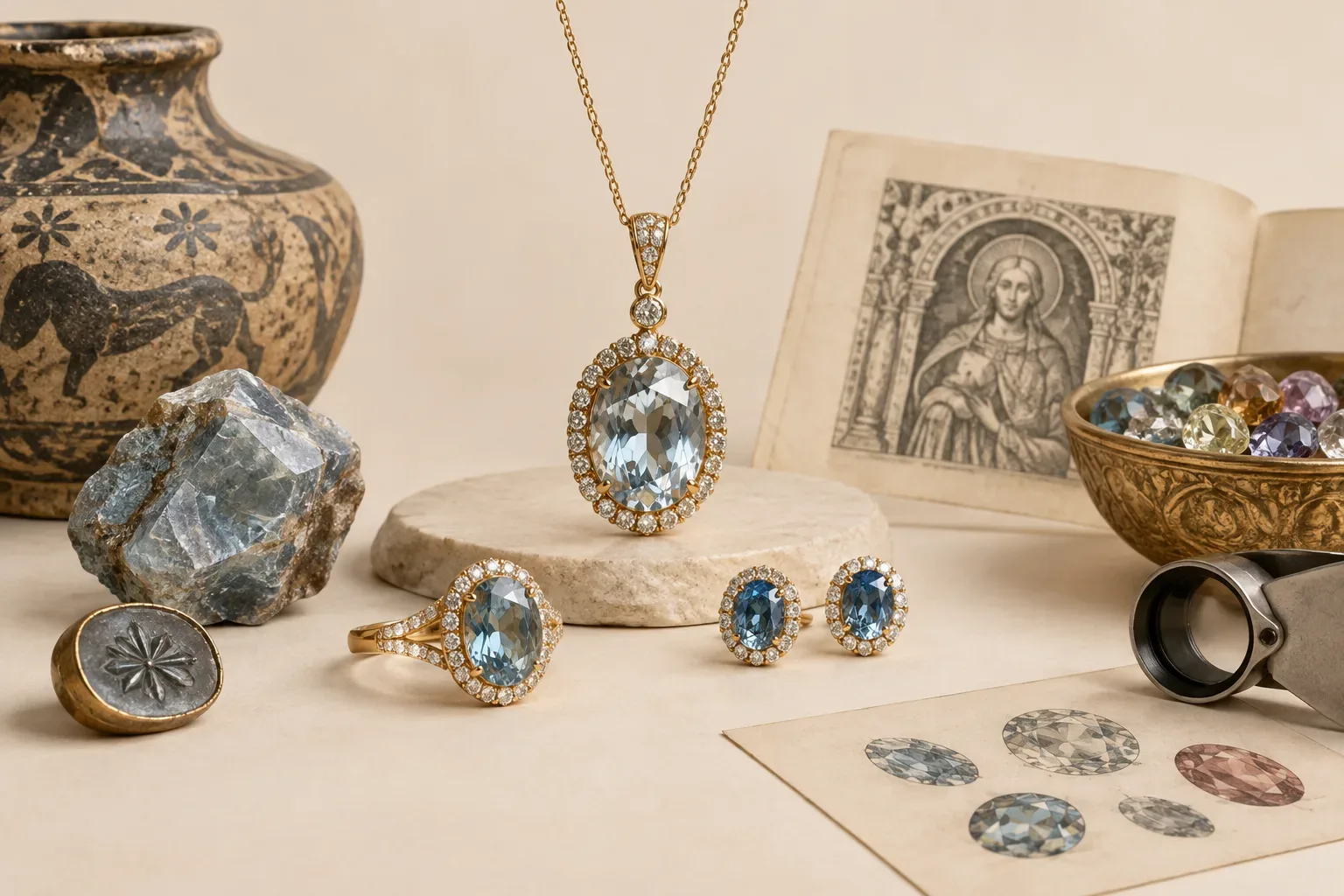
Museum collections show zircon used as a faceted accent in rings, earrings, brooches, and pendants across different periods, with settings and cuts reflecting prevailing styles of each era. In modern commercial jewelry, zircon may be presented as the natural gemstone zircon or, separately, as other materials that imitate the look of diamonds or colourful gems.
The issue buyers encounter today is twofold: natural zircon can be altered to change its color or clarity, and lookalike materials — including synthetics created to resemble diamonds or sparkly coloured gems — are available as imitations. The Victoria and Albert Museum materials and exhibition notes emphasize the changing technologies and fashions around gemstones; those same changes led to widespread use of treated stones and substitutes in later commercial jewelry.
What museums and consumer-protection guidance tell us about disclosure
Museum research provides provenance and context but does not regulate commerce. For buyers, the Federal Trade Commission’s guidance on buying gemstones, diamonds, and pearls is the practical standard: the FTC explains that sellers should disclose treatments that affect value and should not misrepresent synthetics or imitations as natural stones. Use this guidance to form specific questions when you shop and to know your right to clear information.
Treat public museum documentation and collector records as sources for historical provenance and cultural use, and treat government consumer guidance as the source for what sellers should disclose about current treatments and imitations.
Questions to ask when buying zircon or zircon-like stones
Before you commit to a purchase or a gift, ask the seller whether the stone is natural zircon, whether it has been treated (and how), and whether the stone is a synthetic or imitation material. Request written disclosure and, where appropriate, an independent gem lab report that names the material and any treatments. If the seller cannot or will not provide clear, written answers, consider walking away.
Also ask about provenance and returns: is the piece documented in a way that supports age or origin claims? Is there a return policy or guarantee if the stone tests differently than represented? Sellers who follow the practices outlined by the Federal Trade Commission will provide clear information on treatments and imitations and will support buyers with written assurances.
Selecting and gifting zircon respectfully
If you choose zircon for personal wear or as a gift, think about the meaning you want to convey and how that meaning will be received. If you value historical continuity, look for documented provenance or museum-backed references to similar period pieces; cite the specific historical source rather than relying on broad statements about a stone’s 'ancient' powers. If you prefer a modern aesthetic, decide whether treated color or an affordable synthetic imitation better suits the design and budget, and be transparent with the recipient about what you purchased.
Be mindful when invoking cultural or religious symbolism. If a seller or guide links a stone to a specific spiritual practice or cultural tradition, ask for evidence in the form of contemporary sources or museum references. Using gemstones as personal symbols is fine, but avoid presenting modern interpretations as ancient facts unless you have specific documentation to support the claim.
Testing, certification, and budget considerations
Independent gemological reports can name a stone and list treatments; they are especially helpful for high-value purchases. For more modest budgets, insist on clear seller disclosure and a return policy rather than paying up front for expensive testing. Remember that the presence of an accepted treatment does not necessarily make a piece undesirable—some treatments are standard in the trade and accepted if disclosed—so weigh your priorities on natural material, durability, and price.
Finally, think about the design and wearability of the piece. Museum examples cited by the Victoria and Albert Museum show how setting and craftsmanship affect how a gemstone performs and is perceived. A well-made setting of a treated zircon may outshine a poorly set, untreated stone, so balance material authenticity with craftsmanship and the emotional value of the piece.
Summary
Use museum resources like the Victoria and Albert Museum to learn where and when zircon was used historically and to separate documented uses from later popular claims. Rely on Federal Trade Commission guidance to insist on clear disclosure of treatments and imitations when you buy. Ask direct questions, get written answers, and choose pieces that match your priorities for authenticity, aesthetics, and meaning.
Frequently asked questions
What’s the difference between natural zircon and cubic zirconia?
Natural zircon is a naturally occurring mineral historically used in jewelry; cubic zirconia is a manufactured synthetic material created to resemble diamonds. Ask sellers to name the material and provide written disclosure so you know whether a piece contains natural zircon or a synthetic imitation.
Are zircon treatments common and should they affect price?
Treatments that change color or clarity exist in the gemstone trade; whether they affect price depends on the market and buyer preferences. The Federal Trade Commission advises that sellers must disclose treatments that affect value, so request that information in writing to make an informed choice.
Can I trust seller claims about provenance or historical age?
Museum documentation provides reliable provenance when available. For commercial claims, request supporting documentation and, for higher-value items, consider an independent appraisal or lab report. If a seller cannot substantiate provenance, treat the claim cautiously.
What paperwork should I ask for when buying zircon?
Ask for written disclosure naming the material and any treatments, a return policy, and, for higher-value purchases, a gemological report from a recognized laboratory. Clear written answers help protect buyers and align with FTC guidance on disclosure.
Is it acceptable to gift a treated or imitation stone?
Yes, provided you are transparent with the recipient about what the stone is. Treated stones and well-made imitations can be beautiful and meaningful; just avoid presenting them as something they are not and respect the recipient’s values regarding authenticity.
Sources and further reading
- Bedazzled: A History of Jewellery — Victoria and Albert Museum
- An A-Z of Gemstones — Victoria and Albert Museum
- Buying Gemstones, Diamonds, and Pearls — Federal Trade Commission