Meaning at a glance
This guide explains the documented history and changing contexts of the spinel quality and value factors motif, separates museum-documented historical evidence from modern personal interpretations, and provides practical guidance for choosing, evaluating, and gifting spinel jewelry while recommending disclosure and lab reporting practices.
Direct answer — what this guide covers
Concise answer: Spinel quality and value factors are determined primarily by the usual gem-quality criteria—color (hue, tone, saturation), clarity, cut, and carat weight—while historical and cultural value depends on documented use and provenance. This article explains the documented historical record for spinel as presented in museum sources, separates those records from later or personal interpretations, explains how spinel appears in jewelry, and gives practical, ethical buying and gifting guidance that emphasizes disclosure and objective grading.
Documented historical evidence and precise cultural contexts
Museum scholarship and reference collections record how spinel’s identity and social role changed over time. The Victoria and Albert Museum’s resources on jewelry history and gemstones discuss how gem classification and social meanings shift with technology and taste, and illustrate that what a culture called a gem and how it used that gem are historically specific rather than universal. Use of red spinel alongside rubies in court jewels, for example, is part of a wider historical pattern in which red stones were prized for status and display, a point made in the V&A’s material on jewelry history.
When citing historical claims, it helps to be precise about the source. The V&A’s A–Z of Gemstones provides identification and historical context for individual gems, and the V&A’s exhibition framing on jewelry history documents changes in taste, technology, and the social meanings attached to gems. These museum sources present documented evidence (objects, provenance records, and historical descriptions) rather than modern popular myths. Where a historical culture treated a stone as a status symbol, that treatment is a documented social practice recorded in museum collections and scholarship; it should not be generalized as a universal symbolic meaning for all people or eras.
Separating documented historical meanings from modern personal interpretations
Documented historical meanings are those explicitly recorded by contemporaries or preserved with objects and provenance in museum collections. For spinel, museums record its frequent use in high‑status jewelry and its historical confusion with ruby in many collections—evidence about usage, trade, and identification is the province of museums and gemological study, as summarized by the V&A.
Modern personal interpretations—such as attributing specific spiritual, healing, or personality traits to spinel—are contemporary meanings that individuals or retailers may promote. These personal or commercial interpretations are not the same as documented historic belief systems unless supported by primary historical evidence. Make this distinction when explaining significance to a recipient: you may gift a spinel because of a modern personal meaning you and the recipient share, but that is separate from the stone’s recorded cultural or historical roles in museum collections.
How spinel appears in jewelry (what museum collections show)
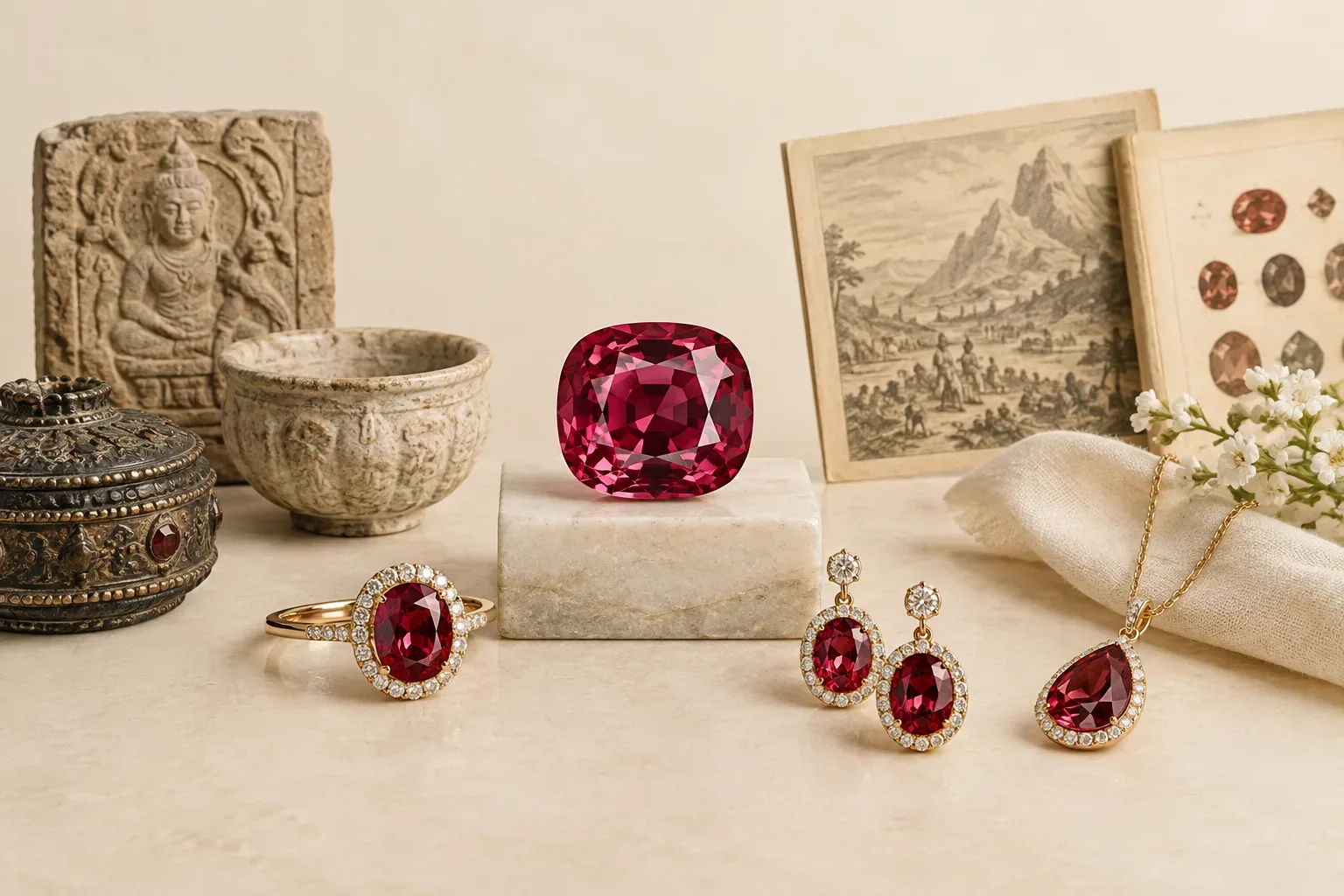
Museum collections and surveys of jewelry illustrate the practical ways spinel is mounted and worn. Spinel appears as single statement gems in rings and brooches, as accent stones in multi‑gem necklaces or tiaras, and in historical sets where red spinels were used alongside other colored gems for contrast and impact. The V&A’s discussions of jewelry history make clear that stones with good color and size were commonly showcased in visible settings to display status.
In modern commercial jewelry, spinel is cut and set like other transparent gem materials: faceted for brilliance, cabochon when heavily included or for historical authenticity, and used in cluster arrangements to increase visual presence. As with other gems, modern designers vary mounting style—closed back for certain historic looks, open back to enhance color—and the choice of metal and setting affects how the stone’s color is read in the finished piece.
Practical quality and value factors to evaluate
Color remains the single most important determinant of value for spinel. Evaluate hue (red, pink, blue, violet, etc.), tone (light to dark), and saturation (how pure and vivid the color is). The most desirable pieces typically show vivid, evenly distributed color without brownish or gray overtones. The V&A’s gemstone overview explains how museums and the trade assess color as a primary visual attribute.
Clarity influences price, especially in transparent faceted stones. As with most gems, eye-clean stones (no visible inclusions to the unaided eye) command higher value. Cut affects brilliance and how color is presented; a well-proportioned cut maximizes the appearance of color and minimizes visible inclusions. Carat weight matters because larger clean stones are rarer and increase value disproportionately.
Provenance and documented history can add value beyond basic gem quality when a stone has verified historical importance or an attractive origin, and museum scholarship notes that provenance is an important contextual factor. Finally, treatments and imitations affect value: sellers should disclose any enhancements and whether the gem is a natural spinel, synthetic, or a different material, as required by consumer protection guidance.
What to ask sellers and what documentation to request
Ask the seller to describe the gem in plain terms: natural or synthetic, any treatments or enhancements, weight, measurements, and a photograph under consistent lighting. The U.S. Federal Trade Commission explains that sellers must not misrepresent treatments or fail to disclose imitations and enhancements, so ask for written confirmation of disclosures and examine any written grading or treatment statements carefully.
For higher-value purchases, request an independent gemological laboratory report that identifies the material, documents any treatments, and provides measurements and photographic orientation. A lab report does not guarantee future value, but it certifies the gem’s identity and any known alterations at the time of testing, which is crucial for insurance and resale. If a seller resists disclosure or cannot demonstrate provenance for a historically marketed stone, consider walking away or seeking a second opinion.
Selection and gifting guidance: respectful, practical choices
Choose spinel as a gift by balancing aesthetic, symbolic, and practical considerations. Aesthetic: pick the color and cut that suit the wearer’s style and skin tone. Practical: consider durability and everyday wear; spinel is a durable gem suitable for many jewelry types, but the setting can extend wearability—avoid shallow settings for rings that will see heavy use.
Respectful gifting recognizes the distinction between historical documentation and modern meaning. If you want to convey a historical or cultural narrative, cite museum sources or provenance rather than unverified lore. If your gift carries a personal meaning—growth, celebration, or a private memory—frame it as a modern or personal interpretation rather than a claim about universal historic symbolism.
Budget considerations: prioritize color and eye‑clean clarity over carat if you must choose. Smaller vivid stones often appear more attractive than larger, washed‑out stones. For significant purchases, plan for a lab report and insurance. For heirloom or historically attributed stones, insist on documented provenance and consult a reputable appraiser or museum gem specialist when possible.
Care, maintenance, and ethical considerations
Treat spinel as you would other transparent gemstones: clean with mild soap and water and a soft brush, avoid prolonged exposure to harsh chemicals and extreme heat, and have settings inspected periodically. Many museums’ conservation notes, summarized in museum literature on jewelry, emphasize preventive care for historic and modern gems alike.
Ethical concerns around mining and origin are increasingly important to buyers. If origin or ethical certification matters to you, request sourcing information from the seller and prefer vendors that can document responsible sourcing practices. Provenance can affect both ethical considerations and monetary value, so obtain as much documentation as possible and prefer transparent, reputable retailers or dealers.
Putting it together: a brief buyer’s checklist
Before you buy: evaluate color, clarity, cut, and carat in photographs and in hand; ask for written disclosure of any treatments or whether the gem is synthetic; request an independent lab report for significant purchases; verify provenance if historical value is claimed; and plan for insurance. Rely on museum and consumer protection guidance—such as the V&A’s gemstone reference and the FTC’s buyer guidance—for established practices rather than unverified marketing claims.
Frequently asked questions
What are the most important quality factors that determine spinel’s value?
Color (hue, tone, saturation) is the most important, followed by clarity, cut, and carat weight. Provenance and documented historical importance can add premium value for specific stones.
Are spinels treated or enhanced?
Gemstone treatments exist across many gem types. Sellers must disclose any treatments or imitations; ask for written disclosure and an independent lab report for high-value purchases, following guidance from consumer protection agencies.
How can I tell a spinel from a ruby?
Visual inspection alone is often inconclusive because historical records show spinel and ruby were frequently confused. A gemological laboratory report will identify the material reliably.
Should I get a lab report for a spinel purchase?
Yes for significant purchases. A lab report documents identity and any treatments at the time of testing and helps with insurance and future resale.
How should I care for spinel jewelry?
Clean spinel with mild soap, warm water, and a soft brush; avoid harsh chemicals and extremes of temperature. Have settings checked periodically and insure valuable pieces.
Sources and further reading
- Bedazzled: A History of Jewellery — Victoria and Albert Museum
- An A-Z of Gemstones — Victoria and Albert Museum
- Buying Gemstones, Diamonds, and Pearls — Federal Trade Commission