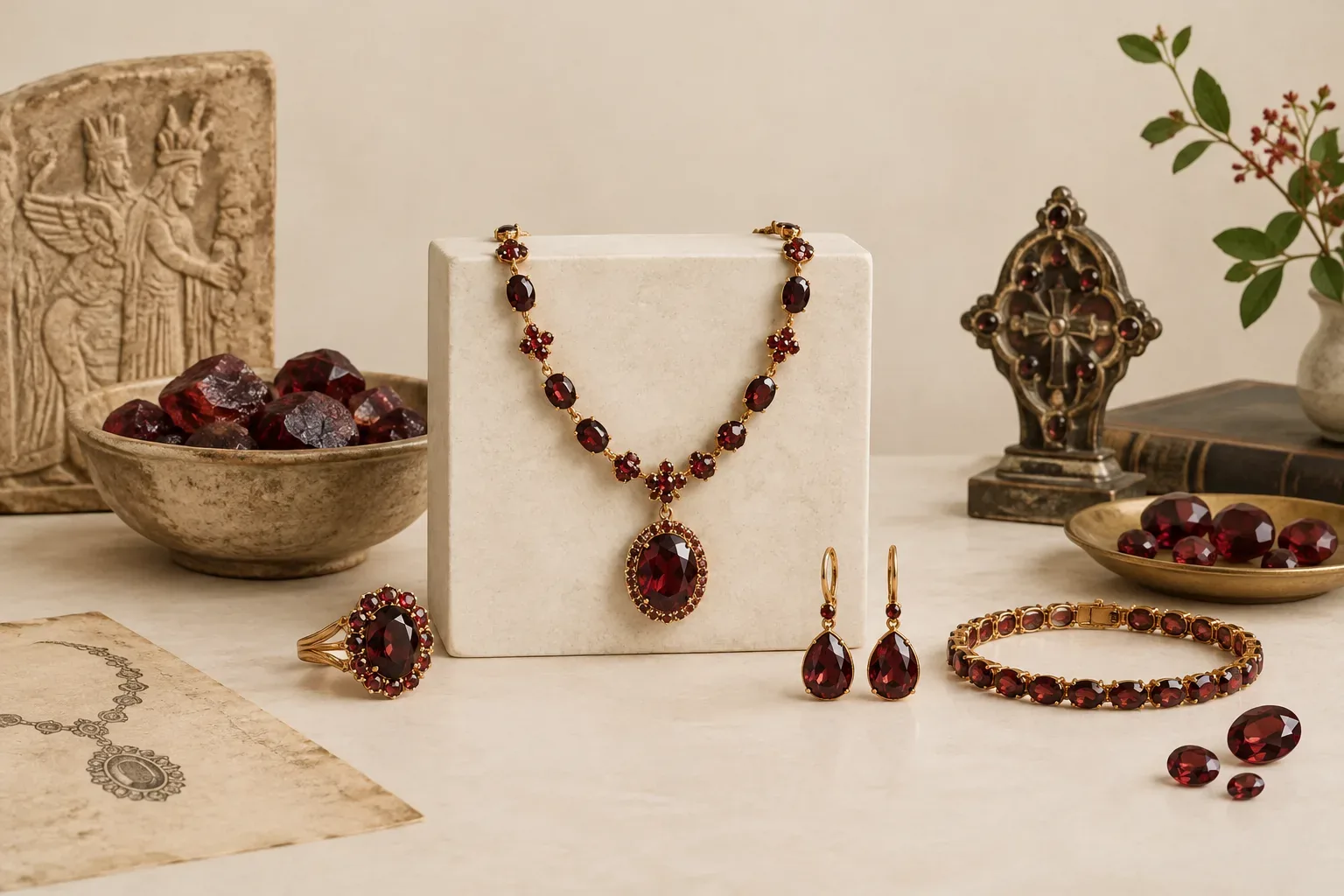
Meaning at a glance
Documented evidence shows garnets were used across many periods and cultures and that sellers must disclose treatments or imitations; buyers should ask clear, written questions about treatment, origin, and return policies and choose reputable sources when selecting or gifting garnet jewelry.
Quick answer
Garnet treatments and imitations can affect value, durability, and what a piece should be called; the responsible approach is to ask sellers directly whether a garnet has been treated or is a simulant, request written disclosure and any lab reports, and buy from reputable dealers who follow guidance on disclosure. This article explains what the historical record shows about garnet use, how modern interpretations differ from documented meanings, how garnets appear in jewelry, and practical questions to ask before you buy or gift a garnet piece.
What the historical evidence shows (and how I’m attributing it)
Curators and historians at the Victoria and Albert Museum describe garnets as a gemstone group used widely in different periods and places, from ancient jewelry through medieval and Victorian collections. The museum’s broad treatments of jewelry history document changing fashions, techniques, and the social roles gems played rather than a single, continuous symbolic meaning for garnet across all cultures.
The Victoria and Albert Museum’s resources note that jewelry makers in many eras used garnet for its color and workability, and that design styles and settings evolved over time as tastes and technologies changed. When historians point to a particular use—for example, garnet being fashionable in a certain century—they are describing social context and surviving objects rather than prescribing modern meanings.
The Federal Trade Commission’s consumer guidance frames the modern commercial context: sellers should disclose treatments, synthetics, and imitations when offering gemstones. That legal and consumer-protection perspective shapes what buyers should expect from a seller today, even when handling antique pieces whose original documentation may be absent.
Separating documented historical meanings from modern interpretations
Documented historical evidence, as summarized by the Victoria and Albert Museum, shows how garnets were selected and set in different periods for aesthetic and technical reasons. Museums and archives record who ordered and wore those pieces, the materials used, and how items circulated in society. Those records describe usage and context; they do not establish a single spiritual or emotional meaning that applies to everyone who wears garnet today.
Modern interpretations of garnet’s meaning—statements such as ‘‘garnet symbolizes love’’ or ‘‘garnet is protective’’—are personal or cultural readings that developed later through folklore, marketing, and contemporary preference. These interpretations can be meaningful to individuals, but they are not universal historical facts. Treat modern symbolic meanings as contemporary layers added over time rather than as direct continuations of an ancient, singular tradition.
When you are choosing garnet jewelry for personal reasons or as a gift, be clear whether you are honoring historical use, following a modern symbolic reading, or combining both. That clarity will guide how you research provenance, display, and talk about the piece with the recipient.
Garnet in jewelry: forms, settings, and stylistic appearance
Garnet appears across many types of jewelry including rings, brooches, necklaces, and cluster settings. Historical examples in museum collections show how jewelers used garnet’s rich color as a focal point in small, tight clusters and in inlaid work. The Victoria and Albert Museum’s surveys of gemstone use describe how designers chose settings and backing methods to maximize color and wearability across different periods.
In some historic pieces, gem cutters and setters used closed or reflective settings and specific mounting techniques to intensify color and mask the stone’s back. These are design and technical choices made by makers of the time to achieve a desired look and should be read as craft decisions rather than symbolic markers alone.
Contemporary jewelry uses garnet both in traditional, historically inspired forms and in modern, minimalist designs. You will find garnet used as a single center stone, in graduated strands, or in mixed-metal contemporary settings where the gem’s hue is the visual focus.
Treatments, imitations, and what the law and consumer guidance require
Modern commercial practice requires clear disclosure when a gemstone has been treated or is an imitation. The Federal Trade Commission advises consumers that sellers must describe what a gem is, whether it has been treated, and whether it is natural, synthetic, or an imitation. That general consumer-protection guidance is the foundation for what you should expect when buying gemstones in the marketplace today.
Garnets are a group of naturally occurring minerals and many garnets on the market are untreated, but imitations and simulants exist. The FTC guidance is the practical rule for buyers: ask for, and expect, straightforward answers about whether what you are buying is a natural garnet, whether any enhancement was applied, and whether the piece contains simulants or glass inlays advertised as garnet.
If a seller claims a gem is ‘‘natural’’ or ‘‘untreated,’’ you may reasonably ask for proof, supporting documentation, or a lab report for higher-value items. For lower-cost purchases, written seller disclosure and a clear return policy are minimally important protections.
Questions to ask sellers and what answers to expect
Ask whether the garnet is natural, synthetic, or an imitation and request written confirmation. Expect a clear answer; the FTC’s consumer guidance makes disclosure the baseline of responsible selling. If the seller cannot or will not say, treat that as a risk factor.
Ask specifically about treatments or enhancements and whether they are permanent. Even when many garnets are sold untreated, disclosure of any dyeing, coating, or other processing is important for assessing care needs and long-term value.
For higher-value pieces, ask for origin information and for any laboratory reports or appraisals. Reputable sellers will be able to provide provenance, testing documentation, or a clear explanation of why such documentation is not available, particularly for older or antique pieces.
Finally, get the return policy in writing and ask about aftercare. Knowing whether you can return a piece and how to care for it are practical protections that complement information about authenticity and treatment.
Selection and gifting guidance: practical and respectful steps
Decide what matters most to you or your recipient: historical authenticity, visual appearance, budget, or symbolic meaning. If the primary desire is historical authenticity, prioritize pieces with documented provenance or from reputable dealers who work with museum-standard documentation. If the priority is visual appeal or affordability, treat clear disclosure and a fair return policy as your baseline protections.
When a gift is intended to communicate meaning, be explicit about whether that meaning is historical, modern, or personal. If you are relying on a modern symbolic reading—such as declaring garnet a birthday or relationship stone—explain that meaning when you give the piece and consider including a short note describing why you chose it.
If you are buying an antique or estate piece, accept that full documentation may not always be possible; in those cases, ask the seller to explain what they know in writing and insist on a return window so you have time to verify any claims that are important to you.
Choose sellers who follow disclosure practices, provide receipts and condition reports, and are willing to answer technical questions or refer you to an independent gemological lab for testing. That approach protects your purchase, helps you respect the cultural and historical contexts of the object, and makes gifting more thoughtful and informed.
Frequently asked questions
Are garnets typically treated?
Many garnets on the market are natural and untreated, but treatments are used in the gem trade for various stones. The Federal Trade Commission advises that sellers must disclose any treatment; therefore you should ask the seller directly and expect a written answer when treatment status matters to you.
How can I tell if a garnet is a real garnet or an imitation?
Ask the seller for clear identification and, for higher-value purchases, a laboratory report. The Federal Trade Commission’s consumer guidance recommends that sellers disclose whether a stone is natural, synthetic, or an imitation. If you receive vague answers, seek independent testing or choose a seller who provides documentation.
What should I ask about when buying an antique garnet piece?
Request any available provenance or condition information, ask whether restorations or replacements have been made, and obtain a written return policy. Museum summaries of jewelry history note that makers used different settings and techniques over time, so ask how those factors affect the piece’s appearance and care.
If a seller says a garnet is 'untreated,' is that enough?
A seller’s claim is a starting point, but for valuable items ask for written confirmation and for testing documentation if possible. The FTC expects truthful disclosure, and reputable sellers will provide documentation or explain why it is not available.
How should I balance historical authenticity with my budget?
Decide whether provenance and lab reports are priorities or whether visual appeal and budget are more important. If authenticity is essential, allocate more of your budget to pieces with documentation; if appearance matters most, prioritize disclosure, return policies, and seller reputation so you can buy within your means safely.
Sources and further reading
- Bedazzled: A History of Jewellery — Victoria and Albert Museum
- An A-Z of Gemstones — Victoria and Albert Museum
- Buying Gemstones, Diamonds, and Pearls — Federal Trade Commission