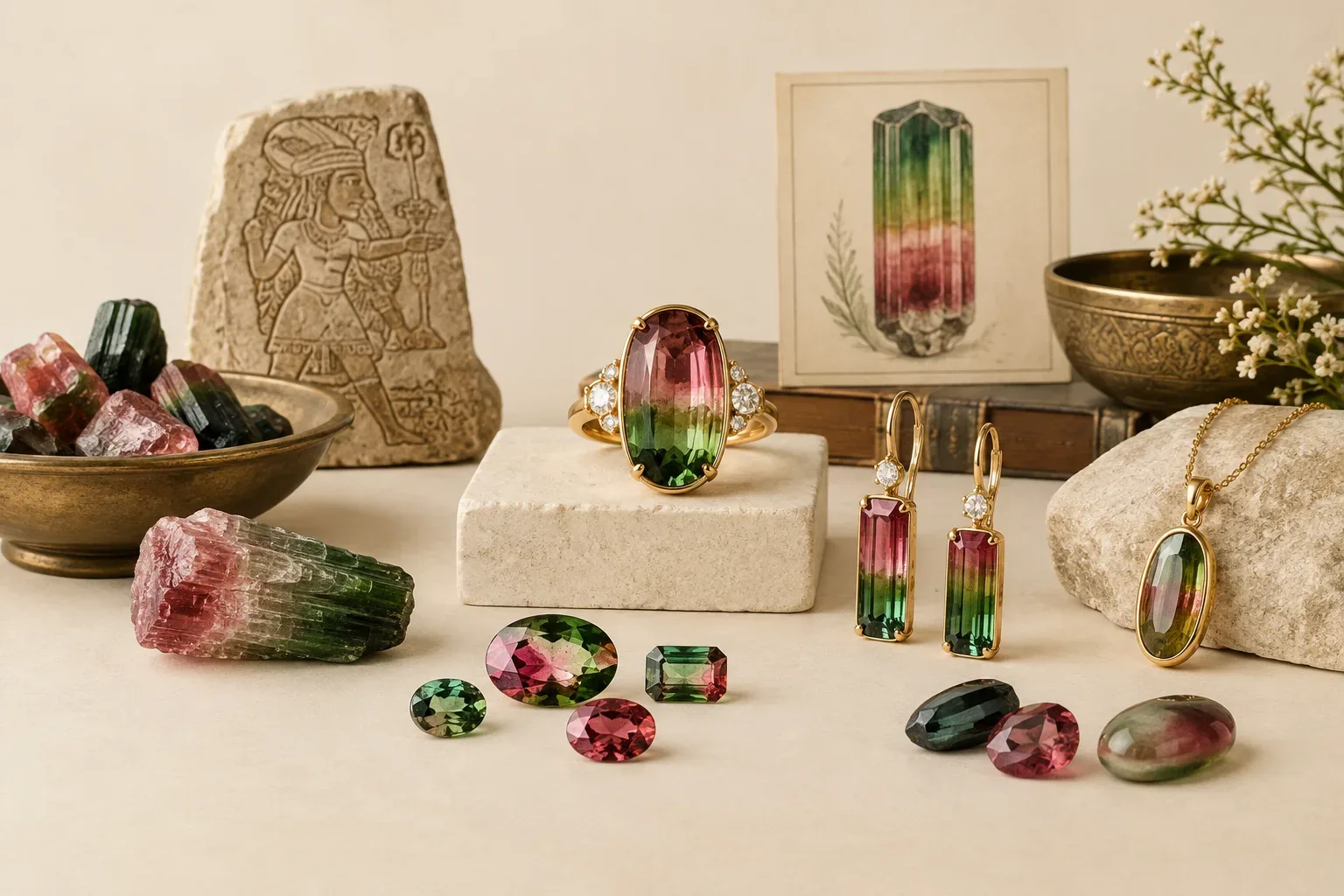
Meaning at a glance
Tourmaline treatments and imitations have historical and modern contexts: museums document how gemstones were valued and repurposed across periods, while modern commerce includes color enhancements and synthetic or imitation materials that must be disclosed; buyers should ask clear, written questions about treatment, testing, and return policy before purchasing.
What the historical record shows
Documentation compiled by major museums and curators shows that gemstones and their visual properties have been valued in different ways across cultures and periods. The Victoria and Albert Museum’s materials on jewellery history emphasise that jewelry fashions, including the choice of stones and their finishes, shift with social, economic, and technological change, and that gems have been repurposed and re-set over time as tastes changed.
The V&A’s A–Z of Gemstones discusses individual gems in the context of material properties and historic use. That record places tourmaline among the suite of colored gemstones that collectors and makers have used for their color, durability, and availability. The museum resources document changing practices—such as shifting tastes for particular colors and the reuse of stones—rather than a single, continuous tradition for one gem.
Separating documented historical meanings from modern interpretations
Museum sources document how gems were used, traded, and described in different periods. Where the V&A notes social contexts—such as status, fashion, and the role of workshops—these are documented observations about behaviour and material culture, not universal symbolic statements.
By contrast, modern personal or marketing interpretations about what a tourmaline ‘means’—for example, claims that a given color brings specific emotional or spiritual effects—are contemporary layers applied by wearers, designers, or sellers. Those personal meanings are valid as individual or cultural expressions, but they are not the same as historically documented practices unless supported by period sources. Keep the distinction clear when choosing jewelry for meaning: documented historical uses tell you how a gem was used or valued in a time and place, while modern symbolism reflects present-day beliefs and preferences.
How treatments and imitations appear in tourmaline jewelry
In modern markets gemstones appear in a range of material states: natural, enhanced, synthetic (laboratory-made but chemically similar), or imitations (materials made to look like the gemstone). Museum pieces and historical records show that modifying stones—by recutting or repolishing, resetting them, or combining them with other materials—has always been part of jewellery making. Contemporary treatments such as color enhancement or stabilization continue that practical lineage.
The Federal Trade Commission’s consumer guidance on buying gemstones stresses that modern commerce includes a range of treatments and imitations and that sellers should disclose material treatments and whether a stone is an imitation. In practice this means tourmaline in today’s jewelry might be sold as natural but with color enhancement, as a lab-grown tourmaline, or as an entirely different material cut to resemble tourmaline. These differences affect durability, care, and resale value.
Practical questions to ask sellers and makers
Before buying, ask for clear, written answers to the following: Is the stone natural, synthetic, or an imitation? Has it been treated, and if so what was done? Can you provide a gemological report or any laboratory testing? What is the return policy if the disclosure is later found to be incomplete? Does the jeweller provide guidance on care for treated stones? Requesting this information up front follows the consumer-protection approach recommended by the FTC and reduces misunderstandings.
If documentation such as a gemological report is offered, check which lab issued it and what tests were performed. Museum accounts such as the V&A’s A–Z of Gemstones underline the value of provenance and documentation for understanding a gem’s history in a piece of jewelry. Written records support responsible collecting and gifting.
Evaluating value and meaning when treatments are involved
Treatments and imitations can be legitimate ways to make attractive jewelry affordable and wearable. However, they change how a piece might be appraised or perceived by future owners. If your priority is natural material and long-term collectibility, untreated natural stones with clear provenance are preferable. If your priority is color, affordability, or a particular design, treated or manufactured stones can be excellent choices.
When choosing a piece with meaning attached—whether sentimental, cultural, or aesthetic—be explicit about which layer of meaning matters. Are you choosing a stone because of a documented historical association, because its color suits the recipient, or because a modern symbolic meaning resonates? Separating those intentions helps you decide whether to prioritise natural, untreated material or to accept treatments or imitations for other benefits.
Selection and gifting guidance
Treat the purchase as both a material and a communicative act. When gifting, tell the recipient what you know: disclose whether the stone is natural or treated and share any testing documentation. If you want the gift to carry an impression of rarity or long-term investment, choose natural, documented stones. If the focus is immediate wearability and colour or budget, a treated stone or high-quality imitation can be a thoughtful and practical gift.
Respect cultural contexts. Museums show that meanings and uses of gems vary by place and time. If you are gifting a piece that invokes a specific cultural or historical symbolism, do a little research and make sure the recipient will welcome that reference. If in doubt, prioritize clarity about the stone’s material qualities and provide care instructions so the piece is enjoyed and preserved.
Care, longevity, and resale considerations
Different material states behave differently in daily wear. Some treatments affect surface durability or colour stability and may require gentler cleaning or special storage. Ask the seller for care advice tailored to the stone’s treatment status and set. The FTC guidance implies that treatment disclosures are important not only for price transparency but also for informing proper care.
If resale value matters, untreated natural stones with documentation typically command higher prices among collectors. Treated stones can still hold value, particularly when well-documented and in excellent condition, but value expectations should reflect the material’s treatment and market norms.
Final thoughts
Understanding tourmaline treatments and imitations means combining documentary context with clear, practical questions. Museums such as the Victoria and Albert Museum document how gemstones and jewellery practices change through time; the Federal Trade Commission advises clear disclosure in sales of gemstones and imitations. Use both kinds of information: respect the documented history and provenance of pieces when that is relevant, and rely on modern consumer protections and written documentation when purchasing.
Frequently asked questions
What should I ask specifically about a tourmaline before buying?
Ask whether the tourmaline is natural, treated, synthetic, or an imitation; request written disclosure of any treatments; ask for any available gemological report or lab testing; and confirm the return policy if later testing contradicts the seller’s statement. These steps follow the consumer-protection approach recommended by the Federal Trade Commission.
How common are treatments and imitations in tourmaline jewelry?
Modern markets include both natural and treated tourmaline as well as lab-grown or imitation materials. Museum documentation shows that modifying and repurposing gemstones is a long-standing jewellery practice, while the FTC notes that contemporary sellers should disclose treatments and imitations. The prevalence will vary by price point, seller, and region.
Will a treatment change how I care for a tourmaline piece?
Possibly. Some treatments can affect a stone’s surface durability or colour stability and therefore call for gentler cleaning or special storage. Ask the seller or maker for care instructions tied to the stone’s treatment status so you can preserve the piece properly.
Does a treatment mean the stone is lower quality?
Not necessarily. Treatments are often used to improve color or durability and can make attractive jewelry more affordable. However, treatments do affect how the market values a stone and should be disclosed. If long-term collectibility or investment value is important, documented, untreated natural stones are typically preferred.
Can a jeweller provide proof of a tourmaline’s treatment status?
Yes—reputable sellers should provide written disclosure and any available gemological reports. If a seller cannot or will not provide documentation, that is a valid reason to request further assurances or to seek another source, as recommended by consumer guidance from the FTC.
Sources and further reading
- Bedazzled: A History of Jewellery — Victoria and Albert Museum
- An A-Z of Gemstones — Victoria and Albert Museum
- Buying Gemstones, Diamonds, and Pearls — Federal Trade Commission