Meaning at a glance
Documented museum sources show how cutting and setting techniques and gemstone fashions have changed over time; citrine (a yellow-to-orange quartz) is cut and set today in a range of faceted and cabochon styles. This article separates what is recorded in the historical record from later popular meanings, explains how citrine appears in jewellery, and gives practical buying and gifting guidance including questions to ask about treatments and settings.
What the historical record shows
Museum scholarship records jewellery history as a story of technology, taste, and social context rather than a single, fixed meaning. The Victoria and Albert Museum’s materials on jewellery history state that cutting techniques, setting types and the social functions of jewellery have evolved with tools, fashion and social use, producing the variety of forms we see today. Use of faceting and development of secure settings grew as gem cutting and metalworking technologies advanced, and curators at the V&A note changing social contexts for jewellery across periods and cultures.
When discussing citrine specifically, gem-reference material collected by museums describes it as a yellow-to-orange variety of quartz. Much of the modern commercial supply is produced or standardized by heat-treating other quartz varieties, a point museums include in their overview of gemstone origins and trade. These technical and commercial histories explain why certain cuts and settings became popular at particular times: cutting methods emphasized light return in faceted stones, while settings adapted to protect more exposed stones or to highlight particular fashions.
Documented meanings versus modern interpretations
Historical documentation preserved in museum collections and curatorial writings records the uses, fashions and technological contexts of gemstones and jewellery. Such records show that cuts and settings functioned to display wealth, follow fashion, or protect fragile stones; they do not establish a universal symbolic meaning for any single gemstone. The V&A’s overview of jewellery history makes clear that meanings shifted with time and place rather than remaining constant.
Modern symbolic claims about citrine (for example, that it universally represents prosperity, energy or healing) are contemporary interpretations and popular associations, not fixed historical facts documented across cultures. These modern meanings can be important to givers and wearers, but they should be distinguished from what museum evidence records about how cut and setting evolved for technical and social reasons.
How citrine cuts and settings appear in jewellery
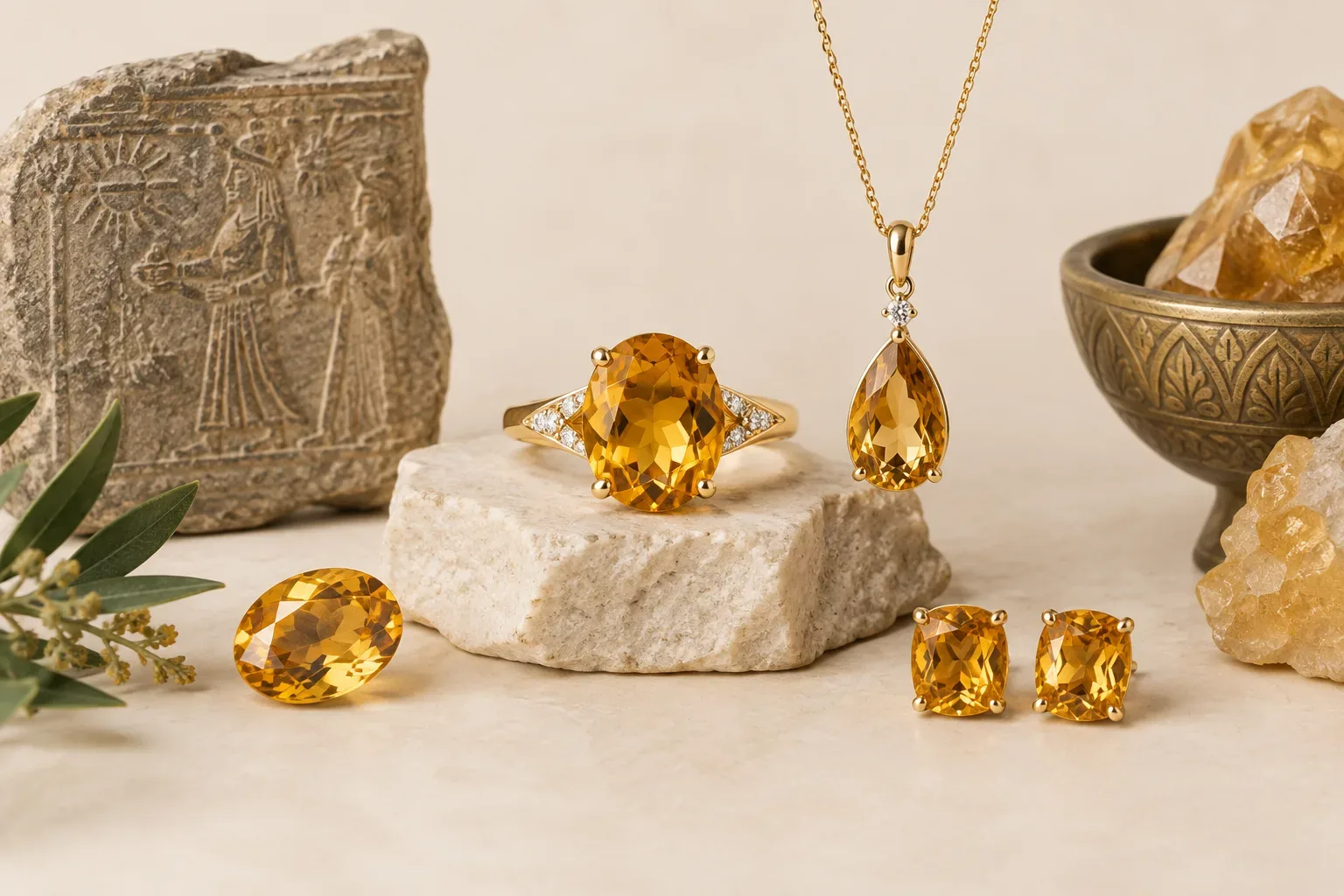
Citrine, as a transparent quartz, is commonly shown in faceted cuts that maximize brilliance and color. Typical faceted choices include round brilliants for sparkle, step cuts (like emerald or baguette shapes) for clear color planes and an elegant profile, and mixed cuts that combine facets for both scintillation and color display. Because the stone is typically clean to the eye and valued for color, cutters balance depth and table size to show the most attractive yellow-to-orange tone.
Cabochon cuts are less common but appear when a softer, satiny look is desired or when the rough yields shapes better suited to a domed finish. Larger stones are sometimes cut as cushions or ovals to read as sizeable color fields rather than as brilliant flashes. In period jewellery or vintage-style pieces in museum collections, stones are set in ways that reflect the era’s techniques—closed-back settings in earlier mounts, open-backed settings in later periods that prioritize light entry—and these functional choices are documented by institutions such as the V&A.
Settings for citrine vary by intended use. Prong settings lift the stone to show color and sparkle but leave edges vulnerable; bezel settings wrap metal around the stone and give more protection while muting the visible edge. Tension and channel settings appear in modern designs to show clean lines, while halo settings use smaller stones to frame and intensify the citrine’s color. Selection of setting style has historically balanced display with the need to protect the gemstone, a balance visible in museum collections and curatorial descriptions.
Durability: what to consider
As a variety of quartz, citrine has material properties that influence cut choice and the selection of setting. Gemstone references in museum resources explain that quartz is a hard but brittle mineral; cutters and setters therefore recommend shapes that avoid thin, vulnerable edges and settings that shield those edges in jewellery intended for daily wear.
For rings and bracelets—pieces subject to knocks and abrasion—designers and conservators often prefer protective settings such as bezels or low-profile crowns to reduce the risk of chipping. For pendants and earrings, where impact is less likely, higher prong settings can safely show more of the stone’s facets and color. These practical recommendations follow from how cutting and setting developed historically to respond to both fashion and the need to conserve gemstones for regular wear.
Practical buying and gifting guidance
Decide how the recipient will wear the jewellery before choosing cut and setting. If they wear rings for work or with active hands, favor sturdier settings (bezel, low prong) and moderate stone sizes to reduce risk. If the piece is for occasional wear—a cocktail ring or pendant—choose cuts and settings that maximize color and brilliance, such as larger faceted stones in prong or halo settings.
Ask about color and clarity preferences: citrine’s appeal is largely in its hue and saturation. Museum gemstone guides note that cutters balance cut proportions to show the best tone; when possible, view stones in natural light and compare specimens side by side rather than relying on a single photograph.
Always ask whether a citrine has been treated. The Victoria and Albert Museum’s gem overviews describe heat treatment as a common commercial process that affects color, and the U.S. Federal Trade Commission advises buyers to request disclosure of any treatments, enhancements or imitations. A reputable seller should state whether a stone is natural, heat-treated, synthetic or an imitation and provide documentation if available.
Consider accompanying metals and design motifs. Yellow, rose, and white gold each change how the citrine’s color reads; yellow or rose gold can warm and emphasize orange tones, while white metals provide contrast. If the piece is a meaningful gift, document the modern meaning you intend and share it with the recipient, recognizing that this meaning is personal and not a universal historical fact. For guidance on making jewellery choices that respect both sentiment and context, see our article on how to choose meaningful jewelry.
Care and longevity
Citrine should be cleaned gently with warm, soapy water and a soft brush; avoid harsh chemicals or ultrasonic cleaners if the stone’s setting includes fillers or other treatments that a seller has not documented. Store citrine jewellery separately to prevent scratching other gems or being scratched by harder materials. Regularly check prongs and settings so stones remain secure, and have a trusted jeweller re-seat or repair settings if needed to prolong the life of the piece.
For heirloom or vintage citrine pieces, museums and conservators note that older settings may use closed backs or different metal alloys. If you plan to wear a vintage piece regularly, consult a conservator or a jeweller experienced in historic settings to assess whether a modernized setting might be advisable to protect the stone and retain historical character.
Respectful selection and cultural awareness
When gifting or wearing citrine, be mindful that contemporary meanings are personal and culturally specific. While museums record historical uses, weights, cuts and settings, they do not support universal symbolic claims about any gemstone. If a design references a cultural motif or historic period, take time to learn about that motif’s origins and to respect cultural context. Our pieces on the history of lockets and how to research jewelry symbols can help frame a considered and respectful approach to historic or symbolic jewellery choices.
Closing note
Choosing citrine cuts and settings is a practical exercise rooted in material facts and personal taste. Use museum-documented histories to understand how form follows function and fashion, ask sellers about treatments and origins as the FTC recommends, and choose cuts and settings that both flatter the stone and fit the wearer’s lifestyle. That way you honor both the technical history and the personal meaning a piece can carry.
Frequently asked questions
What cuts are best for citrine if I want maximum sparkle?
Faceted cuts such as round brilliants and well-proportioned mixed cuts emphasize sparkle and scintillation. Choose a cut that balances table size and pavilion depth to show the stone’s colour while returning light.
Which setting is most protective for everyday citrine rings?
Bezel settings or low-profile prong settings provide more protection for edges and reduce the risk of chipping, making them better choices for rings intended for frequent wear.
How can I tell if citrine has been treated?
Ask the seller directly and request written disclosure. The Victoria and Albert Museum notes heat treatment is common in the commercial trade, and the U.S. Federal Trade Commission recommends buyers request information about treatments, enhancements and imitations before purchase.
Is citrine a good choice for an heirloom piece?
Citrine can be suitable for heirloom jewellery if set and maintained appropriately. Choose protective settings and have prongs, mounts and metal regularly checked to keep the stone secure over time.
Do historical sources say citrine had a single symbolic meaning?
Museum records show that meanings attached to gemstones and motifs changed across times and cultures. Institutions like the Victoria and Albert Museum document these changing contexts rather than a single, universal symbolism for citrine.
Sources and further reading
- Bedazzled: A History of Jewellery — Victoria and Albert Museum
- An A-Z of Gemstones — Victoria and Albert Museum
- Buying Gemstones, Diamonds, and Pearls — Federal Trade Commission