Meaning at a glance
Diamond quality and value depend on technical characteristics commonly described by industry terms (cut, carat, color, clarity) and on market and cultural context; museum research documents changing meanings across cultures and eras, while modern romantic or status interpretations are later social developments — practical buying guidance includes asking for written grading or treatment disclosure, comparing mounted versus loose prices, considering the setting and the wearer’s lifestyle, and confirming return and service policies.
What historical evidence shows (which cultures and periods?)
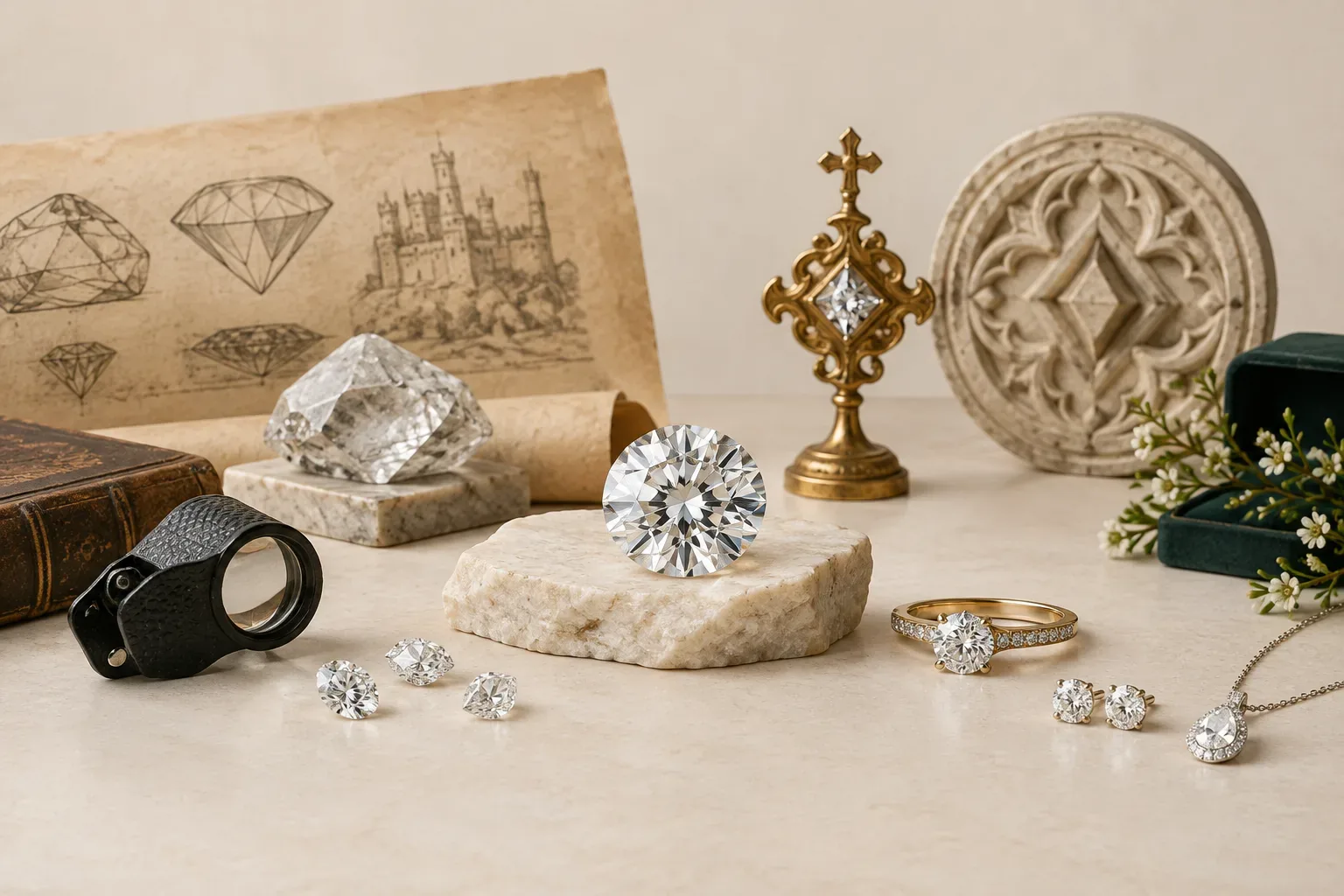
Museum research traces the long and changing history of diamonds as both material and social symbol. The Victoria and Albert Museum (V&A) presents diamonds and gemstones within shifting social contexts, showing how jewels functioned differently in ancient, medieval and modern societies and how tastes and techniques evolved over time.
The V&A’s resources on gemstones and the history of jewellery emphasize that diamonds were prized in multiple cultures. For example, historical collections and displays demonstrate the use of diamonds in royal and court dress in Europe as well as earlier use in South and Southeast Asia, where gem traditions and cutting methods developed long before the modern jewelry market.
Across the periods documented by museum collections, diamonds often signified high status because of rarity, craftsmanship and ownership by elites. The V&A highlights that the ways people displayed and interpreted gemstones — as protective amulets, symbols of rank, or decorative luxury — depended on local beliefs, available technology and social structure rather than any single universal meaning.
Separating documented history from modern interpretation
Documented history, as presented by museum research, shows concrete uses and changing fashions: how gemstones were cut and set, and which social classes had access to them. These are material facts based on surviving objects and archival records. The V&A’s work makes clear that what a jewel signified in one culture or era did not necessarily carry the same meaning elsewhere or later.
Modern associations, such as diamonds as a near-universal symbol of romantic love or marital commitment, are social developments that gained prominence well after the long histories museums document. Those contemporary meanings are legitimate cultural interpretations and personal associations, but they are not the only possible readings and they are not universal. Distinguishing between what is recorded in historical sources and what is a later social meaning helps buyers and givers make informed choices that respect both history and personal significance.
Key quality and value factors explained in practical terms
Several widely used factors describe a diamond’s material qualities: cut, carat (weight), color and clarity. These terms are shorthand for the stone’s finish and proportions, its weight, how much body color it shows, and how many visible inclusions or surface marks it has. Together they affect how a diamond looks and how the market prices it. For buyers this means that different combinations of these qualities can produce very different visual effects and costs.
Treatments, enhancements and imitations also affect value. The Federal Trade Commission (FTC) advises consumers to ask sellers about any treatments, enhancements or whether a stone is synthetic or an imitation and to obtain any promised disclosures in writing. Knowing if a diamond has been treated, filled, coated or is laboratory-grown versus natural will change both price expectations and long-term care considerations.
A practical way to think about value is to prioritize what matters most to you or the recipient: maximum brilliance, size, or a particular colorless look, for example. The balance among the physical factors, the stone’s provenance and the craftsmanship of the mounting determines practical value more than a single number or label.
How diamonds and their meanings appear in jewelry designs
Historically and today, diamonds appear in many kinds of jewellery: as single stones in rings (solitaires), in clusters, as accents in elaborate brooches and tiaras, and as pavé or channel-set elements in necklaces and bracelets. The V&A’s collections and curatorial notes document this range and how setting styles changed across different periods and fashions.
Design choices influence how a diamond reads culturally and personally. A single prominent stone set simply may carry a different visual and social message than many small stones used to add sparkle to an object. Museums show that settings, metalwork and accompanying motifs (flowers, crowns, religious symbols) have always shaped the perceived meaning of the gem, so the same diamond can be experienced differently depending on its setting and context.
Practical selection and gifting guidance
Ask for written documentation. The FTC advises that retailers should disclose material treatments, enhancements and whether a stone is natural, treated or laboratory-grown. Request written confirmation of any claims, and keep it with the purchase paperwork.
Compare loose versus mounted prices. Retailers sometimes price mounted jewelry differently from loose stones because of labor and design. If you are primarily buying the stone itself, compare prices for loose stones; if you are buying a finished piece, look at craftsmanship and fit as part of the value.
Match the jewelry to daily life and taste. Consider how often the recipient will wear the piece and whether the mounting suits their lifestyle. A delicate setting might be perfect for occasional formal wear but less practical for an active daily life. Historical examples in museum collections show that both practical and ceremonial uses influenced design choices; apply the same practical thinking today.
Prioritize return, resizing and care policies. Before you buy, confirm the seller’s return window, resizing options for rings and recommended care instructions. This protects both the buyer and the recipient if preferences or sizes differ from what was expected.
Consider ethical and personal priorities. While museums document the historical circulation and social uses of gemstones, modern buyers often add priorities such as environmental and labor considerations. Discuss these with the seller and request any related documentation they can provide.
Care and long-term considerations
Documented material facts such as treatments affect long-term care. Some enhancements require special handling or re-treatment. The FTC recommends that sellers disclose these features so owners can maintain and insure the jewelry appropriately.
Maintain provenance and paperwork. Museums demonstrate the value of provenance for historical objects; similarly, retaining purchase records, grading reports and treatment disclosures helps maintain resale value and assists appraisals and insurance claims.
How to research further and respectful use
If you want to learn more about historical contexts and changing meanings, museum resources such as the V&A’s articles and exhibition materials provide reliable, object-based perspectives on how gemstones were used and interpreted in specific cultures and periods. Use those materials to understand documented historical usages rather than assuming contemporary meanings applied in the past.
When gifting, be mindful of personal and cultural sensitivities. A museum history can lend depth to a gift, but the wearer’s own cultural background and personal values determine what a piece will mean to them today. Respect the recipient’s preferences over any presumed symbolism.
Frequently asked questions
What are the most important factors that determine a diamond’s value?
Value is influenced by the stone’s physical characteristics commonly described as cut, carat (weight), color and clarity, by any treatments or enhancements, and by market and design context. Different combinations of these factors create different visual effects and price points.
Should I ask for a grading report or certification?
Yes. The FTC recommends requesting written information about treatments, enhancements and whether a stone is natural or laboratory-grown. A written grading report or detailed invoice helps you compare stones and protects you in resale or insurance situations.
How do treatments or imitations affect price and care?
Treatments and imitations typically lower resale value relative to an untreated natural stone of similar appearance and may require special care. Ask the seller to disclose any treatments in writing and to explain maintenance needs.
Is a mounted piece more expensive than the loose stone?
A finished piece can carry extra cost for metal, design and labor, so mounted jewelry and loose stones are priced differently. If you prioritize the stone alone, compare loose-stone pricing; if you value the overall design, assess craftsmanship and fit as part of the purchase.
How can I choose a diamond that suits the recipient?
Consider the recipient’s personal style and daily activities, prioritize the visual qualities they will appreciate (brilliance, size, colorless look), and confirm practical matters like ring size, return and resizing policies before buying.
Where can I learn about historical meanings of diamonds?
Museum resources such as the V&A’s articles and exhibitions present object-based histories that document how diamonds were used and interpreted in different cultures and periods. These sources distinguish material facts from later cultural interpretations.
Sources and further reading
- Bedazzled: A History of Jewellery — Victoria and Albert Museum
- An A-Z of Gemstones — Victoria and Albert Museum
- Buying Gemstones, Diamonds, and Pearls — Federal Trade Commission