Meaning at a glance
Documented museum research shows diamond cutting and mounting evolved with technology and taste across specific periods and cultures; separate those historical facts from later popular meanings, and choose cuts and settings today by balancing light performance, wearability, and the recipient's lifestyle while confirming material disclosures and certifications.
What the historical evidence shows (periods and cultures)
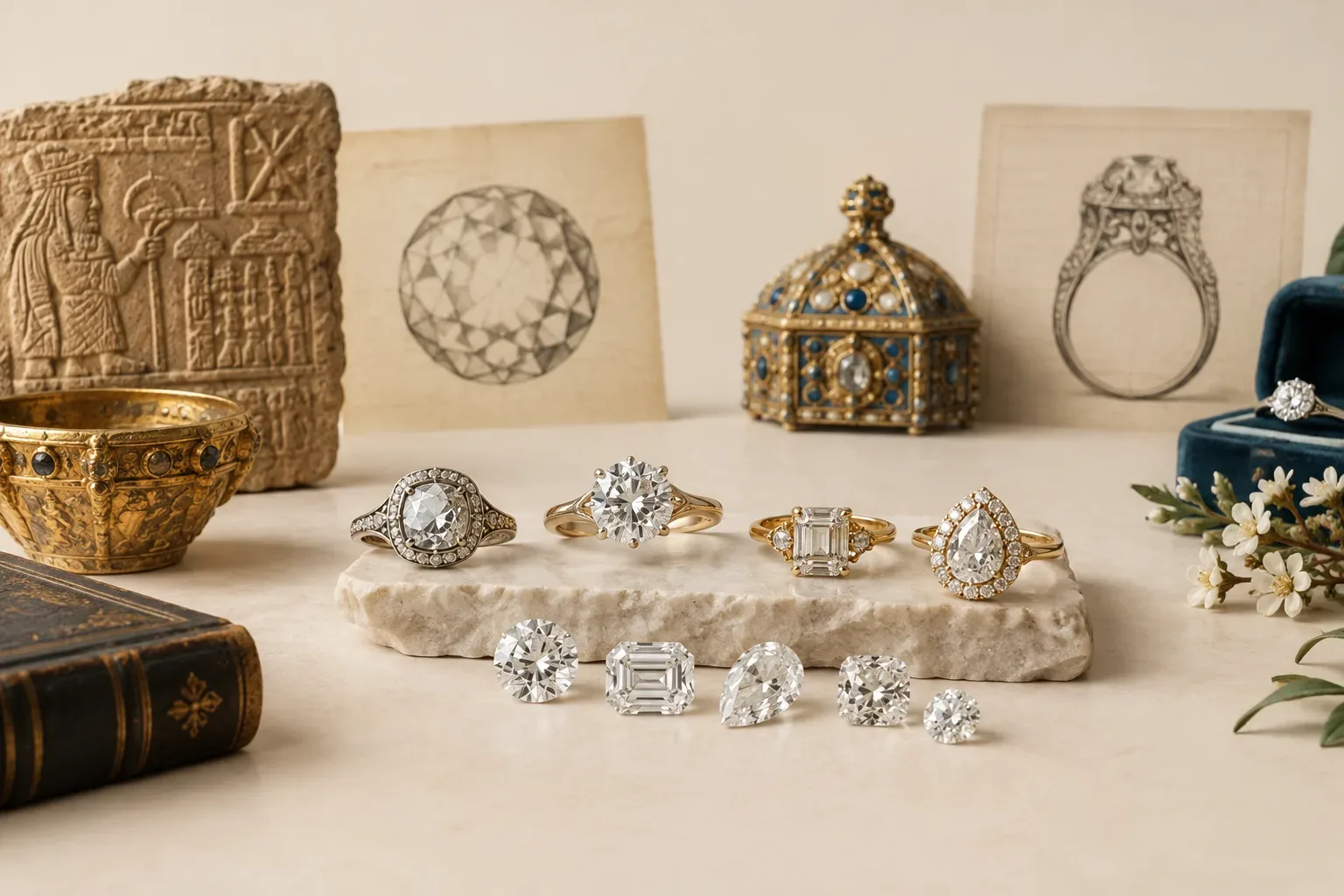
The Victoria and Albert Museum presents jewellery as a material record of changing techniques, tastes, and social meanings across time and place. Their work traces developments from the jewellery of Renaissance Europe through later British periods such as the Georgian and Victorian eras, and into the commercial, industrial, and design shifts of the 19th and 20th centuries. Use of diamonds, polishing techniques, and mounting choices shifted with available tools, diamond sources, and the social contexts in which jewels were worn.
The same museum’s resources on gemstones situate particular stones, including diamonds, within cultural and technical histories. These sources document how gem cutting and setting were not static: changes in lapidary skill and cutting styles reflect both technological innovations and evolving aesthetic priorities in specific regions and periods. The V&A materials make clear that many practices now seen as 'traditional' are the result of relatively recent technical and stylistic developments rather than ancient, unbroken customs.
Documented meanings versus modern personal interpretations
Documented historical meanings recorded by museums like the Victoria and Albert Museum emphasize social functions—display of wealth, civic identity, courtly fashion, mourning and memorial jewellery—rather than a single symbolic meaning for diamonds. For example, the prominence of diamonds in court jewellery often signified rank and access to luxury goods in a particular place and time, a social fact supported by museum collections and scholarship.
Modern personal interpretations—such as a diamond cut or ring style meaning "eternal love"—are often later cultural developments, popularized by 19th–20th century advertising, legal customs, and contemporary social practices. These modern readings are legitimate personal and cultural meanings, but they are distinct from the documentary evidence about how and why particular cuts and mountings were made and worn in earlier periods. The V&A materials make this distinction clear by focusing on material and social history rather than prescribing universal symbolism.
How cuts evolved and what they mean for beauty and durability
Cut refers to the proportions, facets, and overall shape fashioned by the lapidary. Changes in cutting styles recorded by museum collections and scholarship reflect both the desire to maximize a diamond’s sparkle and the limits of available cutting technologies. Different cuts emphasize different qualities: some shapes are designed to maximize light return and brilliance, while others emphasize broad, clean facets and geometric clarity.
From a practical viewpoint, the cut affects both visual performance and how a stone tolerates wear. Faceted brilliant-style cuts typically present strong scintillation and are often chosen for appearance, while step cuts show more of the stone’s clarity and can mask inclusions less effectively. Cuts with pointed corners or shallow girdles may be more vulnerable to impact; conversely, cuts with sturdier outlines or fewer sharp angles can be more forgiving in everyday wear. These are design considerations rather than universal values—choose according to the combination of desired look and the wearer’s routine activities.
Settings: how diamonds are held, protected, and presented
A setting is the metal framework or design that secures a diamond. Historical and museum records show many setting types appearing and becoming fashionable in particular contexts: settings evolved as metalsmithing techniques advanced and as jewellery function shifted from court display to private wear and later to mass-market consumption. Settings vary in how much they expose the gem and how well they protect it.
Practical differences among settings matter. Open settings that lift a stone to catch light may increase sparkle but can expose edges to knocks. Enclosed or bezel-style settings wrap the metal around the stone’s edge and tend to protect it from impact and dirt, at some cost to visible brilliance. Multi-stone pavé or channel settings create dramatic surface sparkle and can stabilize smaller stones, while tension settings hold a stone between two metal points for a contemporary look that requires highly precise engineering and care. Choosing a setting is therefore a trade-off among security, maintenance, comfort, and appearance.
How the motif appears in jewellery objects
Diamonds and their chosen cuts and settings appear across many object types: rings (especially engagement and signet rings), necklaces, brooches, earrings, and cufflinks. Museum collections demonstrate that the same core concerns—visibility, durability, and meaning tied to social context—shape these applications. For example, brooches and large parures historically showcased multiple stones and elaborate settings for ceremonial display, while everyday rings tended toward lower-profile settings that balanced beauty with wearability.
Contemporary jewellers and buyers now apply historical shapes and settings in new ways: antique cuts are often reinterpreted in modern settings; classic settings are scaled to contemporary tastes; and new alloys and finishing techniques influence how a setting interacts with light and wear. This continuity-with-change is visible in many museum collections and contemporary practice.
Practical, respectful guidance for choosing and gifting
Begin by considering the wearer’s lifestyle. If the recipient uses their hands a lot for work or sport, a lower-profile, protective setting and a durable metal will reduce the risk of damage. If the primary aim is brilliance and visual impact for occasional wear, a higher, more open setting with a cut that maximizes sparkle may be suitable.
Match metal and setting to durability needs and taste. Harder metals and protective bezel or channel settings are good when protection matters. For a glittering look in everyday wear, prong settings with secure prongs and regular maintenance can balance sparkle and security. Avoid assuming that a particular cut or setting carries the same personal meaning for every culture or individual; instead, ask about preferences and consider any cultural or religious practices that influence how jewellery is worn or received.
Ask for documented disclosures. The Federal Trade Commission advises consumers to request clear information about treatments, enhancements, and imitations when buying gemstones and diamonds. Request written confirmation of any treatments and insist on reputable certification for significant purchases. If provenance or historical authenticity matters, consult reliable museum or specialist resources and, if needed, a gemological laboratory report.
Respect personal and cultural contexts when gifting. Jewellery can be intimate and culturally charged; verify that a style, gemstone, or the act of gifting jewellery aligns with the recipient’s values and practical needs. If the recipient prefers sustainable or ethically sourced stones, request supply-chain information and consider alternatives such as lower-impact diamonds or lab-grown stones that meet the recipient’s standards.
Care and conservation basics
Routine care extends the life of both cut and setting. Clean stones gently with mild soap and water and a soft brush, and have settings inspected regularly for loose prongs or wear. For historically significant pieces or valuable antiques, consult a qualified conservator or reputable jeweller rather than attempting repairs yourself.
If you inherit or purchase an antique setting, document what is original and what has been altered. Museums such as the Victoria and Albert Museum emphasize the importance of provenance and documentation in understanding a piece’s historical context; similar care in private ownership preserves both value and meaning.
Final thought
The documented history of diamond cuts and settings shows change driven by technology, taste, and social use rather than a single timeless symbolism. Modern meanings are layered on that history. Choose diamonds and settings today by balancing beauty, durability, and the personal or cultural needs of the wearer, and rely on clear disclosures and reputable documentation for significant purchases.
Frequently asked questions
Does a particular diamond cut have a fixed historic meaning?
No single cut has a universal historic meaning. Museum research shows that cuts and settings primarily reflect available technology, fashion, and social use in particular places and periods; modern symbolic meanings are often later cultural interpretations rather than fixed historical facts.
Which setting is best if I worry about durability?
Choose a protective setting such as a bezel or channel for everyday durability, and prefer harder metals and secure craftsmanship. Low-profile settings reduce the chance of knocks. For specialized advice, consult a trusted jeweller about the wearer’s activities and the specific piece.
How can I be sure a diamond hasn’t been treated or misrepresented?
Follow the Federal Trade Commission’s guidance: ask the seller for written disclosure of any treatments or enhancements, request a reputable laboratory report for important purchases, and buy from established, transparent suppliers.
Are antique cuts less durable than modern cuts?
Antique cuts are not inherently less durable, but certain shapes or shallow girdles can be more susceptible to damage. Assess each stone with a jeweller who can advise on the combination of cut, setting, and intended use.
How should I respect cultural or personal meanings when gifting diamonds?
Ask about the recipient’s preferences and any cultural or religious practices that affect jewellery. Avoid assuming universal symbolism, and consider alternatives aligned with the recipient’s values, such as ethically sourced or lab-grown stones if those preferences are known.
Sources and further reading
- Bedazzled: A History of Jewellery — Victoria and Albert Museum
- An A-Z of Gemstones — Victoria and Albert Museum
- Buying Gemstones, Diamonds, and Pearls — Federal Trade Commission