Meaning at a glance
Diamond treatments and imitations have a long material and social history; documented museum records show changing craft and taste, while modern practice requires clear disclosure—ask sellers about treatment type, permanence, disclosure, testing, and resale value when buying or gifting.
The short answer
Diamond treatments and imitations are long-standing practices in the history of jewelry-making that have shifted in meaning over time; museums document these changes as matters of craft and fashion rather than fixed symbolic value. Today, buyers should assume that treatments or simulants may be present and ask direct questions about disclosure, testing, permanence, and how any treatment affects value and care before purchasing or gifting.
What we mean by "treatments" and "imitations"
In modern gem trade language, a treatment is any deliberate change to a gemstone’s appearance or durability, such as laser drilling, high-temperature annealing, fracture filling, or coating. An imitation or simulant is a material made to look like a diamond—glass, cubic zirconia, moissanite, or synthetic diamond simulants—while a synthetic diamond is a real diamond grown in a lab rather than formed in nature.
The distinction matters: treatments alter a natural stone, while imitations substitute a different material. Both have practical implications for appearance, longevity, care, and market value.
Documented historical evidence and cultural contexts
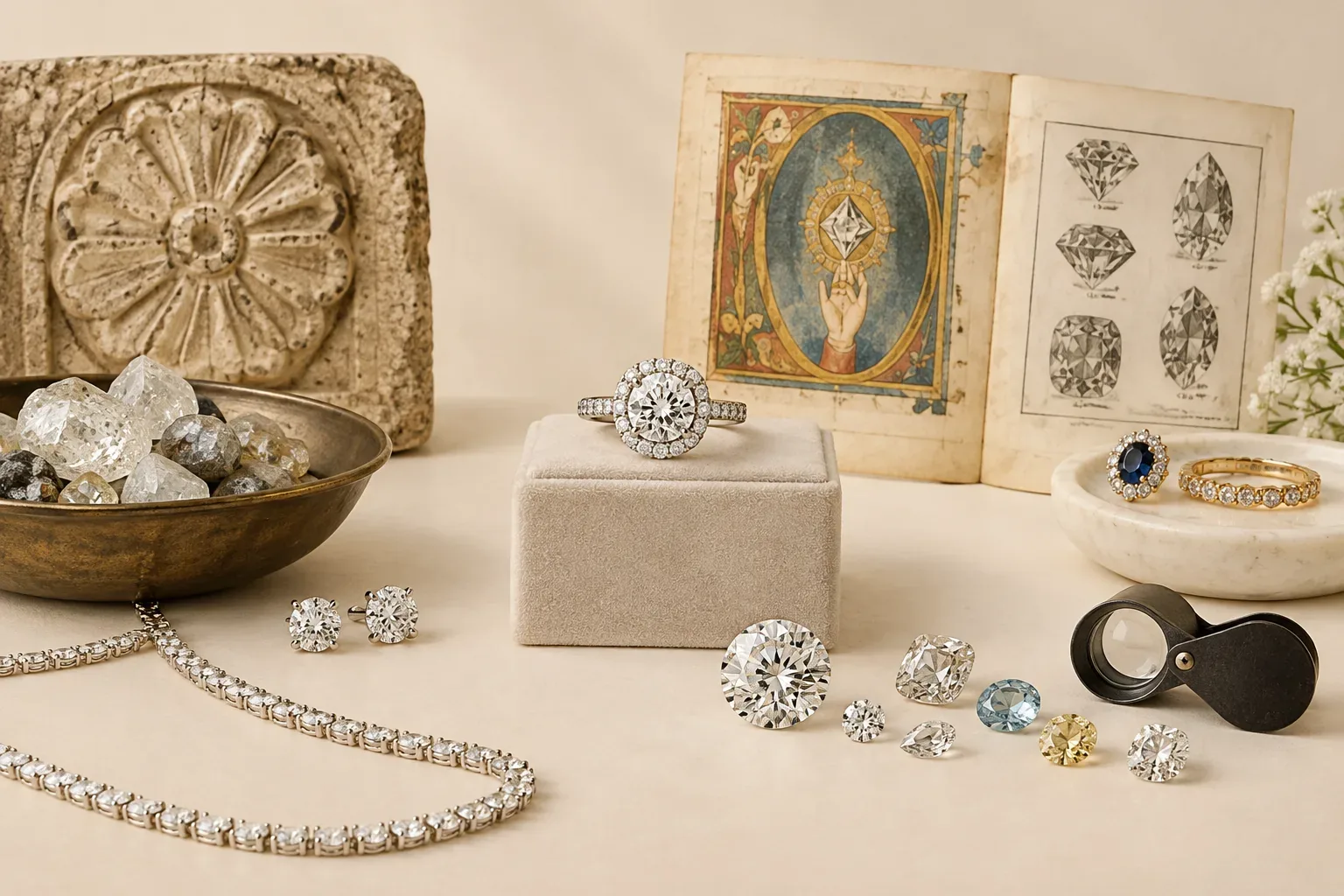
The Victoria and Albert Museum (V&A) places the development of many gemstone fashions and technical interventions in a social and craft history rather than as unchanging symbols. The museum’s exhibition and essays trace how jewelers through different periods adopted new cutting techniques, surface finishes, and substitute materials to meet changing tastes and economic circumstances. These records show that altering or substituting gem materials has been a regular part of jewellery making rather than a modern anomaly.
The V&A’s reference material on gemstones outlines how different cultures and periods have prized particular stones, experimented with treatments and imitations, and used technological innovations to mimic more costly materials. This documentation demonstrates that what counts as desirable, acceptable, or deceptive has varied widely by time and place, often reflecting social status, trade networks, and available technology.
Separating documented history from modern personal interpretations
Museum documentation such as that published by the V&A records techniques, trade practices, and the changing popularity of materials; it does not assign a single, universal symbolic meaning to treatments or imitations. Historical uses—such as substituting more affordable materials for mass-market pieces or using new cuts to imitate sparkle—are matters of craft and commerce. Those are documented facts, not theological or cultural prescriptions.
Modern personal or popular interpretations—claims that a treated diamond carries an inherent moral or sentimental deficiency, for example—are contemporary attitudes that may reflect marketing and social norms rather than historical precedent. Buyers who value a particular symbolic meaning should be explicit about that meaning when selecting or commissioning jewellery rather than assuming that any treatment automatically changes the piece’s sentimental value.
How treatments and imitations appear in jewelry today
Treatments can be subtle. A laser-drilled diamond may have tiny channels sealing inclusions, high-pressure high-temperature (HPHT) processes can change color, and fillings can improve apparent clarity. Coatings can add color or enhance sparkle but may wear over time. These interventions are often used to improve appearance, stabilize a stone, or make lower-grade material marketable.
Imitations appear in many forms across jewellery styles. Costume pieces commonly use glass or cubic zirconia for affordability and light performance. Moissanite, with optical properties closer to diamond, is used for higher-end simulants. Synthetic diamonds, grown in labs, are chemically and physically diamond yet differ in origin. Each option behaves differently in wear, cleaning, and resale.
What to ask before you buy: practical questions and why they matter
Start by asking the seller to describe the stone in writing. Request a clear statement about whether the stone is natural, treated, synthetic, or a simulant and ask for the specific treatment method if applicable. According to the U.S. Federal Trade Commission (FTC), sellers should disclose material treatments and imitations; asking for written disclosure protects you and clarifies expectations.
Ask whether there is any gemological testing or certification and, if so, which laboratory issued it. Certified reports can confirm natural origin, treatment status, and other properties but vary in scope and detail. If no laboratory report exists, consider an independent appraisal or testing, especially for higher-value purchases.
Clarify permanence and care. Some treatments are stable and permanent, while others—such as surface coatings or fracture fills—can be damaged by heat, chemicals, or routine repair work. Ask how routine maintenance, resizing, or repair might affect the stone, and whether a jeweller recommends particular cleaning methods.
Discuss value and resale implications. Treated natural diamonds and simulants typically command lower resale prices than untreated natural diamonds. If future resale or inheritance is a consideration, insist on full disclosure and documentation of any treatment or synthetic origin.
If you care about origin or ethical concerns, ask additional questions about sourcing and whether any chain-of-custody documentation exists. Lab-grown diamonds often appeal for different ethical reasons than mined diamonds; whether that matters depends on the buyer’s priorities.
Choosing, gifting and wearing with respect
Select a piece with clear information about materials and treatments when symbolism, provenance, or investment value matters. If you are buying a gift and the recipient places importance on natural, untreated stones, verify this in writing to avoid unintended disappointment.
If affordability and appearance are the primary goals, a high-quality simulant or lab-grown diamond can be a respectful and beautiful choice. Explain your decision when appropriate: a note that says why you chose that stone—practicality, environmental concerns, or budget—can make a gift feel thoughtful rather than concealed.
When commissioning or caring for jewellery, work with a qualified jeweller who will discuss how treatments affect repair and maintenance. Respect older pieces: historic jewellery that uses period-appropriate imitations or treatments should be conserved by specialists who understand the original materials and methods, as noted by museum conservation practice.
Quick checklist for in-store and online purchases
Obtain written confirmation of whether a diamond is natural, treated, synthetic, or a simulant. Ask for the specific treatment names and whether any certification or lab report accompanies the stone. Confirm the recommended care, any restrictions on repairs, and how treatments affect valuation. If buying online, save all product descriptions and seller communications and verify that return policies permit independent testing. If any answer is vague or evasive, consider walking away or seeking a second opinion.
Conclusion
The history of diamond treatments and imitations is a long story of changing technology, fashion, and social meaning, documented in museum collections and essays such as those by the Victoria and Albert Museum. Today’s consumers benefit from that historical perspective while relying on current disclosure standards and testing practices. Ask direct questions about origin, treatment, certification, care, and resale implications, and make choices—whether for purchase or gifting—based on documented facts and the recipient’s values rather than untested assumptions.
Frequently asked questions
Do sellers have to disclose diamond treatments and imitations?
In many jurisdictions, including guidance from the U.S. Federal Trade Commission, sellers are expected to disclose treatments, synthetic origin, or imitation status. Always request written disclosure and, if needed, an independent lab report.
How can I tell whether a diamond is treated, synthetic, or a simulant?
Visual inspection alone is unreliable. Certified gemological testing from a recognized lab can determine whether a stone is natural, treated, lab-grown, or a simulant. When certification is absent, consider an independent appraisal or testing before purchase.
Are treated diamonds less valuable than untreated ones?
Generally, certain treatments that improve appearance may lower a stone’s resale value compared with comparable untreated natural diamonds. The extent depends on the type of treatment, permanence, and market perception.
Can treatments be undone or will they wear off?
Some treatments are permanent and stable, while others—like surface coatings or fracture fills—can degrade with heat, cleaning, or repair. Ask the seller about permanence and recommended care to avoid accidental damage.
Is a lab-grown diamond the same as an imitation?
No. Lab-grown diamonds are chemically and physically diamond but differ in origin. Simulants are different materials meant to look like diamond. Each category has distinct implications for value, symbolism, and care.
What should I do if a seller refuses to disclose treatment or origin?
If disclosure is refused or evasive, consider walking away, seek another seller, or insist on independent testing. Keep written records of all communications and consider consumer protection resources in your jurisdiction.
Sources and further reading
- Bedazzled: A History of Jewellery — Victoria and Albert Museum
- An A-Z of Gemstones — Victoria and Albert Museum
- Buying Gemstones, Diamonds, and Pearls — Federal Trade Commission