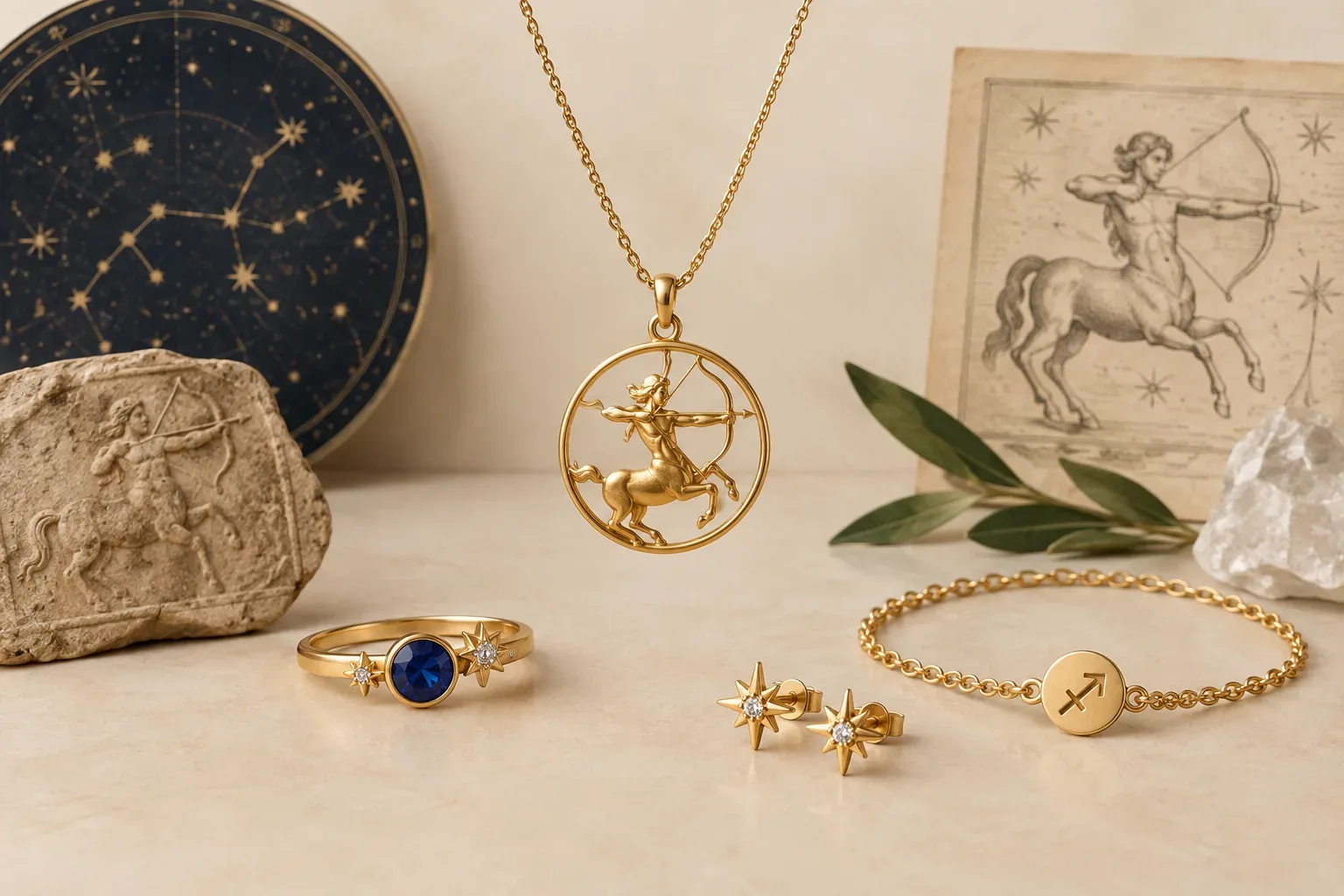
Meaning at a glance
The sagittarius jewelry meaning rests on a long Western visual tradition that links the archer or centaur image to the constellation and zodiac; museums such as the Victoria and Albert Museum document how mythological and astrological motifs entered jewellery across periods, while modern astrological personality meanings are contemporary interpretations. This article separates documented historical contexts from modern uses, describes how the motif and gemstones appear in jewellery, and offers practical guidance for selection and gifting with attention to materials and disclosure.
Documented historical evidence and cultural origins
The visual roots commonly associated with Sagittarius in Western jewellery come from the centaur-archer and related constellation imagery of Greco-Roman tradition. Collections and exhibitions that trace the history of jewellery note that mythological figures and astronomical motifs were adopted into personal adornment in classical antiquity and reappeared in medieval and Renaissance European contexts as decorative and learned themes. The Victoria and Albert Museum has discussed how jewellery designs changed with tastes and beliefs, incorporating a wide range of iconography from myth and the heavens into wearable objects.
Across periods, jewellery served varied social and cultural functions: it could display status, signify learning or affiliation, or simply carry fashionable motifs. The use of zodiac and constellation imagery in European jewellery is part of that wider pattern of borrowing from literature, religion, and scholarly interests. The V&A's historical treatment emphasizes changing social context and fashion as primary drivers for the appearance and reappearance of such motifs in different eras.
Separating documented historical meanings from modern interpretations
Documented historical meanings for archer and constellation imagery in jewellery are pragmatic and context-dependent: they include decorative use, expressions of erudition, and references to myth or cosmology that resonated with a particular owner or patron. Museum scholarship, including material presented by the Victoria and Albert Museum, highlights those social and stylistic contexts rather than a single, fixed symbolic definition for the motif.
By contrast, many of the personality traits and moral qualities now commonly associated with Sagittarius—such as restlessness, independence, optimism, or a love of travel—are products of modern astrological practice and contemporary popular culture. These are living, personal interpretations people attach to the sign today. They are meaningful to individuals who identify with them, but they should not be described as historically documented meanings embedded in older jewellery traditions.
How the Sagittarius motif and related traditions appear in jewellery
Designers draw on Sagittarius in a few consistent visual ways: figurative depictions of a centaur with bow, simplified archer glyphs or arrow motifs, and stylized constellation patterns. Those graphic forms are translated into pendants, charms, rings, brooches, and engraved surfaces. Zodiac lockets and medallions that combine an astrological symbol with a portrait or inscription are also part of the broader zodiac motif tradition found in European decorative arts.
Gemstones enter the picture in two ways. Historically, gems have been used for their color, status, and perceived properties; museum sources such as the Victoria and Albert Museum's A–Z of Gemstones discuss how specific stones were chosen for visual effect and social meaning in different periods. In contemporary Sagittarius-themed jewellery designers may select stones for color harmony, birth-month associations, or personal meaning, but there is no single historically mandatory gem for the motif across cultures.
Material, authenticity, and buyer guidance
When selecting Sagittarius-themed jewellery, consider both symbolic intent and material practicalities. Choose metals and settings that match the recipient’s wear habits and allergies; for example, opt for higher-karat gold or plated base metals depending on budget and sensitivity. For gemstones, the Victoria and Albert Museum’s guidance on gemstones highlights how treatment, rarity, and craft all affect how a stone is used in jewellery historically and now.
Be attentive to disclosure about gem treatments, synthetics, and imitations. The U.S. Federal Trade Commission provides clear consumer advice about buying gemstones, diamonds, and pearls and stresses the importance of honest disclosure from sellers regarding treatments and whether a gem is natural, lab-grown, or simulated. Ask the retailer for written information about treatments and for any available certificates when a gemstone’s origin or treatment is important to you.
Practical and respectful choices for selection and gifting
Match the form of the piece to the occasion and the person. If the gift is for everyday wear, favor durable metals, secure settings, and designs that sit comfortably with the recipient’s style; if the intent is symbolic, choose a motif style—literal centaur, minimal arrow, or constellation dots—that matches how openly the recipient expresses astrological identity. Personalization, such as engraving a short message or selecting a birthstone based on the recipient’s preferences, makes the piece more meaningful than relying on any assumed universal symbolic meaning.
Be respectful of cultural and religious contexts. Some wearers prefer subtle or abstract zodiac references rather than overt mythological imagery. If you are gifting across cultures or to someone who has different beliefs about astrology, check whether they value astrological symbolism and be prepared to explain your intention clearly and sensitively.
Care, attribution, and research tips
Care for Sagittarius jewellery as you would any fine piece: follow the maker’s care instructions, avoid harsh cleaners on delicate stones or finishes, and store pieces separately to prevent scratches. For antique or vintage zodiac pieces, provenance and maker marks help establish age and authenticity; museum collections demonstrate how techniques and styles change over time, which can help place a piece in its proper historical context.
When researching a particular piece’s history or symbolism, use museum catalogues and specialist resources. The Victoria and Albert Museum is a reliable starting point for understanding how motifs like mythological figures and constellations entered jewellery design, and the V&A’s gemstone guides explain historical and material considerations for stones. For consumer protection and accurate claims about gem treatments and authenticity, consult the Federal Trade Commission’s guidance before purchase.
Frequently asked questions
What does sagittarius jewelry mean?
Sagittarius-themed jewellery typically references the Western archer or centaur associated with the constellation and zodiac. Historically, that imagery was used as a decorative and learned motif in European jewellery rather than carrying a single fixed symbolic meaning; many of the personality traits now linked to Sagittarius are modern astrological interpretations people apply personally.
Is the Sagittarius motif an ancient symbol in jewellery?
Variations of centaur and archer imagery appear in Greco-Roman art and later in medieval and Renaissance European decorative traditions, and museum scholarship such as the Victoria and Albert Museum discusses how mythological and astronomical imagery entered jewellery design over time. However, specific meanings have shifted by period and context.
Are there traditional gemstones for Sagittarius jewellery?
There is no single historically mandatory gemstone for Sagittarius across cultures. Gemstones have been chosen historically for color, status, and perceived properties; the Victoria and Albert Museum’s resources describe how stones were used in different periods. If a modern wearer values a particular birthstone or color, choose stones based on personal preference and the seller’s disclosure about treatments.
How can I verify a gemstone’s authenticity or treatment?
Ask the seller for written information about any treatments and for certificates from recognized gemological labs when appropriate. The Federal Trade Commission advises consumers to seek honest disclosure about treatments, whether a gem is natural, lab-grown, or simulated, and to request documentation for valuable purchases.
Is it respectful to give Sagittarius jewellery as a gift?
Yes, when done thoughtfully. Match the design to the recipient’s aesthetic and beliefs, choose durable materials for regular wear, and be sensitive to how openly the recipient identifies with astrology. Personalization such as an engraving or a carefully chosen stone can make the gift more meaningful.
How should I care for Sagittarius-themed jewellery?
Care depends on the materials used. Follow the maker’s care instructions, avoid chemical exposure for delicate stones or finishes, and store pieces separately to prevent scratching. For antique or vintage items, consult a specialist before any cleaning or repair to protect historical integrity.
Sources and further reading
- Bedazzled: A History of Jewellery — Victoria and Albert Museum
- An A-Z of Gemstones — Victoria and Albert Museum
- Buying Gemstones, Diamonds, and Pearls — Federal Trade Commission