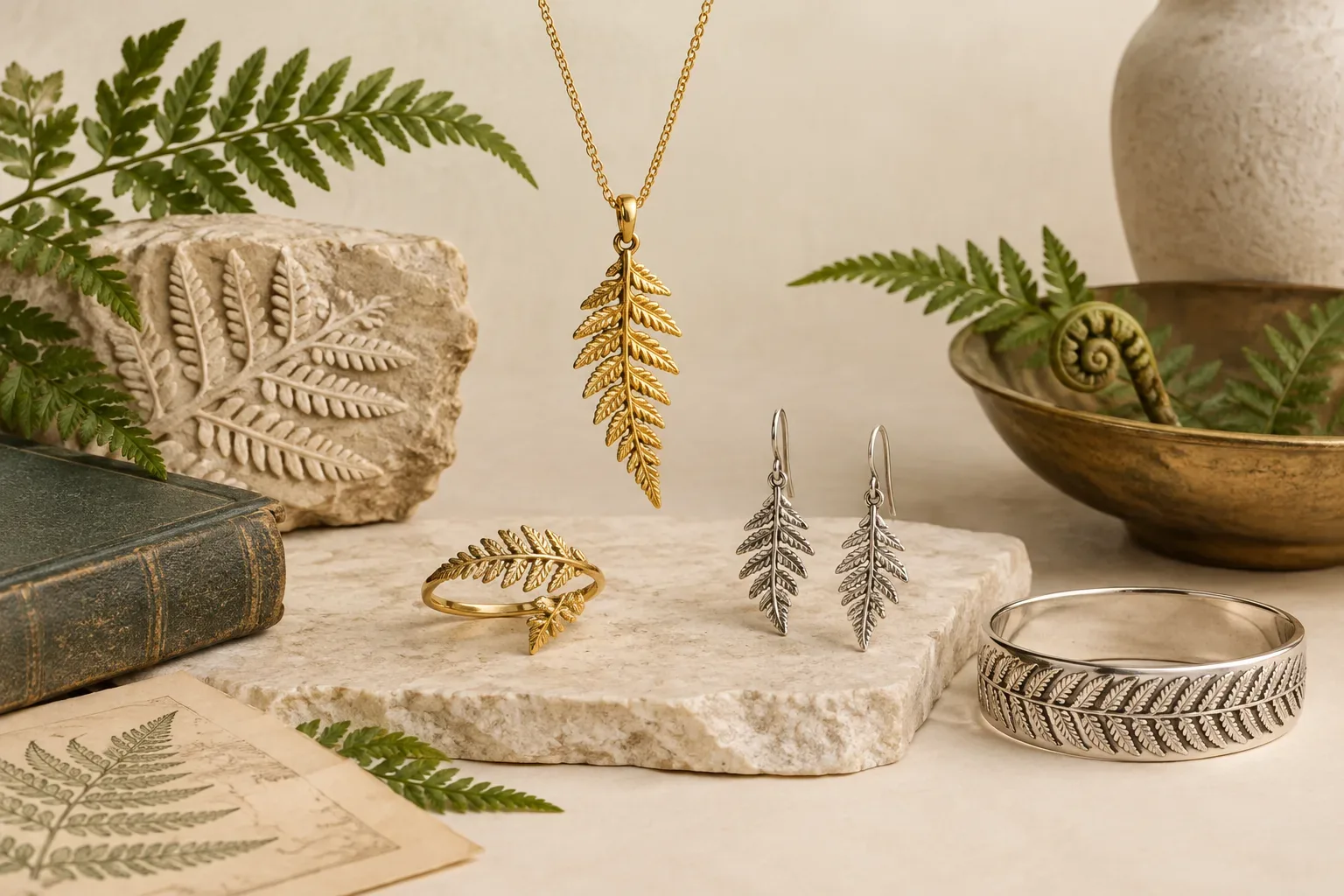
Meaning at a glance
Museum records show that plant motifs, including stylized ferns, appear at different times and in various techniques in jewellery; documented historical uses are largely decorative and stylistic, while modern associations such as new beginnings or resilience are contemporary personal meanings; choose fern jewellery by considering design style, materials, gemstone disclosure, cultural context, and the recipient’s preferences.
What the historical record shows (museum evidence and periods)
The Victoria and Albert Museum (V&A) documents the long, changing history of jewellery and how botanical motifs have been used across styles and epochs. The V&A collection and commentary emphasize that jewellers have repeatedly adopted plant forms—flowers, leaves, and occasionally fern-like fronds—for decorative effect, adapting them to the technical and aesthetic conventions of each period. The museum’s work on jewellery history makes it clear that the meaning attached to plant motifs has shifted as fashion, materials, and social contexts changed, rather than remaining fixed.
Surviving pieces and catalogues in museum collections typically show the fern as part of a broader naturalistic vocabulary. For example, nineteenth-century naturalism and Arts and Crafts approaches revived close observation of nature in ornament, which led makers to render leaves, stems, and fronds in detailed metalwork and enamel. Earlier and later periods also reused plant forms, but the way they were rendered and displayed depends on the period’s taste, available techniques, and patrons’ preferences. The V&A caution in its exhibitions and essays is helpful: motifs circulate and are reinterpreted, and museum records often record style and technique more reliably than a single symbolic meaning.
Documented cultural meanings versus modern interpretations
Museum documentation rarely links a single, consistent spiritual or cultural meaning to the fern across all times and places. Where a clear cultural or religious meaning exists for a motif, curators and catalogues usually tie that meaning to specific objects, makers, or communities and explain the evidence. The V&A’s approach to jewellery history stresses provenance, context, and changing social function; if a community or period assigned a particular symbolic value, museum records will typically reference that evidence.
By contrast, many of the popular meanings you will encounter today—fern as symbol of new beginnings, protection, eternal youth, or resilience—are modern, widely shared interpretations rather than continuations of a single documented historical tradition. Those contemporary readings are personal, poetic, or influenced by modern literature, design trends, and marketing. They are valid as present-day meanings for wearers who choose them, but they should not be presented as universal or as an unbroken historical tradition unless tied to specific documentary evidence.
How the fern motif, gemstones, and traditions appear in jewellery
The fern motif enters jewellery through form, technique, and surface treatment. Historical and modern makers realize fern shapes as engraved or chased leaf patterns, openwork silhouettes, cast charms, pierced metal pendants, and delicately enamelled fronds. These approaches reflect the broader technical vocabulary of jewellery production documented by the V&A: engraving and chasing for surface detail, casting for repeated forms, enamelling and stone inlay for colour, and filigree or openwork to suggest the lightness of foliage.
Gemstones and pearls have long been combined with botanical motifs to provide colour, sparkle, or symbolic contrast. The V&A’s materials guidance places such combinations in the broader history of gem use in jewellery—makers have historically chosen stones for colour, price, and the technical suitability of setting methods. For modern buyers, the Federal Trade Commission’s consumer guidance is particularly relevant: disclosures about gemstone treatments, imitations, and the provenance of materials are important when purchasing pieces that pair a motif with colored stones or pearls. Ask sellers whether stones are natural, treated, or synthetic and request any available paperwork.
Choosing and gifting fern jewellery: practical and respectful guidance
Start from the recipient’s taste and the context of the gift. Fern motifs appear in a wide range of styles—from highly realistic, botanical renderings to stylized, geometric interpretations. If the recipient prefers minimal, contemporary jewellery, look for small, clean-line pendants or studs. If they prefer vintage or romantic styles, seek pieces with detailed engraving, enamel, or seed pearls that echo historical naturalism. Consider the metal and finish for daily wear: solid precious metals or good-quality vermeil are more durable than plated costume jewellery.
Be attentive to authenticity and disclosure. The Federal Trade Commission advises consumers to ask sellers about gemstone treatments, synthetic materials, and repair or plating history before buying. Request written confirmation for significant purchases. For antique or vintage fern pieces, provenance and condition reports from reputable dealers or auction houses add assurance.
Respect cultural meanings and personal identity. Because modern interpretations of fern symbolism vary, avoid assigning a single ‘correct’ meaning as a motive for a gift unless you know the recipient appreciates that interpretation. If you intend a symbolic message—such as encouragement for someone starting a new chapter—explain your intention when you give the piece so the recipient understands the personal meaning you attach to it. If the recipient has cultural or religious backgrounds where plant symbols carry specific significance, do a little research or ask respectfully to avoid unintended offense.
Consider practicalities of wear and care. Delicate openwork or enamel can be beautiful but may need careful handling. If the recipient is active, choose a sturdier setting and a secure clasp. Provide simple care guidance with the gift: keep jewellery away from harsh chemicals, store pieces separately to avoid abrasion, and use a soft cloth to clean metals. For pieces with coloured gems or pearls, follow any specialist care recommendations and check whether the seller provided information about treatments.
Care, authentication, and further research
For authenticity and value, ask for documentation on materials and treatments. The FTC’s consumer guidance explains the seller’s responsibility to disclose treatments, imitations, and whether a gemstone is natural or synthetic. For high-value purchases, independent gemological reports or certificates give additional reassurance.
If you want to research a specific piece’s history or symbolism further, consult museum catalogues, auction records, and maker archives. The V&A’s catalogues and essays on jewellery are a useful starting point for understanding how motifs were used in particular periods and for tracing stylistic lineages. For personal meanings, primary accounts—letters, inscriptions on lockets, or provenance notes—are often the clearest evidence of what a given object meant to its original owner.
Frequently asked questions
Does the fern have a single historical meaning in jewellery?
No. Museum documentation shows plant motifs including ferns have been used decoratively in different periods and styles; there is not one universal historical meaning attached to the fern across all cultures and times. Modern symbolic readings are usually contemporary personal or popular interpretations rather than a single continuity from the past.
Are fern motifs more likely to be found in certain historical periods?
Fern-like and botanical motifs appear at many points in jewellery history, but their popularity and manner of depiction change with style movements. Institutions like the Victoria and Albert Museum illustrate how naturalistic detail rose in prominence during movements that valued close study of nature, while other eras rendered plant forms more abstractly.
How can I verify the stones in a fern-themed piece?
Ask the seller for written disclosure about whether stones are natural, treated, or synthetic and request any certificates. The Federal Trade Commission recommends that consumers request clear information about gemstone treatments and any imitations before purchase.
Is it respectful to give fern jewellery as a symbolic gift?
Yes, if you are clear about your intention and considerate of the recipient’s background. Modern symbolic meanings are personal and often appreciated, but avoid assuming a single meaning applies to everyone. If the recipient has cultural traditions where plant symbols carry specific meanings, take time to learn or ask respectfully.
How should I care for delicate fern pendants with enamel or openwork?
Store such pieces separately to avoid abrasion, keep them away from harsh chemicals and perfumes, and clean metals with a soft cloth. For enamel or fragile settings, avoid ultrasonic cleaners and follow any specialist care advice provided by the seller.
Sources and further reading
- Bedazzled: A History of Jewellery — Victoria and Albert Museum
- An A-Z of Gemstones — Victoria and Albert Museum
- Buying Gemstones, Diamonds, and Pearls — Federal Trade Commission