Meaning at a glance
Candle jewelry meaning combines long-standing associations of light, remembrance, and sentiment documented in museum collections with many newer, personal uses; choose pieces with sensitivity to cultural context and ask about materials and treatments when buying.
Quick answer
The candle jewelry meaning traces to long-standing symbolic uses of light and flame—most often associated with remembrance, vigil, hope, and illumination—documented in jewelry histories held by museums such as the Victoria and Albert Museum. Over time the motif has been adapted for sentimental, religious, political, and pure-fashion uses; modern wearers often add personal interpretations. When buying or gifting candle-themed jewelry, give weight to documented contexts, respect the recipient's beliefs, and confirm material and treatment disclosures from the seller.
Historical evidence, and which cultures or periods the evidence represents
Evidence for the candle and related light motifs in jewelry comes primarily from studies of changing decorative language and technique rather than from a single, continuous tradition. The Victoria and Albert Museum documents how motifs shift meaning as social contexts change, showing that imagery connected to light and flame regularly appears in European and wider collections of jewellery across many periods as an emblem of sentiment, remembrance, or status. Those museum resources emphasize that designers have reused and reinterpreted familiar visual themes—such as torches, flames, and lamps—within different cultural and historical settings.
Because museums like the Victoria and Albert Museum present material from many eras, the documented occurrences are best read as examples rather than proof of a single, universal meaning. In Western European jewellery histories, for instance, visual references to light and flame often surface in sentimental or memorial pieces where the image works alongside inscriptions and portraiture to express memory or guidance. Other traditions use light imagery differently: votive lamps or candle-bearing iconography appear in religious objects, while secular adaptations translate the same visual language into fashion or status symbols. The museum perspective stresses context: the same flame motif can mean devotion in one object and fashionable allegory in another.
Documented historical meanings versus modern personal interpretations
Documented historical meanings are the associations that museums and curatorial accounts identify in surviving objects and archives. Institutions such as the Victoria and Albert Museum describe how jewellery functions within its social moment—often as a marker of mourning, a token of guidance or hope, or an emblem of enlightenment and education. These documented meanings rely on object provenance, inscriptions, materials, and the cultural environment in which the pieces were made and worn.
Modern personal interpretations are the meanings wearers and makers attribute today that are not necessarily recorded in historical documentation. Contemporary interpretations may include solidarity during vigils, political protest, personal recovery narratives, or purely aesthetic choice. These are valid as personal expression, but they differ from the historically documented readings because they arise from present concerns and identities rather than the original object's social context. It is important not to conflate a modern individual's intent with the proven historical use of similar motifs.
How the candle motif, gemstone, or tradition appears in jewelry
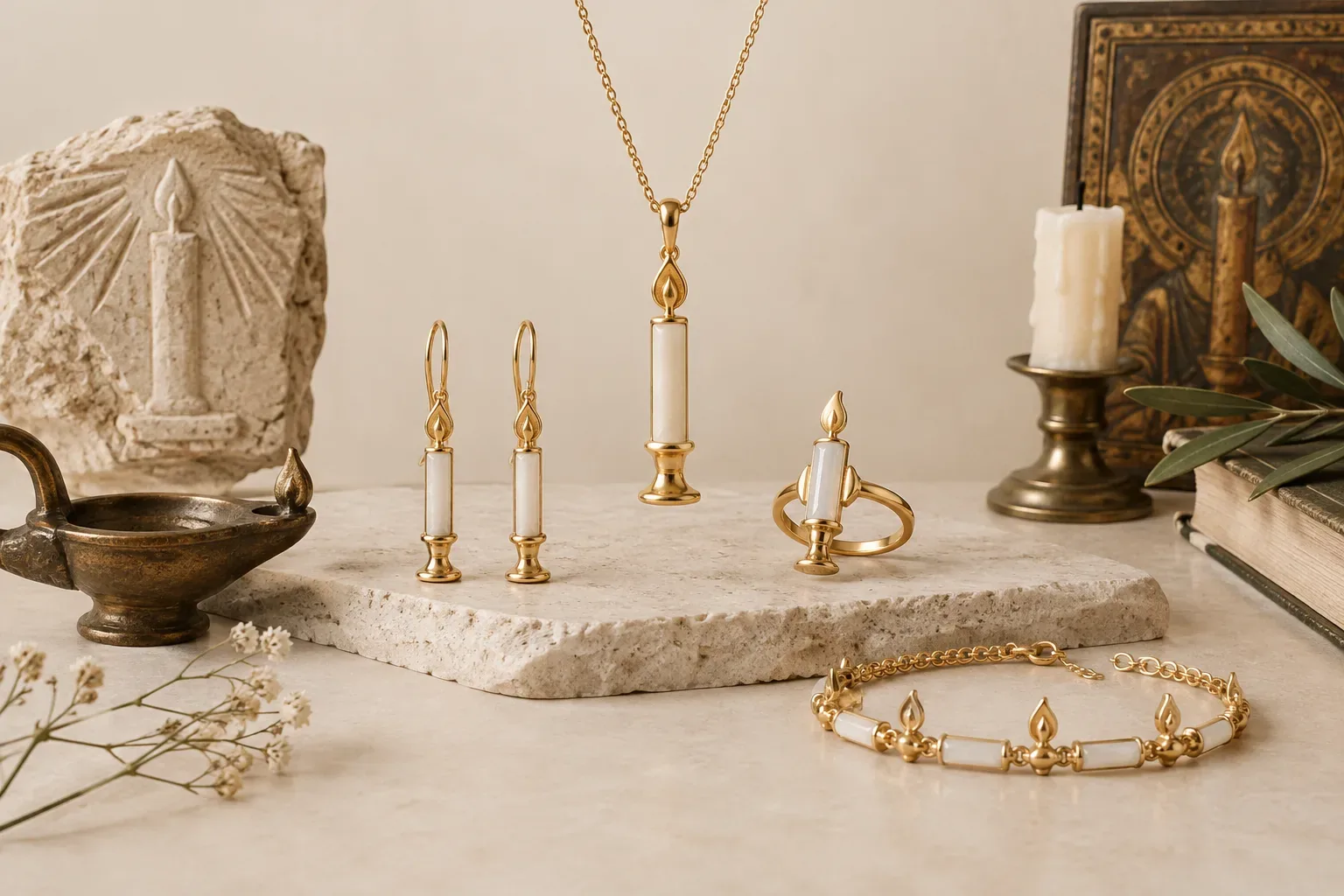
Designers and historic makers use several visual strategies to convey candle- or flame-related meaning. Literal representations appear as miniatures—small pendants or brooches shaped like a candle, a candlestick, a lamp, or a stylized flame. More abstract treatments employ a flame silhouette, engraved or pierced metalwork, or enamel panels that suggest flickering color. Makers also use inscriptions and paired motifs such as wreaths, hands, or portrait miniatures to anchor the image in a memorial or sentimental register.
Gemstones and techniques are often selected to heighten the idea of light. Warm-colored stones and translucent materials capture a flame’s color and glow, while faceted clear stones and diamonds connote brilliance. Enamel work and reflective metal finishes help simulate flame and luminosity. The Victoria and Albert Museum’s resources on jewellery history and craft demonstrate that makers have long combined color, cutting, and surface treatment to suggest qualities associated with light and heat.
Gemstones and materials associated with candle-themed pieces
Colour and optical effect are principal considerations when jewellers select gemstones for candle-themed designs. Yellow and orange stones such as citrine, topaz, and amber, and red stones like garnet, have historically been used where a warm, flame-like hue is desired. Clear, well-cut stones and diamonds can stand in for brightness or divine light. The Victoria and Albert Museum’s A–Z of Gemstones explains how individual gem properties—colour, translucency, and historical associations—contribute to the symbolic role they play in jewellery.
Buyers should also note that many gemstones are treated to enhance color or clarity. The Federal Trade Commission recommends that sellers disclose significant treatments, imitations, or enhancements. If the symbolic intent depends on a particular color or material authenticity—for instance, choosing natural amber for its historical associations—ask the seller for written confirmation about treatments and origin.
Practical and respectful selection or gifting guidance
When selecting candle-motif jewelry as a purchase or a gift, start by thinking about the recipient’s cultural and religious background. Because light and candles carry spiritual meanings in many faiths, a candle motif can be consoling and appropriate for someone who observes that tradition, but it may be awkward or misunderstood in other contexts. If you are unsure, choose a design that is clearly secular or ask the recipient whether they would welcome a symbol tied to remembrance or spirituality.
Match the form of the piece to how it will be worn. A subtle flame silhouette or a small pendant suits everyday wear and allows the recipient to attach a private meaning. A larger, highly literal candlestick pendant may read as a statement piece or a commemorative object. For memorial or condolence gifts, pair the piece with a note that explains your intent; explicit language can prevent misreading and respect the recipient’s process of grief.
Always ask sellers about materials and treatments. The Federal Trade Commission’s guidance on buying gemstones, diamonds, and pearls encourages buyers to seek clear disclosure of any treatments or imitations and to request certificates from reputable labs when appropriate. For bespoke or higher-value pieces, consider working with a maker who will document materials, or ask for a simple hallmarked or appraised statement so the recipient can keep the provenance with the jewelry.
Care, authenticity, and ethical notes
Care for candle-motif jewelry like you would for other fine jewellery: avoid exposing fragile stones or enamel to heat and chemicals, store pieces separately to prevent abrasion, and service settings periodically. Enamel and delicate inlays that depict flame detail may require specialist repair if damaged.
On authenticity and ethics, consult the seller about gem treatments, country-of-origin, and responsible sourcing. The Federal Trade Commission points out that buyers should be informed about material treatment and imitation; clarity is particularly important when symbolic meaning depends on a natural stone or a traditional technique. If ethical sourcing matters to you or your recipient, ask for supplier policies or certifications and consider makers who publish transparent sourcing practices.
Closing summary
Candle jewelry meaning sits at the intersection of documented historic practices and ongoing personal reinterpretation. Museum documentation (for example, work and collections described by the Victoria and Albert Museum) shows how motifs of light and flame have recurred and shifted in social meaning across periods. Contemporary wearers continue to find new relevance in the motif—sometimes echoing older associations of remembrance or guidance, and sometimes creating wholly new meanings. When choosing or gifting candle-themed jewellery, balance respect for documented context with the recipient’s own beliefs, and follow good buying practice by checking materials and treatments as recommended by consumer guidance.
Frequently asked questions
Is candle jewelry always religious or memorial?
No. While museums such as the Victoria and Albert Museum document that motifs of light and flame often appear in memorial and devotional jewellery, the motif has also been used for secular fashion, allegory, and purely decorative effect. Modern wearers may attach religious, memorial, political, or purely aesthetic meanings; none of these is universal.
Which gemstones best convey a candle or flame motif?
Gemstones with warm tones or high brilliance tend to convey flame or light, for example citrine, topaz, amber, garnet, and well-cut clear stones. The Victoria and Albert Museum’s A–Z of Gemstones explains how colour, translucency, and cutting influence symbolic effect.
How can I gift candle-themed jewelry respectfully?
Consider the recipient’s cultural and religious background and whether the symbol may be consoling or potentially sensitive. Choose a subtle design if you are unsure, include a note that explains your intent, and ask the recipient beforehand if appropriate.
How do I check a gemstone’s authenticity or treatment?
Ask the seller for written disclosure of any treatments, enhancements, or imitations. The Federal Trade Commission recommends that buyers request clear information and, for higher-value pieces, certification from recognized gemological laboratories.
Are there special care considerations for candle-motif pieces?
Treat delicate details such as enamel, small inlays, and thin prongs with care. Avoid exposing these pieces to heat or harsh chemicals, store them separately to prevent abrasion, and have settings checked periodically by a jeweller.
Sources and further reading
- Bedazzled: A History of Jewellery — Victoria and Albert Museum
- An A-Z of Gemstones — Victoria and Albert Museum
- Buying Gemstones, Diamonds, and Pearls — Federal Trade Commission