Meaning at a glance
Documented sources trace the door motif and related architectural elements into jewelry across historical periods; modern interpretations emphasize thresholds and new beginnings, and practical guidance helps you choose and gift door-themed pieces with care.
What the historical evidence shows
Collections and curatorial scholarship at the Victoria and Albert Museum illustrate that jewel motifs are dynamic: forms borrowed from architecture, tools, plants, and household objects often enter personal adornment as fashions, status markers, or symbolic devices. The V&A’s overview of jewellery history emphasizes changes in technique, social context, and motif use across periods rather than a single, unchanging meaning for any one image. Use of architectural motifs in metalwork and ornament is documented across multiple eras in museum collections and exhibitions, where door-like shapes appear as decorative frames, paneling, and miniature architectural pendants rather than as a single fixed symbol.
In the 18th and 19th centuries, European sentimental jewelry—documented and discussed by museum sources such as the V&A—placed particular emphasis on objects that signified memory, privacy, and personal relationships: lockets, miniature architectural reliquaries, and engraved panels all served to contain images, hair, or inscriptions. These forms show how jewelry makers adapted elements of portals and framed openings to vehicle intimate meaning in wearable objects. The V&A’s work on gemstones and gem lore likewise provides context for the materials used in these items, showing how specific stones gained fashionable value or technical use in settings.
Separating documented cultural meanings from later interpretations
Where museum documentation exists, it usually records the form, materials, provenance, and social context of an object rather than a single, universal symbolic reading. For example, a pendant shaped like a small doorway in a 19th-century European collection may have functioned as a fashionable architectural miniature or as a sentimental container, but museum cataloguing typically does not claim a uniform metaphysical meaning across all owners and periods. The V&A’s approach emphasizes context and change over time.
Modern popular interpretations—such as marketing copy or personal readings that describe door jewelry as inherently meaning 'new beginnings' or 'opening opportunities'—are contemporary layers of meaning that may resonate with many wearers today but should be kept distinct from what is documented about historical use. In other words, contemporary symbolism is valid as individual or cultural expression, but it should not be presented as the only or original meaning unless specific historical evidence supports that claim.
How the door motif and related traditions appear in jewelry
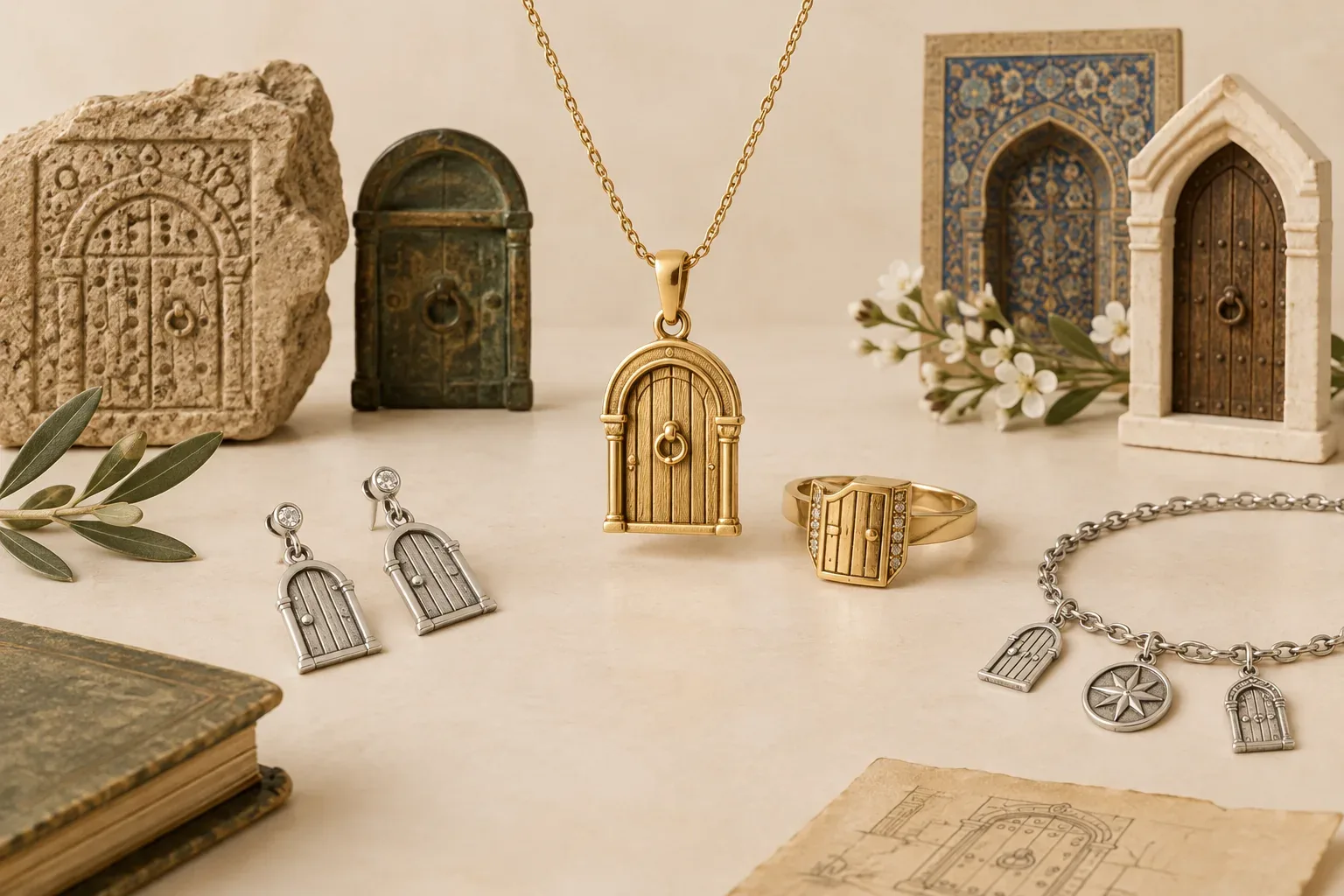
The motif appears in jewelry through a variety of forms: literal miniature doors and gateways rendered in metal and enamel, lockets and hinged pendants that emulate a portal, architectural frames around cameos and miniatures, and stylized motifs that echo archways, keys, or thresholds. These approaches can be both decorative and functional: hinged elements or small cavities transform a piece into a wearable container, continuing the long tradition of intimate, framed objects in personal adornment.
Gemstones appear in door-themed pieces in two main ways. First, gems are used as decorative accents in hinges, knockers, or framing elements; second, certain stones may be chosen for their colour or contemporary associations when designers want to evoke a particular mood (for example, cool blues for calm or green stones for renewal). The Victoria and Albert Museum’s A–Z of Gemstones provides background on how different stones have been identified and used historically, explaining both technical and stylistic reasons behind gemstone choices in jewellery.
Materials, treatments, and what to watch for
When choosing door-themed jewelry, be aware that metals, gemstone treatments, and imitations affect both appearance and value. The Federal Trade Commission’s guidance on buying gemstones, diamonds, and pearls stresses the importance of disclosure for treatments and imitations: sellers should tell you if a stone is dyed, heat-treated, fracture-filled, or synthetic, and reputable makers will provide clear information about metal purity and hallmarking.
From a conservation and everyday-wear perspective, moving parts such as hinges or tiny clasps require extra care. Solid metals and well-made joints last longer; plated finishes and glued settings may show wear sooner. If a piece is vintage or antique, museum curators like those at the V&A recommend assessing condition and provenance to understand restoration history and original materials.
Modern meanings, personal symbolism, and respectful use
Contemporary wearers choose door motifs for many reasons: to mark a life change such as moving house or beginning a new job, to signal openness or guardedness, or simply because the design appeals aesthetically. These are personal, contemporary meanings rather than uniform historical facts. Treat contemporary interpretations as layers of meaning added by designers and wearers rather than as definitive translations of historical practice.
Be mindful that doors can carry culturally specific meanings in some religious or communal contexts—associations with thresholds, rites of passage, or sacred boundaries are present in a range of traditions. If you plan to wear or gift a door motif to someone from a specific cultural or religious background, ask respectfully or research local significance to avoid unintentionally insensitive choices. If you are unsure, opt for neutral language when presenting the gift and emphasize personal intention rather than assumed cultural symbolism.
Practical guidance for choosing and gifting door jewelry
Decide whether you want a literal architectural rendering or a stylized motif: literal miniatures and hinged lockets often feel more narrative and intimate, while simplified door shapes read more as graphic symbols. Consider the recipient’s lifestyle: moving parts can be delightful but require care, and heavy pendants suit infrequent wearers better than those seeking daily jewelry.
Ask key questions when buying: what is the metal and its mark, what gems are used and are they treated, and is the piece new, vintage, or antique? The Federal Trade Commission recommends getting clear statements about treatments and imitations, and reputable sellers should provide that information. If provenance matters to you—especially for a vintage or antique piece—look for documentation from the seller or a trusted appraisal.
For gifting, match the form to the occasion: a small hinged pendant or locket can be appropriate for intimate milestones such as birthdays, graduations, or farewells; a stylized pendant or cufflinks can suit a professional milestone. Include a note that explains your personal meaning for the motif so the recipient understands your intention without assuming a single cultural reading.
Caring for door-themed pieces
Treat hinges and moving parts gently, store pieces where they will not rub against other metal and cause wear, and follow standard cleaning advice for the metals and stones involved. For silver, a soft polishing cloth and airtight storage reduce tarnish; for stones, check the V&A’s guidance on specific gem care, remembering that some materials are porous or vulnerable to heat and chemicals.
When in doubt about a gemstone’s authenticity or treatment, ask for documentation or a qualified appraisal. The FTC recommends that sellers disclose treatments; a lack of transparency is a red flag. Conserving and maintaining the piece will preserve both its aesthetic and any sentimental meaning you assign to it.
Further research and related topics
If you want to go deeper, museum catalogues and object records offer the best route to documented historical meanings because they describe context, materials, and provenance. The Victoria and Albert Museum’s resources on jewelry history and gemstones are useful starting points for tracing how forms moved from architecture into personal adornment.
For a more practical approach to selecting meaningful pieces and researching symbols, consult our related articles on Symbols, how to choose meaningful jewelry, and the history of lockets, which expand on the themes of containment, memory, and architectural influence in wearable objects.
Frequently asked questions
What does door jewelry symbolize?
Door-themed jewelry carries multiple meanings depending on context; historically, museum records show doors and architectural frames functioned as decorative motifs or as structural design elements in lockets and miniatures, while modern wearers often interpret the motif as representing thresholds, new chapters, protection, or privacy. Contemporary meanings are personal and culturally variable rather than universally fixed.
Is door jewelry appropriate as a gift for major life events?
Yes—many people choose door motifs to mark transitions such as moving home, graduation, or a new job because the imagery of a threshold resonates with change. When gifting, explain your personal intention and, where relevant, check whether the recipient’s cultural or religious background has particular associations with door imagery.
How can I tell if the gemstones in a door-themed piece are treated or synthetic?
Ask the seller for full disclosure about treatments or synthetic materials; the Federal Trade Commission recommends clear statements about dyeing, heating, fracture-filling, or synthetic origins. Reputable sellers will provide documentation or a gemmological report if requested.
Are hinged door pendants fragile?
Hinged or moving parts add charm but can be more fragile than solid pieces. Look for secure construction, tested clasps, and quality metalwork; if purchasing vintage, request condition details and any restoration history.
Where can I learn more about historical uses of this motif?
Museum catalogues and reputable online resources are the best starting points. The Victoria and Albert Museum’s materials on jewellery history and gemstones provide context about how architectural motifs and materials entered personal adornment.
Sources and further reading
- Bedazzled: A History of Jewellery — Victoria and Albert Museum
- An A-Z of Gemstones — Victoria and Albert Museum
- Buying Gemstones, Diamonds, and Pearls — Federal Trade Commission