Meaning at a glance
This article explains the documented history and changing contexts of the rainbow motif in jewelry, separates museum-documented historical uses from modern personal interpretations, and gives practical guidance for choosing, buying, and gifting rainbow-themed pieces.
What the historical record shows
Collections research and exhibition overviews at the Victoria and Albert Museum demonstrate that jewelers have long worked with multiple colours and iridescent materials to create visual variety and symbolic effect. The V&A frames jewellery history as a sequence of changing social contexts in which technique, available materials, and fashion shaped motifs and meanings rather than any single universal symbolism.
That documented record is best read as an account of materials, techniques, and social use. Across different periods—ancient through medieval, Renaissance, Georgian, Victorian, and modern—artisans combined coloured gemstones, enamel, and iridescent stones to imitate natural effects, to show wealth and taste, and to follow fashion cycles. The V&A’s descriptions and collections emphasize these practical and stylistic drivers rather than a single, consistent symbolic message attached to a multicolored arc or band.
How museums and gem references describe the materials and techniques
The Victoria and Albert Museum’s resources on gemstones and jewellery techniques explain the practical ways jewellers have produced rainbow-like effects. Gemologists and curators note recurring choices: combinations of different coloured stones placed together, the use of opal and other iridescent gems, coloured glass and paste imitations, and decorative enamelling to produce bands or arcs of colour.
Those materials and methods matter when you study a piece: genuine multigem combinations differ from single iridescent stones, and historic pieces often show specific techniques and levels of finish that reflect their period and social context. The V&A’s guides help identify which materials and techniques are characteristic of particular eras and styles, and thus how an object’s appearance ties to its documented context.
Documented historical meanings versus modern interpretations
When museum catalogues and gem guides describe rainbow effects in jewellery they usually emphasize form, material, and social function—how a piece was made, worn, or displayed in its historical setting—rather than a single symbolic meaning. For example, curatorial notes at the V&A show that use of many colours could signal luxury, imitate nature, or satisfy decorative fashion demands of a period.
By contrast, many modern wearers read symbolic meanings into rainbow jewellery that are contemporary and personal. These modern associations—which can include feelings of joy, diversity, solidarity, identity, or hope—are valid personal or cultural interpretations but are separate from the historical documentary record described by museum sources. In short: documented historical meanings tend to be contextual and material; modern symbolic readings are personal, social, and often political, and should be treated as contemporary layers of meaning rather than continuations of a single ancient symbolism.
How the rainbow motif and related gemstones appear in jewelry
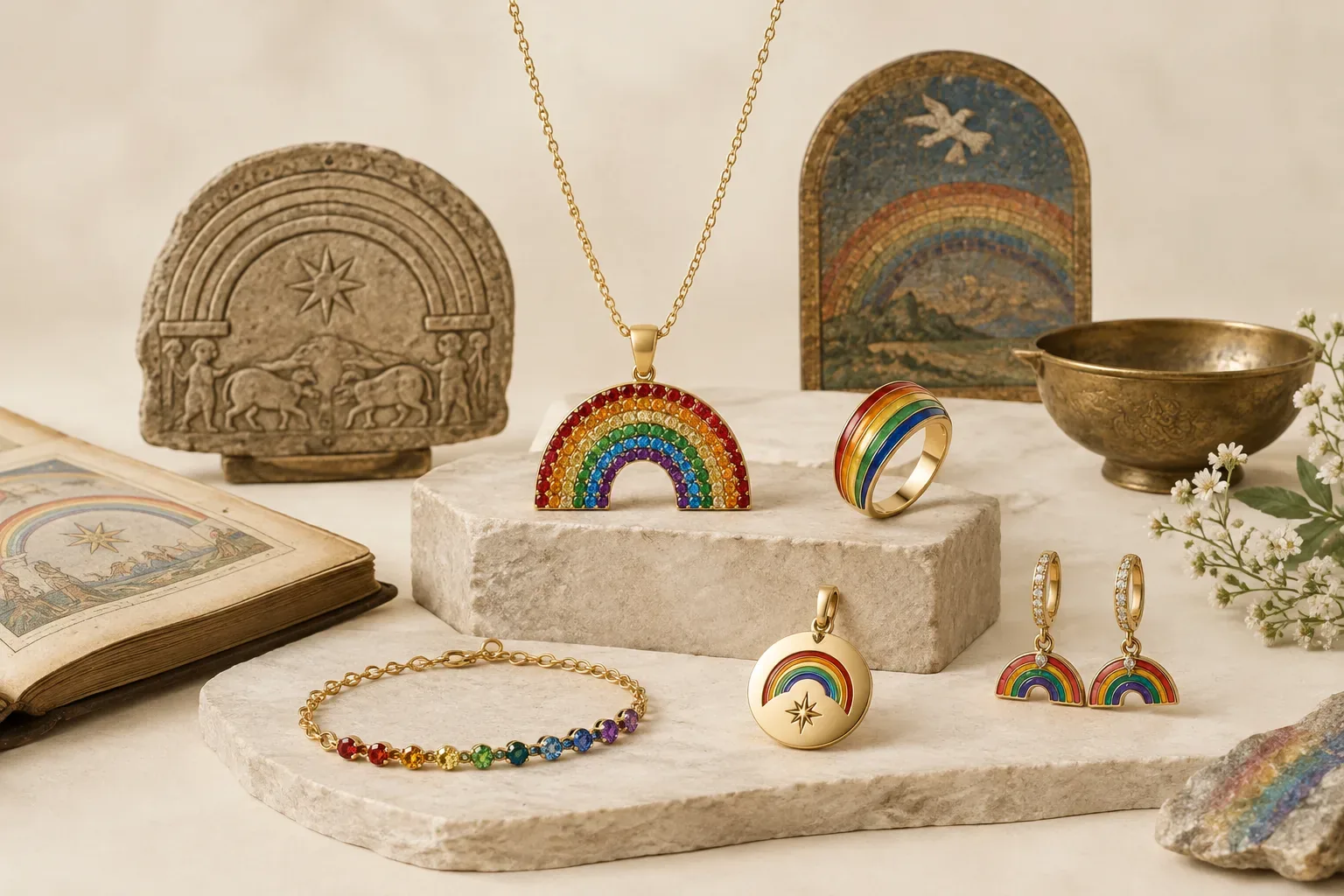
Designers and historic makers have achieved rainbow effects in several consistent ways. One approach is mixed-set design: placing small faceted stones of different colours—sapphires, rubies, emeralds, garnets, tourmalines, and others—in a graduated or banded arrangement. Another is to use iridescent gems—such as opal—or surface treatments that show shifting colours. Enamelling is a long-standing technique to create durable coloured fields and crisp bands of colour that read as a rainbow when assembled into brooches, pendants, and bracelets.
Museum and gem reference material at the V&A also explains the use of imitation materials and glass pastes historically used to achieve bright colour at lower cost. More recently, modern coatings and synthetic stones can reproduce rainbow-like optical effects. These choices affect appearance, durability, and value, so recognising the construction method is key to understanding a piece’s origin and meaning.
Practical guidance for choosing rainbow jewellery
Begin by deciding what meaning you want the piece to carry for the wearer. If the goal is personal expression—celebration, colour preference, or a private memory—choose colours and forms that reflect that intention. If the goal is to reference historical style or craftsmanship, look for pieces whose materials and techniques are consistent with the period you admire; museum descriptions can help you identify characteristic features.
Ask sellers about the materials and treatments. The Federal Trade Commission recommends that jewellery sellers disclose treatments, synthetic materials, and imitations. If authenticity and long-term value are important, query whether stones are natural or treated, and whether glass or paste has been used. For everyday wear, prefer sturdy settings and harder stones; for heirloom-style pieces intended for occasional wear, you may prioritise historic technique or unusual materials instead.
When gifting, be mindful of the recipient’s likely associations. Some recipients may prize a colourful, playful design; others may give the motif a social or political reading. If you are unsure, a conversation before purchase—or selecting a versatile piece such as a small pendant or removable charm—helps avoid unintended messages.
Buying, care, and authenticity checks
If you are buying antique or high-value rainbow jewellery, request provenance and condition reports and, when appropriate, independent gemological verification. Use reputable dealers who can explain repair history and conservation treatments. For modern pieces, ask for full material disclosure: the FTC’s guidance makes clear sellers should disclose gemstone treatments, synthetics, and whether coatings or imitations are present.
Care depends on construction: enamel and inlay can be vulnerable to hard knocks and chemical cleaners; iridescent stones like opal are sensitive to sudden temperature change and harsh cleaning; mixed-set multi-stone pieces require regular inspection to ensure tiny stones remain secure. A trusted jeweller or conservator can advise cleaning methods appropriate to the piece’s materials and era.
Final considerations
Rainbow jewellery blends aesthetic effect and personal meaning. Museum documentation, as summarized by the Victoria and Albert Museum, anchors our understanding in materials, technique, and changing fashions; modern wearers and communities add new layers of meaning that often have little direct link to the object’s historical context. Respect both kinds of information: use curatorial and gemological evidence to understand origin and construction, and treat modern symbolic readings as valid personal or cultural statements that belong to the wearer.
Frequently asked questions
What does rainbow jewelry symbolize?
Historically, museum records indicate that multicolour motifs were used for decorative effect, to imitate nature, or to display wealth and taste; contemporary wearers often add personal or social meanings, which are modern interpretations rather than continuations of a single ancient symbolism.
Are certain gemstones especially 'rainbow' stones?
Iridescent gems such as opal and certain treated crystals show multiple colours in one stone; alternatively, designers create rainbow effects by combining different coloured gems or using enamelling techniques, as described in museum gemstone guides.
How can I tell if a rainbow effect is authentic or an imitation?
Ask the seller for full disclosure about treatments, synthetics, or glass paste. The Federal Trade Commission recommends that sellers disclose gemstone treatments and imitations; reputable sellers will provide clear information or certification.
Is rainbow jewelry appropriate to gift?
Yes, but consider the recipient’s likely associations and the occasion. Some people value colourful jewellery for aesthetic or emotional reasons, while others may read social or political meanings into the motif. A short conversation or choosing a modest, adaptable piece can reduce the risk of misunderstanding.
How should I care for multicoloured or enamel pieces?
Care varies by material: avoid harsh chemicals and extreme temperature changes, inspect settings regularly for loose small stones, and consult a jeweller for cleaning and conservation appropriate to the piece’s materials and age.
Sources and further reading
- Bedazzled: A History of Jewellery — Victoria and Albert Museum
- An A-Z of Gemstones — Victoria and Albert Museum
- Buying Gemstones, Diamonds, and Pearls — Federal Trade Commission