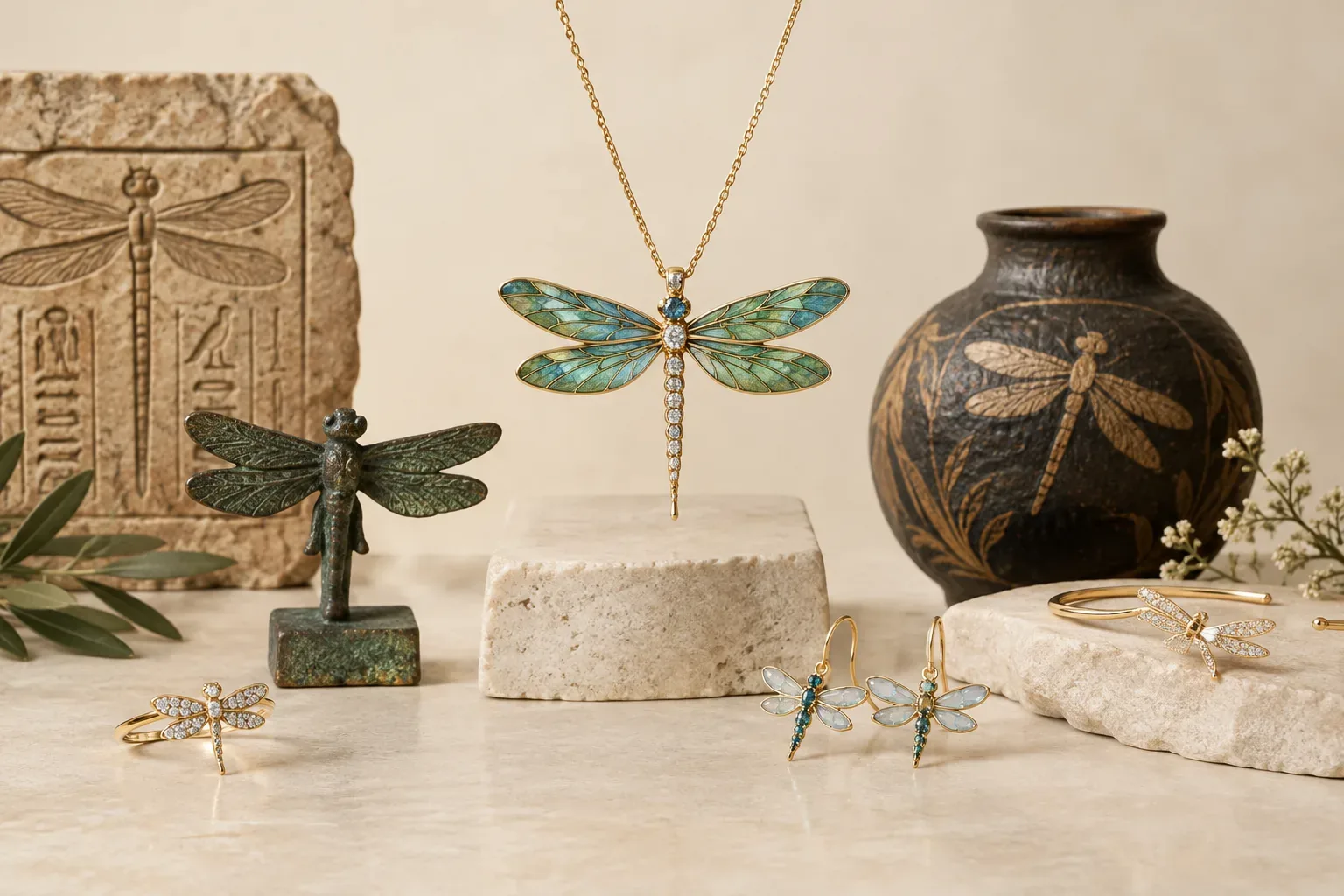
Meaning at a glance
Dragonfly jewelry meaning is best read as two strands: the motif’s documented role in decorative jewelry history (notably in European decorative arts and modern design movements) and a range of contemporary personal and cultural interpretations that developed later. Use museum scholarship to separate recorded uses from later symbolic layers, choose stones and treatments transparently, and approach gifting with respect for the recipient’s context.
Quick answer
Concise answer: The documented evidence for dragonfly jewelry meaning shows the motif as a decorative natural form used by jewelers across changing styles; sources such as the Victoria and Albert Museum place dragonflies within broader trends in jewelry history rather than as a single, fixed symbolic meaning. Many of the symbolic associations people cite today—transformation, agility, short-lived beauty, or spiritual messages—are modern interpretations layered on top of historic decorative use. Consult historical sources for provenance and use consumer guidance when buying gemstones or treated materials.
What the historical record shows
When we ask about historical meaning, we must distinguish recorded decorative practice from later interpretive claims. The Victoria and Albert Museum (V&A) frames dragonflies and other insect motifs as part of evolving jewelry fashions and techniques rather than as a single religious or cultural symbol. The museum’s overview of jewelry history emphasizes changing social contexts and designers’ interest in nature across periods, so dragonflies appear as a motif used for their visual qualities—shape, line, and potential for color—within broader styles and technologies.
In European decorative arts, insect motifs, including dragonflies, became particularly visible at moments when natural forms were fashionable. The V&A’s exhibition and writing on jewelry history document how designers adapted insects into brooches, pendants, and hair ornaments as tastes shifted. The museum’s A–Z resource on gemstones also explains how jewellers used particular stones and techniques to suggest iridescence or translucence—effects well suited to insect motifs. These museum sources connect the motif to materials and stylistic change rather than to a single, continuous symbolic tradition.
Separate documented history from modern interpretations
Documented history (what museums and historical records support). The V&A’s work on jewelry history and gemstones shows that dragonflies appear primarily as decorative subjects used to exploit new metals, enamels, and gemstones, and to express changing tastes for naturalism or stylization. Exhibition materials and collection notes treat dragonfly forms like other nature-inspired motifs and focus on craftsmanship, materials, and fashion context.
Modern interpretations (what developed later or is personal). Over the 20th and 21st centuries, authors, jewelers, and wearers have attached meanings such as transformation, adaptability, lightness of being, or connection to water to dragonflies. These associations are not necessarily documented in historic makers’ records; rather, they are contemporary layers of symbolism people bring to the motif. They are valid as personal or cultural expressions today, but they should not be conflated with the V&A’s documented historical uses.
How the motif and gemstones appear in jewelry
Design and technique. Historically and today, jewelers treat the dragonfly motif in ways that emphasize its wings, elongated body, and potential for color and movement. Techniques that highlight these features include delicate metalwork for thin wing veins, plique-à-jour and other enamels for translucent wings, and stone-setting to represent body segments. The V&A’s historical surveys highlight how changing techniques and fashion periods influenced which decorative methods were used.
Gemstones and visual effects. The V&A’s A–Z of Gemstones explains which stones have been sought for iridescent or shimmering effects useful in insect motifs. Gemstones such as opal, moonstone, and certain varieties of glass and cabochon-cut stones have historically been chosen for their play of color or glow. Contemporary makers also use treated gems, synthetic stones, and colored enamels to suggest the dragonfly’s shimmering wings. When the visual intent is iridescence, both natural and treated materials may be employed, and the appearance alone does not indicate a single historical meaning.
Buying and material considerations
Disclosures and treatments. When you buy dragonfly jewelry, especially pieces that use opal, moonstone, or other iridescent materials, check for treatment and origin disclosures. The Federal Trade Commission provides buyer guidance noting that gems and pearls can be treated, enhanced, or imitated and that sellers should disclose these conditions. Ask for clear information about whether stones are natural, treated, synthetic, or assembled, and whether enamels or plique-à-jour have been restored or repaired.
Condition and provenance. For antique or museum-quality pieces, provenance and maker information help place a dragonfly motif in historical context. Museum cataloguing, auction records, and reputable dealers can provide documentation that links a piece to a period or designer. The V&A’s work on jewelry history demonstrates the value of this documentary context for understanding why a motif was chosen in its time.
Practical guidance for selection and gifting
Match the piece to the wearer’s taste and context. If you choose dragonfly jewelry as a gift, decide whether you are emphasizing historic style (for example, a piece made in an Art Nouveau idiom), aesthetic qualities (delicate lines, iridescent stones), or a personal symbolic message. If you intend the motif to carry symbolic meaning—such as encouragement during life changes—explain that the meaning is a contemporary sentiment rather than a single historical fact.
Respect cultural context and personal beliefs. Because symbolic readings vary, ask or consider whether the recipient has cultural or religious associations that would affect how they receive an insect motif. Avoid assuming that a motif has the same meaning for everyone; the V&A’s approach to jewelry history underlines how meanings shift with social context. When in doubt, choose a neutral design that emphasizes craftsmanship and beauty, and include a note explaining your intention if the symbolic message matters.
Care and maintenance. Different materials require different care. Enamel work and plique-à-jour can be delicate, and iridescent stones such as opal can be sensitive to heat and chemicals. Check the seller’s care recommendations and consider professional cleaning for valuable or antique pieces.
Wearing and styling dragonfly jewelry today
Styling the motif. Dragonfly motifs can be small and subtle as a pendant or ring accent, or large and expressive as a brooch or statement necklace. For everyday wear choose durable settings and stones; for special-occasion pieces you can prioritize delicate enameling or fragile inlay work. Contemporary designers often mix naturalism with abstraction, so you can find styles that read as literal insects or as streamlined, graphic shapes.
Making the meaning your own. If you adopt a dragonfly jewel for its modern symbolic associations, consider keeping a small written note with the gift describing the intended meaning. That practice clarifies that the symbolism is personal or contemporary rather than a direct continuation of museum-documented tradition.
Concluding note
Dragonfly jewelry meaning sits at the intersection of documented decorative history and evolving personal symbolism. Museum resources such as those at the Victoria and Albert Museum remind us to read motifs in their historical and material contexts, while buyer guidance from the Federal Trade Commission helps with practical decisions about gemstones and disclosures. Combining historical awareness with respectful, intentional gifting will help you choose or wear dragonfly jewelry in a way that honors both craftsmanship and personal meaning.
Frequently asked questions
Is the dragonfly a traditional symbol of transformation?
Many people today associate dragonflies with transformation, but that association is largely a modern interpretive layer. Museum scholarship such as the Victoria and Albert Museum’s writing on jewelry history treats dragonflies primarily as a decorative motif within changing stylistic contexts rather than as evidence of a single historic symbolic meaning.
What gemstones are commonly used to suggest a dragonfly’s wings?
Gemstones and materials prized for iridescence or translucence—such as opal and moonstone—or colored enamels and glass are commonly used to suggest wing shimmer. The V&A’s A–Z of Gemstones discusses how jewelers historically selected materials for visual effects; check seller disclosures for treatments or enhancements.
How can I tell if a dragonfly piece is antique or a modern reproduction?
Provenance, maker’s marks, documented collection information, and condition reports help establish whether a piece is antique. The V&A’s exhibitions and cataloguing practices show the importance of documentary context; when buying, request provenance and condition details from reputable dealers or ask for a professional appraisal.
Are there specific cultural meanings I should be aware of before gifting dragonfly jewelry?
Meanings vary by culture and individual, and many contemporary meanings are personal rather than historically documented. Consider asking about the recipient’s preferences and avoid assuming a universal meaning. If the symbolic message matters, explain your intent in a note to make your gift respectful and clear.
What should I ask the seller about gemstones and treatments?
Ask whether stones are natural, treated, synthetic, or assembled, and request written disclosure. The Federal Trade Commission’s consumer guidance emphasizes that sellers should disclose treatments and imitations, so request clarity on origin, treatment, and care recommendations before purchase.
Sources and further reading
- Bedazzled: A History of Jewellery — Victoria and Albert Museum
- An A-Z of Gemstones — Victoria and Albert Museum
- Buying Gemstones, Diamonds, and Pearls — Federal Trade Commission