Meaning at a glance
Use a concise quality checklist that verifies solid construction, comfortable fit, and realistic durability expectations; understand the documented historical uses and changing contexts of wedding rings as described by museum research; and ask sellers about material treatments and disclosure before you buy.
Why a checklist matters
Wedding bands are worn constantly and often hold cultural or personal significance, so assessing construction, comfort and durability before purchase reduces the chance of surprises. A short, practical checklist helps you compare options across makers and materials, ask focused questions of sellers or workshops, and make a choice that suits daily wear as well as symbolic intent.
Documented history: where wedding rings come from
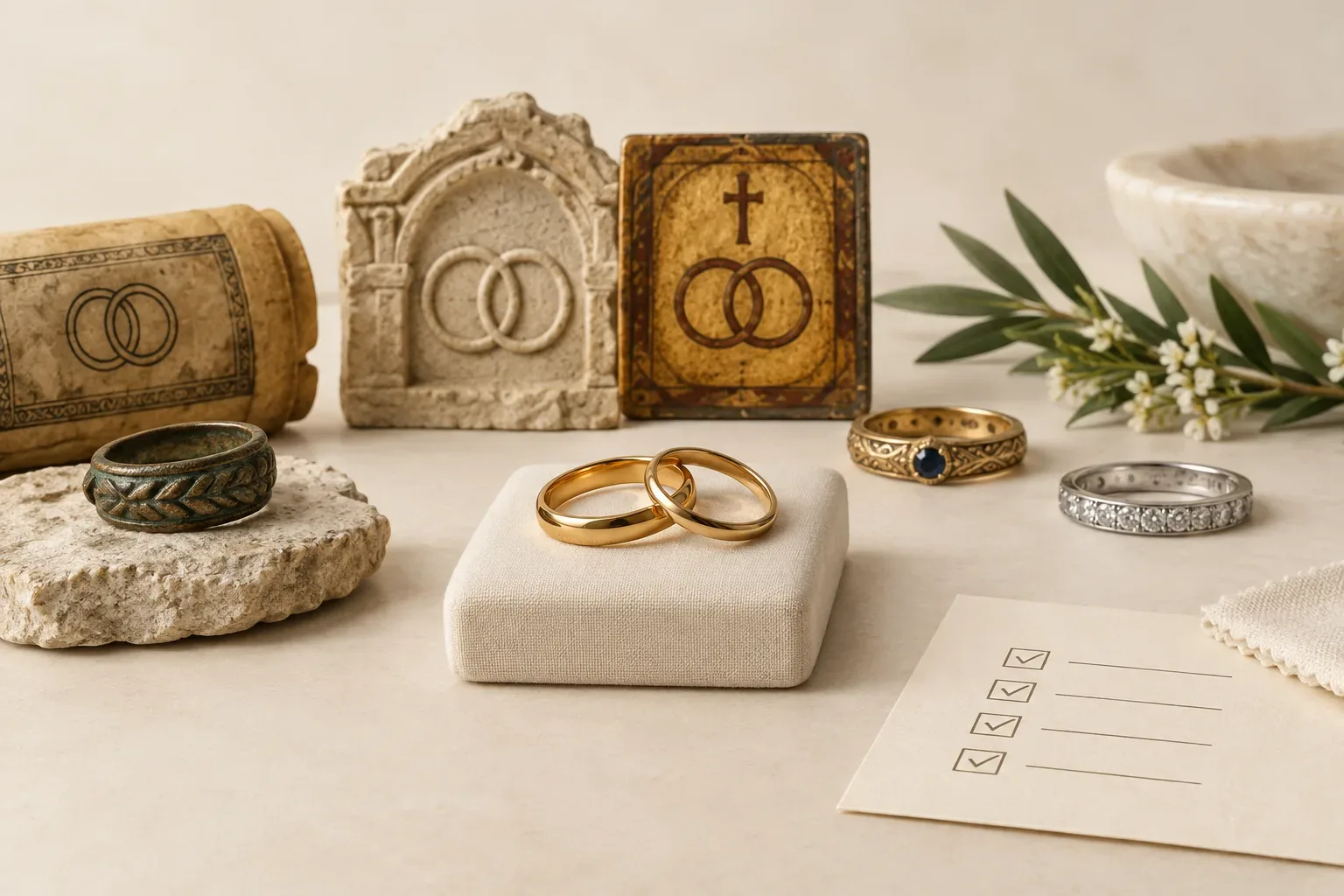
Museum research records that rings and circular bands have been used in many societies to mark relationships, contracts and status. The Victoria and Albert Museum discusses the long span of jewelry history and how function and meaning change across time and place, showing that bands appear in varied forms in ancient and later collections rather than as a single, unchanging object.
Different cultures used rings for different reasons. For example, in some ancient and classical contexts a ring could mark legal or ceremonial bonds, while in medieval and later European practice another set of customs attached religious and social meanings to marital exchange. The V&A’s overview of jewellery history makes clear that the object’s role and symbolism evolved with social and material changes, and that what a modern wedding band represents is often a layered outcome of those histories rather than a single origin.
Separate documented meanings from later or popular interpretations
Historical records and museum collections document when and how a ring was used in a particular culture; those are specific, time-bound facts. The Victoria and Albert Museum’s work helps identify those contexts and the objects associated with them. By contrast, many contemporary claims about fixed ancient meanings or universal symbolism are modern interpretations layered onto older practices. Treat documented cultural evidence and modern personal or marketing interpretations separately. Use historical evidence to inform understanding of a tradition’s origins and to avoid assuming that any one symbolic reading is universal or original.
How motifs, gemstones, and traditions appear in wedding bands
Motifs such as plain circular bands, engraved patterns, filigree, and inset gemstones have appeared at different times and places in ring-making. The Victoria and Albert Museum’s A–Z of Gemstones shows that particular gems have long been favored for rings because of their color, durability or social value, and that gem use in bands shifts with fashion and supply.
In modern wedding bands a motif can be literal, like a carved Celtic knot, or more subtle, such as a brushed finish or a single inset diamond. Gemstones may be set flush, in channels, or in prongs that change how a band wears. Historically documented uses (for example, a preference for certain stones in particular courts or regions) come from museum scholarship; contemporary meanings, such as marketing that links a given stone to a particular emotion, are modern layers on top of these material facts.
Construction checklist: what to examine before you buy
Ask whether the band is solid or hollow. Solid construction generally resists bending and long-term wear better than hollowed or tube-style work. Inspect joins and seams: a continuous, well-finished ring without visible weak solder lines is preferable for everyday wear because it reduces points of failure.
Check the profile and thickness. A comfort-fit interior (a slightly rounded inner surface) reduces pressure and improves all-day wear, particularly for wider rings. Thickness and width affect both durability and comfort; very thin edges can deform more easily, while very wide bands can feel restrictive. Evaluate the edge finishing: rounded edges are friendlier for daily wear than sharp square edges.
Review stone settings and mountings. If the band includes stones, ensure they are set securely in a style suited for daily wear. Flush or channel settings usually snare less than high prongs. If you prefer low maintenance and high wearability, discuss setting options with the maker before purchase.
Comfort checklist: fit, finish, and wearer needs
Size and fit are essential to comfort. A correctly sized band should slide on and off without force yet not spin freely. Consider finger shape and activity: individuals with knuckles larger than pulley of a finger may prefer slightly narrower rings or shapes that taper for ease of movement. Try the band on for at least a few minutes to gauge pinch points or pressure.
Material allergies and skin sensitivity matter. Some people react to base metals or plating; if you have known sensitivities, prioritize hypoallergenic materials or finishes. Surface finish also affects comfort: highly textured or sharp engraving can irritate skin over prolonged wear, whereas smooth interiors and edges reduce friction.
Durability checklist: material choices, treatments, and realistic expectations
Understand the trade-offs of material choice. Different metals and finishes behave differently in everyday life. Discuss how a metal will age and how the finish will wear. The Federal Trade Commission advises consumers to ask about treatments and imitations and to expect clear disclosure when gems or metals have been altered or plated, since treatments affect how an item should be cared for and its long-term appearance.
Ask the seller about plating, surface treatments and repairs. Plating will wear and may require re-plating over time; surface finishing such as brushing will show different wear patterns than high polish. If the band has stones, confirm that settings are appropriate for continuous wear and that the maker offers repair or tightening services.
Request information about warranties or aftercare. Many jewelers provide cleaning, inspection and repair services—factor those options into durability expectations and the overall cost of ownership.
Practical and respectful selection and gifting guidance
Match durability and comfort to lifestyle before selecting symbolic motifs. If the wearer works with their hands or prefers low-maintenance jewelry, prioritize low-profile settings, durable constructions and finishes designed to hide scratches. If symbolism or tradition is the priority, choose motifs that are culturally appropriate for the recipient and relevant to their background or beliefs.
Be respectful about cultural and religious symbols. If a design element has a specific cultural or religious meaning, learn about that meaning from reliable sources before gifting it. Museum work, such as the Victoria and Albert Museum’s studies of jewelry forms and contexts, can help you understand historical uses, but personal conversations with the recipient or their family are the best guide to what is appropriate.
When gifting, present practical care guidance and documentation. Provide any available maker information, receipts and statements about materials and treatments so the recipient knows how to maintain the band and what to expect from its finish over time.
Before you finalize the purchase: practical final checks
Try on the actual band or a precisely matched sample for fit and comfort. Verify the seller’s disclosure about materials and any treatments, and request written information about resizing and aftercare policy. If buying online, confirm return and resizing policies and whether the seller offers secure inspection upon delivery.
Keep expectations realistic about wear. All jewelry changes with time; how a band ages depends on use, environment, and the treatments it received. Using the checklist—construction, comfort and durability—lets you choose a band that aligns with both how you want it to wear and what it symbolizes.
Frequently asked questions
What are the top three things to check on a wedding band before buying?
Confirm solid, well-finished construction without weak seams; try the band for a comfortable fit and interior finish such as a comfort profile; and ask about material treatments, plating and expected maintenance so you have realistic durability expectations.
How do I know if a band will be comfortable for daily wear?
Try the band on in the width and thickness you plan to buy and wear it for several minutes to feel pressure points. Look for a comfort-fit interior and rounded edges, and consider narrower widths if you have larger knuckles or engage in manual tasks.
Are plated rings a bad idea for a wedding band?
Plating can be attractive but will wear over time and may require re-plating. If you want a long-term, low-maintenance band, prioritize solid metals or discuss durable finish options with the maker. Ask the seller about expected plating lifespan and repair services.
What should I ask the seller about gemstones in a wedding band?
Ask whether stones have been treated, how they were set, and whether the setting suits daily wear. The Federal Trade Commission recommends that consumers ask for disclosure of treatments or imitations so you understand care needs and value.
How do historical meanings affect choice today?
Museum research shows that rings carried different meanings in different times and places. Use documented histories as context rather than assuming any single traditional meaning is universal, and consider the recipient’s personal, family or cultural preferences when selecting motifs.
Can all wedding bands be resized?
Many bands can be resized, but the feasibility depends on material, width, finish and the presence of stones or inlaid materials. Before purchase, confirm the seller’s resizing policy and any costs or limits on resizing.
Sources and further reading
- Bedazzled: A History of Jewellery — Victoria and Albert Museum
- An A-Z of Gemstones — Victoria and Albert Museum
- Buying Gemstones, Diamonds, and Pearls — Federal Trade Commission