Meaning at a glance
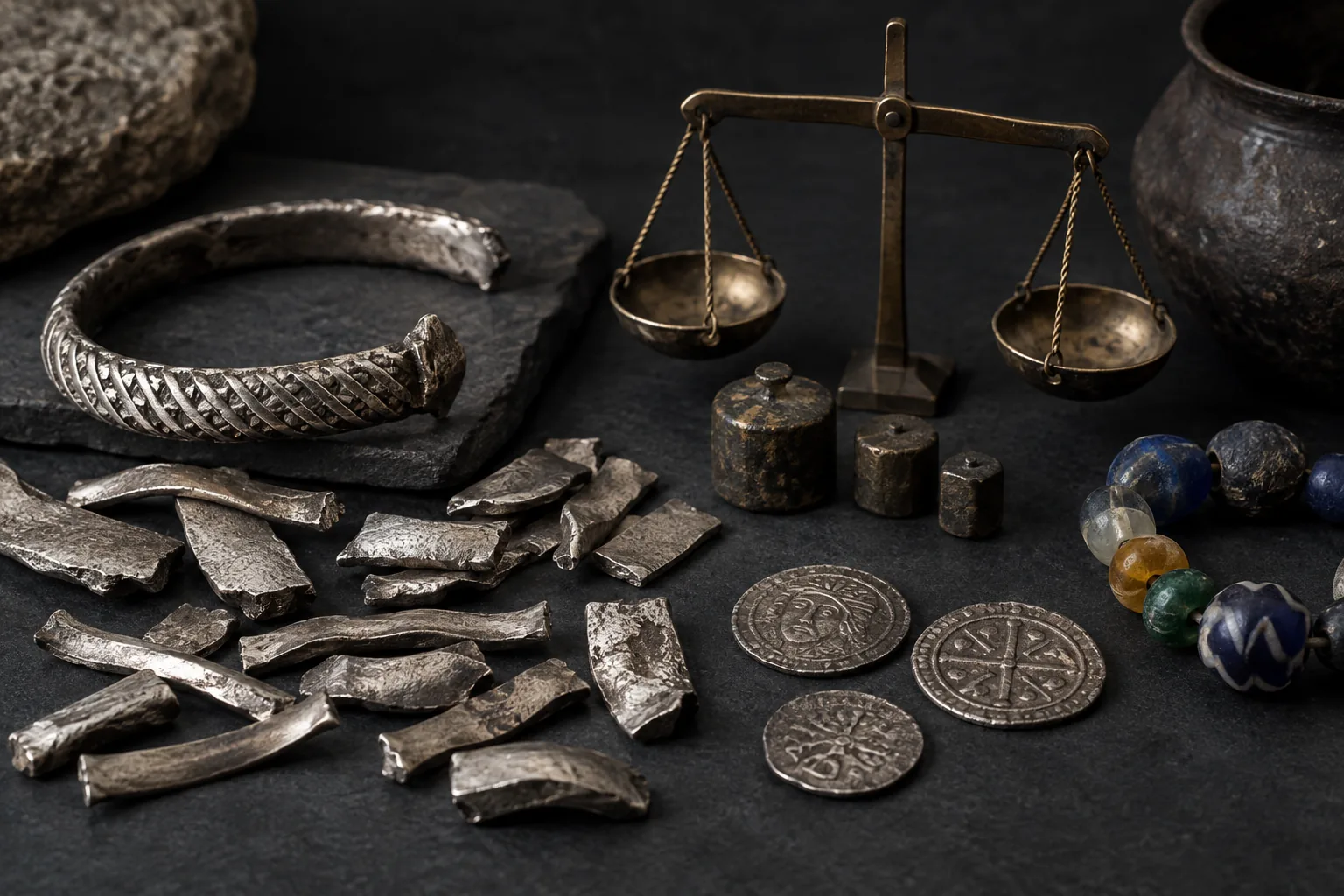
Archaeological evidence indicates Viking jewelry displayed wealth and identity and that silver circulated by weight in trade, while hoards cannot be read automatically as personal treasure, merchant stock, or ritual deposit.
What the archaeological record and museums actually show
Two types of evidence underlie our basic claims: the types of objects people left behind and the contexts in which they are found. Museum collections and published displays show repeated patterns of personal ornament — such as rings, arm-rings, brooches and beads — together with cut or fragmented silver that appears to have been used as bullion rather than only as finished jewellery. The National Museum of Denmark frames trade as a substantial part of Viking activity and describes how silver moved through long-distance exchange networks, while The British Museum documents objects such as hacksilver arm-rings that show cut and re-cut pieces used as both ornament and a form of weighed silver in transactions.
How specialists interpret hoards and cut silver
Archaeologists and museum curators emphasize caution when interpreting hoards. Finds of deliberately cut silver and mixed assemblages can indicate a range of practices: personal savings, merchant stock, payments in transit, or deposits with ritual significance. The National Museum of Denmark highlights trade as one interpretation of such material, and The British Museum's documentation of hacksilver demonstrates the material reality of silver being fragmented and valued by weight rather than always as finished objects.
Because contexts vary from isolated graves to buried caches in settlement or wet places, the same type of deposit can mean different things in different places. That interpretive uncertainty is itself part of the documented record: museums present hoards and cut silver as evidence for exchange and variable use rather than as straightforward markers of a single practice.
Which societies and time period are we discussing?
When we say “Viking” here we are referring to societies in Scandinavia and their overseas networks during the Viking Age as discussed in museum literature, roughly the period commonly studied under that label in archaeology. The National Museum of Denmark frames its account as relating to activity in and from Denmark during the Viking age, while The British Museum presents objects recovered from sites across northern Europe and beyond that reflect Scandinavian connections and interactions.
These sources treat a range of regional practices and decades-long developments rather than a single homogeneous culture. Regional differences, changing trade routes, and evolving fashions mean that jewellery and exchange practices varied across time and place.
Documented meanings versus modern interpretations
Documented meanings are those that we can infer from context and patterns in the archaeological record and from how museums describe the finds. Museums such as the National Museum of Denmark and The British Museum present jewellery as serving functions of display, identity marking, and economic exchange, and they show silver being used and traded by weight. These are interpretations grounded in material evidence: repeated finds of cut or hacked silver, the contexts in which objects are deposited, and the distribution of high-status finished pieces together with bullion.
Modern personal interpretations include the many ways people today choose to wear or award Viking-style jewellery: as expressions of personal taste, family heritage, or contemporary values such as loyalty, resilience, or aesthetic preference. Those modern meanings are valid as personal sentiment but they are not the same as documented, contemporaneous beliefs. It is important to keep the distinction clear: museum-based, evidence-led claims describe what the physical record supports; modern personal meanings are contemporary and subjective.
How motifs, materials, and traditions appear in Viking-age jewellery
Materially, the surviving record emphasizes precious metals and portable items. Silver is a dominant medium in the archaeological record and is present both as finished ornament and as hacked or cut metal that could be valued by weight. The British Museum’s object records, for example, include hacksilver arm-rings that demonstrate how a single item could serve simultaneously as wearable ornament and as a source of tradeable metal.
Decoration and motif appear in a variety of ways on surviving objects. Many museum-displayed items show ornamentation produced by casting, stamping, engraving or beadwork. Motifs that museums describe in Viking displays are applied to brooches, pendants and other personal accoutrements and function as visible markers of style and, likely, group or individual identity. The same objects can therefore serve social and aesthetic purposes while also having an economic dimension when silver was cut and exchanged by weight.
Practical and respectful selection or gifting guidance
If you are choosing Viking-inspired jewellery today, consider three practical priorities: historical clarity, material transparency and cultural respect. Historical clarity means being explicit about whether a piece is an archaeological replica, a contemporary reinterpretation, or a piece that simply uses Viking-era aesthetics. Sellers and buyers should not present modern creations as ancient artifacts.
Material transparency means asking about metal content and provenance. Silver is central to the archaeological record for northern Europe in the Viking context, so knowing the karat, whether sterling silver is used, and whether any stones are genuine or simulated helps set expectations about value and durability. If supporting ethical sourcing is important to you, request information about where the metal and any stones were sourced.
Cultural respect means avoiding casual claims that a single object “means” something universal. Because museum evidence shows that jewellery could signal wealth, identity, and could act as tradeable bullion, modern givers should explain their intended meaning rather than attributing a single historical symbolism to a gift. If gifting a replica of an arm-ring or brooch, present it as a thoughtful nod to history or personal meaning rather than as an authentic artefact with a prescriptive symbolic mandate.
For gift occasions, practical considerations also matter: choose a piece that suits the recipient’s everyday wearability and personal style, include information about the inspiration and materials, and, if the piece is a reproduction, consider including a short note that explains the historical context with a citation to a reputable museum or curator so that the gift is both beautiful and informative.
Summary and what to take away
Museum collections and archaeological practice, as reflected in the National Museum of Denmark and The British Museum, offer a measured picture: Viking-age jewellery was multifaceted. It was worn to display and signal identity and could also enter systems of exchange where silver circulated and was valued by weight. Hoards and cut silver are important evidence for these practices, but their meaning depends on context and cannot be reduced to a single explanation.
Approach both historical claims and modern uses of Viking-style jewellery with nuance. Use museum sources for evidence-led interpretation, and treat modern meanings as personal choices rather than direct continuations of a single historical symbolism.
Frequently asked questions
Did Vikings use jewelry as currency?
Archaeological evidence and museum documentation show that silver often circulated by weight and that cut or hacked silver functioned as a form of bullion used in exchange. Museums such as The British Museum present objects like hacksilver arm-rings that demonstrate how ornament and bullion could overlap.
Can a hoard be assumed to be a buried personal treasure?
No. Hoards can represent a range of practices — personal savings, merchant stock, payments in transit, or ritual deposits — and museums stress caution in interpretation because context is crucial to understanding any particular deposit.
Were arm-rings and brooches status symbols?
Yes, patterns in the archaeological record and museum displays indicate that finished jewellery could display wealth and identity. At the same time, the same objects might be cut or repurposed as bullion, showing the dual social and economic roles of metalwork.
How should I choose a Viking-style piece as a gift?
Choose pieces with clear information about whether they are modern reproductions or inspired designs, ask about materials and provenance, and present the piece with an honest note explaining its inspiration rather than asserting a single historical symbolism.
Are motifs on Viking-age jewellery universal in meaning?
No. While motifs and decoration signalled style and likely expressed identity, museum-based interpretations avoid universal claims; meanings can vary by region, period, and social context and modern personal meanings are contemporary choices.
Sources and further reading
- Trade in the Viking period — National Museum of Denmark
- Viking hacksilver arm-ring — The British Museum
- Vikings gallery activities — The British Museum