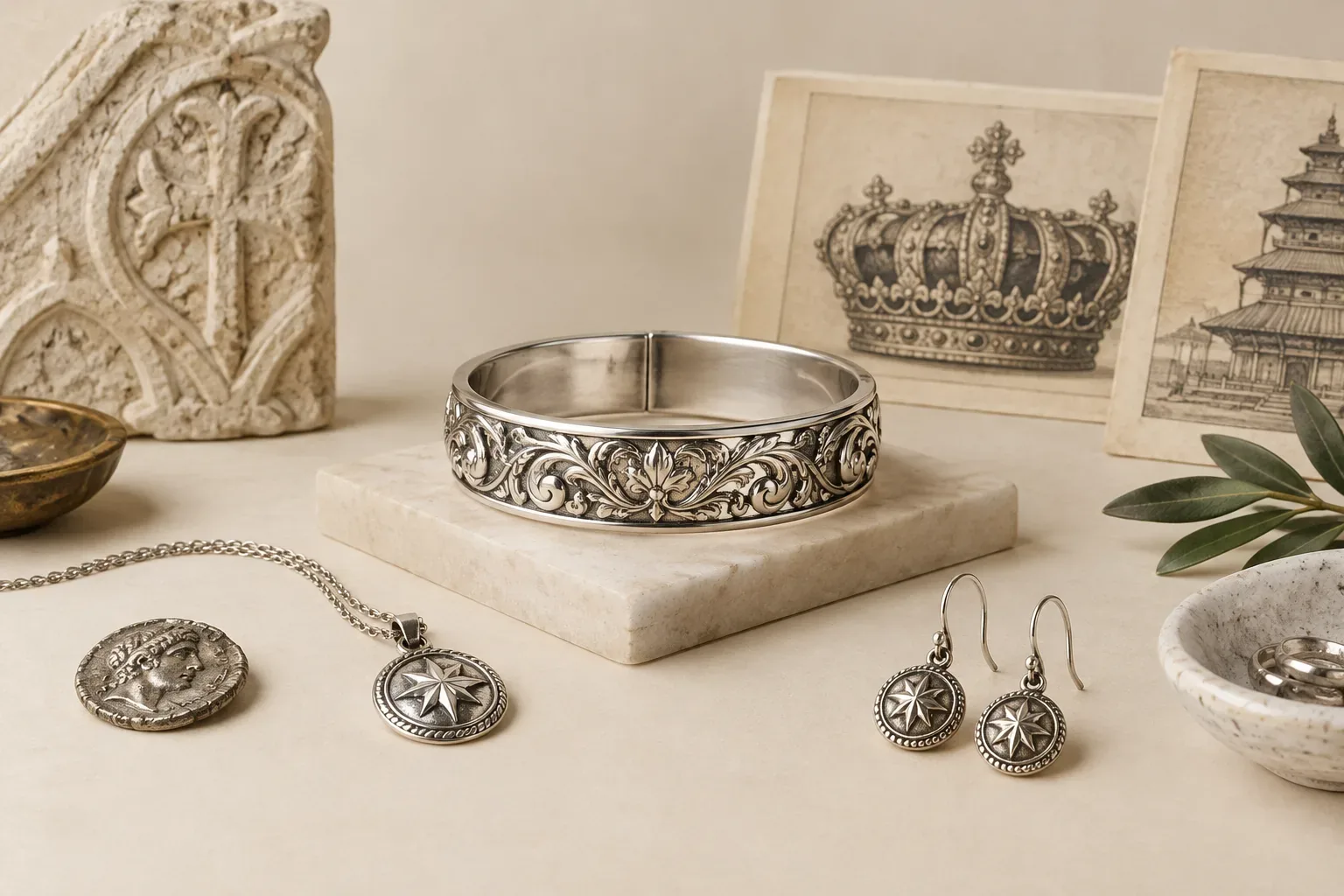
Meaning at a glance
Sterling silver jewelry explained: sterling is a well-established silver alloy used for durable, wearable pieces; hallmarks and assay marks record maker and assay information; historical meanings vary by culture and era per the Victoria and Albert Museum; sellers should disclose treatments or imitations under FTC guidance and buyers should check marks, documentation, and cultural context before buying or gifting.
Short answer
Sterling silver jewelry explained simply: 'sterling' refers to a long-established silver standard used to make durable, wearable pieces; its identification relies on documentary marks (hallmarks and maker marks) and reputable disclosure from sellers. The Victoria and Albert Museum documents how silver and silver standards have changed in meaning and use across cultures and periods, while the U.S. Federal Trade Commission outlines what sellers must disclose about treatments and imitations when you buy jewellery.
What 'sterling' means and why composition matters
In practice, the term 'sterling' denotes an established silver alloy used in jewellery manufacture that balances the metal's appearance with the physical strength needed for wearable objects. The alloying metals and exact technical standard have varied by place and over time; what matters for buyers and makers is that the piece has been made to a recognizable trade standard and, where appropriate, marked to indicate that standard.
For jewellery wearers and buyers, composition matters because silver in its pure state is soft; alloying increases hardness and durability so a piece will stand up to daily use. Because standards and practices have changed historically and regionally, the most reliable confirmation of composition on a finished object is an assay or hallmark applied by a recognised office or maker.
Hallmarks, maker marks, and what to look for
Hallmarks and maker marks are the principal documentary clues on silver jewellery. A hallmarking system records information such as the assayed standard, the assay office or authority, and often a maker's mark. These marks are a practical way to confirm that an item was tested or identified according to an established standard rather than being a purely descriptive label.
When examining jewellery, check for small stamped marks on the inside of rings, pendants, clasps, or other discreet areas. Look for an assay symbol or purity indicator, a maker's mark, and any additional marks that indicate an assay office or year letter. If you cannot confidently read the marks, ask the seller for assay certificates, documentation, or independent testing, and request clear information about any plating, surface treatments, or non-silver components.
Documented history and changing contexts
Historical evidence for silver jewellery and standards comes through material collections and curatorial research. The Victoria and Albert Museum traces jewellery’s social and technological history across many cultures and periods, showing how silver has been used differently over time and in different places. For example, the V&A documents that silver was used for personal adornment in a wide range of societies, and that fashions, techniques, and the social meanings attached to silver have shifted with changing social contexts.
It is important to keep distinct cultures and periods separate when we talk about meaning. The social role of silver in medieval and Renaissance Europe, as described by the V&A, differed from its meanings in later periods such as Victorian Britain or in the various revivals and modern commercial contexts that followed. Likewise, motifs and uses that are documented for one culture or era should not be assumed to carry the same documented significance elsewhere.
Documented historical meanings versus modern personal interpretations
Museum documentation records how people used and understood jewellery in particular places and times. These documented historical meanings derive from surviving objects, contemporary records, and curatorial interpretation. The V&A’s exhibitions and articles place jewellery in its social, technological, and economic contexts and make clear that meanings are historically situated.
Modern wearers often bring personal, symbolic or fashion meanings to sterling silver pieces that do not match historical evidence. Those contemporary interpretations are valid as personal expressions, but they are not the same as documented cultural meanings. When discussing or gifting an object with a claimed historical symbolism, distinguish whether the symbolism is supported by museum or archival evidence, or whether it is a modern preference or reinterpretation.
How motifs, gemstones, and traditions appear in sterling jewellery
Motifs and gemstones may appear in sterling silver jewellery in many ways: as engraved patterns, cast forms, applied settings, or as inlaid stones. The Victoria and Albert Museum’s resources on gemstones explain how particular stones have been combined with metals across time and how stone choice, cutting, and setting have affected jewellery design and meaning.
If a piece combines a culturally significant motif with sterling silver, consider both the documented use of that motif (what the V&A or other curatorial sources say about its historical context) and the maker’s origin and stated intent. Gemstones are similarly context-dependent: an identified gem has a documented material history, but contemporary marketing and personal taste shape how it is understood today. Provenance, maker notes, and exhibition or catalogue references help place a motif or stone in its appropriate cultural and historical frame.
Disclosure, treatments, and buyer protections
Sellers must provide accurate information about a piece’s composition and any treatments or imitations. The Federal Trade Commission’s guidance for buying gemstones, diamonds, and pearls makes clear that consumers have a right to truthful disclosure: if a metal is plated rather than solid, if a gemstone is treated or synthetic, or if a piece has been repaired or modified, that information should be given to you before purchase.
Ask your seller directly whether a piece is solid sterling or silver-plated, whether the surface has been re‑enamelled or coated, and whether any stones are natural, treated, or lab-grown. Request written information or a receipt that records these facts. For higher-value items, independent assay reports, gemological certificates, or reputable appraisals provide extra assurance.
Practical selection and respectful gifting guidance
Choose sterling silver jewellery based on a combination of material verification, maker transparency, and an understanding of the cultural meanings you intend to convey. If you are selecting a motif tied to a particular culture or religion, research its documented history and usage and consider whether the item’s maker and context are appropriate. The V&A’s materials can be a starting point for historical context, and you can use internal guides to research symbols and meanings further.
When gifting, be explicit about whether the gesture is personal fashion, sentimental, or intended to convey a researched cultural meaning. If the recipient has cultural or religious ties to a motif, prefer pieces made by artists from that community or from reputable sources that describe provenance and meaning. For mainstream gifts, pay attention to hallmarking, seller disclosure (per FTC guidance), and any care recommendations from the maker so your recipient can enjoy the piece without unexpected conservation issues.
Conclusion
Sterling silver jewellery explained is essentially a conversation between material standard, documentary marks, and cultural context. Use hallmarks and maker information to confirm composition and provenance; consult museum documentation such as the Victoria and Albert Museum for historical context; and rely on consumer-protection guidance from the Federal Trade Commission to insist on accurate disclosure of treatments and imitations. Separating documented history from personal or marketed meanings will help you choose, wear, and gift silver with confidence and respect.
Frequently asked questions
What does 'sterling' mean on a piece of silver jewellery?
In common use, 'sterling' refers to a recognized silver alloy standard used for durable jewellery. The most reliable confirmation on an individual piece is documentary evidence such as assay or maker marks and any supporting paperwork from the seller or assay office.
How can I read hallmarks on silver jewellery?
Look for small stamped marks on discreet parts of the item, such as the inside of a ring band or the back of a pendant. Typical marks include a purity or assay symbol, a maker's mark, and sometimes an assay office or date letter. If the marks are unclear, ask the seller for documentation or an independent assay.
Do sellers have to disclose plating, treatments, or lab-grown stones?
Yes. The Federal Trade Commission advises that sellers must disclose treatments, enhancements, or synthetic materials so buyers can make informed decisions. Always ask for written confirmation if you need certainty about a piece’s materials or treatments.
Are historical meanings of motifs always the same today?
No. Museum research shows that meanings change by culture and period. The Victoria and Albert Museum highlights how motifs and social contexts shift over time. Modern personal or marketed interpretations may differ from documented historical meanings.
What should I consider when gifting a culturally significant motif?
Research whether the motif has a documented cultural or religious meaning and whether the maker is appropriate to produce such an item. When in doubt, choose pieces made by artists from the relevant community or from reputable sources that provide provenance and explanation.
How can I verify a valuable piece of silver jewellery?
Request seller documentation, ask for assay or gemological certificates where relevant, and consider an independent appraisal or assay for higher-value objects. Clear hallmarking and transparent seller disclosure are the first steps to verification.
Sources and further reading
- Bedazzled: A History of Jewellery — Victoria and Albert Museum
- An A-Z of Gemstones — Victoria and Albert Museum
- Buying Gemstones, Diamonds, and Pearls — Federal Trade Commission