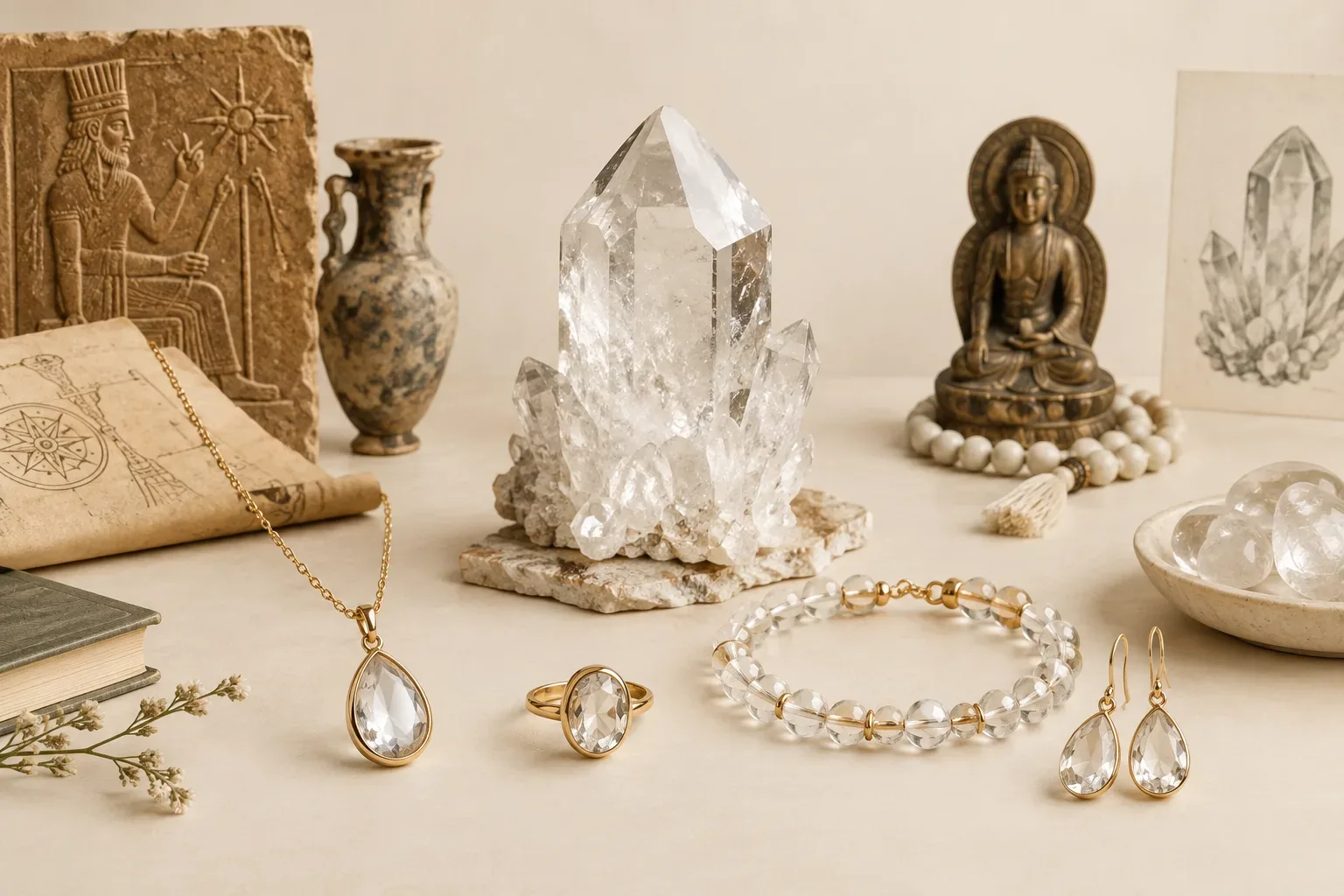
Meaning at a glance
Quartz quality and value factors depend on clearly documented gem attributes (color, clarity, cut, size), any treatments or imitations, and context such as provenance and setting; historical meanings vary by culture and period in museum collections, while modern metaphysical interpretations are contemporary personal beliefs—verify disclosures and choose settings and sellers to match intended use and sentiment.
What we mean by ‘quartz’ and where it appears in jewelry
In jewelry contexts the word "quartz" is used both as a family name and as shorthand for particular varieties. Common gemstone varieties included under the quartz family are rock crystal (clear quartz), amethyst (purple), citrine (yellow to orange), rose quartz (pink), and smoky quartz (brown to grey tones). Each variety has distinct commercial and aesthetic considerations that affect value and how the stone is used in settings.
Museum writing and gem guides treat these varieties as related materials with similar basic properties but different market profiles and historic uses. The Victoria and Albert Museum presents quartz and its varieties within both identification guides and historical collections, showing how lapidary techniques and fashion determined the roles these stones played in jewelry across time.
Documented historical evidence: which cultures and periods used quartz (and how the evidence is presented)
Material evidence in museum collections demonstrates that quartz varieties have been used in many regions and periods for decorative and functional objects. The Victoria and Albert Museum catalogues examples from classical, medieval, Renaissance and later European jewelry and decorative arts that include rock crystal and other quartz types, illustrating changing fashions and technologies rather than a single continuous symbolic meaning. For example, V&A documentation shows repeated use of clear and colored quartz in European lapidary work and personal adornment across several historical periods.
Those museum records make distinctions by object type and context: rock crystal might appear as a carved gem, an intaglio, or a mounted stone in portrait and sentimental jewelry; colored quartz varieties appear in cabochons and faceted stones according to the cutting techniques and tastes of each era. The V&A curatorial and interpretive materials place examples within social and technological histories of jewellery, emphasising craftsmanship, taste and social function rather than suggesting universal spiritual meanings.
Documented meanings versus modern personal interpretations
Where museum evidence records meaning, it is normally specific and contextual: an object may be described as a status item, a mourning token, or a fashion accessory within a particular period and culture. The Victoria and Albert Museum’s materials focus on these historically documented contexts—how objects were used and what they signified to people at the time—rather than on modern metaphysical claims.
By contrast, much of the language you will find today about quartz as a ‘‘healing’’ stone, energy conductor, or aura balancer is a modern personal or commercial interpretation that post-dates the historical objects in museum collections. Those contemporary meanings are valid as personal beliefs but should not be conflated with documented historical ritual or religious uses unless supported by specific primary sources or curatorial evidence.
How quartz and its motifs appear in jewelry design
Quartz is versatile: faceted amethyst and citrine appear in rings and pendants, rose quartz is often cut as cabochons for soft, rosy surfaces, and rock crystal has been carved into intaglios, cameos or used as transparent mounts to frame miniatures and portraits. Museum collections documented by the Victoria and Albert Museum show examples of these diverse uses, from delicate Victorian settings to bold Art Deco pieces that emphasize color and geometry.
Beyond single stones, quartz appears as beads and stringed forms in necklaces and rosaries, as carved elements in brooches and hair ornaments, and as polished slabs in inlays. Motifs—such as floral or symbolic motifs—are expressed differently according to period tastes; curators present these motifs in relation to the fashions and materials available to makers at the time.
Practical quality and value factors to check when buying quartz
Color: For colored quartz varieties the intensity, uniformity and location of color are central to aesthetic value. Rich, even color that flatters the cut is usually preferred, while washed-out or uneven color reduces market appeal. For amethyst and citrine, deeper saturation typically commands higher interest among collectors and buyers.
Clarity and inclusions: Quartz is often relatively clean and transparent; visible inclusions or cloudiness can lower value, although some inclusions are interesting and collectible in their own right. Examine stones against neutral light and ask to see the stone under magnification if clarity is a deciding factor.
Cut and finish: Skilled cutting maximizes color, sparkle and stability in settings. Faceted cuts can enhance brilliance while cabochons emphasize color and surface texture. Quality of workmanship—symmetry, polish and proportion—matters for overall appearance.
Size and carat weight: Larger fine-quality specimens of a desired color are less common and can be more valuable, but quartz is generally abundant compared with precious gems, so price per carat tends to be lower than for rare stones. The relationship of size to cut and color affects market value.
Treatments, imitations and disclosure: Be aware that heat treatment, dyeing, irradiation and synthetics are used in the gem trade to alter appearance. The Federal Trade Commission requires sellers to disclose treatments and imitations; ask for those disclosures in writing and for any laboratory reports that accompany high-value items. The FTC’s consumer guidance is a practical reference for truth-in-advertising and material disclosure.
Practical tips for inspection, purchase and verification
Buy from a reputable seller who provides clear information about treatments, return policies and any gem reports. For higher-value purchases request independent lab documentation or a report from a recognized gemological laboratory, and confirm that any treatments will be documented on the invoice.
Inspect the stone in natural light if possible or ask for high-quality images that show the stone from multiple angles. Pay attention to color under different lighting conditions, to visible inclusions and to how the stone sits and is secured in the mounting. If the piece is to be worn daily, choose secure settings and ask about the metal and construction quality.
Price sensibly: because quartz is more common than many gemstones, extremely high prices should prompt careful scrutiny of the stone’s provenance, rarity factors that might justify the premium, and any promotional claims about supernatural properties. If a seller emphasizes metaphysical benefits as the principal value proposition, treat those as personal or cultural beliefs rather than objective measures of monetary worth.
Selecting quartz jewelry as a gift: respectful and practical guidance
Match the variety and color to the recipient’s style and the intended meaning. If the gift is sentimental, choose a motif or setting that has personal relevance—such as a locket, a birthstone color, or a design that echoes the recipient’s tastes—rather than relying solely on metaphysical claims.
Consider durability and lifestyle. Quartz varieties are suitable for many types of jewelry, but think about how often and in what situations the piece will be worn. Choose settings that protect the stone if the recipient is active or if the piece is likely to be worn daily.
Include clear information about the stone’s treatment and care, and avoid making historical or spiritual claims as facts. If you want the gift to carry a contemporary symbolic meaning, explain that the sentiment is a modern personal interpretation, which is respectful and accurate.
Putting the evidence together
Museum documentation, notably from the Victoria and Albert Museum, demonstrates that quartz varieties have long been employed in decorative and wearable objects and that the significance of those objects has changed according to cultural and historical context. That same documentary approach teaches buyers to separate historically recorded meanings from present-day beliefs.
For practical buying decisions, prioritize observable gem factors and reputable disclosure. Use museum and consumer-protection resources to understand historical context and legal standards for disclosure, and base purchases and gifts on durable qualities, honest information, and the recipient’s preferences.
Frequently asked questions
What are the main factors that determine quartz value?
Color, clarity, cut quality and size are the principal factors affecting value for quartz varieties; additional value considerations include rarity of a particular color, the quality of the mounting, and whether treatments or imitations have been used and disclosed.
How can I tell if a quartz stone has been treated or is synthetic?
Ask the seller for written disclosure and any gemological reports. The Federal Trade Commission requires disclosure of treatments and imitations, so reputable sellers will provide that information. For higher-value items request an independent laboratory report.
Are historical meanings of quartz the same as modern spiritual claims?
No. Museum documentation, such as materials from the Victoria and Albert Museum, records historical uses and social contexts of quartz in specific cultures and periods. Many modern spiritual or healing claims are contemporary interpretations and should be treated as personal beliefs unless supported by historical evidence.
Is quartz suitable for everyday jewelry like rings?
Quartz varieties are widely used in jewelry and are generally durable, making them suitable for many everyday pieces. Consider the setting and the wearer’s lifestyle, and confirm any treatments that might affect durability before choosing a stone for daily wear.
Should I expect a certificate with a quartz purchase?
Not every quartz purchase will come with a laboratory certificate. For higher-value or uncommon stones it is reasonable to ask for certification or an independent report. Ensure any treatments or enhancements are documented on the invoice or by the seller.
How should I care for quartz jewelry?
Care practices vary by setting and metal, but in general avoid harsh chemicals and store pieces separately to prevent scratches. Ask your jeweller for specific cleaning guidance for the particular quartz variety and the piece’s construction.
Sources and further reading
- Bedazzled: A History of Jewellery — Victoria and Albert Museum
- An A-Z of Gemstones — Victoria and Albert Museum
- Buying Gemstones, Diamonds, and Pearls — Federal Trade Commission