Meaning at a glance
This guide explains the documented history and changing contexts of mosasaur tooth jewelry, separates cultural and religious evidence from later popular interpretations, and offers practical guidance for choosing, verifying, and caring for a mosasaur-tooth piece.
Historical evidence and where it comes from
When considering the history of fossil-derived jewelry, museums and curators place such objects in the longer story of collecting and adornment rather than in a single continuous tradition. The Victoria and Albert Museum frames jewellery history as changing with social context and taste, with collectors and makers in different periods repurposing natural curiosities for adornment and display. Use of fossils and fossilized materials in personal ornament has been documented most strongly in contexts where natural history collecting and the fashionable display of curiosities overlapped, notably in parts of nineteenth-century Europe and later revival movements, as discussed by the Victoria and Albert Museum.
There is less museum-documented evidence for ancient or pre-modern cultures specifically using mosasaur teeth as jewelry. Mosasaurs are extinct marine reptiles whose fossilized teeth are primarily objects of palaeontology and collecting. The clear, documented historical record that connects fossil teeth to decorative jewellery is strongest in the modern era when collectors, makers, and natural-history interests combined. For historical background on how materials shift in meaning across time and place, the Victoria and Albert Museum’s work on jewellery history and gemstone context is the appropriate published reference.
Documented meanings versus modern interpretations
Documented cultural or religious meanings attached to mosasaur teeth are limited in museum literature. The Victoria and Albert Museum emphasizes that materials take different meanings in different eras; what one period regards as a curiosity another period may treat as a fashionable or sentimental object. That means there is not a single documented, long-standing symbolic meaning for mosasaur tooth jewellery established across cultures in the museum record.
In contrast, many contemporary sellers and wearers assign personal or popular meanings—strength, connection to the sea, a fossil’s age as a symbol of endurance, or purely aesthetic appeal. These contemporary associations are individual or community-based interpretations and should be treated as modern layers of meaning rather than as historically documented symbolism. If symbolism matters for you or your recipient, ask the maker or retailer how they describe the object and treat that as a modern, personal narrative rather than an ancient tradition.
How the motif appears in jewellery today
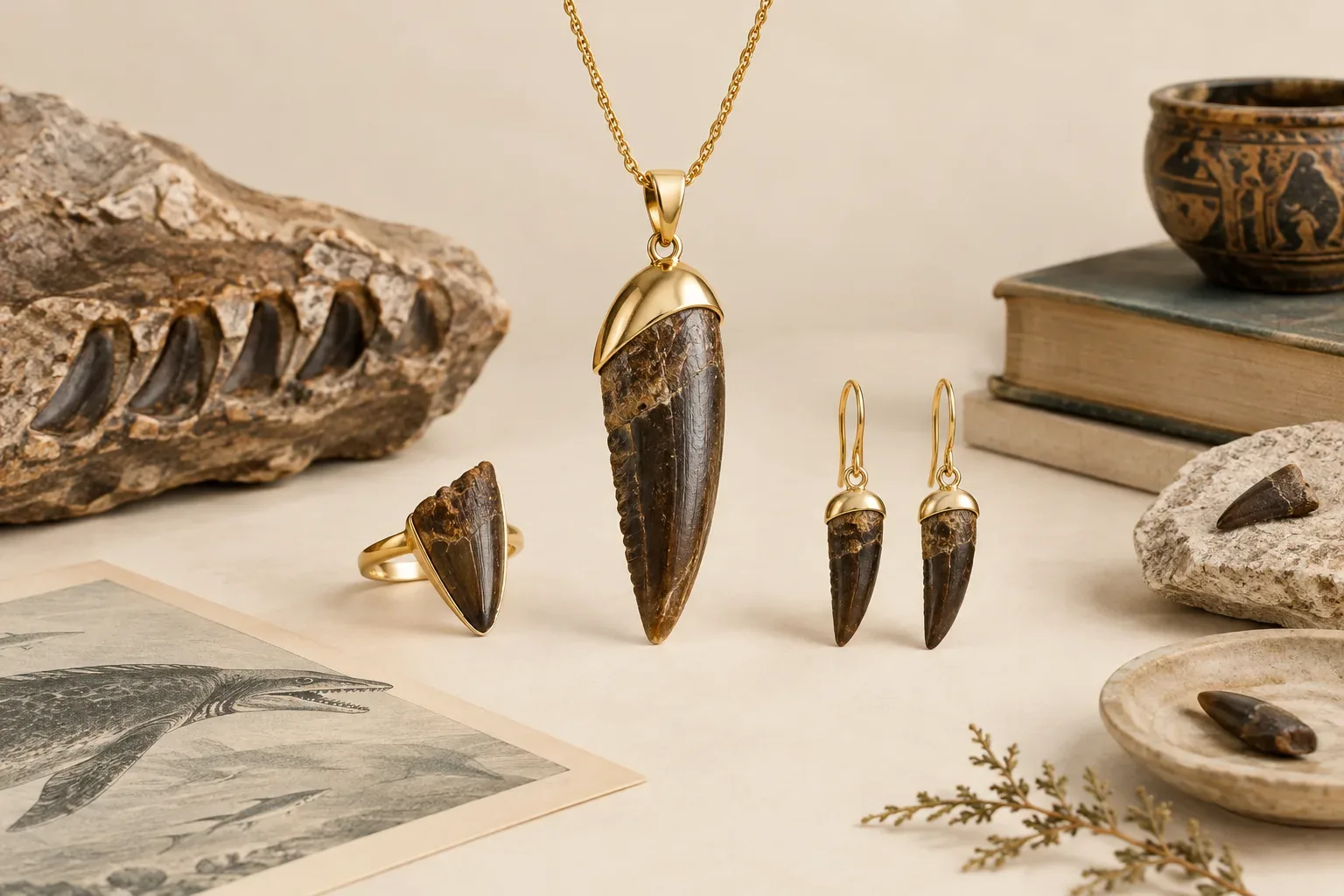
In contemporary jewellery, mosasaur teeth typically appear as pendants, single-tooth necklaces, or as components in mixed-media pieces. Makers may leave the fossil largely unworked to highlight natural texture, or they may clean and polish surfaces, add metal caps or bezels, drill the root for mounting, and combine teeth with metal settings, cords, or other gemstones. Museum resources that discuss gemstones and material treatment help to contextualise how non-traditional materials are adapted for wear, and the Victoria and Albert Museum’s reference on gemstones provides useful background on identification and handling of varied materials.
Because fossil teeth are structurally different from minerals commonly used in classic gemology, their appearance in jewellery blends palaeontological interest with contemporary design. If a piece incorporates a tooth in a setting or with modern finishes, those maker decisions affect how the object reads visually and culturally—in some cases highlighting natural history, in others foregrounding craft or fashion.
Authenticity: what to ask and what to expect
Start by asking the seller for clear, verifiable information. Sellers should be able to describe the material (for example, ‘fossilized mosasaur tooth’), the treatment history, and any provenance information they have. The Federal Trade Commission recommends that buyers expect disclosure of material treatments, stabilisation, and whether an item is an imitation or composite; this general principle applies to fossils and fossil-derived jewellery as much as to traditional gemstones.
Useful questions include: Can you provide high-resolution photos from several angles? Is there documentation of where the specimen was found or acquired? Has the tooth been stabilised, repaired, dyed, or combined with resins or modern materials? Was any metal work added, and if so, of what composition? If the seller cannot provide answers or resists basic disclosure about treatments and origin, consider that a warning sign.
Treatment and imitation: common realities and red flags
Treatments and composite work are common across many kinds of jewellery materials; museum guidance on gemstones explains how treatments change appearance and value, and the FTC recommends transparent disclosure about such processes. For fossil teeth this can include cleaning, adhesive repairs, surface consolidation (stabilisation), resin fills, and modern metal caps or mounts. None of these treatments is intrinsically improper, but they should be disclosed and described so buyers can judge conservation versus decorative alteration.
Red flags include sellers who claim an item is ‘untreated’ but cannot explain cleaning or stabilisation steps, or listings that use ambiguous language about ‘authentic look’ without clarifying whether the tooth is real, fossilised, or a replica. If a seller markets a piece as a ‘tooth’ but it is actually a cast, plastic, or entirely modern reproduction, the FTC’s guidance on truthful disclosure means the buyer should be told that upfront.
Care and maintenance
Treat fossil teeth as delicate, heterogeneous materials rather than hard gemstones. The Victoria and Albert Museum’s discussions of materials and jewellery history help underline that treatments and long-term preservation matter for unusual materials. As a practical rule, store fossil jewellery separately to avoid abrasion, keep it away from strong household chemicals and perfumes, and avoid repeated exposure to salt water and extreme heat which can stress adhesives or stabilising resins commonly used in treated specimens.
For routine cleaning, use a soft, dry cloth or a very soft brush and mild, plain water if needed; avoid soaking pieces where hidden adhesives or composite fills may be present. When in doubt, consult the maker or a conservation professional. If a piece has a significant or well-documented provenance, consider professional conservation advice rather than attempting aggressive cleaning yourself.
Selecting and gifting respectfully
If you are buying for yourself or as a gift, match the piece to the recipient’s interests and ethics. For a palaeontology enthusiast, include provenance information or a short note explaining what a mosasaur tooth is and where the piece came from. If the recipient is environmentally or culturally sensitive, ask whether a fossil piece might be better received as an educational specimen rather than personal ornament, because attitudes toward collecting and display of natural specimens differ.
Buy from sellers who provide clear descriptions, photographs, and, when possible, provenance. Reputable dealers and makers who work with fossil material will welcome questions about treatment and origin. If the piece is intended as a meaningful gift, include context: a small card with the species, the nature of the fossil, and any treatment described by the seller helps the recipient appreciate both the object and its story. Finally, remember that modern symbolic associations are personal; a well-chosen piece can carry a contemporary meaning you and your recipient agree upon, even where historical symbolism is limited.
Frequently asked questions
How can I tell if a mosasaur tooth is authentic?
Ask the seller for clear photos, provenance information, and a description of any treatments. Authenticity for fossils typically rests on expert identification and provenance rather than simple visual checks; reputable sellers will disclose any stabilisation, repairs, or composite work. If in doubt, request an independent assessment from a qualified palaeontologist or a reputable fossil dealer.
Are mosasaur teeth often treated or repaired?
Yes—many fossil specimens that enter jewellery are stabilised, cleaned, or consolidated to make them wearable. The Federal Trade Commission’s guidance on buying gemstones and pearls highlights that buyers should expect disclosure about treatments and whether a specimen has been altered or combined with modern materials. Sellers should describe any stabilisation, adhesive repairs, or resin fills.
Can I wear mosasaur tooth jewellery every day?
Because fossil teeth are heterogeneous and may include stabilising materials or adhesives, daily wear can expose a piece to abrasion, chemicals, and moisture. To prolong life, store pieces separately, avoid strong chemicals and prolonged moisture, and clean gently with a soft cloth. When caring for historically or scientifically significant specimens, seek professional conservation advice.
Is it legal to buy or sell mosasaur teeth?
Laws and regulations about fossil collection, trade, and export vary by country and jurisdiction. Buyers should confirm that a seller can document lawful acquisition and any export permissions required. If provenance documentation is absent, buyers should exercise caution and check local rules or consult an expert.
What should I ask a seller before buying?
Request clear, high-resolution photos; a description of the material; full disclosure of treatments or repairs; any available provenance; and details on how the tooth has been mounted or stabilised. Reputable sellers will answer these questions and provide sensible information about care and authenticity.
Sources and further reading
- Bedazzled: A History of Jewellery — Victoria and Albert Museum
- An A-Z of Gemstones — Victoria and Albert Museum
- Buying Gemstones, Diamonds, and Pearls — Federal Trade Commission