Meaning at a glance
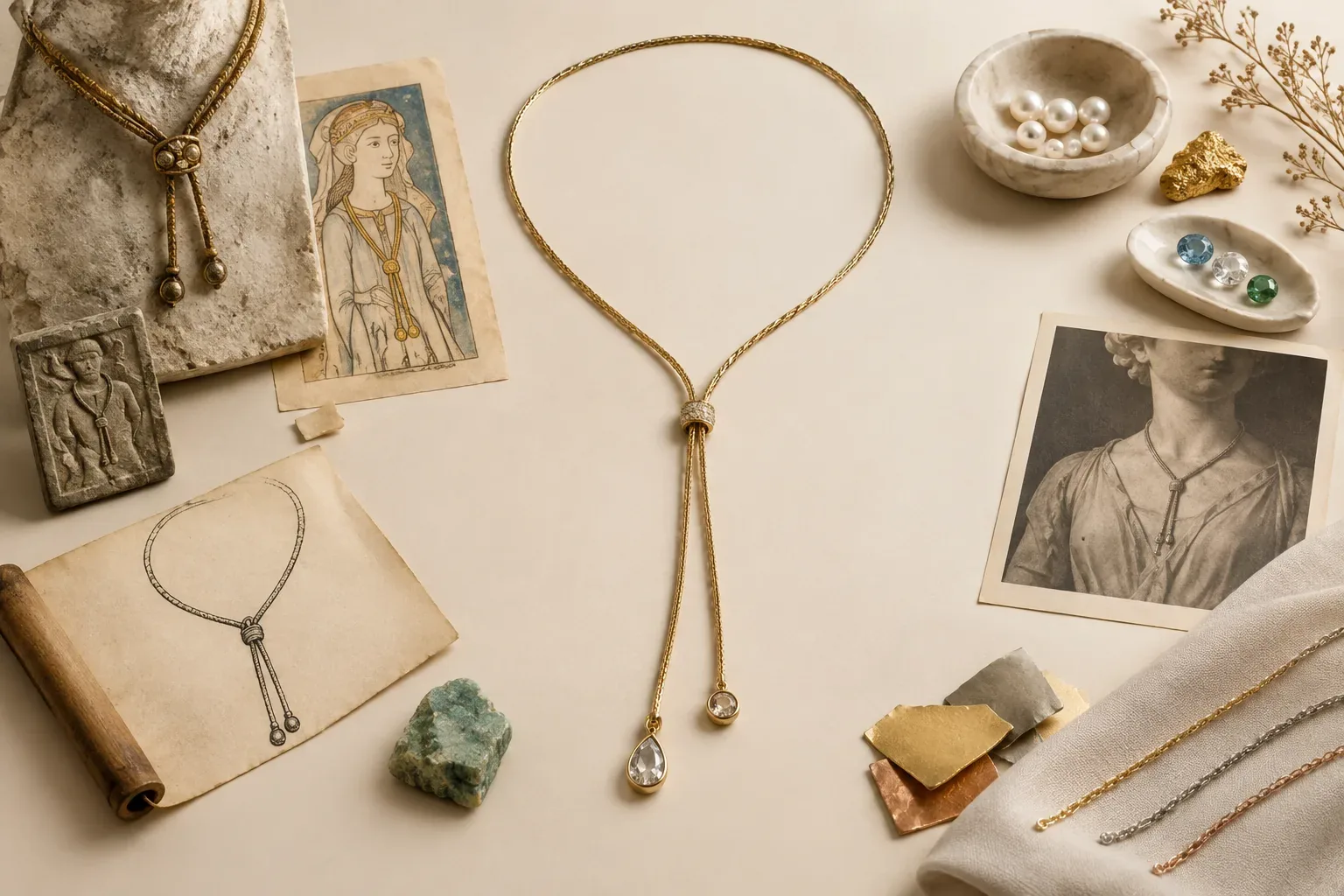
The lariat necklace is a modern jewelry term for open, rope‑like necklaces that loop, slide, or tie rather than close with a fixed clasp; museum surveys show rope and drape forms recur across many periods and cultures, but there is no single, universal historical meaning. Use clear questions about metal, construction, gemstone treatments, and return/appraisal policies (and consult seller documentation) when evaluating quality and price.
Documented history: what museums record and what they do not
Surveys of jewellery history concentrate on form, technique and social context rather than on one‑word symbolic definitions. The Victoria and Albert Museum frames jewellery as an element that changes with fashion, technology and social meaning; its materials note that rope‑like and draped neck ornaments are a recurring formal idea across history rather than a motif traceable to a single origin (Victoria and Albert Museum).
Because museum overviews emphasize change and context, they show that similar structural solutions — flexible cords, sliding knots, and decorative tassels — have been used by a range of cultures for functional or decorative reasons, not necessarily for a unified symbolic message (Victoria and Albert Museum). That means when you read modern claims that a lariat represents a particular belief or ritual, treat those claims as contemporary interpretations unless a clear, cited historical source ties the design to that practice.
Separating documented historical meanings from modern interpretations
Where museums document meaning, they do so in context: who wore it, when, how it was made, and how it related to social status or function (Victoria and Albert Museum). For lariat‑style pieces, the documented record commonly describes formal choices (how to drape a necklace or secure a pendant) or technical innovations rather than a single symbolic meaning.
Modern fashion narratives, marketing copy and personal symbolism often layer fresh meaning onto historic shapes. Those modern attributions — for example, calling a lariat a symbol of freedom, continuity, or sensuality — are valid personal or contemporary aesthetic interpretations, but they are not the same as museum‑documented historical evidence. Keep the distinction clear when researching or gifting: ask whether a claimed meaning is supported by historical scholarship (museum records) or is a modern usage or personal preference.
How the motif, gemstones and traditions appear in jewellery
In current jewelry practice the 'lariat' name describes an open-ended design that can be tied, looped, or passed through an element to secure it. Designers achieve the look using thin chains, cords, flexible metal strands, sliding beads, or a fixed loop and tongue. Decorative elements such as tassels, pendants, or bezel‑set stones often emphasize the drop created by the open design.
Gemstones and pearls are common accents on lariats. For information on individual stones and their historical use in jewelry, museum resources provide useful identification and context. The Victoria and Albert Museum maintains accessible summaries on many gemstones and their use in historical pieces, which can help buyers understand which gemstones are traditional for certain styles and which are modern choices (Victoria and Albert Museum).
Because lariat designs rely on flexible connections and frequent movement, workmanship details matter: fixed soldered links, secure bezels or prongs, reinforced cord ends, and high‑quality end caps reduce wear. Where a gemstone is present, the setting should protect the stone from catching on clothing or experiencing repeated shocks as the necklace moves.
Material, treatment and disclosure: what to ask sellers
Ask straightforward, specific questions about metal, gemstone treatments, and documentation. The Federal Trade Commission emphasises that buyers should request clear disclosure about material treatments, imitations and enhancements. Ask whether metal is solid or plated and for karat or purity markings, whether stones are natural, lab‑grown, treated, or simulants, and whether any disclosure accompanies the piece (Federal Trade Commission).
Request photographs of hallmarks or assay marks, a description of construction (soldered links versus glued or crimped ends), and any grading, lab reports or receipts. If a gemstone is important to price, ask for a lab report or at least a seller statement about origin, treatment and whether the stone is natural or synthetic. Transparent sellers will provide this information or explain their return or appraisal options if you need independent verification.
Quality, craftsmanship and price: how to evaluate value
Price depends on materials, gemstone quality, and craftsmanship. Solid precious metals and well‑finished workmanship command higher prices than plated metals or mass‑produced pieces. Heavy, well‑soldered chain elements and secure settings are signs of durability in a lariat, which will take more movement than a fixed necklace.
For gemstones, treat quality factors such as cut, clarity, color and carat (and any treatments) as you would for any other setting. Museum gemstone guides can help you identify common stone types and how they have been historically used in jewelry; combine that knowledge with seller disclosures about treatments to form an accurate sense of value (Victoria and Albert Museum; Federal Trade Commission).
When comparing prices, factor in design complexity: a hand‑finished sliding mechanism, custom tassels, or detailed gem settings increase labor cost. Ask whether repair or restringing is straightforward and whether the seller offers warranties or a return window that allows independent appraisal.
Practical selection and respectful gifting guidance
Match the lariat’s scale and materials to how the recipient dresses and to their lifestyle. A delicate, fine‑chain lariat suits evening wear; a sturdier, thicker rope or chain suits daily wear. Consider metal allergies and preferred metal tones, and choose gemstones and finishes that align with the wearer’s regular wardrobe and daily activities.
If you want the necklace to carry symbolic meaning, be explicit about whether the meaning is personal or historically documented. If you claim a cultural or religious significance for a design, research that claim carefully and cite reliable sources; avoid assuming any single design is sacred or universally meaningful. When in doubt, choose a neutral, high‑quality piece and present it with a personal note explaining the meaning you intend.
Respect provenance and cultural associations. If a piece is described as a form from a specific culture or era, ask the seller for evidence or a clear provenance statement. Provenance can affect both the cultural sensitivity of gifting and the price, so buyers should be prepared to verify claims or choose a contemporary reinterpretation that does not claim undue historical authenticity.
Care, maintenance and long‑term value
Because lariat designs move and can catch on clothing, regular care is important. Inspect sliding elements and end caps for wear. For precious metals, follow standard cleaning guidance and ask a jeweler about re‑soldering or tightening links if the necklace begins to show stress.
If the piece contains pearls or soft gemstones, avoid chemicals and store the necklace flat or hung so that pendants and tassels do not tangle. Keep documentation of purchase, hallmarks and any gemstone reports; these records aid insurance, resale and appraisal.
Frequently asked questions
What exactly is a lariat necklace?
A lariat describes a necklace style that remains open-ended rather than closing with a fixed clasp; it is designed to loop, tie or pass through a feature and often creates a drop or tassel. The name refers to the form, not a single historical meaning.
How do I check whether the metal is real gold or plated?
Ask the seller for karat or purity markings and photographs of hallmarks. For reassurance, request a written statement about metal content or have a local jeweler perform a non‑destructive test; documentation helps for insurance and resale.
Are gemstones in lariats often treated or synthetic?
Gemstones may be natural, treated, lab‑grown or simulated. The Federal Trade Commission advises buyers to request clear disclosure about any treatments, enhancements or simulants before purchase, and to obtain any available lab reports.
What should I expect to pay for a quality lariat necklace?
Price varies widely with metal content, gemstone type and cut, and the level of craftsmanship. Solid precious metal, well‑finished sliding mechanisms and natural untreated gemstones increase cost. Compare pieces with similar materials and ask sellers about construction details, warranties and return policies.
Is gifting a lariat culturally sensitive?
Because similar forms have appeared in many contexts, a lariat is generally a versatile gift, but avoid asserting cultural or religious meanings without research. If the piece is described as from a specific culture or tradition, ask for provenance and sources to ensure respectful gifting.
How should I care for a lariat necklace?
Store it to avoid tangling or abrasion, inspect sliding elements frequently, keep pearls and soft stones away from chemicals, and ask a jeweler about periodic tightening or re‑soldering. Keep purchase documentation for future appraisals or insurance.
Sources and further reading
- Bedazzled: A History of Jewellery — Victoria and Albert Museum
- An A-Z of Gemstones — Victoria and Albert Museum
- Buying Gemstones, Diamonds, and Pearls — Federal Trade Commission