Meaning at a glance
Layer necklaces by combining short, mid, and long lengths with varied chain weights and clear focal points, while acknowledging documented historical contexts and separating cultural symbolism from contemporary personal interpretation.
Documented historical evidence and changing contexts
Museum research shows that layered ornament has appeared in many cultures but with different materials and social meanings. The Victoria and Albert Museum’s exhibitions and writing explain how jewellery’s social role and visual styles have changed across periods, with pieces serving functions from status display to personal remembrance. The museum’s overview highlights how what we now call “fashion” pieces were often embedded in social hierarchies and rites in earlier contexts.
The V&A also provides accessible histories of specific materials and gemstones, illustrating that the same visual motifs and stones have been reinterpreted in new technologies and tastes over time. These documented threads caution against assuming any single, fixed meaning for layered necklaces; instead, layers reflect specific historical and cultural contexts recorded by museum scholarship.
Separating documented cultural or religious evidence from modern interpretations
When discussing the symbolism of motifs or layering practices, it is important to distinguish museum-documented uses from later popular or personal readings. The V&A’s historical accounts record specific uses—for example, jewels tied to rank, commemoration, or trade value—rather than contemporary, generalized meanings.
Modern style trends that favor maximalist layering often repurpose traditional motifs or combine items from different cultures. These contemporary interpretations are personal and fashion-driven, and they do not always reflect the original cultural, ritual, or religious meanings recorded by historians. Treat documented cultural or religious associations as specific to their time and place, and treat modern meanings as individual or subcultural choices rather than universal truths.
How motifs, gemstones, and traditions appear in layered jewelry
Motifs and gemstones show up in layered necklaces in three common ways: as repeated small charms, as a single focal pendant, or as statement beads and cabochons strung across multiple strands. The V&A’s A–Z of Gemstones explains the historical use and visual appeal of many stones; museums record how lapidary techniques, setting styles, and stringing methods evolved and moved between cultures.
Gemstones in modern layered looks may be untreated, treated, or synthetic. The Federal Trade Commission provides guidance on disclosure and consumer protection for gemstones, diamonds, and pearls, which is relevant when selecting gemstones for layering or when receiving a gift. Knowing whether a stone has been enhanced, stabilized, or substituted changes both its value and how you might treat it when layering with other pieces.
Layering practicalities: length, balance, and preventing tangles
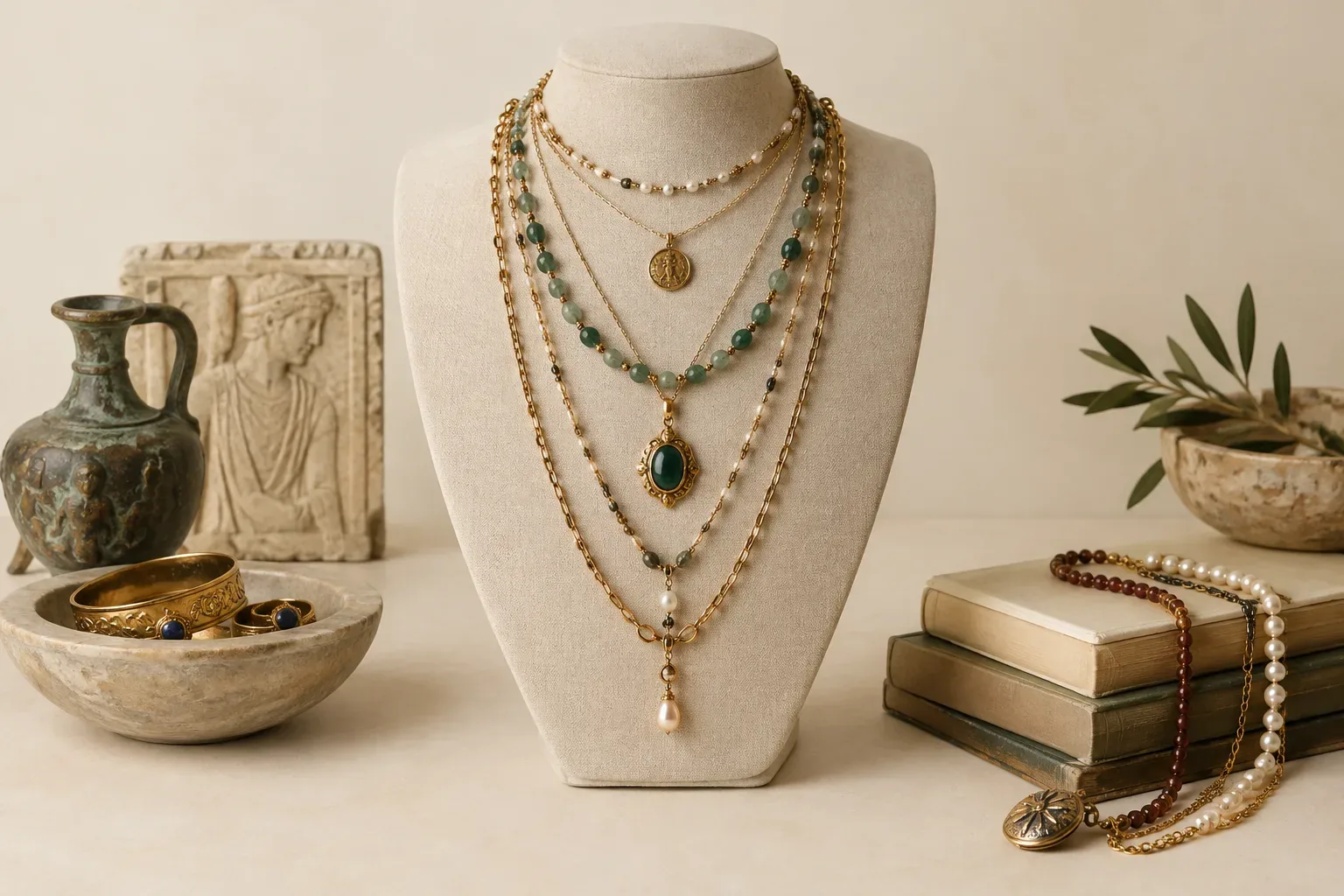
Think in relative lengths rather than fixed measurements: begin with a short piece that sits closest to the throat or base of the neck, add a mid-length that rests near the collarbone, and finish with a long pendant or strand that falls on the chest. Each layer should be visibly separate from the next so the eye can land on distinct focal points, which creates a composed maximalist effect rather than visual clutter.
Vary chain weight and motif scale. Pair delicate chains with small charms alongside one or two heavier chains or beaded strands. A larger pendant or a thicker chain can act as the visual anchor, preventing the ensemble from looking unintentional. Contrast textured links with smooth chains to add depth without extra volume.
To reduce tangling, avoid layering several very fine, similar-length chains with free-hanging pendants. Use necklace spacers or multi-strand organizers when storing or traveling, and consider connecting multiple chains to a single clasp or using small safety rings at different points on a single chain to control movement. When putting on layers, fasten the longest piece first so the shorter pieces sit naturally above it.
Mixing metals, materials, and motifs respectfully
Mixing metals and materials is an accepted maximalist strategy, but do so thoughtfully. When combining yellow gold, white gold, silver, or plated metals, consider tonal cohesion through a repeated accent—such as a single charm or a recurring gemstone color—to unify the set. If you include items with explicit cultural or religious symbolism, learn their specific meanings and contexts rather than relying on general impressions.
If a particular motif belongs to a living cultural tradition, ask about provenance before wearing or gifting it. Museum histories show that objects gain meaning in context, and that context matters when motifs move from ceremonial or community use into mainstream fashion. Respectful use can mean consulting a knowledgeable source, choosing contemporary makers from that culture, or selecting motifs that are widely shared and not sacred.
Selecting pieces and gifting with care
When choosing jewelry for a maximalist wardrobe or buying as a gift, match the recipient’s comfort with scale and cultural sensitivity. Ask whether they prefer bold, tactile pieces or intricately detailed layers. If you are uncertain about the cultural significance of a motif, select a secular or clearly decorative piece instead.
Check material disclosures and treatments before purchasing. The Federal Trade Commission advises that sellers should disclose treatments, synthetics, and imitations for gemstones, diamonds, and pearls; this affects both value and care. For heirloom-style or historically inspired pieces, look for reputable makers or documented provenance so you can explain the piece’s history accurately when gifting.
Care and longevity for layered pieces
Layered pieces often experience more friction than a single necklace, so choose durable chains and secure settings for stones that will be worn together. Store layered sets flat or on specialized organizers to avoid kinks and tangles. For pearls and porous stones, follow care instructions for gentle cleaning and limited exposure to cosmetics and moisture.
When in doubt about repair or cleaning, consult a professional jeweller or conservator. If a piece has historical or cultural value, treat it as you would any valuable object: seek expert advice rather than improvising cleaning methods that could cause irreversible damage.
Frequently asked questions
How many necklaces should I layer for a maximalist look?
There is no fixed rule, but three distinct lengths tends to read as deliberate: a short piece closest to the neck, a mid-length near the collarbone, and a longer pendant or strand as an anchor. Adjust the number to your comfort and the visual weight of each piece.
Can I mix different metals when layering necklaces?
Yes. Mixing metals is a modern styling choice. To create cohesion, repeat a color or motif across layers or choose a unifying stone or pendant.
How do I avoid tangles when wearing multiple necklaces?
Fasten the longest piece first, vary chain thicknesses, and avoid several very fine, similar-length chains. Use multi-strand clasps, small safety rings, or travel organizers to keep strands separated.
Are there ethical or legal considerations when buying traditional motifs or gemstones?
Yes. For gemstones and pearls, the Federal Trade Commission recommends sellers disclose treatments, synthetics, and imitations. For traditional motifs, research provenance and cultural significance and prefer makers who can document responsible sourcing or cultural consent.
How should I care for layered necklaces?
Store layered sets flat or in organizers to avoid kinks, clean according to the most delicate material in the set, and consult a professional jeweller for repairs or conservation of valuable or historic pieces.
Sources and further reading
- Bedazzled: A History of Jewellery — Victoria and Albert Museum
- An A-Z of Gemstones — Victoria and Albert Museum
- Buying Gemstones, Diamonds, and Pearls — Federal Trade Commission