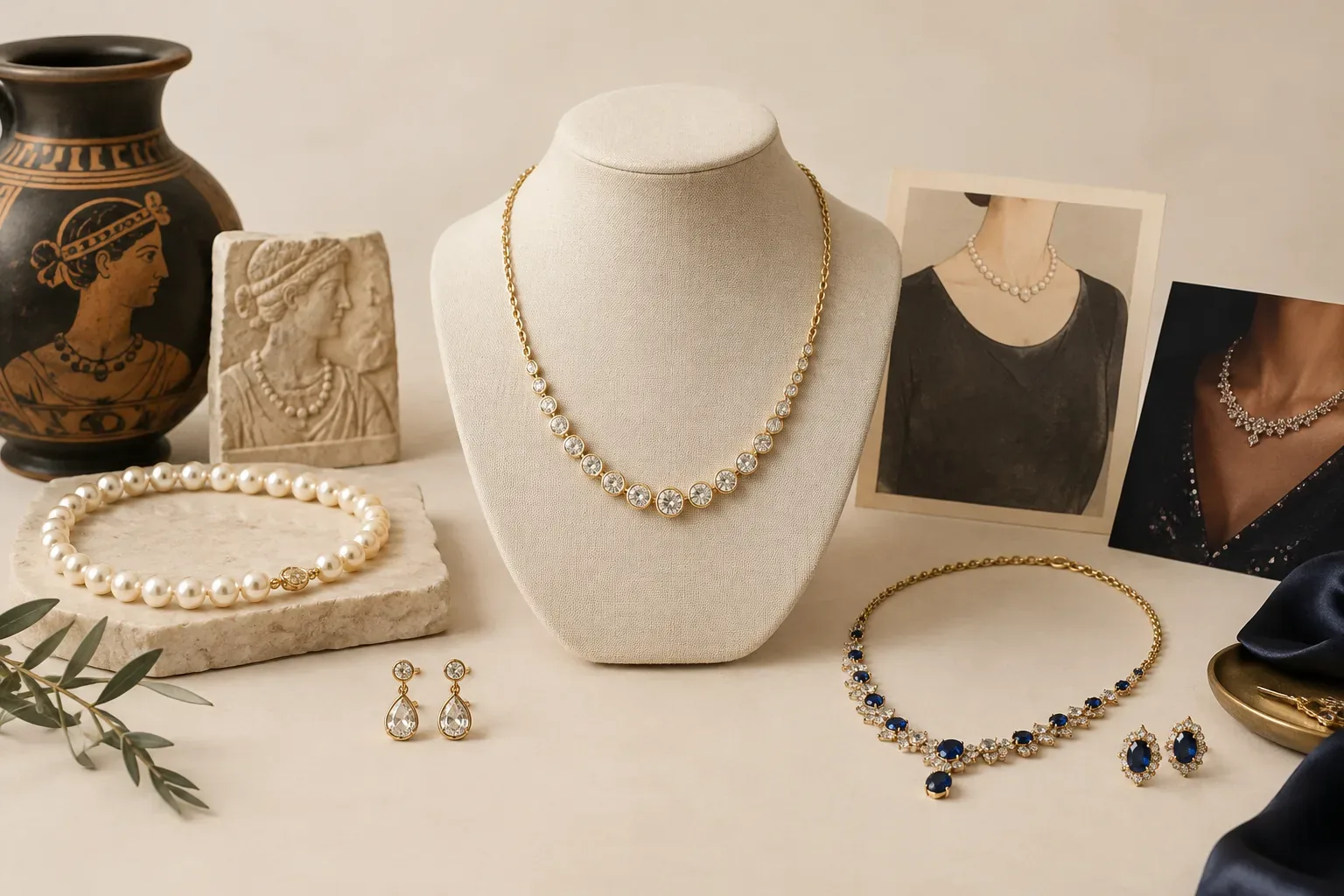
Meaning at a glance
Use shorter, closer-to-the-neck pieces and refined layers by day and swap in one or two bolder elements for night; understand the historical uses of necklaces and gemstones from museum research, distinguish documented meanings from personal symbolism, and follow consumer guidance on gemstone disclosure when selecting or gifting jewelry.
Quick answer
For crew‑neck outfits, keep daytime jewelry compact and close to the neckline—short chains, small pendants, studs or small hoops—and convert to evening by adding one bolder or more reflective element such as a statement necklace, drop earrings, or a layered chain. This approach lets the silhouette of the crew neck remain clean in daylight while allowing a single dramatic or sparkling piece to transform the look for night, and it aligns with historical patterns of jewelry functioning as both daily adornment and social display (Victoria and Albert Museum).
What the historical record says and where it comes from
Museums and curators describe jewelry as both personal ornament and social signal across many eras and places. The Victoria and Albert Museum’s overview of jewellery history emphasizes that designers, wearers and societies repeatedly adjusted the form and display of jewellery in response to changes in dress, technology and social norms. The same object could be everyday adornment in one context and ceremonial or status signaling in another, depending on materials, placement and occasion.
The V&A’s resources on gemstones place many of the stones we use today—pearls, garnets, sapphires and others—into long historic use, showing how cutting, setting and the cultural language around particular gems changed over time. For example, curators note that advances in cutting and setting made some gemstones catch light differently, altering how they were used to attract attention on a wearer’s person (Victoria and Albert Museum).
Separating documented historical meanings from modern interpretations
Documented historical meanings often come from how objects were used and described in their own time: lockets and portrait miniatures preserved images of absent loved ones and were often explicitly sentimental; coronation regalia and state jewellery marked rank and office. The V&A’s historical commentary provides evidence for these documented social and material functions without endorsing any single, universal emotional meaning.
Modern personal interpretations—such as wearing a pendant “to keep a loved one close to your heart” or adopting a motif because it ‘brings luck’—are valid personal choices but should be distinguished from what the historical record proves. Contemporary wearers frequently repurpose historic forms and motifs for new meanings, and that re‑use is a cultural practice in its own right rather than a continuation of original intent.
How motifs, gemstones and traditions appear in jewellery for crew‑neck styling
Crew necklines are typically close to the base of the neck, which influences which jewellery forms read best. Historically, short chains, chokers and small pendants were practical with higher necklines because they sat above or at the edge of clothing; longer pendants work best with lower necklines. Museums’ collections and exhibitions show many examples of short necklaces and collars designed to be visible with higher necklines as social display items (Victoria and Albert Museum).
Gemstones appear in these forms according to how they were cut and set in different periods. The V&A’s A–Z of gemstones explains that faceting, cabochon cutting and mounting styles change how a stone catches the light, which affects whether it reads as understated or dramatic. For daywear with a crew neck, smaller faceted stones or polished cabochons set in neat bezels will appear restrained; for evening, larger faceted stones or clustered settings will read as more striking.
Motifs—floral sprays, geometric medallions, small religious or protective symbols—have been adapted repeatedly. Where a historic catalogue records use of a motif as an amulet or status marker, that is a documented cultural function. In modern styling the same motif may be chosen for aesthetic, sentimental or identity reasons; those modern motivations are personal interpretations rather than museum‑proven meanings.
Practical day‑to‑night jewelry strategies for crew‑neck outfits
Start with a daytime base that is comfortable and proportionate. A short chain (typically 14–18 inches for many adults) with a small pendant, a delicate collar or a single strand of small pearls will sit close to a crew neck without fighting the fabric. Keep earrings small to medium and avoid heavy drops during the day to stay comfortable and professional.
For evening, make one purposeful change rather than replacing every piece. Swap the daytime pendant for a chunkier short necklace or add a statement collar on top of a slim chain. Alternatively, keep the short necklace and introduce bold drop earrings or a sparkling brooch on a jacket lapel or dress shoulder to create vertical interest without cluttering the neckline. Layering two short chains that differ in texture or metal can also give instant depth while still respecting the crew‑neck silhouette.
Consider how light will interact with the materials. Faceted stones, mirror‑polished metals and well‑placed pearls show more from a distance and under evening lighting. If you want more nighttime impact with minimal swaps, choose one piece that amplifies reflected light—earrings with faceted stones or a pendant with a polished gemstone—and let other pieces remain subdued.
Selection and gifting guidance: practical, respectful, and consumer‑aware
Select pieces that respect both the wearer’s lifestyle and cultural background. If you are gifting a motif that has cultural or religious associations, check whether that symbol has ceremony or sacred use for the recipient’s community. When in doubt, choose classic, non‑religious forms such as simple bars, geometric pendants or small gemstone studs that are less likely to carry unintended cultural weight. Our guide on choosing meaningful jewelry gives additional practical steps for researching symbolism and recipient preferences.
Pay attention to proportions and comfort. For a crew neck, shorter lengths and lighter weights are safer practical choices. If the recipient prefers subtlety, opt for smaller stones or low‑relief motifs; if they like drama, choose a single bold piece rather than many competing elements.
Be clear about materials and treatments when buying or gifting gemstones. The Federal Trade Commission advises consumers to ask sellers about treatments, synthetics and imitations and to seek written confirmation on the nature of the stone. Disclosures affect value and care requirements, so request documentation from reputable dealers, and keep receipts and any certification with the piece.
Care, buying notes and responsible choices
Use trustworthy sources when purchasing gemstones and precious metals, and ask sellers about origins, treatments and return policies. The FCC’s consumer guidance emphasizes that many stones are routinely heat‑treated, dyed or otherwise enhanced and that sellers should disclose such treatments. Knowing whether a stone is natural, treated or synthetic changes both care and expected durability.
For care, choose appropriate cleaning methods for the metal and stone. Hard stones like sapphires and diamonds tolerate gentler ultrasonic cleaning, while porous or treated materials may need only a soft cloth and mild soap. If a gifted piece carries sentimental value, consider professional cleaning and inspection by a qualified jeweller to ensure settings are secure before regular wear.
Final practical checklist
When planning jewelry for a crew‑neck outfit that must move from day to night, choose a restrained daytime base, plan one or two intentional evening enhancements, be mindful of proportion and comfort, and verify materials and treatments at purchase. Distinguish historically documented meanings from modern personal interpretation when selecting motifs if cultural or sentimental concerns matter, and consult reliable museum resources and consumer guidance when researching history and materials.
Frequently asked questions
What necklace length works best with a crew neck for daytime?
Necklaces that sit close to the base of the neck—often 14 to 18 inches depending on body proportions—tend to work best for daytime with a crew neck because they follow the neckline without bunching over fabric.
How can I make my daytime jewelry more evening‑appropriate without a full change?
Introduce one bolder element such as a short statement necklace, dramatic drop earrings, or a single sparkling brooch. Alternately, layer a second short chain over the daytime piece to add depth and shine.
Are certain gemstones better for day wear versus night wear?
Smaller, more muted stones or cabochons often read as daytime‑appropriate, while larger faceted stones and clustered settings reflect more light and create evening impact. Material choice should also consider the wearer’s comfort and daily activities.
What should I ask a seller when buying a gemstone gift?
Ask whether the stone is natural, treated, synthetic or an imitation; request written confirmation of any treatments; inquire about return policies and any certification. The Federal Trade Commission recommends clear disclosure of treatments and synthetic status.
How can I respect cultural or religious meanings when gifting a motif?
Research the symbol’s cultural or religious significance and, if possible, ask the intended recipient or someone from their community. When unsure, choose neutral motifs or consult our practical gift guide on choosing meaningful jewelry.
Sources and further reading
- Bedazzled: A History of Jewellery — Victoria and Albert Museum
- An A-Z of Gemstones — Victoria and Albert Museum
- Buying Gemstones, Diamonds, and Pearls — Federal Trade Commission