Meaning at a glance
Gold vermeil is sterling silver finished with a layer of gold; this guide explains the documented historical contexts of plated and gilded jewelry, distinguishes recorded cultural meanings from modern personal interpretations, describes how vermeil and gemstones appear in pieces, and gives practical advice for choosing, caring for, and gifting vermeil.
Short answer
Gold vermeil is sterling silver coated with a layer of gold; it offers the look of gold at a lower price point than solid gold. When buying vermeil, ask about the silver base, the karat of the gold used, how the finish was applied and disclosed, and whether gemstones are natural or treated. Documented museum studies describe how plated and gilded finishes have changed meaning according to fashion and social context, while consumer guidance emphasizes clear disclosure of treatments. Use this information to balance appearance, durability, and cultural or personal significance when selecting or gifting vermeil.
What gold vermeil is and why it matters
In commercial jewelry terms, vermeil refers to a precious metal finish in which silver is given a gold surface. The result is a warm, gold appearance while retaining a silver core. Buyers choose vermeil for its aesthetic similarity to gold combined with lower price and, often, a lighter weight than solid gold.
The way vermeil is made and described matters to value and longevity. Treatment methods, the purity of the gold used for the surface, and the quality of the silver underneath affect how the piece wears, how it reacts with skin, and whether it is a durable everyday item or best kept for occasional use. For consumer protection, sellers should disclose treatments and the nature of the materials involved.
Documented historical evidence and cultural contexts
Museums and curators examine jewelry as part of broader social and technological histories rather than as single, fixed meanings. The Victoria and Albert Museum (V&A) describes the longue durée of jewelry as an art form whose materials and finishes reflect changing tastes, techniques, and social contexts. The V&A's work shows that gilding, plating and other surface treatments have recurred across periods and cultures as ways to achieve the appearance of precious metals, to signal status, and to follow fashion.
Across different times and places, a gilded surface has not carried one universal meaning. In some periods, the look of gold signaled wealth and public display; in others, economical gold finishes allowed a wider range of people to participate in current styles. The V&A frames these shifts as part of the changing social context of jewellery rather than a single symbolic story.
Separating documented historical meanings from modern interpretations
Documented history recorded by curators and historians focuses on technique, fashion and social use, not on a single symbolic definition. The V&A’s approach shows that finishes like gilding or plating should be read in context: who wore the object, in what setting, and what techniques were available. Those are the types of historical claims reliably supported by museum research.
By contrast, many modern interpretations are personal or commercial. Contemporary sellers and wearers often ascribe symbolic meanings—for example, that a vermeil piece conveys affordable luxury or sustainability—based on current values. Those modern interpretations are valid personal or marketing perspectives, but they are not the same as the documented cultural or ritual meanings recorded by museum scholarship. Treat contemporary symbolic claims as interpretive rather than historical fact unless a specific culture’s records are cited.
How vermeil, motifs and gemstones appear in jewelry
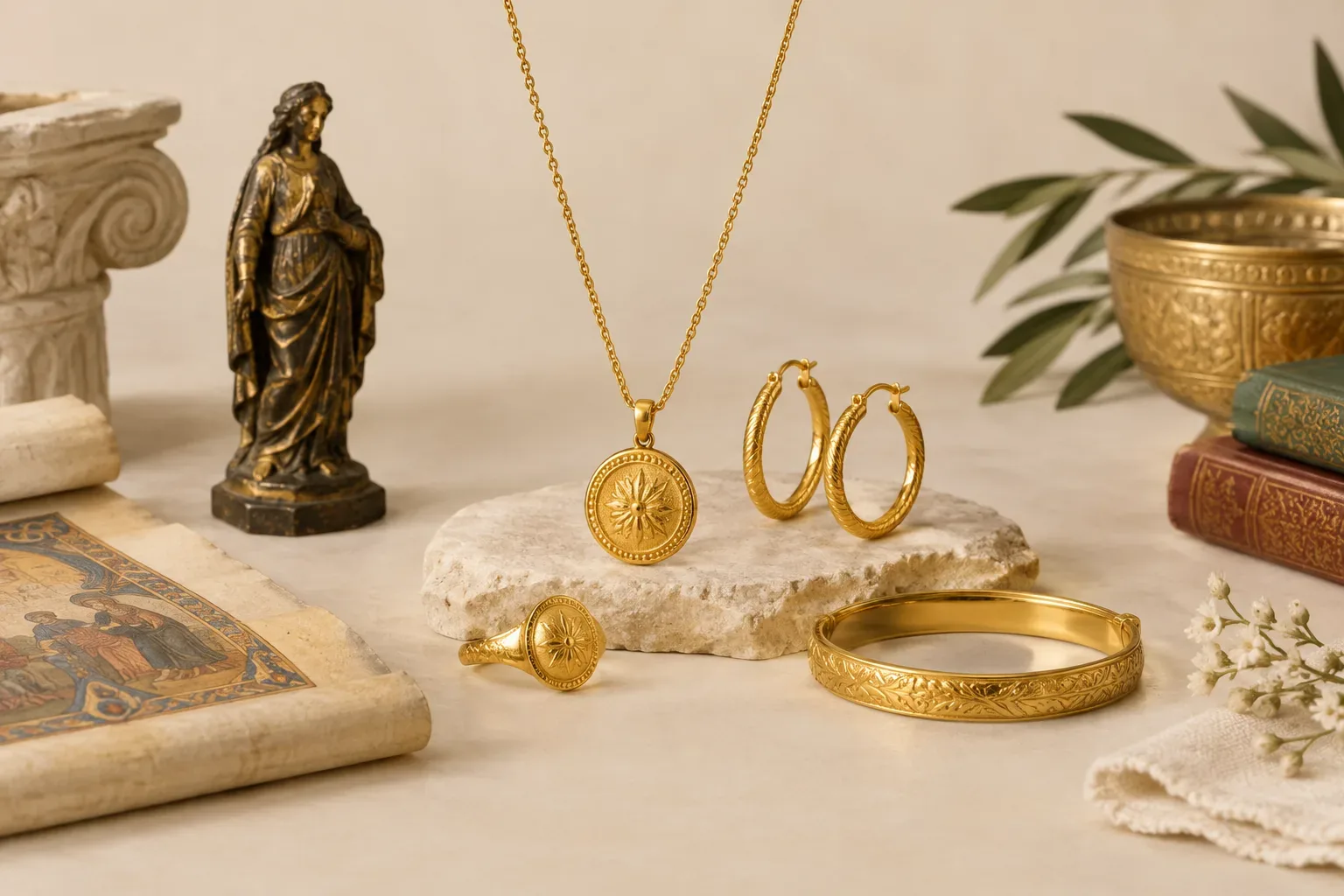
Vermeil appears as a finish on a wide range of forms: chains, signet rings, pendants, lockets and costume-inspired pieces frequently feature a gold surface over silver. The technique is compatible with many shapes and with setting gemstones, because the silver core provides a workable metal for making settings and the gold surface provides the desired color.
The Victoria and Albert Museum’s A–Z of gemstones emphasizes that gemstones themselves carry varied histories and technical identities. In modern vermeil pieces, you may find natural, treated or simulated stones. Sellers might use a vermeil setting to highlight a colored gemstone for visual contrast, to give a warm tone to a clear stone, or to create a period-inspired look. When a piece reproduces a historical motif—such as Victorian lockets, classical cameos or Art Deco geometry—vermeil can be chosen specifically to evoke an earlier era’s palette while retaining modern manufacturing methods.
How to evaluate quality and price (practical steps)
Ask the seller for plain facts first: what is the base metal (confirm it is sterling silver if it is sold as vermeil), what karat gold is used for the surface, and how the gold was applied. The Federal Trade Commission (FTC) advises sellers to disclose treatments and imitations; as a buyer, insist on clear descriptions. These material facts affect price, expected wear and the piece’s suitability for daily wear.
Examine craftsmanship. Check joins, clasps, settings and the evenness of the finish. A well-made vermeil piece will have secure settings and an even surface without obvious flaking or rough edges. Consider the design: pieces with delicate engraving, fine filigree or pierced work often require more care but can command higher prices because of the labor involved.
Compare price to alternatives. Vermeil is generally less expensive than solid gold of similar weight and design because much of the object is silver rather than gold. It can be a cost-effective choice for larger or trend-led items where solid gold would be prohibitively expensive, but expect to pay more than for non-precious plated costume jewelry because of the silver core and higher-quality finishes.
Care, wear and best uses
Vermeil is best treated as a semi-precious finish: it can be worn regularly, but it benefits from mindful care. Avoid harsh chemicals, abrasive cleaners and prolonged exposure to water and perspiration; these accelerate wear of any plated surface. Store vermeil separate from harder metals and gemstones to reduce abrasion.
For everyday items that will encounter friction—wedding bands or frequently worn rings—consider the long-term trade-off: some vermeil will develop wear patterns over time that reveal the silver beneath. For statement pieces, seasonal accessories or styles that you may update frequently, vermeil offers an economical way to have a high-quality gold appearance without the cost of solid gold.
Practical and respectful selection and gifting guidance
When selecting vermeil as a gift, consider the recipient’s metal preferences, skin sensitivity and lifestyle. Some people prefer solid metals for sentimental items intended to last for decades; others appreciate vermeil’s look without the same financial commitment. If the recipient has metal allergies, ask the seller about the silver alloy and any other metals used in joins or backs.
Be attentive to cultural and symbolic associations. Because meanings change over time and across cultures, verify whether a particular motif or gemstone has specific cultural or religious significance for the person you’re buying for. The V&A demonstrates that historical objects must be read in context; following that approach, prefer direct, respectful inquiry over assumptions. If you are unsure, choose neutral motifs or accompany the gift with a note explaining your intention.
For responsible purchases, insist on disclosure. The FTC’s consumer guidance highlights that treatments, imitations and material substitutions should be made clear to buyers. Ask for written details about the metals and any stone treatments, and request return or repair policies in case the piece wears sooner than expected.
Putting it together: when vermeil is the right choice
Choose vermeil when you want a warm gold color at a moderate price, when you value a silver core for its workability or color contrast with gemstones, or when you want a historically inspired look without the cost of solid gold. Prefer solid gold for heirlooms you expect to pass down intact, and prefer vermeil for fashion-forward, seasonal or larger pieces where cost is a major factor.
In every case, use disclosure and craftsmanship as your primary quality indicators. Clear answers from the seller about the materials and treatments, plus careful inspection of the finish and settings, will tell you whether the piece matches your expectations for longevity and value.
Frequently asked questions
Is gold vermeil 'real' gold?
Vermeil combines sterling silver as the core metal with a gold surface. It is not solid gold, but it is made from precious metals rather than base metals when correctly described. For consumer protection, sellers should plainly disclose the materials and any treatments.
How long will vermeil last before the gold shows wear?
Longevity depends on how the piece was made, the karat of the gold finish, how often you wear it and how you care for it. A well-made vermeil piece can last for years with mindful wear and storage, but all plated surfaces will show wear eventually. Ask the seller for details about the application method and their expected wear life.
Can gemstones be set in vermeil settings?
Yes. Vermeil settings can hold many kinds of stones—natural, treated or simulated—because the silver core is workable for setting. If the historical or gemological identity of a stone matters to you, request written information about the stone’s origin and any treatments.
How should I care for vermeil jewelry?
Avoid chemicals, abrasive cleaners and prolonged moisture. Store vermeil separately to reduce abrasion and wipe gently with a soft cloth after wearing. For heavy soiling or repair, consult a jeweler who will work with precious metals rather than using household polish.
What should I ask the seller before buying vermeil?
Request clear answers about the base metal (confirm sterling silver), the karat of the gold used for the surface, how the gold was applied, and whether any gemstones are natural or treated. Also ask about returns, repairs and any hallmarks or documentation that support those claims.
Sources and further reading
- Bedazzled: A History of Jewellery — Victoria and Albert Museum
- An A-Z of Gemstones — Victoria and Albert Museum
- Buying Gemstones, Diamonds, and Pearls — Federal Trade Commission