Meaning at a glance
Explain the documented history and changing contexts of gastropod fossil jewelry, separate verified cultural evidence from modern interpretation, describe how the motif and material appear in jewellery, and offer practical guidance for choosing, gifting, and caring for gastropod fossil pieces.
Direct answer — what this guide explains
This guide explains the documented history and changing contexts of gastropod fossil jewellery, separates cultural or religious evidence from later popular interpretations, and gives practical guidance for choosing, authenticating, and caring for gastropod fossil pieces in modern jewellery.
What the historical evidence shows — museums and material context
Museum scholarship shows that jewellery fashions and the use of natural materials have changed over time and across cultures; the Victoria and Albert Museum documents these broad shifts in style, meaning, and material use in its collections and interpretive resources. The V&A’s work supports using museum records and object histories to understand how motifs and materials enter jewellery traditions rather than assuming continuity or universality.
Specific, well-documented historical claims about gastropod fossils as a recurring, named motif in a particular ancient religion or single long-running cultural tradition are limited in accessible museum records. Where fossils appear in historical collections, museums tend to present them within the wider themes of natural history collecting and the shifting tastes for natural objects in decorative arts. In other words, the strongest documented evidence is that jewellery practices change with social context, and natural specimens have sometimes been incorporated when collecting and scientific interest or fashion favored them (Victoria and Albert Museum).
Separating documented historical meanings from modern interpretations
Documented meanings: When museums document jewellery that includes natural specimens, they report provenance, maker, and recorded use rather than assuming symbolic meaning. The V&A emphasises contextual evidence—labels, maker records, and contemporary texts—when attributing symbolic significance to an object. If there is no direct documentary evidence tying a fossil gastropod to a specific ritual or religious meaning, that absence should be noted.
Modern and popular interpretations: Today, people often attribute meanings such as longevity, connection to the sea, or evolution and time to fossil motifs. These are modern personal or cultural readings rather than universally documented historical meanings. Treat modern symbolism as contemporary sentiment or personal statement, useful for gifting and personal expression, but distinct from museum-grade historical evidence.
How gastropod fossils or motifs appear in jewellery
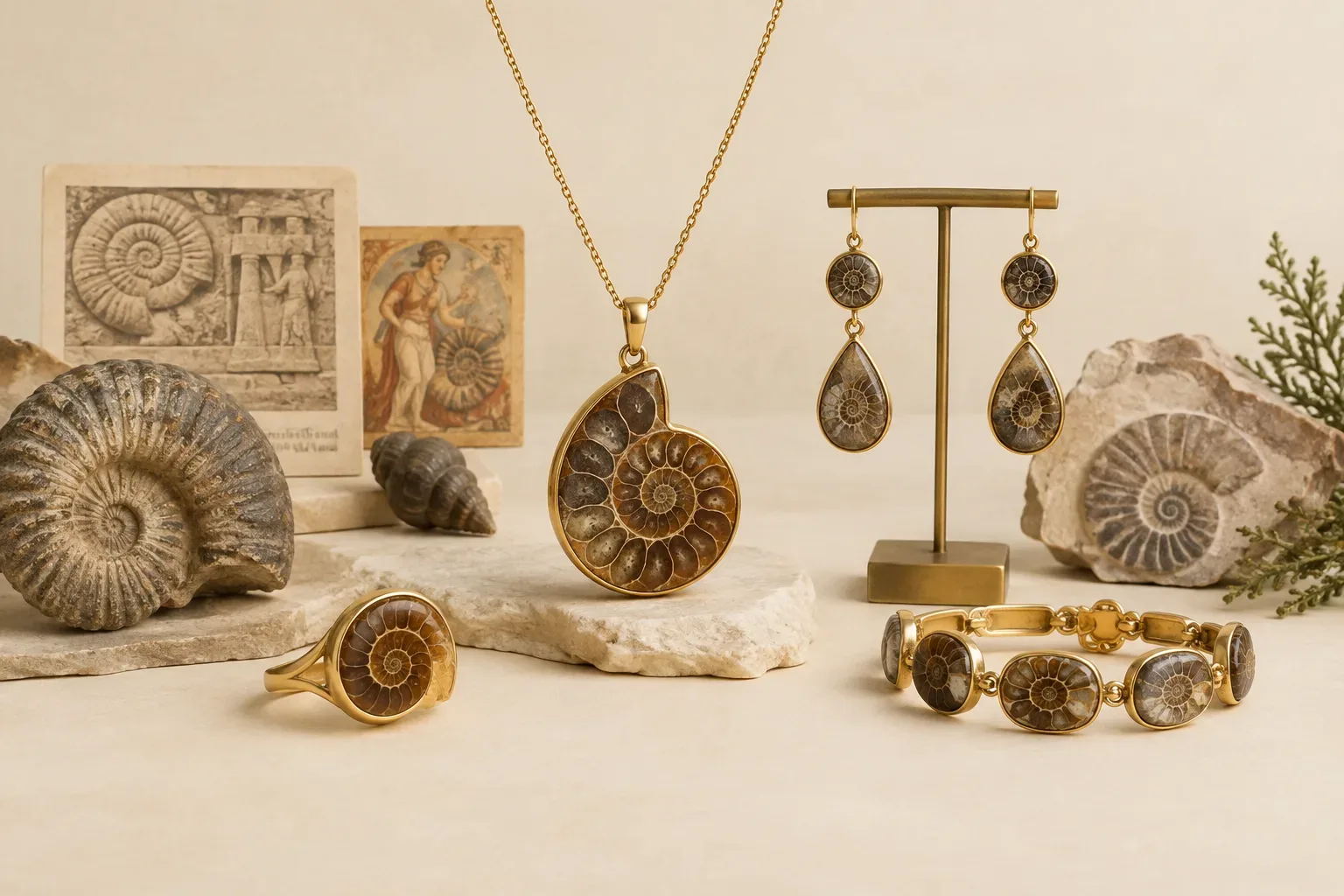
Gastropod fossils can appear in jewellery in two basic ways: as worked natural fossils set into metal, or as a carved or cast motif inspired by the shell form. Natural specimens may be trimmed, polished, stabilized, or mounted. A shell-like motif may appear in metalwork, intaglio, or enamel without any fossil material at all.
In jewellery design, the spiral form associated with gastropod shells is a popular graphic element. Designers may use actual fossil material—small ammonite or gastropod sections—set into bezels, pendants, or rings. Alternatively, silversmiths, goldsmiths, and makers may reproduce the spiral as a motif in metal, often echoing the shape without using a fossil specimen.
Authenticity and treatment: questions to ask before you buy
Ask the seller for provenance and treatment disclosure. U.S. government consumer guidance recommends that sellers disclose material treatments, enhancements, and whether an item is an imitation or composite. That guidance applies equally to fossil specimens used in jewellery: request written confirmation of whether the fossil has been stabilized, dyed, backed, or combined with other materials (Federal Trade Commission).
Request clear photographs from multiple angles and, for higher-value items, documentation of origin. If you need scientific verification, ask whether the seller can provide identification from an independent specialist or laboratory. For many purchases, a reputable dealer’s provenance, clear return policy, and transparent answers about treatment will be the most practical indicators of authenticity.
Common seller disclosures and what they mean
Stabilization or consolidation: Some natural specimens are porous or fragile. Sellers should say if a piece has been consolidated with resins or adhesives. Such treatments can be legitimate conservation measures but affect value and how the piece should be cared for.
Composite or assembled pieces: Some jewellery uses fossil fragments set onto a backing or combined with non-fossil material to create a stable wearable item. Ask whether what you are buying is a single worked specimen or a composite assembly.
Imitation or reproduction: If a spiral motif is cast in metal or carved from a modern material, it is not a fossil; it is a reproduction or a motif. The FTC advises sellers to label imitations clearly. If a seller calls something a “fossil” verify whether they mean genuine fossil material or a fossil-inspired design.
Selection and gifting guidance — respectful, practical choices
Match the piece to the recipient’s taste and values. If the recipient values natural history, provenance and an honest story about the specimen’s origin will matter. For someone who prefers symbolic meaning, choose a design whose modern interpretation you can explain as a contemporary sentiment rather than a claimed ancient rite.
Respect cultural context. Do not assume a fossil motif carries sacred status for any community unless there is clear evidence to that effect. If a seller attributes a traditional or ritual meaning to a fossil motif, ask for documentation or provenance supporting that claim.
Set a budget and check return and repair policies. Fossil jewellery ranges from inexpensive, novelty items to high-value pieces with well-documented provenance. A clear return window and a seller who answers questions about treatment and care are especially important when gifting.
Care and maintenance for fossil jewellery
Store fossil jewellery away from harder gemstones and metals that could scratch fragile surfaces. Use soft pouches or separate compartments in a jewellery box.
Clean gently. For everyday maintenance, a soft dry or slightly damp cloth is usually safest. Avoid harsh household chemicals or prolonged immersion without knowing whether the specimen has been stabilized, and seek professional advice for valuable or fragile pieces.
Repair and professional conservation: If a vintage or valuable fossil piece needs repair, use a conservator or jeweller with experience handling natural-history materials. Repairs that use adhesives or consolidants can affect value and should be disclosed in any resale.
Where to buy and how to verify reputable sellers
Buy from dealers who publish provenance, treatment history, and clear return policies. Museums, established natural-history dealers, and recognised jewellery galleries are more likely to provide documentation or an expert opinion on request.
For online purchases, evaluate seller photographs, reviews, and communication. A reputable seller will answer questions about whether the specimen is natural, what treatments (if any) were performed, and whether the piece is a composite. Use the FTC’s guidance as a baseline: insist on truthful descriptions and clear disclosure of enhancements or imitations.
Final note — meaning, use, and research
If you are interested in the cultural or historical meaning of a specific piece, start with provenance and museum cataloguing practices. The Victoria and Albert Museum encourages researchers to ground symbolic claims in documentary evidence rather than assumption. Treat contemporary meanings as personal or cultural additions that coexist with any historical record.
When buying gastropod fossil jewellery, prioritise transparency from sellers, basic conservation-friendly care, and clear communication about what the piece is and how it was treated. That approach protects value, honours the object’s history, and respects the different ways people assign meaning to natural materials.
Frequently asked questions
How can I tell if a gastropod fossil in jewellery is genuine?
Ask the seller for provenance and written disclosure of any treatments. Reputable sellers will provide clear photographs, a return policy, and information about whether the piece is a single worked specimen or a composite. For higher-value purchases, request independent identification from a specialist or laboratory.
What treatments should sellers disclose for fossil jewellery?
Sellers should disclose any stabilisation, consolidation, dyeing, backing, adhesives, or composite assembly. Government consumer guidance advises that material treatments and imitations be clearly disclosed to buyers.
Is a spiral motif the same as a fossil gastropod?
No. A spiral motif carved, cast, or set in metal is a design inspired by shell forms and is not the same as genuine fossil material. If a seller uses the word 'fossil,' confirm whether they mean real material or a fossil-inspired design.
How should I care for fossil jewellery?
Store fossil pieces separately to avoid scratches and clean gently with a soft cloth or a slightly damp cloth if needed. Avoid harsh chemicals and prolonged immersion unless you know the piece’s treatment history, and consult a conservator for valuable or fragile items.
Can I gift fossil jewellery with symbolic meaning?
Yes. Modern symbolic meanings—connection to nature, time, or personal narratives—are valid contemporary readings. Distinguish these personal meanings from documented historical symbolism, and be transparent with recipients about whether the symbolism is modern interpretation or historically documented.
Sources and further reading
- Bedazzled: A History of Jewellery — Victoria and Albert Museum
- An A-Z of Gemstones — Victoria and Albert Museum
- Buying Gemstones, Diamonds, and Pearls — Federal Trade Commission