Meaning at a glance
This article explains the documented history and changing contexts of the feather motif in jewellery, distinguishes cultural and religious evidence from later popular interpretations, and offers practical guidance for choosing and wearing feather-themed pieces.
Quick answer
Feather jewelry meaning is best understood as historically variable: museum and curatorial records show feather motifs and actual feathers have been used ornamentally and ceremonially in many cultures, while contemporary meanings are often personal or popular rather than universally traditional. This article summarizes documented historical evidence, separates that evidence from modern interpretations, describes how the motif appears in jewellery, and gives respectful, practical selection and gifting guidance.
What the historical record shows
Curatorial and museum scholarship documents that feathers and feather motifs have been incorporated into dress and jewellery across many times and places for ornamental, status, and ceremonial reasons. The Victoria and Albert Museum's collections and interpretive materials discuss jewellery's changing social contexts and show how motifs move between decorative, symbolic, and functional uses over time. From ancient metalwork and inlaid ornaments to later European designs, the feather motif appears in objects that range from head-dress and regalia to small pendants and brooches.
Specific examples in museum collections illustrate variety rather than a single meaning. In some pre-modern societies feathers were used in ceremonial regalia, in others they were decorative accents, and in later European jewellery feather shapes were adopted as fashionable motifs or as stylised motifs influenced by natural history and costume. The V&A's overview of jewellery history underscores that motifs like feathers reflect a combination of available materials, techniques, and social uses rather than a single, constant symbolism.
Documented meanings tied to particular cultures or periods
When discussing meaning we must separate documented, contextual uses recorded by curators and scholars from later, popular claims. Museum records and object labels compiled by institutions such as the Victoria and Albert Museum note that in many cultures feathers were components of ceremonial dress, a material indication of rank, or a decorative element in funerary and ritual objects. Those are object-centred, material and social readings drawn from provenance, context and historical accounts.
In European decorative arts, especially from the Renaissance through the 19th century, stylised feather motifs entered goldsmithing and gemstone settings as part of broader naturalistic trends in ornament and costume. The V&A's surveys of jewellery history describe how designers borrowed from nature, incorporated new lapidary and enamelling techniques, and responded to changing fashion, which explains the motif's recurring appearance in brooches, hair ornaments and pendants.
Ethnographic uses of feathers in regalia and ceremonial objects are recorded in numerous museum collections, where the emphasis is on the object's social or ritual function rather than an uncontested symbolic gloss. The recorded evidence is therefore best read narrowly: that a feather or feathered item played a role in a ceremony or signalled status in a particular cultural context, not that the same symbolic content applied universally across cultures.
Modern personal and popular interpretations
Contemporary popular meanings attached to feather jewellery—such as freedom, lightness, angelic protection, or spiritual connection—are largely modern interpretations. These meanings are widely used in marketing and personal storytelling, but they are not universal historical facts. Many people choose feather pieces because those modern associations resonate with individual experiences, aesthetics, or life moments.
It is important to recognise that using a motif today in a personal or fashion context does not necessarily reflect the original cultural or ritual meaning of the motif in any particular society. In short, modern symbolic readings are valid as personal meaning-making, but they should not be presented as documentary evidence about another culture's beliefs without direct historical sources.
How feather motifs and materials appear in jewellery
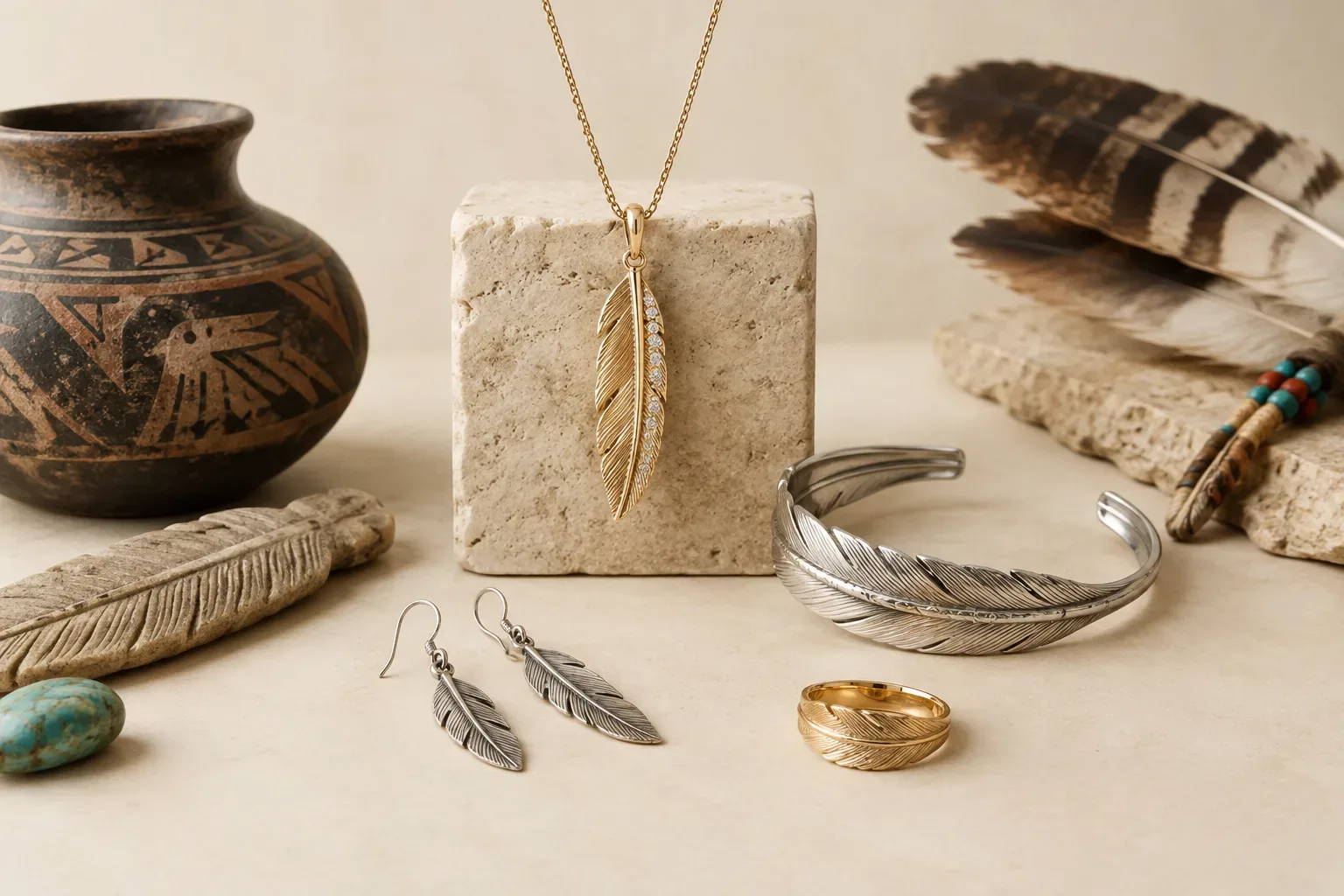
Jewellers have expressed feather motifs in several ways: by incorporating actual feathers into head-dress, hairpieces and earring designs; by modelling metal and enamel into stylised feather shapes for brooches, pendants and rings; and by carving feather-like detail in cameos and gem settings. Museum surveys and object descriptions at the Victoria and Albert Museum show examples of all these techniques across periods, illustrating both literal and stylised treatments.
In addition to literal feathers, craftsmen used settings and surface work to suggest the texture and curve of a plume. Techniques such as chasing, engraving, repoussé, and enamelling helped render feather detail in metal, while pavé-set seed pearls or small gemstones were sometimes used to add shimmer and contrast. The V&A's A–Z of Gemstones provides context on the historical use of particular stones and how gems were chosen to complement designs across different periods.
Gemstones historically associated with jewellery production are often used to accent feather motifs rather than to carry a single feather-specific symbolism. Gemstones and simulated materials can add colour, contrast, and perceived value or meaning to a feather design, but their interpretation depends on culture, period and contemporary wearer preference. For buying and identification of gems in feather-themed pieces, consult museum material on gemstones and trustworthy consumer guidance on treatments and imitations.
Practical guidance for selecting and gifting feather jewellery
Choose pieces with attention to provenance and maker information when cultural heritage is relevant. If a design is described as inspired by a particular culture's regalia, look for information from the maker or seller about consultation with that community or appropriate acknowledgement. When purchasing antique pieces, rely on reputable dealers or museum-quality documentation to confirm origin and context.
If you care about material treatments, imitations or the ethical sourcing of materials, follow the Federal Trade Commission's consumer guidance: ask sellers to disclose gemstone treatments, imitations, plating details and whether feathers are natural or synthetic. The FTC's consumer guidance on buying gemstones, diamonds and pearls highlights the importance of clear disclosure so buyers can make informed choices.
For gifts, match the motif to the recipient's values and aesthetics. A stylised metal feather in gold or silver may suit someone who prefers durable, everyday wear, while a delicate feather pendant or feather-inspired enamel brooch can be appropriate for someone who prefers symbolic or seasonal pieces. When gifting a design drawn from another culture, choose makers who explain their sources respectfully and avoid presentations that claim a single, universal symbolism for the motif.
Care instructions depend on materials: metal feather pendants typically tolerate regular cleaning and polishing while pieces containing real feathers, delicate enamels or certain gem settings require specialist care. When in doubt, ask the maker or retailer for care guidance and for information on the materials and any fragile components.
Respectful wearing and cultural sensitivity
Wearing feather jewellery respectfully means being aware of context. If a piece is clearly described as part of a living community's ceremonial practice, treat claims about sacred or restricted use seriously and seek guidance before wearing. If the piece is a contemporary designer's aesthetic interpretation, that intent should be clear in the product description so wearers understand they are using a fashion motif rather than a ritual object.
Jewellery is a form of personal expression; balancing appreciation for other cultures' artistic traditions with respect for living practices is part of responsible collecting and gifting. When a purchase supports artisans from the culture that inspired a piece, look for transparent maker information and direct support for that community.
Further research and trustworthy information
When you want to verify historical claims about a particular feather motif, consult primary cataloguing information from museum collections and specialist scholarship. The Victoria and Albert Museum's resources on jewellery history and on gemstones provide a reliable starting place for how motifs and materials have been used and adapted over time.
For consumer protection questions about materials, treatments and disclosure, the Federal Trade Commission's guidance on buying gemstones, diamonds and pearls is a practical reference that helps buyers ask the right questions and evaluate seller disclosures.
Frequently asked questions
Does feather jewellery always have a spiritual meaning?
No. Historical evidence shows feathers and feather motifs were used for many purposes—ornament, status, and ceremony—depending on culture and period. Modern spiritual meanings such as freedom or angelic protection are personal or popular interpretations and are not universal historical facts.
How can I tell if a feather in a jewellery piece is real or synthetic?
Ask the seller or maker for material information and provenance. Reputable sellers should disclose whether feathers are natural, dyed, or synthetic and provide care instructions. For gemstones, consult consumer guidance such as the Federal Trade Commission's advice on treated or imitation gems.
Is it cultural appropriation to wear feather jewellery?
It depends on context. Wearing a mass-produced feather pendant inspired by nature is different from wearing an item that is part of a living community's sacred regalia. If a piece is described as connected to a specific community's ceremonial practice, seek information and guidance about appropriate use and consider supporting makers from that community.
What should I ask a seller before buying antique feather jewellery?
Request provenance, documentation of origin, maker information, and condition reports. Confirm whether any parts (feathers, enamels, gemstones) have been restored or replaced, and whether the seller can provide images and cataloguing details that support the piece's provenance.
How should I care for feather jewellery?
Care depends on materials. Metal and gemstone pieces are generally cleaned and stored according to standard jewellery care. Pieces containing real feathers or delicate enamels may need specialist conservation or gentler handling. Ask the maker or retailer for specific care advice for that piece.
Can gemstones or pearls add specific meaning to a feather design?
Gemstones and pearls add colour, texture and historical resonance, but their meanings vary by culture and era. Museum resources such as the Victoria and Albert Museum's A–Z of Gemstones explain historical contexts for particular stones; for current purchases, ask about treatments or imitations per FTC guidance.
Sources and further reading
- Bedazzled: A History of Jewellery — Victoria and Albert Museum
- An A-Z of Gemstones — Victoria and Albert Museum
- Buying Gemstones, Diamonds, and Pearls — Federal Trade Commission