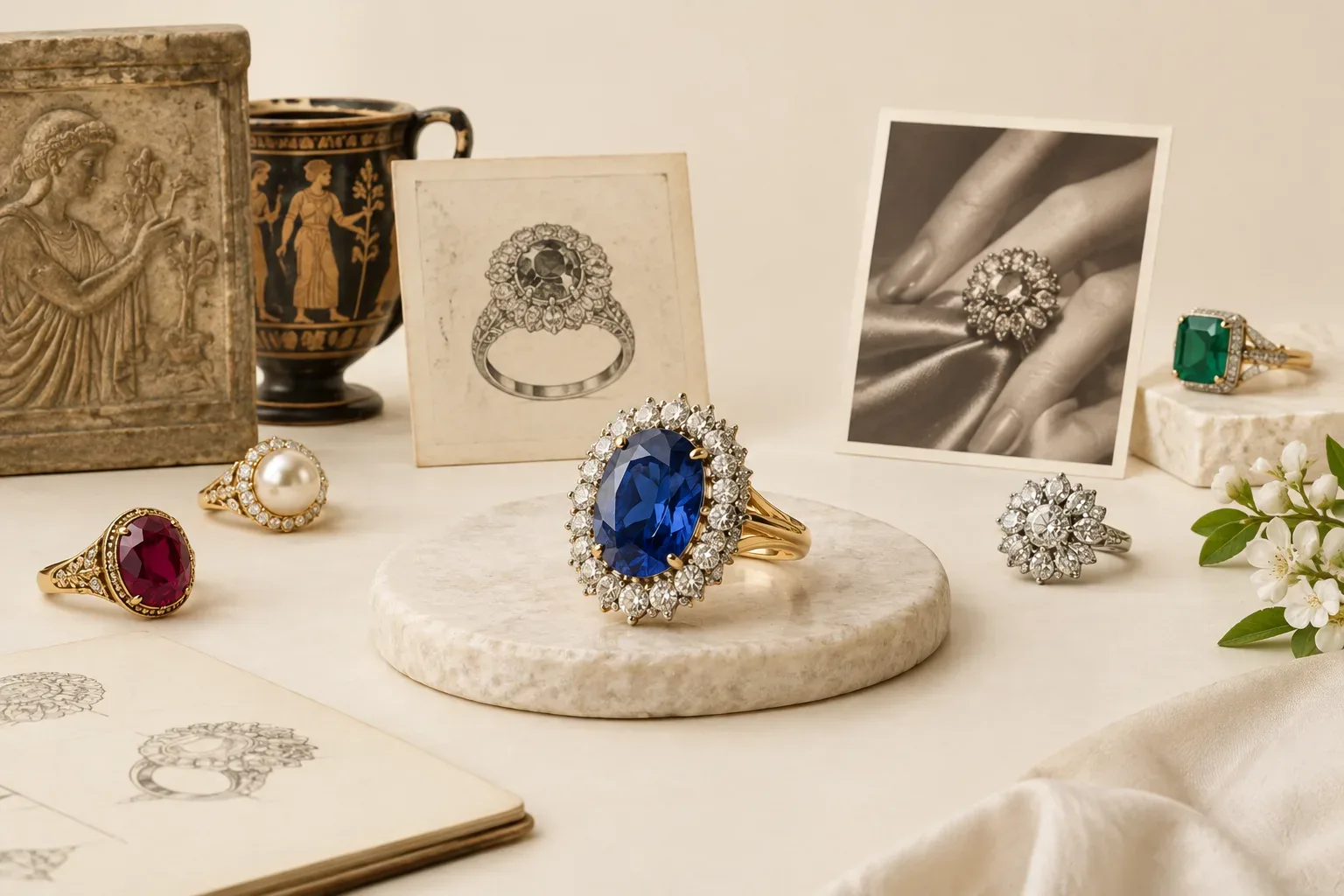
Meaning at a glance
A good cocktail ring buying guide distinguishes documented history from later interpretations, focuses on construction and gemstone disclosure, and balances visual impact with durable materials and respectful gifting. Use museum histories to understand changing contexts, and consumer rules on treatment and disclosure when judging price and value.
Quick answer
Concise answer: When buying a cocktail ring, prioritize solid construction, authenticated materials, and transparent disclosure of treatments and imitations; use historical sources to understand how the style and meanings evolved, and apply respectful, personal selection criteria when gifting or wearing these bold pieces.
What the historical record shows
The term and style we now call a “cocktail ring” belong to a broader history of wearing large, conspicuous rings that signal social change and shifting dress codes rather than a single, unbroken cultural or religious tradition. The Victoria and Albert Museum describes the long arc of jewellery history as tied to changing social contexts and fashions, so the emergence of large evening rings should be read against those wider shifts rather than as deriving from a single ancient source.
Museum documentation emphasizes that jewellery forms, including oversized and showy rings, have waxed and waned with changes in gender roles, leisure, and display conventions. The V&A’s collection and interpretive materials connect such changes to moments when people sought more visible, decorative jewellery for public social life, rather than assigning a fixed symbolic meaning across time or cultures. That is, the historical record shows styles and functions evolving in context rather than one universal meaning for the cocktail ring form.
Separate documented history from modern interpretation
Documented history, as framed by the Victoria and Albert Museum, shows that ring size, ornamentation, and the contexts in which rings were worn changed with social circumstances. Museums and archival records can demonstrate when a particular look became fashionable, but they do not support universal claims that a specific motif carried the same symbolic meaning everywhere or in every period.
Modern interpretations—such as calling a cocktail ring a symbol of independence, glamour, or a statement of nightlife—are often personal or popular cultural readings layered onto the historical form. Those modern meanings are valid for wearers who choose them, but they are not the same as documented, culture-specific symbolic systems recorded in primary sources. Keep these categories distinct: cite museum evidence for historical context and treat contemporary symbolic readings as personal or cultural interpretation.
How motifs, gemstones, and tradition appear in cocktail rings
Design motifs in large rings can include clusters of gemstones, floral or abstract shapes, filigree settings, and central cabochons. These design features are practical choices for creating visual impact at evening events: a large table of stones or a single oversized center gem reads from a distance and complements formal dress. The V&A’s coverage of jewellery history and gemstone identification shows how artisans combine cut, setting, and metalwork to achieve that effect.
Gemstones commonly used in statement rings range across the trade: color stones such as rubies, sapphires, and emeralds appear alongside diamonds and cultured pearls. The V&A’s A–Z of Gemstones provides context for identifying stones and understanding how particular gems have been used historically in decorative jewellery. In cocktail rings, stones may be set in cluster arrangements, bezel settings, or prong mounts; the choice of cut and setting affects both appearance and durability.
Tradition shows up not as a single meaning but as practical motifs and techniques. For example, cluster settings that maximize perceived size, or cabochon cuts that emphasize color rather than faceting, are recurrent technical solutions for achieving a showy look. Those recurring technical choices are what scholars and curators document, rather than a single agreed symbolic meaning.
Assessing quality: construction, stones, and materials
Start with construction: a quality cocktail ring will have a well-formed shank that resists bending, secure prongs or bezels, and a setting that distributes the weight of a large top. Inspect the underside of the head for rough solder joints or excessive gaps where stones could loosen. Heavier, well-made rings often feel balanced on the finger rather than top‑heavy and awkward.
Evaluate the metal: look for hallmarks or maker’s marks that indicate metal type and fineness. Solid precious metals (for example, measured fineness marks for gold or sterling silver) will wear differently over time than plated bases. The V&A’s historical frames for metal use can help you recognize traditional finishes and techniques, but for present‑day buying you should rely on marks and seller disclosures for metal content.
Examine gemstones with a loupe if possible and ask for identification paperwork for significant stones. The Victoria and Albert Museum’s A–Z of Gemstones is a useful reference for historical context and identification characteristics, but today’s buyers should ask for lab reports for high-value gems. For colored stones, consider cut, color saturation, and clarity; for diamonds, consider the conventional characteristics that affect light performance.
Treatment, imitation, and consumer protections
Modern markets include treated stones, synthetic gems, and imitations. The Federal Trade Commission’s guidance stresses that sellers must disclose treatments, enhancements, and whether gems are synthetic or imitation. That legal framework is a practical tool for buyers: always ask the seller to state in writing whether a stone has been heat-treated, fracture-filled, irradiated, dyed, or is lab-grown or synthetic.
When a seller discloses treatments, weigh how those treatments affect price and care. Some treatments are common and stable, others require special care or reduce resale value. If the seller cannot or will not provide truthful, documented disclosure, treat the absence of information as a risk factor when evaluating price.
Price questions: value factors and reasonable ranges
Price depends on metal content, craftsmanship, gemstone type, gemstone quality, and documented provenance or maker value. A hand-finished ring from a respected maker will command a premium compared with mass-produced pieces of similar metal and stone weight. The V&A’s perspective on jewellery history helps explain why certain makers or eras attract collector interest, but for most buyers price reflects material and workmanship rather than historical association.
Compare like with like: get quotes from multiple reputable sellers and request written descriptions of metal fineness, gem treatments, and any accompanying certificates. For large stones or designer pieces, independent lab reports or appraisals can justify higher prices. Conversely, be cautious if a price seems too low for the materials claimed; the FTC notes that misrepresentation of treatments and imitations is a common consumer issue.
Practical and respectful selection and gifting guidance
Consider the wearer’s lifestyle and comfort before prioritizing maximum visual impact. A very large ring can be impractical for someone who works with their hands; choose a lower-profile setting or a sturdy bezel if durability is important. Respectful gifting means matching the gift to the recipient’s aesthetic and practical needs rather than assuming they want a showpiece.
Be mindful of cultural and personal symbolism. If a particular motif or stone has known cultural or religious significance to the recipient, research its meaning before gifting. The V&A provides useful historical context on motifs, but contemporary cultural meanings can vary widely. When in doubt, ask the recipient or choose a neutral design that emphasizes the giver’s sentiment rather than assigning a contested symbolic meaning.
Sizing is important: if you must guess a size, provide a change policy or include a resizing option. Many jewelers will resize rings, but complex settings or certain metals make resizing costly. Offer documentation of materials and treatment with the gift, and include care instructions tailored to the ring’s stones and metal so the recipient can maintain the piece properly.
Care, maintenance, and long-term ownership
Large, showy rings require routine inspection because stones and prongs carry greater mechanical stress. Have settings checked periodically by a qualified jeweler, especially after knocks or heavy wear. Clean according to the needs of the specific gemstones involved; some color stones are porous or treated and need gentle care, while diamonds tolerate more robust cleaning.
Keep documentation: receipts, certificates, and appraisals aid in resale, insurance, and repair work. The V&A and other museum resources can help you appreciate historical techniques, but your practical records determine how a modern piece is valued and cared for over time.
Final takeaways
A useful cocktail ring buying guide rests on three pillars: documented context (use museums like the Victoria and Albert Museum for historical perspective), transparent material and treatment disclosure (use Federal Trade Commission guidance to evaluate seller claims), and personal fit and respect when choosing or gifting. Distinguish historical documentation from modern symbolic readings, choose durable construction and honest disclosure, and match the piece to the wearer’s life and preferences.
Frequently asked questions
What defines a cocktail ring?
A cocktail ring is typically a single finger ring designed to be large and visually striking, often featuring a prominent colored or clear gemstone arrangement; historically it emerged as part of changing social dress practices rather than a single cultural or religious tradition.
How do I assess the quality of a cocktail ring?
Assess construction (solid shank, secure settings), metal hallmarks, and gemstone condition; request documentation for significant stones and inspect prongs and the underside of the head for signs of sturdy workmanship.
Should I accept treated or synthetic stones in a cocktail ring?
Treated and synthetic stones can be acceptable if fully disclosed by the seller; the Federal Trade Commission requires sellers to disclose treatments and whether a gem is synthetic or imitation, and disclosure should factor into price and care decisions.
Can a cocktail ring be resized?
Many cocktail rings can be resized, but complex heads, filigree, or certain alloys can make resizing difficult or costly; always ask the seller about resizing options and costs before purchase.
How do motifs and gemstones affect meaning?
Motifs and stones can carry historical or cultural meanings in specific contexts, but museums like the Victoria and Albert Museum show that meanings change over time; modern symbolic readings are personal or cultural interpretations rather than universal historical facts.
What should I look for in the seller’s documentation?
Look for metal fineness marks or hallmarks, written disclosures of gemstone treatments or synthetic origin, and any lab reports or certificates for high‑value stones; lack of documentation is a risk factor.
How often should I have a cocktail ring checked?
Have a jeweler inspect settings and prongs at least annually or after any significant knock; frequent inspection helps prevent stone loss in larger, heavier settings.
How do I choose a cocktail ring as a gift respectfully?
Match the ring to the recipient’s style and lifestyle, check for cultural or personal symbolism that might make certain motifs inappropriate, include resizing or return options, and provide material and care documentation with the gift.
Sources and further reading
- Bedazzled: A History of Jewellery — Victoria and Albert Museum
- An A-Z of Gemstones — Victoria and Albert Museum
- Buying Gemstones, Diamonds, and Pearls — Federal Trade Commission