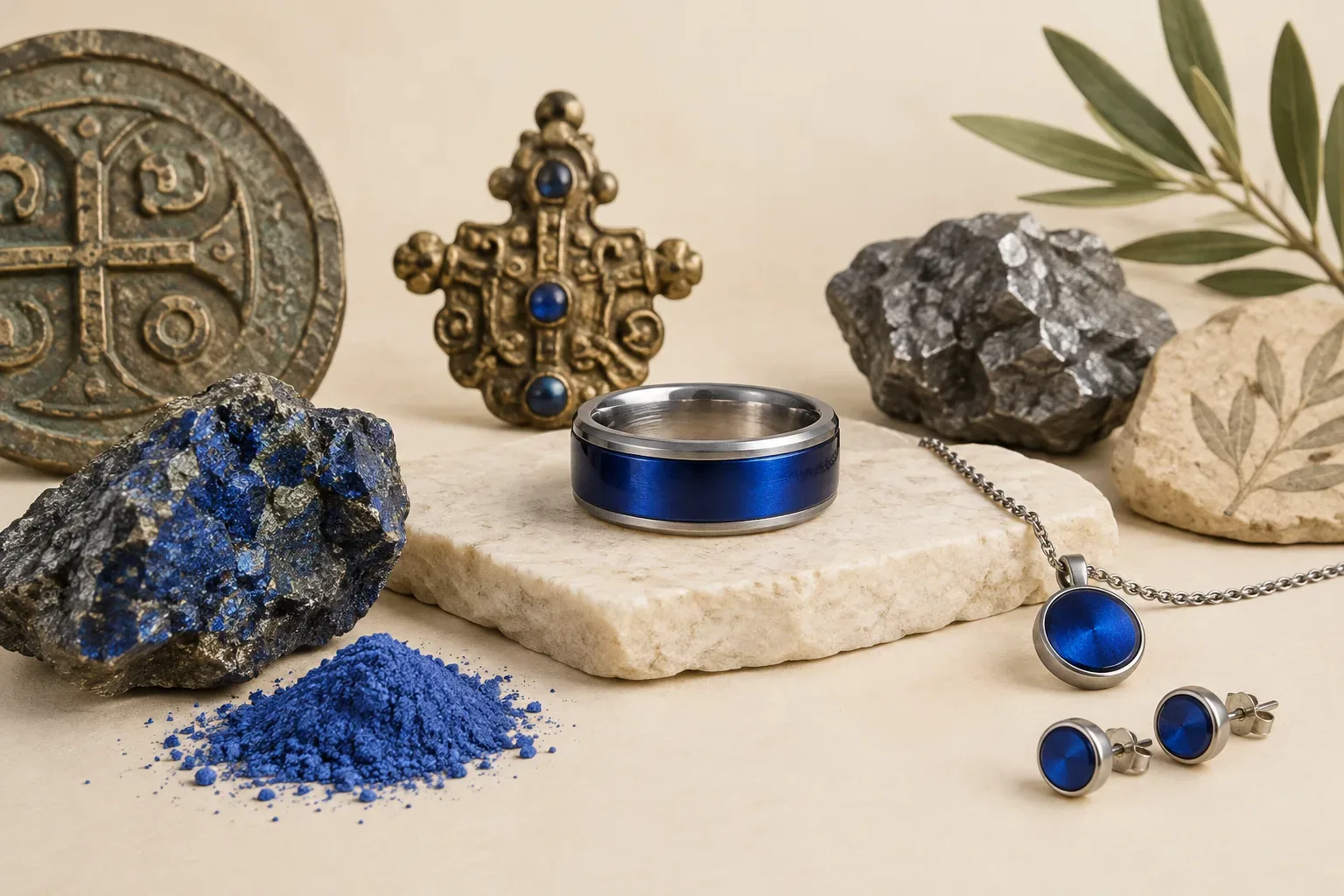
Meaning at a glance
Cobalt chrome jewelry is a modern category built from contemporary metal alloys and design practices; museums show that meanings attached to new materials change with social context, and makers and sellers should disclose composition and treatments while buyers should ask for marks, testing, and return terms.
What museums tell us about materials and changing meanings
Collections and scholarship in museums demonstrate that the social meaning of jewelry shifts as new materials and techniques appear. The Victoria and Albert Museum describes jewelry history as a long sequence of changing social contexts and technologies, from precious metals and gem-set pieces made for display to later industrial and fashion-led forms that used new alloys and finishes to serve different uses and price points.
That institutional perspective is important for understanding cobalt chrome jewelry: museum evidence shows how meanings follow material and context. Materials that have long histories—gold, silver, natural gems—accrue documented traditions and symbolic uses in particular cultures and periods. By contrast, alloys that are technological or commercial innovations acquire meanings in the modern period through design choices, marketing, and personal stories rather than through a deep, documented cultural history.
Composition: what sellers mean (and what to confirm)
Contemporary sellers use names such as "cobalt chrome" to refer to metals that include cobalt and chromium in their formulation or to surface finishes inspired by those alloys. Because commercial naming is not standardized across all makers, buyers should treat the phrase as a starting point for inquiry rather than a precise chemical specification.
Ask the maker or retailer to provide written details: whether the piece is a solid cobalt-chrome alloy, a base metal plated with a cobalt-chrome finish, or a different construction. Request information about any other metals present, especially if you or the recipient have metal sensitivities. The U.S. Federal Trade Commission highlights the importance of transparent disclosure about material composition, treatments, and imitations; sellers should not misrepresent what a piece is or how it was finished.
Hallmarks, marks, and how they apply to non‑traditional alloys
Traditional hallmarking systems were developed to certify the content of precious metals such as gold, silver, and platinum. The Victoria and Albert Museum and other collecting institutions document hallmarking as part of the social and legal history of jewelry, tied to standards for precious-metal content and maker identity.
Modern non-precious alloys and commercially named metals such as pieces labeled "cobalt chrome" may not carry those traditional hallmarks because hallmarking regimes typically apply to legally defined precious metals. That does not mean a lack of traceability: makers can and should provide their own maker's mark, a full materials declaration, or third-party assay results where appropriate. If a buyer expects the protections associated with hallmarks, ask the seller whether the piece has a recognized assay mark or an alternative certification.
Documented historical meanings versus later or popular interpretations
When a material or motif has a long, documented history, museums and primary records can identify specific cultural or religious meanings attached to it in particular times and places. The V&A's work on jewelry history shows how scholars anchor interpretations to artifacts, makers' records, and contemporary texts. For materials that are recent innovations, however, there is typically no comparable archival record tying them to traditional religious or cultural symbolism.
Claims that a modern alloy like "cobalt chrome" carries ancient or traditional spiritual meaning should therefore be treated as contemporary reinterpretations or marketing narratives unless supported by primary historical evidence. Emotional or personal meanings—for example, choosing a cobalt chrome ring because the wearer likes its color or modern look—are valid and common, but they are personal or contemporary cultural meanings rather than documented historical ones.
How cobalt chrome appears in jewelry design and wearing traditions
In recent decades, designers have adopted industrial and medical alloys and finishes for aesthetic and functional reasons: durability, a contemporary look, or to offer an alternative price point to traditional precious metals. Museum commentary about changing social context in jewelry helps explain this shift; the presence of new materials in collections and exhibitions reflects broader changes in technology and taste.
Practically, buyers will find pieces labeled "cobalt chrome" across a range of forms—bands, bracelets, watch cases, and fashion pendants—where makers aim for a particular finish, color, or scratch resistance. The way the material is used — as a solid alloy, plated finish, or combined with other materials — affects appearance, weight, and how the piece is cared for, so clarify construction before purchase.
Disclosure, testing, and consumer protection
The Federal Trade Commission advises clear disclosure about gemstones, treatments, and the nature of materials. Under consumer-protection principles, sellers should not misrepresent a piece as a different metal or imply it has properties (for example, that it is hypoallergenic) without substantiation.
If you need certainty about composition, request written specification, any available assay or laboratory test results, and a return policy that allows for independent testing. For items that may be worn daily (rings, bracelets), inquire about hardness, scratch resistance, and recommended care so you and the recipient can make informed choices.
Practical and respectful selection and gifting guidance
When choosing or gifting jewelry described as cobalt chrome, prioritize clarity over assumption. Ask the retailer or maker to describe the construction, whether the item is solid alloy or plated, the presence of nickel or other allergenic metals, and any care instructions. If the recipient has a known metal sensitivity, request documentation or choose a material with an established track record for hypoallergenic properties.
Be mindful of cultural or religious contexts. Because "cobalt chrome" is a contemporary material without a long, shared symbolic history, avoid asserting fixed traditional meanings when presenting the gift to someone for whom material symbolism matters. Instead, focus on design, intent, and the personal significance of the gesture. For more on choosing meaningful jewelry and exploring symbol research, see our gift guide and research primer in related articles.
Final notes
Cobalt chrome jewelry sits within a modern chapter of jewelry history where maker transparency and consumer information are especially important. Museums record how meanings shift with materials and technologies, and consumer-protection guidance highlights the need for disclosure and accurate representation. Treat the label "cobalt chrome" as an invitation to ask questions about composition, hallmarks, and wearability rather than as a guarantee of any historical symbolism.
Frequently asked questions
What exactly does "cobalt chrome" mean when used to describe jewelry?
The term is a contemporary commercial label generally used for alloys or finishes involving cobalt and chromium, but naming is not standardized. Ask the seller for a written description of whether the piece is a solid alloy, plated, or constructed from other metals and request any lab or maker documentation to confirm composition.
Are there hallmarks for cobalt chrome pieces?
Traditional hallmarking systems apply to legally defined precious metals. Pieces made from modern non‑precious alloys may not carry the same official assay marks. Seek a maker's mark, written material declaration, or third-party test results if hallmark-style assurance is important to you.
Is cobalt chrome hypoallergenic?
Hypoallergenic properties depend on the full alloy and any surface treatments, not simply on a commercial name. If skin sensitivity is a concern, request detailed composition information and ask whether nickel or other common allergens are present. Do not assume hypoallergenic behavior without documentation.
How can I verify a seller's claims about composition or treatments?
Request written specifications, any available laboratory test reports, and clear statements about plating or coatings. The U.S. Federal Trade Commission recommends transparent disclosure about material treatments and imitations; a reputable seller should provide sufficient information or permit independent testing within a reasonable return policy.
Does "cobalt chrome" have traditional cultural or religious symbolism?
There is no documented historical cultural or religious symbolism tied specifically to modern cobalt-chrome alloys in museum records. Any symbolic meaning attached to such material is typically contemporary, personal, or derived from the design rather than from a long historical tradition.
What should I ask when buying cobalt chrome jewelry as a gift?
Ask for written composition details, information about any coatings or plating, care instructions, allergen information, and the return or testing policy. Consider whether the recipient values material tradition; if so, emphasize design, intent, and presentation rather than asserting historical symbolism for the metal itself.
Sources and further reading
- Bedazzled: A History of Jewellery — Victoria and Albert Museum
- An A-Z of Gemstones — Victoria and Albert Museum
- Buying Gemstones, Diamonds, and Pearls — Federal Trade Commission