Meaning at a glance
A good choker balances sound construction, wearer comfort, and long-term durability; evaluate materials and joinery, test fit and edges, verify gemstone treatment and disclosure, and consider provenance and cultural context when choosing or gifting. Historical documentation in museum collections shows neck ornaments appear across cultures and eras, but modern symbolic meanings are personal and variable.
What the historical record shows
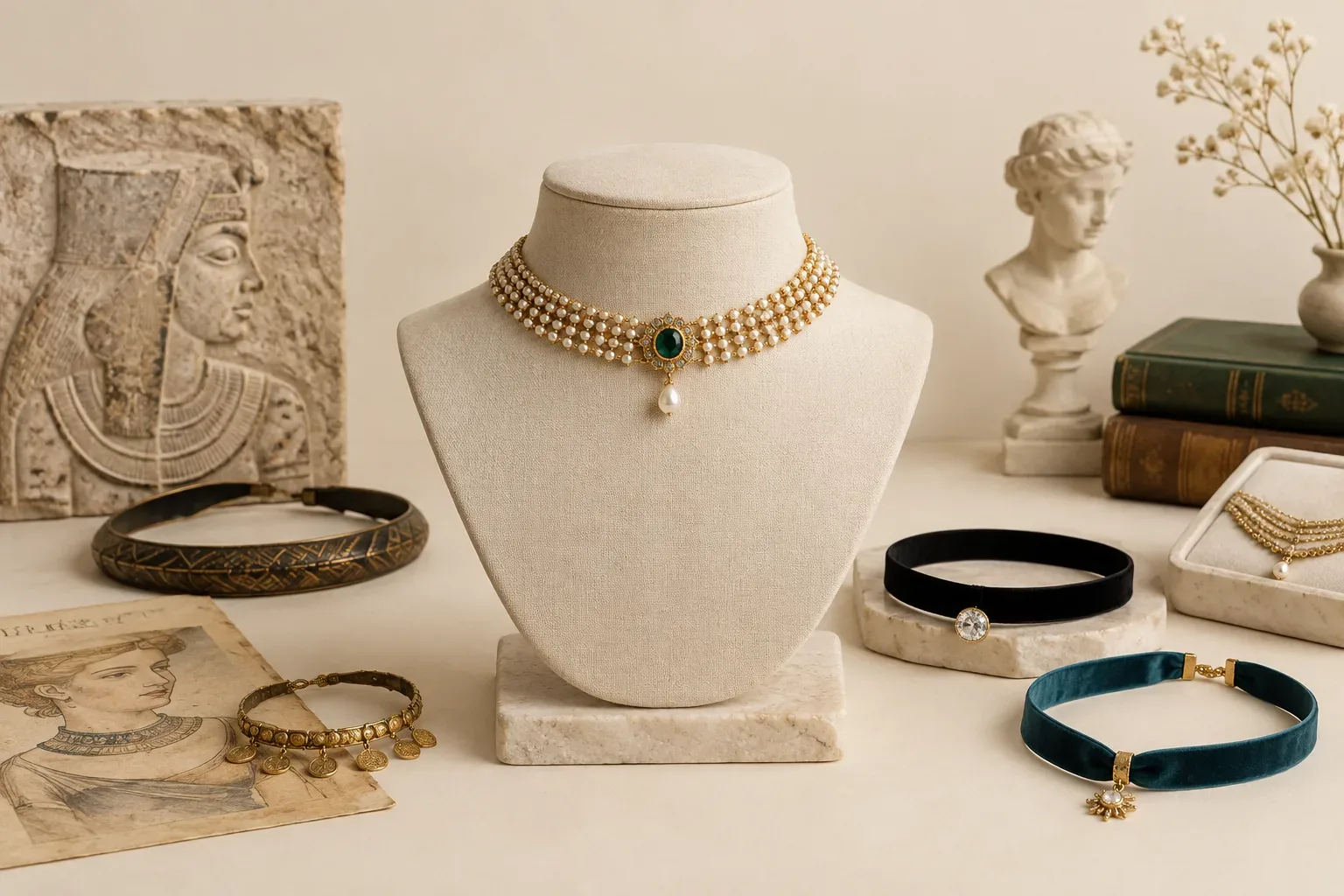
Museum scholarship and collections place neck ornaments, including close-fitting collars and chokers, in many different cultures and historical periods. The Victoria and Albert Museum's exhibition materials and collection interpretation emphasize that neck decorations appear from ancient times through historical European fashions into modern revivals, and that their forms and social contexts have changed significantly over time. Using museum documentation as a guide helps separate well-attested historical facts from later lore or modern reinvention.
Specifically, museum studies note recurring uses of tight neck ornaments in ancient dress, ceremonial regalia, and later fashion trends in Europe and beyond. These sources treat examples as objects within changing social and material contexts rather than as single, fixed meanings. That approach—tracing form, materials, and recorded uses—lets researchers identify when a choker served ornamental, protective, status-related, or purely fashionable functions in a particular time and place.
Documented historical meanings versus modern personal interpretations
Documented historical meanings come from objects, provenance records, and contemporary texts preserved with museum collections. Institutions such as the Victoria and Albert Museum present those contexts: why a piece was made, how it was worn, and what materials signified in that society. Those records can show, for example, when a neck ornament formed part of ceremonial dress or reflected access to particular materials.
Modern symbolic or personal interpretations are different. Contemporary wearers often assign their own meanings to a choker—identity, style, memory, or statement—that are valid on a personal level but are not the same as historically documented functions. When discussing or gifting chokers, keep museum-documented evidence distinct from present-day associations: use historical descriptions to inform respectful choices, and allow room for the modern wearer’s personal meaning to evolve.
How motifs, gemstones, and traditions appear in chokers
Motifs in chokers can be structural—such as a repeating link, bezel-set stones, or a mounted pendant—or purely decorative like inlaid patterns or embroidered fabric. Museums document a wide variety of motifs, showing how makers adapted imagery and techniques to available materials and cultural preferences. A motif that recurs historically may appear as a metal repoussé pattern in one era, and as a laser-cut modern metal band in another.
Gemstones and other materials are integral to assessing quality. The Victoria and Albert Museum’s guides on gemstones explain differences in materials, historical usage, and how particular stones were prized in certain periods. In a contemporary choker, a gemstone’s cut, setting quality, and whether it has been treated or is a simulant affect both value and durability. For ethical and practical reasons ask for disclosure about treatments and imitations: the U.S. Federal Trade Commission outlines that sellers should disclose material treatments, enhancements, and imitations when relevant to a purchase decision.
Choker quality checklist: construction
Materials: Verify what base metal, precious metal, fabric, or composite is used. Solid precious metals such as gold or platinum have different wear characteristics than plated metals. For fabric or leather chokers inspect stitching and edge sealing. When gemstones are present, confirm the setting type (prong, bezel, channel) and that stones sit evenly and securely.
Joinery and fastenings: Check that solder joints are clean and continuous rather than cracked or brittle, and that links move freely without catching. Examine the clasp for security: lobster, box, and hook-and-eye clasps have different failure modes; a well-made clasp will engage smoothly and remain fastened under gentle tugging. If there is a jump ring or connector, ensure it is properly closed or soldered.
Finish and edges: Metal should be smoothly finished without sharp burrs. For fabric, leather, or ribbon chokers inspect hems and glue lines. Edges that rub exposed skin will cause discomfort and wear rapidly. Quality finishes also include consistent plating thickness where used and protective lacquers applied to prevent tarnishing.
Choker quality checklist: comfort
Fit and adjustability: A choker should allow for safe, comfortable breathing and movement. Test the choker at home or in store: it should sit comfortably close to the neck without compressing the airway. Adjustable extenders or multiple clasp positions improve fit across different neck sizes and seasons (neck size can change slightly with temperature and posture).
Weight and balance: Evenly distributed weight prevents the choker from riding or twisting. Heavy central pendants or unevenly spaced stones can pull the piece out of alignment and strain clasps. Consider the wearer’s tolerance for weight and whether long wear will cause strain.
Skin sensitivity: Ask about metal content and finishes if the wearer has metal allergies. Nickel-containing alloys are common allergy culprits. Look for stamped metal purity marks, hypoallergenic options, or fabric chokers if sensitivity is a concern.
Choker quality checklist: durability and maintenance
Material stability: Understand how the chosen materials age. Solid precious metals resist corrosion; plated metals can wear through to the base metal. Fabrics can fray and leather can dry or stiffen. Ask the seller about recommended cleaning and storage methods and whether the piece is intended for occasional versus daily wear.
Gemstone treatments and disclosure: Ask explicitly whether stones have been heat-treated, fracture-filled, dyed, or are simulants. The Federal Trade Commission advises buyers to request written disclosure of treatments or imitations where they affect value or care. Treated stones may require different cleaning and will affect long-term expectations for durability.
Repairability: Inspect how the choker is constructed with an eye toward future repair. Soldered jump rings, replaceable clasps, and modular elements are easier to service than glued or permanently crimped joins. For family heirlooms or gifts meant to last, favor constructions that a jeweler can repair without damaging decorative elements.
Selection and gifting guidance (practical and respectful)
Assess the recipient’s style and context before buying: a choker that matches everyday wear will be more likely worn often than a highly period-specific reproduction. For pieces drawing on specific cultural or ceremonial traditions, verify provenance and cultural sensitivity. Use museum resources and reputable sellers to learn whether a design has a particular cultural significance and avoid appropriating sacred symbols without permission or appropriate context.
When in doubt prioritize versatility and documentation. Choose adjustable designs for unknown neck sizes, select durable, hypoallergenic materials when the wearer’s sensitivities are unknown, and obtain any available provenance or treatment certificates. For gemstone chokers, ask the seller for written statements about treatments and return policies. If the piece is intended as a meaningful gift, consider pairing it with an explanation that differentiates documented historical associations from contemporary personal meaning so the recipient can understand both context and choice.
If you are purchasing a vintage or museum-style piece, consult institutional descriptions as part of your research. The Victoria and Albert Museum’s collections and explanatory materials are useful models for how to interpret the object’s documented history and production techniques. Treat those descriptions as evidence, not as universal rules about meaning.
Closing reminder
A reliable choker quality checklist combines material knowledge, hands-on inspection, and an attention to provenance and disclosure. Use museum documentation to inform respectful choices and rely on consumer-protection guidance when you need clarity about gemstones and treatments. Finally, remember that historical uses of neck ornaments are diverse; modern wearers are free to create personal meanings while remaining mindful of documented cultural contexts.
Frequently asked questions
How tight should a choker fit?
A choker should sit comfortably close to the neck without compressing the airway. It should allow natural breathing and swallowing and not become painful with normal movement. Adjustable extenders or multiple clasp positions help achieve a safe fit.
What materials make the most durable chokers?
Durability depends on use: solid precious metals and high-quality leather or tightly woven fabric perform well for frequent wear. Plated metals can wear through, and delicate fabrics may fray. Consider how the piece will be worn and ask the seller about care recommendations.
Should I worry about gemstone treatments in a choker?
Yes. Treatments such as heat, dye, fracture-filling, or diffusion can affect a stone’s appearance and how it should be cleaned. The Federal Trade Commission recommends asking for written disclosure of treatments, enhancements, or simulants that affect value or care.
How can I tell if a choker is repairable?
Look for soldered joins, replaceable clasps, and components attached with jump rings rather than glued joints. A jeweler can more easily repair pieces that were constructed with traditional metalwork techniques than those assembled with permanent adhesives or crimped components.
Are there cultural concerns when gifting a choker?
Yes. Some designs draw on specific cultural or ceremonial traditions. Before gifting, research the motif’s provenance using museum resources or reputable sellers and avoid appropriating sacred symbols without permission or proper context. Distinguish documented historical uses from contemporary fashion when explaining your gift.
How should I store and care for a choker?
Store chokers flat or hung where they won’t tangle or catch. Keep metal pieces away from harsh chemicals and high humidity to reduce tarnish. Clean gemstones and fabrics according to the maker’s instructions and seek professional cleaning for fragile or high‑value pieces.
Sources and further reading
- Bedazzled: A History of Jewellery — Victoria and Albert Museum
- An A-Z of Gemstones — Victoria and Albert Museum
- Buying Gemstones, Diamonds, and Pearls — Federal Trade Commission