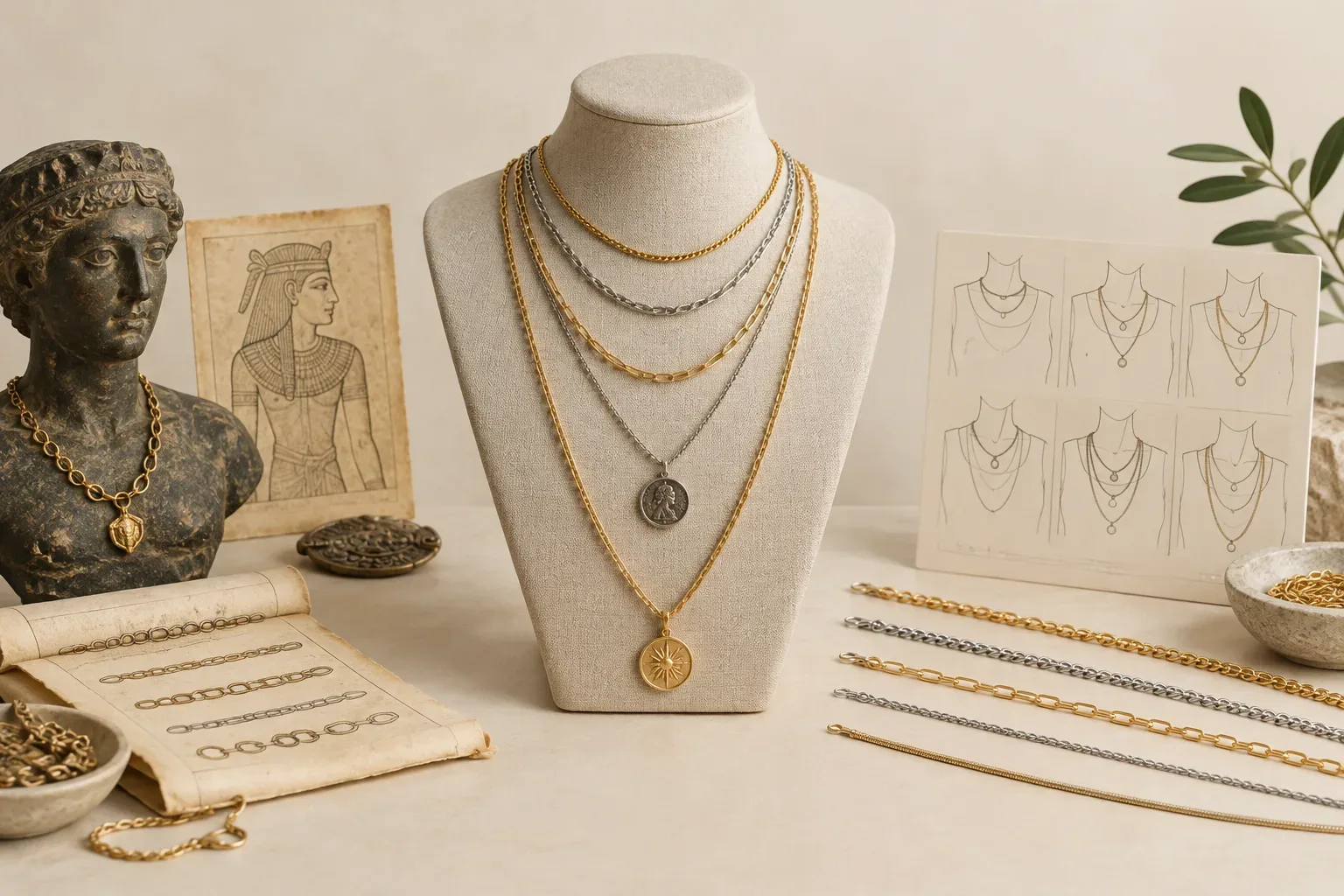
Meaning at a glance
This guide explains how chain necklace length, fit, and related motifs have been used across cultures as documented by museums, separates those historical uses from modern personal meanings, and gives clear, practical advice for measuring, selecting, and gifting chains today.
Quick answer
Choose a chain length and fit to match the wearer's neck measurement, the intended pendant drop or visibility, and the desired styling (close-fitting choker, mid-length that sits at the collarbone, or long opera and rope styles); measure the neck, consider typical length categories, and allow for personal comfort and clothing. Historically, chain length and placement have carried social and symbolic information, but in modern practice fit is also a matter of comfort, proportion, and personal expression.
What museums tell us: documented historical uses and contexts
The Victoria and Albert Museum describes jewelry as an object class whose forms and social meanings have changed across time and place. Museums like the V&A record that in many cultures necklaces and chains functioned as visible markers of status, profession, religious identity, or protection rather than purely decorative items. For example, the V&A collection and interpretive work trace how in some ancient societies neck adornments were integrated into ceremonial dress and how in later European periods necklace styles signaled rank and fashion.
Those museum narratives emphasize shifting contexts: craftsmen, materials, and the social rules around wearing jewelry have evolved. The placement of a chain—high, at the throat, or low on the chest—could carry different connotations in different periods. The V&A’s general histories demonstrate that chains and necklaces are best understood within the culture and period that produced them, and that similar shapes or placements can mean different things in different places or times.
Separate documented historical meanings from modern interpretations
Documented historical meanings are what curators and object records report about how people used and understood jewelry in a specific culture or period. For example, museum interpretation may note that a particular collar-shaped necklace was part of a burial costume or court dress, or that a jeweled chain was used to indicate office or rank. These are claims grounded in object study, provenance, and contemporary texts as reported by institutions such as the Victoria and Albert Museum.
Modern personal interpretations—what people today choose to believe or feel about a chain—are different and often intentionally subjective. A necklace length chosen today may be meant to reference a family memory, a contemporary fashion trend, or a spiritual idea adopted from another culture. Those contemporary meanings are valid for the wearer but should not be presented as the original historical meaning unless supported by evidence. When gifting or wearing pieces that echo another culture’s jewelry, be clear about whether your interpretation is personal or historically documented.
How chain length, motifs, gemstones, and traditions appear in jewelry
Chain length and fit are motifs of placement and visibility in necklace design. A short chain or collar draws attention to the throat and is often used for pendants intended to rest at the collarbone. A long chain becomes part of the silhouette and can connect with garments at a lower point on the torso. The same chain links and lengths can be reinterpreted across periods: what once signified rank may be repurposed as a fashion statement.
Gemstones and other materials add another layer of meaning and function. The Victoria and Albert Museum’s resources on gemstones explain how different materials were selected for optical qualities, rarity, and cultural preferences. Historic jewelry often paired certain stones with particular settings or chain styles to achieve visual and symbolic goals; contemporary makers continue that practice, sometimes using historical forms for inspiration.
Traditions such as wearing a locket on a particular length, or knotting a charm near the heart, can persist as personal or familial rituals even when their broader cultural meanings have changed. Where a museum notes a documented ritual use, that usage is specific to a people or period; modern makers and wearers often adapt such motifs for new personal meanings.
Measurements that matter: practical fit guidance
Start with an accurate neck measurement. Use a soft tape measure or a length of string around the base of the neck where the top of the chain will sit, then measure that against a ruler. Add a small allowance for comfort: people who prefer loose fits typically add 1 to 2 inches, while those who like close fits need little or no allowance. Keep in mind that thicker chains and collars will sit slightly higher than a fine chain at the same nominal length.
Understand common length categories as starting points for discussion rather than rigid rules. Short fits (often called chokers) sit high on the neck; collar and princess lengths usually rest around the collarbone; matinee lengths fall lower on the chest; opera and rope lengths fall yet lower and can be doubled. Use these visual references to match the chain to the wearer's torso height, clothing styles, and the intended pendant position.
Consider pendant drop when pairing a chain with a charm or pendant. Measure from the clasp to the point where the pendant will sit and test that measurement against the wearer’s clothing styles. A pendant intended to be visible above a shirt collar needs a different chain length than one meant to lie over a blouse or dress.
Account for neck shape and posture. A forward-tilting neck, a fuller throat, or a long torso will change how a length reads on the body. When possible, test sample lengths by holding a cord or an adjustable necklace at the proposed clasp position on the wearer to confirm the look and comfort before committing.
Materials, treatments, and disclosure: what to ask sellers
If gemstones or plated metals are involved, ask the seller about material treatments and imitation use. The Federal Trade Commission advises that sellers disclose treatments, enhancements, or imitations for gemstones, diamonds, and pearls. If the chain includes a gemstone or plated finish, clear information about metal type, plating thickness, stone treatment, or whether a stone is lab-grown or imitated allows the buyer to evaluate durability and care needs.
Also inquire about clasp type and construction. A secure, appropriately sized clasp suited to the chain weight will affect how comfortably the chain sits and how long it will last in daily wear. Ask about soldered jump rings and reinforced links for heavier pendants or for pieces intended for frequent use.
Choosing and gifting guidance with cultural respect
When selecting a chain as a gift, prioritize fit testing and clear, flexible return policies. If you cannot measure the recipient’s neck directly, choose an adjustable length or include a gift receipt. Consider the recipient’s usual wardrobe, whether they prefer subtle or bold styles, and whether they commonly wear pendants.
Be culturally respectful. If a chain design or pendant references symbols, motifs, or sacred forms from a particular culture, research whether that use is appropriate and whether the item was made by artisans from that culture. Rely on museum research to understand historically documented uses and avoid claiming historical meanings you cannot substantiate. If the recipient has a personal connection to the motif, mention that you chose the piece with sensitivity and clarity about your intentions.
For practical longevity, select a chain gauge and metal appropriate to the wearer’s lifestyle. Finer chains are elegant but more delicate; thicker chains are durable and better for heavier pendants. Choose metals and finishes that match the recipient’s skin reaction history and preferred maintenance level.
Care and adjustment: keeping fit and shape over time
Regularly check chain links, soldered joins, and clasp function, especially if the piece is worn daily. Have a jeweler professionally clean and re-solder links when necessary rather than risking home repairs that can weaken the metal. If the chain stretches or deforms, a professional can often reduce or rework links to restore the intended fit.
If you need a permanent length change, a reputable jeweler can shorten or lengthen many chain types, but some link patterns are more difficult to alter without changing the visual rhythm of the necklace. Discuss alteration options before purchase if you suspect fit adjustments may be necessary.
Final note
Chain necklace length and fit matter for both practical comfort and the messages a piece can send. Museums like the Victoria and Albert Museum remind us that placement and materials have carried specific social meanings in particular cultures and periods, but modern wearers reassign and personalize those meanings. Use measurement, material disclosure, and respectful context to choose a chain that suits the wearer’s body, style, and values.
Frequently asked questions
How do I measure neck size for a chain?
Wrap a soft measuring tape or a length of string around the base of the neck where you want the chain to sit, then measure that length against a ruler. Add 1 to 2 inches for a looser fit and little or no allowance for a close fit; testing with a temporary cord on the person is the most reliable method.
What are typical chain length categories and where do they sit?
Common categories include very short/choker fits that sit high on the throat, collar or princess lengths that typically rest around the collarbone, matinee lengths that fall lower on the chest, and opera or rope lengths that fall well below the collarbone; treat these as flexible references and confirm visually on the wearer.
How do I choose a chain for a pendant?
Measure from the clasp to the point the pendant should sit on the wearer, consider the pendant’s weight (choose a stronger gauge for heavier pieces), and test the combined look over the clothing the recipient most often wears to ensure the pendant falls where intended.
Can I resize a chain after purchase?
Many chains can be shortened or lengthened by a jeweler, though some link styles are harder to alter without changing appearance; consult a jeweler before buying if you anticipate alterations.
How can I be sure gemstones or plated metals are what sellers claim?
Ask the seller about treatments, enhancements, or imitations. The Federal Trade Commission advises that sellers disclose material treatments and whether a stone or pearl is natural, treated, lab-grown, or imitation; request written details when possible.
Is there special cultural etiquette when gifting a necklace?
Yes. If the design references another culture’s symbols or sacred forms, research documented uses and consider whether the piece was made by artisans from that culture. Be transparent about whether your choice reflects a historical meaning or a personal interpretation to avoid misrepresenting cultural significance.
Sources and further reading
- Bedazzled: A History of Jewellery — Victoria and Albert Museum
- An A-Z of Gemstones — Victoria and Albert Museum
- Buying Gemstones, Diamonds, and Pearls — Federal Trade Commission