Meaning at a glance
This guide explains how to evaluate ammolite jewelry for authenticity, how to ask about treatments and provenance following consumer-protection guidance, how museums and gemstone surveys frame historical meanings, and practical tips for selection, gifting, and care.
What the historical record and museums tell us
General surveys of gemstone history and the social uses of jewellery show that different stones have different, often well-documented cultural trajectories. The Victoria and Albert Museum’s work on jewellery and gemstones emphasizes how meanings, techniques, and fashions change across periods and cultures, and that the same material can be used in many ways depending on context.
That broader museum perspective is important for ammolite: unlike centuries-old gemstones with long archaeological records in specific cultures, many contemporary gemstone markets grew in the 19th–21st centuries and were shaped by modern collecting, scientific classification, and trade. When you see claims about a stone’s ancient or religious symbolism, look for explicit archaeological, ethnographic, or museum documentation backing those claims rather than taking them at face value.
Documented historical meanings versus modern personal interpretations
Documented historical meanings come from records—archaeological finds, written texts, museum catalogues, and established scholarship—that identify how a culture used or regarded a particular material. The Victoria and Albert Museum’s resources discuss many such documented cases for well-known gemstones and their changing social contexts.
Modern interpretations are personal, commercial, or community-based meanings that have developed more recently. These can be meaningful and sincere, but they are different in kind from documented ancient or religious use. For buyers and gift-givers, it helps to label modern meanings as contemporary interpretations and to avoid presenting them as universal or historically attested unless there is explicit evidence to support such a claim.
How ammolite commonly appears in jewelry
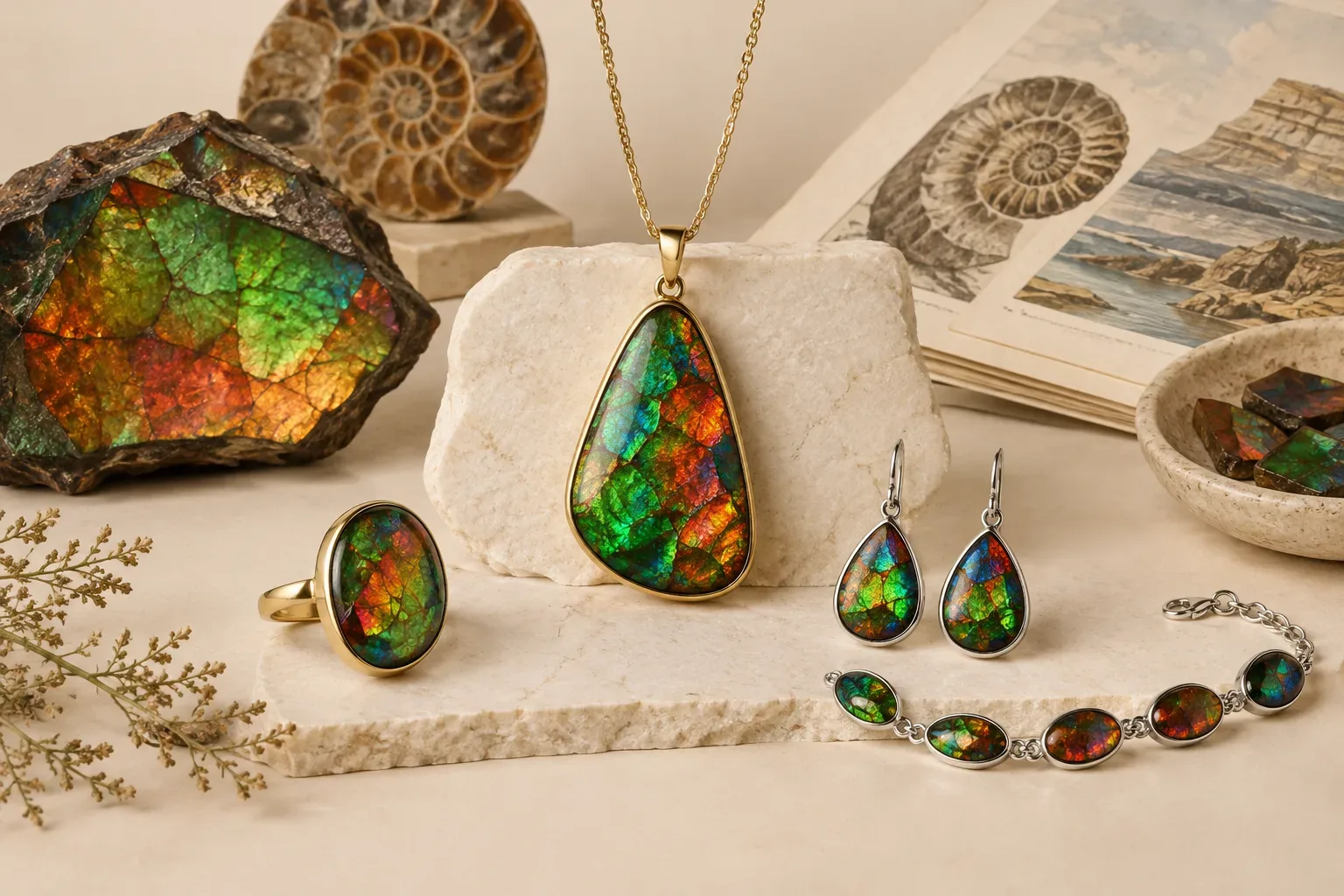
In contemporary jewellery, colourful organic and mineralised materials are typically cut and set as focal stones, inlays, or cabochons. Sellers and museums that describe gemstones emphasize appearance, colour, and durability when explaining how a material is incorporated into wearable objects.
Because the surfaces of fragile or iridescent materials can be sensitive to abrasion and impact, many pieces that use them are mounted with protective settings or surface treatments to improve wearability. If you are considering ammolite jewelry, pay attention to how the material has been finished, how it is set, and whether any protective backing or coating has been applied, because those choices affect both appearance and long-term performance.
Authenticity and treatment: what to ask and expect
Consumer-protection guidance from the U.S. Federal Trade Commission recommends that buyers ask clear questions about treatments, enhancements, and imitations, and request written disclosures when a seller provides them. That guidance applies equally to less-common gemstones and to familiar ones: ask whether the stone has been stabilized, dyed, coated, or assembled with backing materials, and ask for a written statement of any such treatments.
Ask for documentation of provenance and for any gemological reports the seller can supply. Independent lab reports are helpful when available, but not every lesser-known material has widely recognised grading reports. Still, a reputable dealer should be willing to explain the stone’s source, the nature of any treatment, how the piece was made, and their return or repair policies.
Selecting a piece: practical and respectful guidance
Start with how the piece will be used. If you want an everyday ring, choose a setting and mounting that protect the stone and make sure the seller discloses whether any protective treatment has been applied. For pendants and earrings, consider how the colour and size will sit with the wearer’s style and lifestyle.
Respect cultural context when gifting. If a seller or designer attributes a piece with spiritual, cultural, or historical meaning, ask for sources and treat those claims with the same care you would a historical claim about any gemstone. When in doubt, describe such meanings as contemporary or decorative rather than ancient or universal, and select pieces that the recipient can wear comfortably and with dignity.
Care and maintenance
Because iridescent and delicate materials can be sensitive to chemicals, abrasion, and thermal shock, handle ammolite jewellery with care. Store it separately from harder gemstones and metals to avoid scratches, and avoid exposing it to household chemicals and prolonged sunlight that can affect colour or surface treatments.
When cleaning, use only mild soap and water and a soft cloth; avoid ultrasonic cleaners and abrasive polishes unless a qualified jeweller who knows the material recommends them. For repairs or re-setting, work with a jeweller who will document any interventions so the piece’s provenance and treatment history remain clear for future buyers or appraisals.
Practical buying checklist
Before you buy, request written information about provenance, ask specifically whether any stabilization, coating, or backing was applied, and request the seller’s return or repair policy in writing. Compare the seller’s statements with independent sources when possible and prefer sellers who welcome questions and provide clear documentation.
Keep good records, including receipts, certificates, and correspondence about the piece. Clear documentation helps if you later want a third-party appraisal or if you decide to resell the item. Museums and consumer-protection agencies emphasize documentation and provenance as central to responsible collecting and buying behavior.
Final thoughts
Ammolite jewellery can be striking and meaningful, but because it sits at the intersection of jewellery craft, consumer markets, and contemporary interpretation, buyers benefit from a cautious, evidence-led approach. Use museum resources to understand how gemstone meanings evolve, follow the consumer-guidance approach of asking for full disclosure of treatments and provenance, and choose settings and care that match how you intend to wear the piece.
When gifting, be explicit about whether any symbolic meaning you attach is personal or modern rather than ancient or universally documented. That clarity respects both the recipient and the broader cultural history of jewellery.
Frequently asked questions
How can I tell if an ammolite piece is authentic?
Ask the seller for written provenance and any gemological reports they can provide. Reputable dealers will describe the material honestly and disclose any treatments. If you cannot obtain clear documentation or the seller is evasive about treatments and origin, treat the purchase as higher risk.
Are treatments common, and should they be disclosed?
Treatments and stabilizations are common across many gemstones in order to make them wearable. The Federal Trade Commission advises sellers to disclose treatments and imitations; buyers should request written disclosure and an explanation of how any treatment affects appearance and durability.
Is ammolite suitable for everyday wear?
Suitability depends on how the material has been finished and how it is set. Pieces with protective mountings or coatings will generally withstand more wear than exposed, delicate surfaces. When in doubt, choose protective settings and avoid exposing the jewellery to chemicals, hard knocks, and extreme temperatures.
Should I be concerned about cultural claims attached to a piece?
Yes—when sellers or makers attribute spiritual or historical meanings to a gemstone, ask for supporting sources. Distinguish documented historical or cultural uses (which should be evidenced in museum or scholarly sources) from modern or personal interpretations so you can gift or wear the piece respectfully.
What records should I keep after purchase?
Keep receipts, any written treatment or provenance statements, and correspondence with the seller. These records are useful for insurance, future appraisal, and resale, and they help maintain transparency about the piece’s history.
Sources and further reading
- Bedazzled: A History of Jewellery — Victoria and Albert Museum
- An A-Z of Gemstones — Victoria and Albert Museum
- Buying Gemstones, Diamonds, and Pearls — Federal Trade Commission