Meaning at a glance
Rutilated quartz contains visible rutile inclusions valued for pattern and contrast. Natural variation, imitation or assembly risk, setting, and care should precede modern clarity or momentum symbolism.
What the historical evidence shows
Gemological and trade literature, as summarized by the Gemological Institute of America (GIA), documents rutilated quartz primarily in technical and collector contexts rather than as a consistently recorded cultural symbol across antiquity or a specific historical period. The GIA’s reporting describes the appearance, occurrence, and gemological context of rutile inclusions and notes how those inclusions affect cutting, value assessment, and consumer interest.
The professional sources in the approved evidence set do not establish a single, traceable cultural meaning for rutilated quartz in ancient or medieval societies. In other words, modern gemological records and consumer-protection guidance focus on material properties, identification, and disclosure rather than on a long, continuous record of symbolic use attributed to a particular culture or era.
Documented historical meanings versus modern personal interpretations
Documented historical meanings in the available professional literature are limited. The GIA identifies rutilated quartz as a gem material of interest because of its inclusions' visual patterns and gemological implications; this is a descriptive, trade-centered record rather than a catalog of ritual or symbolic roles in specific cultures.
Modern personal and metaphysical interpretations, by contrast, are common in contemporary jewelry markets and among private collectors. Today people often speak of rutilated quartz in symbolic terms—for example, associating the fine rutile needles with themes such as clarity, direction, or energetic momentum—but these attributions are contemporary, culturally variable, and not documented as universal or historically continuous in the approved sources. Treat such meanings as personal or stylistic choices rather than objective facts.
How rutilated quartz appears in jewelry
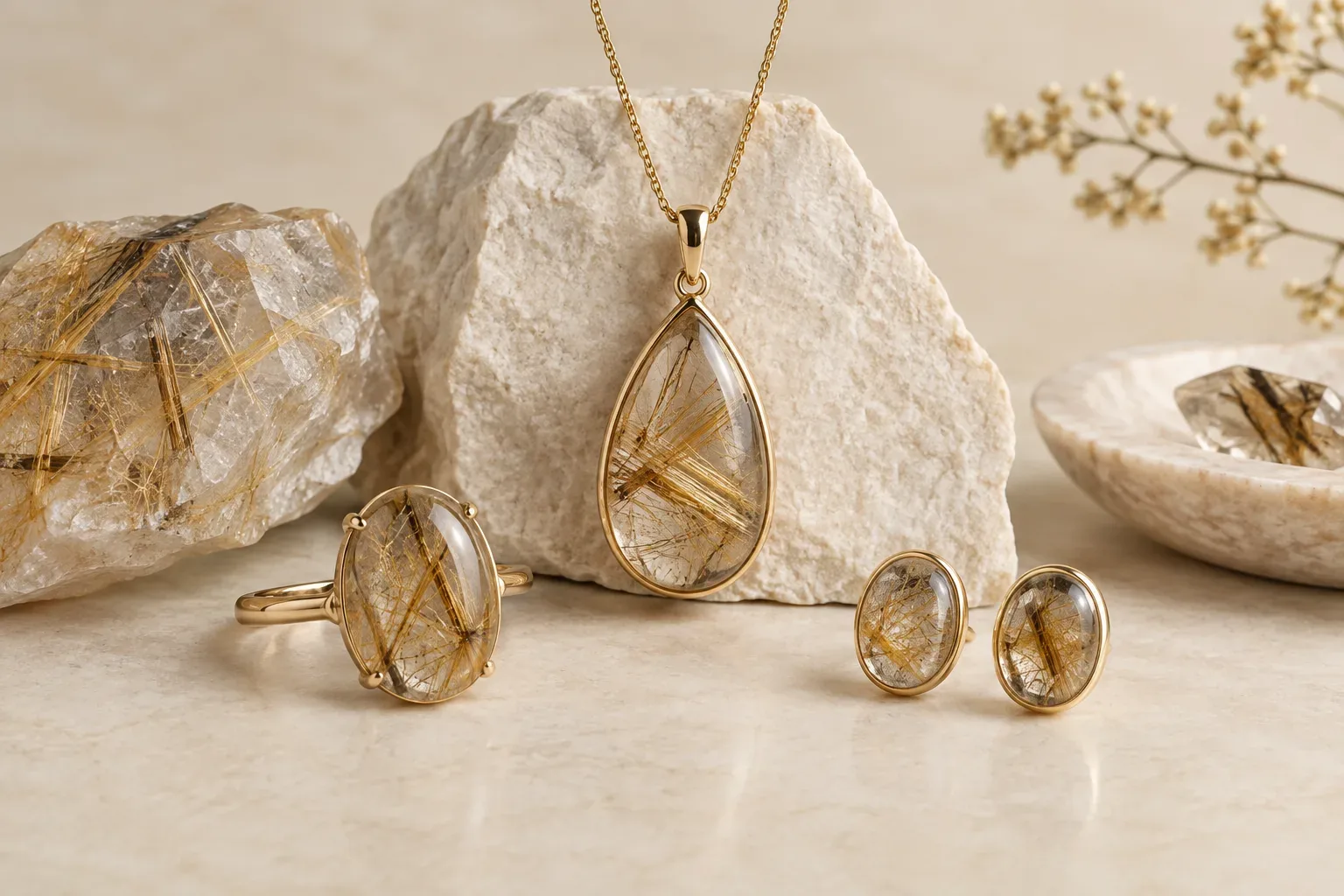
Rutilated quartz is cut and set to make the inclusions visible and aesthetically central. Jewelers work with both faceted and cabochon cuts; faceted stones emphasize sparkle and transparency, while cabochons and freeform cuts often highlight internal patterns and the three-dimensional appearance of the rutile needles. Designers may orient a stone so a rutile pattern reads vertically, diagonally, or concentrically, depending on the intended visual effect.
Because the inclusions are the decorative feature, many designers select clean, simple settings that do not distract from the stone: bezel settings and low-profile prong settings are common choices to protect the stone while letting the inclusions take center stage. Larger statement pieces such as pendants or brooches frequently showcase a single, well-selected rutilated quartz, while smaller stones can be paired with accent diamonds or metalwork to complement rather than conceal the rutile pattern.
Selection and gifting guidance
When selecting a rutilated quartz piece, prioritize what you or the recipient will appreciate most: distinct rutile patterns, contrast between the needles and the host quartz, and the overall color and transparency of the stone. Because every rutilated quartz is unique, examine candidate stones in person when possible and request photographs in consistent lighting if buying online.
Ask the seller about the stone’s origin and whether the quartz is natural, treated, assembled, or imitation. The Federal Trade Commission (FTC) advises consumers to require disclosure about treatments, synthetic or lab-grown material, and whether components have been assembled to imitate a single gemstone. The Gemological Institute of America (GIA) likewise notes that assembled stones and imitations exist in the market, so confirmation and documentation from a reputable seller reduce risk.
For gifting, consider the recipient’s taste more than any assigned symbolism. If the recipient values uniqueness, a rutilated quartz with a dramatic pattern can make a memorable gift. If durability is a concern—such as for a ring worn daily—choose a design that protects the stone and be explicit about care expectations. When the piece is meant as a sentimental token, include a written note that explains why you chose the particular stone or pattern so the personal meaning you intend travels with the gift.
Care and maintenance
Basic care recommendations follow standard gemstone guidance. The GIA’s tips on caring for jewelry recommend regular inspection of settings, careful cleaning, and appropriate storage to prevent scratches and loss. Because rutilated quartz is quartz, it has reasonable surface hardness, but inclusions and internal stresses can make individual stones more vulnerable to impact than clear, inclusion-free quartz of the same composition.
Avoid exposing rutilated quartz jewelry to harsh chemicals and avoid heavy mechanical shock. For routine cleaning, use mild soap and warm water with a soft brush and dry carefully. Before using ultrasonic or steam cleaning, consult a qualified jeweler because inclusions and internal fractures can react differently to aggressive cleaning methods; the GIA recommends professional inspection and warns that certain treatments or conditions may make ultrasonic cleaning unsafe. Store rutilated quartz pieces separately from harder gems to prevent surface abrasion and have prongs and settings checked periodically by a professional.
When to seek professional verification
If authenticity, origin, or treatment history is important to you, request a written report or certificate from a recognized laboratory or an experienced gemologist. The GIA’s gemological reporting and consumer-oriented notes explain why lab identification can matter: it helps distinguish natural rutilated quartz from imitation materials or assembled stones and clarifies whether any treatments have been applied.
The FTC’s guidance on buying gemstones recommends asking sellers for clear disclosures and documentation before finalizing a purchase. For high-value purchases, consider obtaining an independent appraisal or lab report to confirm identity, disclose treatments, and provide an objective assessment of the stone’s characteristics and market value.
Final considerations
Rutilated quartz’s primary appeal is visual: the rutile inclusions create patterns that collectors and wearers find attractive. While many modern buyers attach personal, spiritual, or symbolic meanings to those patterns, the best practice when buying, wearing, or gifting rutilated quartz is to treat those meanings as personal interpretations and to prioritize clear disclosure, sensible setting choices, and appropriate care.
If you are drawn to the stone for its look, choose the cut and setting that present the rutile inclusions in the way you like. If you are drawn by contemporary metaphors—such as clarity, direction, or momentum—make and share that meaning explicitly, but do so as a personal or modern interpretation rather than as a historically documented fact.
Frequently asked questions
Is rutilated quartz considered valuable?
Value depends on factors such as the attractiveness and uniqueness of the rutile pattern, clarity, size, and overall quality of the host quartz. Professional gemological reports and reputable seller disclosure help assess value. The visual appeal of inclusions often drives demand more than resale value tied to traditional gem markets.
Can rutilated quartz be used in rings for everyday wear?
Rutilated quartz can be set in rings, but because inclusions and any internal stress can increase vulnerability to impact, choose protective settings such as bezels or low-profile arrangements and be prepared to remove the ring during heavy manual work. Regular professional inspections of the setting are recommended.
How can I tell if my rutilated quartz is genuine or assembled?
Ask the seller for full disclosure and, if needed, a gemological report. The GIA notes that assembled stones and imitations exist; the FTC advises buyers to request clear information on treatments and assembly. For high-value pieces, seek independent verification from a recognized laboratory or qualified gemologist.
How should I clean rutilated quartz jewelry?
Clean rutilated quartz jewelry with mild soap and warm water and a soft brush, then dry it carefully. Consult a professional before using ultrasonic or steam cleaners because inclusions or internal fractures might make aggressive cleaning unsafe. Store the piece separately to prevent scratches.
Does rutilated quartz have a historical symbolic meaning?
The professional literature in the approved sources documents rutilated quartz’s gemological traits rather than a continuous, culture-specific symbolic history. While contemporary buyers often ascribe personal or metaphysical meanings to the stone, these are modern interpretations and not established historical facts in the cited sources.
What should I ask a seller before buying rutilated quartz?
Request disclosure on whether the quartz is natural or treated, whether any components are assembled, details about the stone’s origin if available, and any lab reports or appraisals. The FTC recommends asking for clear information about treatments, origins, and whether the piece is an imitation or synthetic.
Sources and further reading
- Rutilated Quartz — Gemological Institute of America
- Buying Gemstones, Diamonds, and Pearls — Federal Trade Commission
- Tips on Caring for Jewelry — Gemological Institute of America