Meaning at a glance
Ametrine is quartz that displays both amethyst (purple) and citrine (yellow-orange) color zones in a single crystal; explain its physical cause and source, confirm how natural, synthetic, or treated material should be disclosed, describe cutting and jewelry uses, and separate documented historical facts from contemporary interpretations of balance and duality.
What ametrine is — geology, color, and source
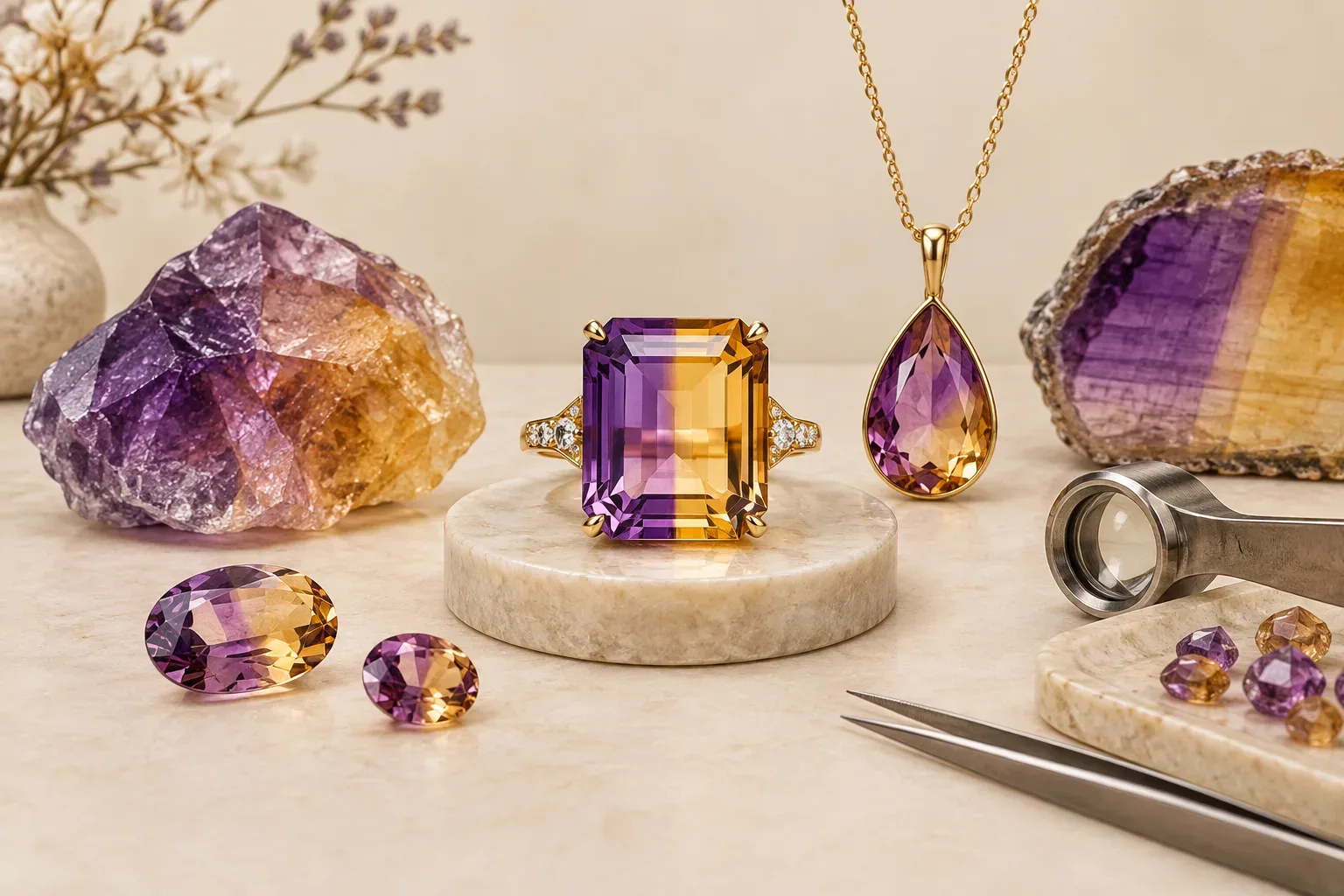
Ametrine is a variety of quartz whose crystal shows distinct areas of amethyst (purple) and citrine (yellow to orange) color. The Gemological Institute of America (GIA) explains that the two colors occur in the same quartz crystal because of variations in iron oxidation and exposure to natural heat or radiation during formation. The distribution of color is typically zoned rather than blended, so a single ametrine gem often displays a visible boundary or wedge of contrasting color.
GIA also documents the primary commercial source for naturally occurring ametrine as the Anahi deposit in Bolivia. While small occurrences elsewhere have been reported, the Bolivian source has historically supplied the bulk of gem-quality ametrine in the market. That geological and geographic information explains why reputable sellers often reference origin when describing ametrine.
Documented historical meanings and what the records say
Stone identification, origin, and physical causes are well documented in gemological literature, but explicit historical symbolism attached to ametrine in older cultures is not well established in the professional records cited by GIA. GIA’s published material focuses on the mineralogy, color zoning, quality grading, and jewelry applications rather than on an ancient ritual or cultural meaning that predates the modern gem trade.
Because ametrine rose to commercial attention largely through documented modern mining and gem trade channels, most historically traceable facts about the stone are geological and commercial rather than mythic or ceremonial in the way older named gems sometimes are.
Modern interpretations versus documented facts
Contemporary sellers, designers, and wearers frequently ascribe symbolic meanings to ametrine—commonly balance, harmony between opposing forces, or the unification of thought and feeling—because the stone literally shows two contrasting colors joined in one crystal. Those interpretations are modern and personal rather than historically documented across distinct cultures.
Separating the two is important: the physical facts (two colors in one quartz, primary origin at Bolivia’s Anahi deposit, and the ways cutters work the stone) are documented by gemological authorities such as GIA. The symbolic layer—balance, duality, or emotional equilibrium—is a contemporary, evocative reading adopted by designers and buyers and is not a universal or ancient meaning recorded across multiple cultures.
Color zoning, treatments, synthetics, and disclosure you should know
Because ametrine’s appeal comes from its two distinct colors, buyers should understand how those colors form and how they can be modified. Natural color zoning is a feature, but heat treatment and irradiation are used across the trade on various quartz varieties to alter or enhance color. The Federal Trade Commission (FTC) requires accurate disclosure of whether a gemstone is natural, lab-grown, treated, or an imitation, so ask sellers to state any known treatments or whether the piece is synthetic.
Synthetics and imitations exist for many gem types, and the market also has doublets or assembled stones that pair separate amethyst and citrine pieces to create a bi‑colored look. The FTC page on buying gemstones, diamonds, and pearls emphasizes that sellers must not misrepresent such treatments or assemblies. For ametrine, reputable vendors or gem labs will disclose whether the color zoning is natural to the single crystal or the result of assembly, treatment, or laboratory processes.
How cutting and orientation affect what you see
Cutters work with the stone’s natural color zoning to produce the most attractive appearance. A skilled lapidary can orient a faceted ametrine so the boundary between colors sits in a dramatic wedge, a soft band, or in multiple flashes depending on the cut and the gem’s natural zoning. The same rough can yield dramatically different finished looks depending on whether the cutter aims to emphasize contrast, create a more blended effect, or maximize carat weight.
When shopping, examine how the cutter has placed the color interface relative to the table and crown of the gem. For jewelry where the contrast is central to the design—such as a solitaire ring meant to showcase 'two-in-one' color—look for a clean, attractive boundary and even saturation on both sides. For more subtle pieces, a cutter that softens or blends the border may be preferable.
How ametrine appears in jewelry and motifs
Ametrine is used in many jewelry types: rings, pendants, earrings, and statement brooches are common. Designers often exploit the two colors to create a focal motif of duality, positioning the color split to align with a symbol—such as a heart divided by color, a yin-yang–like composition, or contrasting halves in a pendant—so the gem itself becomes the visual metaphor.
Because the gem is typically eye-clean at moderate sizes and can be faceted to show dramatic color play, it is well suited to jewelry intended to make a single, readable statement. Settings that protect the girdle and provide light to the pavilion will preserve brilliance without obscuring the color zoning. For pieces meant for frequent wear, choose secure prong or bezel settings that do not strain the gem during everyday activities.
Practical guidance for buying ametrine
Ask the seller for clear disclosure about origin and treatments and request any available gem reports or lab identifications. The FTC requires sellers to identify whether a gem is natural, treated, or synthetic; insist on transparent answers if this is a concern for you. If origin is meaningful to the recipient, ask for documentation or a verifiable provenance statement, especially if the seller claims Bolivian origin.
Evaluate stones in good light to judge the saturation of both color zones and look for an attractive balance between the purple and yellow-orange areas. Consider the cut and how the color boundary appears in the finished gem, and compare several stones if possible to find the combination of color distribution, size, and cut that suits your aesthetic goals. Finally, if you want assurance of natural, untreated material, ask for an independent gem lab report that explicitly notes treatments and whether the piece is assembled.
Care and maintenance
Ametrine is quartz and shares hardness and care needs with other quartz varieties: it is relatively durable but can be chipped or scratched by harder materials. The Gemological Institute of America recommends standard precautions for jewelry: avoid harsh chemical cleaners, protect the stone from sharp blows, and store it separately to prevent abrasion. For routine cleaning, warm soapy water and a soft brush are generally safe, but avoid steam or ultrasonic cleaners if the gem is known to have fractures, fillings, or an assembled construction.
Have regularly worn ametrine jewelry inspected by a professional jeweler to check settings and to ensure that any heat-treated or assembled aspects remain stable. If you have questions about whether a particular cleaning method is safe for your piece, consult a qualified lapidary or gemologist rather than assuming all quartz can tolerate every method.
Gifting respectfully and selecting for symbolic meaning
If you choose ametrine as a meaningful gift, present the physical facts alongside any personal symbolism you intend. Explain that ametrine literally contains two quartz colors in one crystal and that modern interpretations often treat it as a symbol of balance or integration. Because symbolic meaning is personal and culturally variable, ask whether the recipient values origin, natural material, or a particular explanation before assigning a definitive meaning.
When gifting on behalf of a culture or belief system, avoid asserting that ametrine carries traditional ritual significance unless you have a reliable cultural source. Instead, offer the stone as a modern symbol chosen for its visual duality and beauty, and include care instructions and any documentation of origin or treatment so the recipient can understand both the gem’s story and how to look after it.
Final note
Ametrine’s literal two‑color nature makes it an attractive gem for jewelry and a natural springboard for modern symbolism about balance and complementary forces. Ground your choices in documented facts—what the gem is, where it came from, and whether it has been treated or assembled—then layer personal meaning where it feels respectful and relevant to the wearer.
Frequently asked questions
Is ametrine a natural gemstone or a mix of two stones?
Ametrine is a single natural quartz crystal that shows both amethyst and citrine color zones. However, the market also includes assembled or treated pieces, so ask sellers to disclose whether the color zoning is natural to the single crystal or the result of assembly or treatment, in line with FTC guidance on disclosure.
Does ametrine always come from Bolivia?
Bolivia’s Anahi deposit is the primary historical commercial source for gem-quality ametrine, as documented by GIA. Small occurrences have been reported elsewhere, but origin statements should be confirmed by the seller or by a gemological report if provenance matters to you.
Are ametrine gemstones treated or synthetic?
Treatments such as heat or irradiation are used across the quartz trade to alter color, and synthetics or assembled stones may exist. The FTC requires sellers to disclose treatments and whether a gemstone is natural, lab-grown, or an imitation, so request clear disclosure and any available lab reports.
How should I clean and care for ametrine jewelry?
Ametrine is quartz and can generally be cleaned with warm soapy water and a soft brush. Avoid harsh chemicals, and exercise caution with ultrasonic or steam cleaners if the stone has fractures or is assembled. Follow GIA’s recommendations for storage, avoiding abrasion and inspecting settings regularly.
What does ametrine symbolize?
Symbolic meanings—such as balance, harmony, or the integration of opposites—are modern interpretations based on the stone’s visual duality. These are personal or designer-assigned meanings rather than documented historical meanings recorded by professional gemological sources.
Sources and further reading
- Ametrine Gemstone — Gemological Institute of America
- Buying Gemstones, Diamonds, and Pearls — Federal Trade Commission
- Tips on Caring for Jewelry — Gemological Institute of America