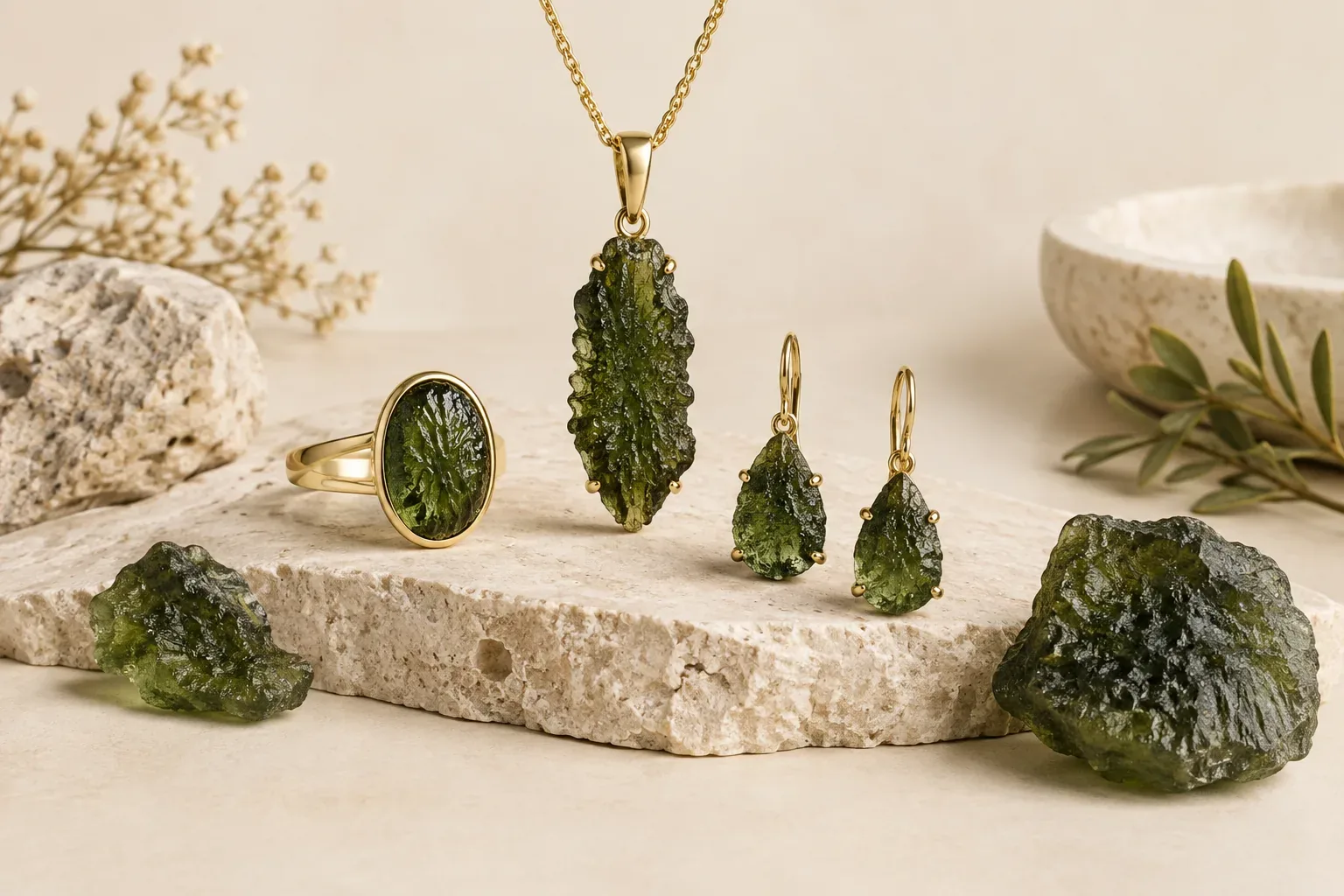
Meaning at a glance
Moldavite is a natural green tektite produced by a meteorite impact; documented evidence is geological rather than rooted in ancient cultural usages, and buyers should focus on authentic identification, careful setting, and gentle care while recognizing modern personal meanings are contemporary interpretations.
Quick answer
Moldavite jewelry meaning: moldavite is a natural green tektite formed in association with a meteorite impact; practical concerns about identification, imitation risk, setting, and care are separate from modern spiritual or transformational narratives.
What moldavite actually is — the geological record
Scientifically, moldavite is a type of tektite: a natural glass formed by the extreme heat and pressure of a meteorite impact. This geological identity and the features used to distinguish natural pieces are discussed in gemological reports and summaries produced by the Gemological Institute of America (GIA).
GIA publications describe the characteristic appearance, internal structure, and surface features that gemologists use to recognize natural moldavite and to detect imitations. Those same professional discussions emphasize that moldavite is a product of a natural high-energy event rather than a human-formed glass.
Historical evidence and cultural claims — what is documented and what is not
The strongest, documented evidence about moldavite is geological and gemological. Professional bodies that study gems report on moldavite’s natural formation, its physical characteristics, and the existence of modern fakes or assembled pieces. Those technical and scientific records form the primary historical evidence for moldavite.
Claims that link moldavite to specific ancient rituals, long-established cultural traditions, or historical religious practices are not documented in the same way. Gemological literature focuses on material origin and identification rather than on premodern spiritual customs, and reliable primary historical sources tying moldavite to defined ancient cultures are not established in those professional reports. As a result, descriptions of ancient cultural use should be treated as speculative unless supported by archaeological or textual evidence published by qualified historians or archaeologists.
Documented meanings versus modern personal interpretations
Documented meaning: the objective, documented meaning of moldavite in scientific and gemological sources is as a tektite — a natural glass formed by impact — and as a gemstone material with particular physical and optical characteristics that affect how it is identified and used in jewelry (Gemological Institute of America).
Modern personal interpretations: many contemporary narratives about moldavite relate to personal transformation, metaphysical properties, or energetic effects. These interpretations are modern cultural phenomena and are individual or community beliefs rather than historically documented meanings. Treat any spiritual or transformative claims as personal or cultural expressions rather than universally established facts.
How moldavite appears in jewelry
Moldavite is usually cut and set to display its distinctive green color and textured surface. Because natural moldavite often shows surface pitting, flow lines, and internal features, many jewelers choose freeform cabochons, polished slices, or tightly bezel-set cabochon mounts that protect fragile edges.
Common jewelry types include pendants, earrings, and rings, but the stone’s relative softness and surface texture influence typical settings. Protective settings that surround the stone or place it within a bezel are preferred for pieces worn daily. In more ornamental or occasional-wear designs, moldavite may be paired with sturdier accent stones and metalwork to reduce the risk of chipping.
Buying and selection guidance — authenticity, disclosure, and practical considerations
Start with authenticity: professional gemological sources note there is imitation risk with moldavite and recommend buyers seek sellers who can point to natural identification features and provenance (Gemological Institute of America). Look for surface textures and internal characteristics consistent with natural tektite and ask whether the piece has been stabilized or altered.
Ask for clear disclosure: the Federal Trade Commission (FTC) advises sellers and buyers that treatments, laboratory processes, and imitations must be disclosed. When purchasing moldavite, ask the seller to state clearly whether the stone is natural, whether it has been assembled from multiple fragments, or whether it is a man-made glass imitation.
Request documentation and policies: request photographs from multiple angles, a written description, and the seller’s return policy. When possible, obtain independent testing or a reputable laboratory report for higher-value purchases. Buy from established retailers or dealers who will explain how they identify natural moldavite and who provide transparent policies on returns and refunds.
Match the stone to the wearer: consider the intended use. For everyday jewelry choose pieces with protective settings and smaller cabochons or cabochon-like mounts. For a dramatic pendant intended for occasional wear, larger natural chunks or artistic cuts may be appropriate. If the recipient values the stone’s geological story, provenance—where the specimen was found and how it was sourced—can be an important part of the gift.
Caring for moldavite jewelry
Treat moldavite as a relatively delicate gem: professional jewelry-care guidance emphasizes gentle cleaning, safe storage, and regular inspection of settings (Gemological Institute of America). Avoid impact, extreme temperature shifts, and harsh household chemicals that can damage natural glass or loosen settings.
Cleaning and storage: clean moldavite jewelry using a soft cloth and mild soap with warm water, rinsing thoroughly and drying carefully. Avoid ultrasonic and steam cleaners for fragile or porous pieces unless a qualified jeweler confirms they are safe for that specific item. Store moldavite pieces separately from harder gemstones and metals to prevent scratching and accidental knocks.
Maintenance routine: have settings checked periodically by a professional jeweler to ensure prongs and bezels remain secure. For pieces that see frequent wear, consider insurance appraisal and keep purchase documentation and any lab reports with the appraisal records.
Gifting considerations and respectful practices
When gifting moldavite, be explicit about authenticity and care. Provide the recipient with any documentation you received at purchase, explain the gemstone’s geological origin if that is part of the intended meaning, and include care instructions to protect the piece.
Respect personal beliefs and contexts. If the gift is intended to convey spiritual or symbolic meaning, acknowledge that such interpretations are personal and contemporary rather than universally historical. If the recipient values scientific provenance, include provenance details and, when available, lab verification to honor that preference.
Frequently asked questions
Is moldavite a natural gemstone?
Yes. According to gemological reporting, moldavite is a natural glass known as a tektite associated with a meteorite impact; professional sources describe its natural surface and internal features used to identify genuine pieces (Gemological Institute of America).
How can I avoid buying fake moldavite?
Ask the seller for clear disclosure about whether the piece is natural or a man-made imitation, request detailed photographs and provenance information, and consider buying from a reputable dealer. The Gemological Institute of America highlights common imitation risks and identification features, and the Federal Trade Commission requires truthful disclosure of treatments and imitations.
Can moldavite be worn every day?
Moldavite can be worn, but it is relatively delicate compared with many gemstones. Choose protective settings for everyday wear, avoid hard impacts, and follow routine inspection and care recommendations. If you need a stone for rough daily wear, select a design with a protective bezel or limited exposure.
How should I clean moldavite jewelry?
Clean gently with a soft cloth and mild soap and water, rinse and dry thoroughly. Avoid harsh chemicals and, unless a qualified jeweler advises otherwise, avoid ultrasonic or steam cleaners for fragile or porous natural glass pieces. Follow professional jewelry-care guidance for storage and inspection (Gemological Institute of America).
What should I include when gifting moldavite?
Include any purchase documentation, seller disclosures, care instructions, and provenance information when available. Clarify whether the stone is natural and whether any treatments were performed, and be explicit about return and authenticity policies so the recipient can verify the piece if desired.
Sources and further reading
- Moldavites: Natural or Fake? — Gemrological Institute of America
- Buying Gemstones, Diamonds, and Pearls — Federal Trade Commission
- Tips on Caring for Jewelry — Gemological Institute of America