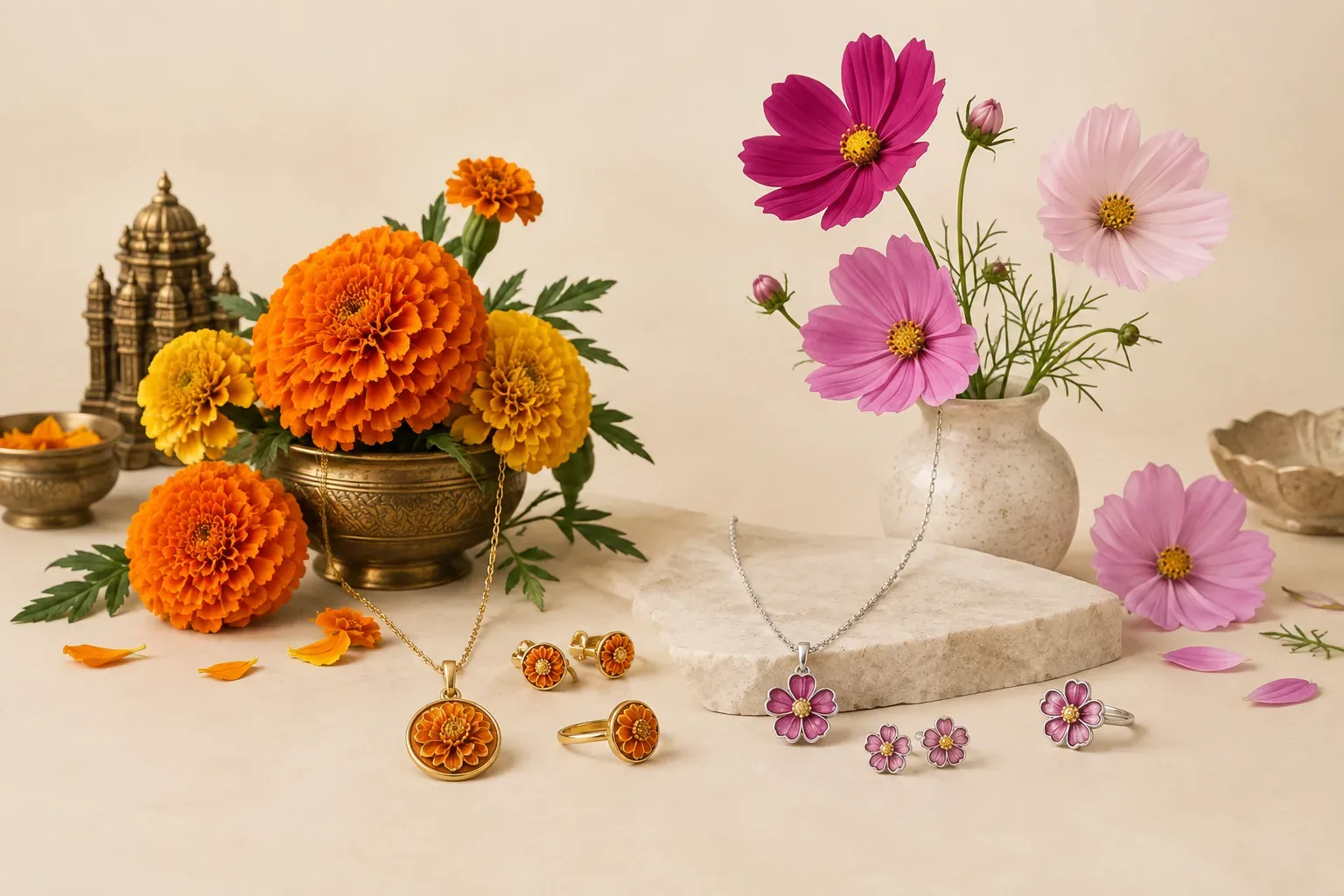
Meaning at a glance
October’s birth flowers—marigold and cosmos—are distinct plants with different botanical identities, cultural histories, and color traditions; historical meanings come from specific cultural or print-era sources while modern sentimental meanings are personal, and those distinctions should guide how you choose or gift jewelry that uses these motifs or colors.
Which plants are we talking about?
The name “marigold” is used for more than one plant. In horticulture and jewelry references you will often see Tagetes species (the New World marigolds gardeners call French, African, or signet marigolds) and Calendula officinalis (often called pot marigold) treated as separate flowers under the same English name. Cosmos most often refers to Cosmos bipinnatus and close relatives, tall annuals with finely divided foliage and daisy-like heads. These botanical distinctions matter because native ranges, seasonality, bloom shapes, and traditional uses differ between genera (Royal Horticultural Society).
Botanical and horticultural context affects how a flower looks and how it is represented in art and jewelry. For example, Tagetes species offer compact, strongly textured heads and intense warm colors, while certain cosmos species present airy stems and a broader palette that includes pinks and whites (Royal Horticultural Society).
Historical evidence and cultural context (documented sources)
Historical meanings for flowers are recorded unevenly and come from specific times and places. The practice of assigning sentiment to flowers in printed guides—often called floriography—was especially prominent in English-language print culture in the 19th century. Collections of floral meanings from that period shaped modern expectations that a flower
means
a single sentiment, but those assignments were local to a time and publishing culture (Library of Congress).
Specific cultural notes tied to marigold and cosmos
Documented uses and meanings vary by culture and cannot be collapsed into a single global meaning. Marigolds have long appeared in ceremonial, medicinal, and ornamental contexts in different regions, and the historical roles of those plants have shifted as peoples and gardens changed seasonally (Smithsonian Libraries and Archives). Cosmos, being a New World genus that became popular in 19th-century ornamental horticulture, entered European and North American gardens and images at a particular historical moment; that horticultural history shaped how the plant was represented in art and decorative objects rather than giving a single, universal symbolic meaning (Royal Horticultural Society; Smithsonian Libraries and Archives).
Documented historical meanings versus modern personal interpretations
Documented meanings are those recorded in specific historical sources: printed floriography lists, herbal manuals, and museum or archival records that link a flower to a practice or sentiment in a particular culture or period. For example, Victorian-era printed guides recorded a broad system of floral symbolism for use in social communication (Library of Congress). Those records are useful as historical evidence of what people in that place and time believed and practiced, but they do not establish a timeless or global meaning.
Modern interpretations—what someone means when they give a marigold or cosmos necklace today—are typically personal, aesthetic, or cultural revivals. Contemporary makers and wearers may choose marigold-themed jewelry for its bright orange tone and associations with warmth, energy, or autumn; they may choose cosmos motifs for breathy shapes and a sense of innocence or order. Those associations are contemporary and individual, and they vary by wearer and community. The important distinction is that historical documentation tells you what was said or done in a particular context, while modern sentiment reflects present tastes and intentions (Library of Congress; Smithsonian Libraries and Archives).
How these flowers and motifs appear in jewelry
Designers represent marigolds and cosmos in jewelry in several recurring ways: as stylized metalwork silhouettes, as painted or enameled petals, as carved or cast forms, and as color palettes translated to gemstones. Marigold-inspired pieces often emphasize warm, saturated tones and repeated petal textures; they appear in autumnal pendants, lapel pins, and statement earrings. Cosmos motifs frequently translate to lighter, airy shapes with single or openwork petals, and they are common in delicate chain pendants and filigree brooches.
Gemstone choices often mirror flower color and the mood the designer wants to evoke. Warm yellows and oranges commonly paired with marigold motifs include citrine, amber, yellow sapphire, and topaz; deep golden or coppery finishes in metalwork reinforce the marigold impression. For cosmos-inspired jewelry, designers lean toward pinks, whites, and soft purples—rose quartz, morganite, moonstone, and amethyst appear frequently—because they suggest the plant’s lighter palette and delicate form.
Beyond gemstone color, makers may use botanical techniques such as pressed-flower resin pendants, hand-painted enamel, or miniature carving to reproduce a flower’s look precisely. When actual plant material is used, conservation choices (clear resin, glass cabochons, or sealed lockets) determine how durable and wearable the piece will be.
Practical and respectful selection and gifting guidance
Start by clarifying what you want the piece to say. If your intent is to honor a documented cultural meaning for a particular community, check reliable cultural and historical sources and, when appropriate, consult someone from that community or a cultural expert. If your intent is personal—celebrating autumn, a birthday, or a shared memory—focus on design cues such as color, scale, and durability that match the wearer’s style.
Respect cultural context. Some flowers have strong ceremonial or sacred roles in particular places; using a flower motif in a casual or commercialized way can feel insensitive if the flower is culturally important. Because documented meanings are context-specific, avoid asserting a single, universal symbolic meaning for marigold or cosmos when giving jewelry as a cross-cultural gift (Smithsonian Libraries and Archives; Library of Congress).
Choose materials for intended use. If the recipient wears jewelry daily, select solid metals and hard gemstones rather than fragile materials or untreated pressed flowers. For keepsakes intended more for display than wear, techniques that preserve real petals can be beautiful but less durable. Include a card or note explaining the intended meaning if you want to make the sentiment explicit—this personalizes the gift and avoids misinterpretation.
Consider color and tone carefully. A marigold-colored piece in deep orange will read very differently than a pale calendula-yellow pendant; similarly, a pink cosmos motif can evoke lightness while a white one can read as understated or traditional. Match the metal finish to the front-of-mind color story: warm gold tones enhance orange marigold associations, while rose gold or silver can complement softer cosmos palettes.
Provide context. If you know the recipient appreciates historical meanings, include a brief note citing the relevant cultural source or book. If the meaning is personal, explain your choice in a short message. That small step preserves the distinction between documented history and personal sentiment and makes the gift more thoughtful and intelligible.
Final takeaways
October birth flower meaning is not a single, universal truth. Marigold and cosmos are distinct botanically and historically, and their symbolic lives depend on species, place, and period. Use documented sources when you want to reference historical meaning, and rely on personal explanation when your gift or purchase reflects contemporary feeling or aesthetic preference. Thoughtful selection—attending to species, color, materials, and cultural context—will make marigold- or cosmos-themed jewelry feel both beautiful and respectful.
Frequently asked questions
What exactly are the October birth flowers?
October’s birth flowers are commonly listed as marigold and cosmos; marigold can refer to different genera such as Tagetes or Calendula, while cosmos typically refers to Cosmos species like Cosmos bipinnatus.
Do marigold and cosmos have universal symbolic meanings?
No. Symbolic meanings are context-specific. Historical meanings come from particular cultures and print traditions, such as Victorian floriography, while modern meanings are usually personal or stylistic (Library of Congress; Smithsonian Libraries and Archives).
Are there jewelry-friendly gemstones that echo marigold or cosmos colors?
Yes. Warm yellows and oranges that pair with marigold motifs include citrine, amber, and topaz; softer pinks and purples that suit cosmos motifs include rose quartz, morganite, and amethyst.
Is it acceptable to gift marigold or cosmos jewelry to someone from another culture?
Often yes, if you are respectful. Avoid asserting a single cultural meaning and, if the flower has known ceremonial significance in the recipient’s community, consult reliable sources or someone from that community before gifting (Smithsonian Libraries and Archives).
How durable are pieces that use real pressed flowers?
Pressed-flower jewelry can be fragile; clear-resin encapsulation and protective settings improve durability, but such pieces usually require gentler wear than solid metal or gemstone jewelry.
Where can I find historical information about flower meanings?
Printed floriography guides and museum or archival essays on plant history are good starting points. The Library of Congress documents print-culture traditions of floral meaning, and institutional collections and essays summarize changing human-plant relationships (Library of Congress; Smithsonian Libraries and Archives).
Sources and further reading
- Blooming Flowers: A Seasonal History of Plants and People — Smithsonian Libraries and Archives
- Flowers and Their Meanings — Library of Congress
- Plants of the World — Royal Horticultural Society