Meaning at a glance
Chrysocolla is a blue-green copper-bearing material often mixed with quartz or other copper minerals; variable composition, stabilization, trade descriptions, durability, and care should be separated from modern communication symbolism.
What chrysocolla is: color and composition
Chrysocolla is identified as a copper-bearing mineral that commonly produces blue to blue-green colors. The Smithsonian National Museum of Natural History explains chrysocolla in the context of gem materials and geology, emphasizing that its chemical composition and physical character can vary and that it often occurs alongside or mixed with other copper minerals or silica-rich materials.
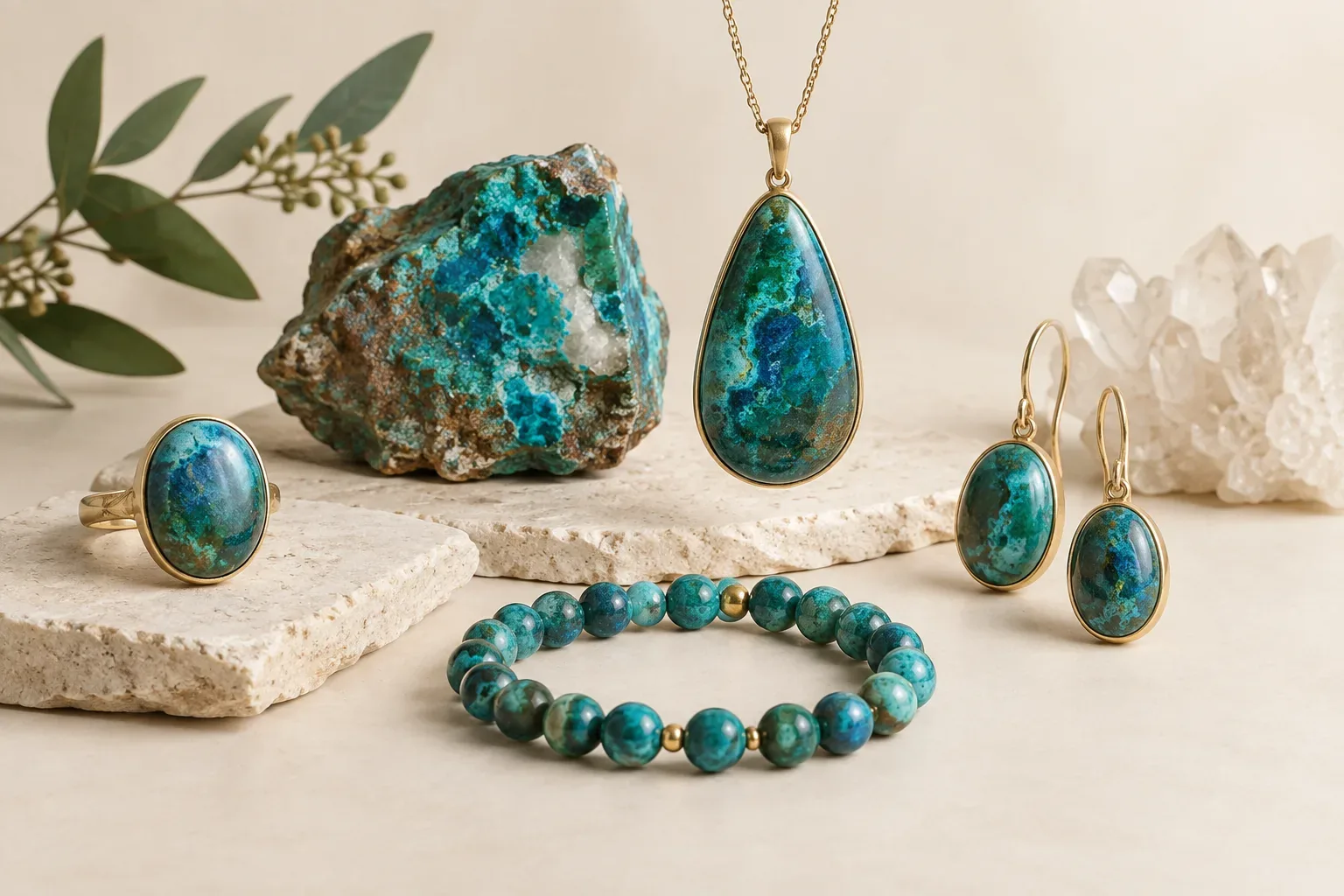
Because chrysocolla frequently forms mixtures or is found with other minerals such as quartz, the visual result ranges from translucent to opaque, with color zones, veining, and patches of different tones within a single specimen. That geological variability explains why two chrysocolla cabochons can look quite different even when sourced from the same deposit.
Historical evidence and named sources
Authoritative public references examined for this article include museum and professional sources that present mineral identity, trade context, and treatment issues rather than comprehensive ethnographic claims. The Smithsonian frames chrysocolla as a mineralogical and gem-material category and illustrates its geological occurrence rather than recording a set of universal cultural meanings.
Professional gemology sources such as the Gemological Institute of America describe the treatment and trade context for many fragile or composite gem materials but do not provide a catalogue of culturally specific symbolic uses that can be taken as universally documented historical facts. For consumer protection and trade language, the Federal Trade Commission sets standards for disclosure about whether a material is natural, treated, lab-grown, or an imitation and advises transparency in marketplace descriptions.
Documented historical meanings versus modern personal interpretations
Within the museum and gemological sources reviewed for this piece, there is limited direct documentation assigning a particular symbolic meaning to chrysocolla that can be traced to a named culture or period. In other words, authoritative mineral and trade references focus on material identity, sources, and treatment rather than long lists of historical symbolism attributed to specific cultures.
Separately, modern sellers, contemporary crystal enthusiasts, and individual wearers often ascribe personal or modern symbolic meanings to chrysocolla—such as associations with calm, communication, emotional balance, or healing. Those modern interpretations are personal and cultural in their own right but should be distinguished from historically documented meanings. If a buyer is seeking a gem because of an historical association, request provenance and documentary evidence; if the appeal is personal or aesthetic, that is a valid reason to choose chrysocolla but it is not the same thing as a verified ancient cultural meaning.
How chrysocolla appears in jewelry
Chrysocolla is used in many jewelry forms: cabochons for rings and pendants, beads, inlays on metal or other stones, and composite slabs where chrysocolla is combined with quartz or other copper minerals. Jewelry suppliers and lapidaries often cut chrysocolla to show attractive color patterns and to make the material wearable.
Because raw chrysocolla can be relatively soft or porous in places, lapidaries sometimes stabilize the material with resins, back it with softer fillers, or select chrysocolla that is naturally reinforced by silica to improve toughness. When chrysocolla occurs with harder minerals such as quartz, the resulting composite piece can be substantially more durable than pure chrysocolla patches. These practical decisions—cutting, backing, and stabilization—affect how the stone is set and what kinds of jewelry are appropriate for everyday wear.
Durability: what to expect
Expect chrysocolla’s durability to vary because it is a variable material. Portions composed primarily of chrysocolla can be relatively soft and susceptible to scratching or abrasion, while composite pieces containing significant quartz or other hard minerals are often harder and more wearable. The Smithsonian’s treatment of gem materials highlights that mineral identity and physical properties are not always uniform across a named gem material, which is why durability can differ from piece to piece.
Because of that variability, jewelers commonly recommend protective settings such as bezels for rings and daily-wear pieces or reserving more fragile chrysocolla items for necklaces, earrings, or occasional-wear rings. When a seller discloses that a stone is stabilized, that often indicates a treatment intended to improve durability or appearance; you should consider that statement when deciding on intended use.
Treatments, imitations, and disclosure when buying
The Gemological Institute of America provides professional guidance on gem treatments and stresses the importance of disclosure. Stabilization, resin impregnation, backing, and composite construction are treatments commonly applied to fragile or porous materials; buyers should ask whether a chrysocolla piece has received such treatments and how they affect cleaning and wear.
The Federal Trade Commission’s guidance for consumers is also relevant: sellers should clearly disclose whether a gemstone is natural, treated, lab-grown, or an imitation. When shopping for chrysocolla, ask for plain-language answers about whether the stone is natural chrysocolla, a chrysocolla-quartz composite, resin-stabilized, or an imitation. If those details are not supplied voluntarily, request them in writing and consider purchasing from vendors who provide transparent treatment and return policies.
Practical care advice
Given chrysocolla’s variable composition and the possibility of stabilization, take a cautious approach to cleaning and care. For routine cleaning, use a soft cloth and mild soapy water and dry thoroughly. Avoid steam, boiling, or ultrasonic cleaners unless the seller or laboratory report states that the specific piece is safe under those conditions.
Protect chrysocolla jewelry from hard knocks, abrasive surfaces, and household chemicals such as bleach or acids. Store chrysocolla items separately from harder gems and metals to prevent scratches. If you own a stabilized piece, confirm care instructions with the seller because resin-impregnated stones may have different sensitivities than unfilled material.
Selection and gifting guidance
Choose chrysocolla based on the combination of color appeal, disclosed treatment, intended wear, and the message you want the piece to carry. If you want a durable daily-wear ring, prioritize chrysocolla that is explicitly described as reinforced by quartz or professionally stabilized and set in a protective bezel. If the recipient values the stone’s color or calming aesthetic for occasional wear, you may choose a less treated specimen and present it with clear care instructions.
When gifting chrysocolla as a symbolic token, be explicit about the symbolism you intend. Modern symbolic meanings are personal and culturally variable; saying why you chose the stone—color, personal association, or a contemporary attribute—helps the recipient understand the gift’s meaning. Also ask the seller for clear disclosure about treatments, return policies, and any care recommendations so the recipient can keep the piece looking its best.
Frequently asked questions
Is chrysocolla suitable for everyday rings?
Chrysocolla’s suitability for everyday rings depends on the specific specimen. Because the material is variable—some pieces are soft or porous while others are reinforced by quartz or stabilized—choose a reinforced or clearly stabilized piece and a protective setting for daily wear, and confirm care instructions with the seller.
How should I clean chrysocolla jewelry?
Clean chrysocolla with a soft cloth and mild soapy water and dry it thoroughly. Avoid steam, boiling, or ultrasonic cleaners unless the seller or a laboratory report explicitly states the piece is safe for those methods, especially if the stone has been stabilized.
How can I tell if a chrysocolla piece has been treated or stabilized?
Ask the seller for written disclosure. The Gemological Institute of America recommends transparent reporting of treatments. If the seller cannot or will not state whether a piece is stabilized, backed, or composite, consider buying elsewhere or requesting a lab report.
Are there imitations I should watch for?
Yes. Market language should clearly distinguish natural chrysocolla from imitations or assembled materials. The Federal Trade Commission emphasizes that consumers should be told whether a stone is natural, treated, lab-grown, or an imitation, so request that information before purchase.
Can chrysocolla be combined with other stones?
Yes. Chrysocolla is often cut and used alongside or as an inlay with other materials. Some pieces are natural composites containing quartz or other copper minerals; composite construction can improve durability but should be disclosed by the seller.
What should I ask for when buying chrysocolla as a gift?
Ask whether the stone is natural or treated, whether it is stabilized or backed, and for care instructions and return policy. If the symbolic meaning matters to the recipient, explain your intention and include a note describing why you chose the stone.
Sources and further reading
- Gems and Minerals: Beauties and Building Blocks — Smithsonian National Museum of Natural History
- An Introduction to Gem Treatments — Gemological Institute of America
- Buying Gemstones, Diamonds, and Pearls — Federal Trade Commission