Meaning at a glance
Vesuvianite, also called idocrase, occurs in green, yellow, brown, and other colors; its mineral identity, possible inclusions, and durability guide buying and care, while any modern symbolism (for courage, renewal, etc.) is a contemporary personal interpretation rather than a documented historical meaning.
What vesuvianite (idocrase) is — mineral identity and color range
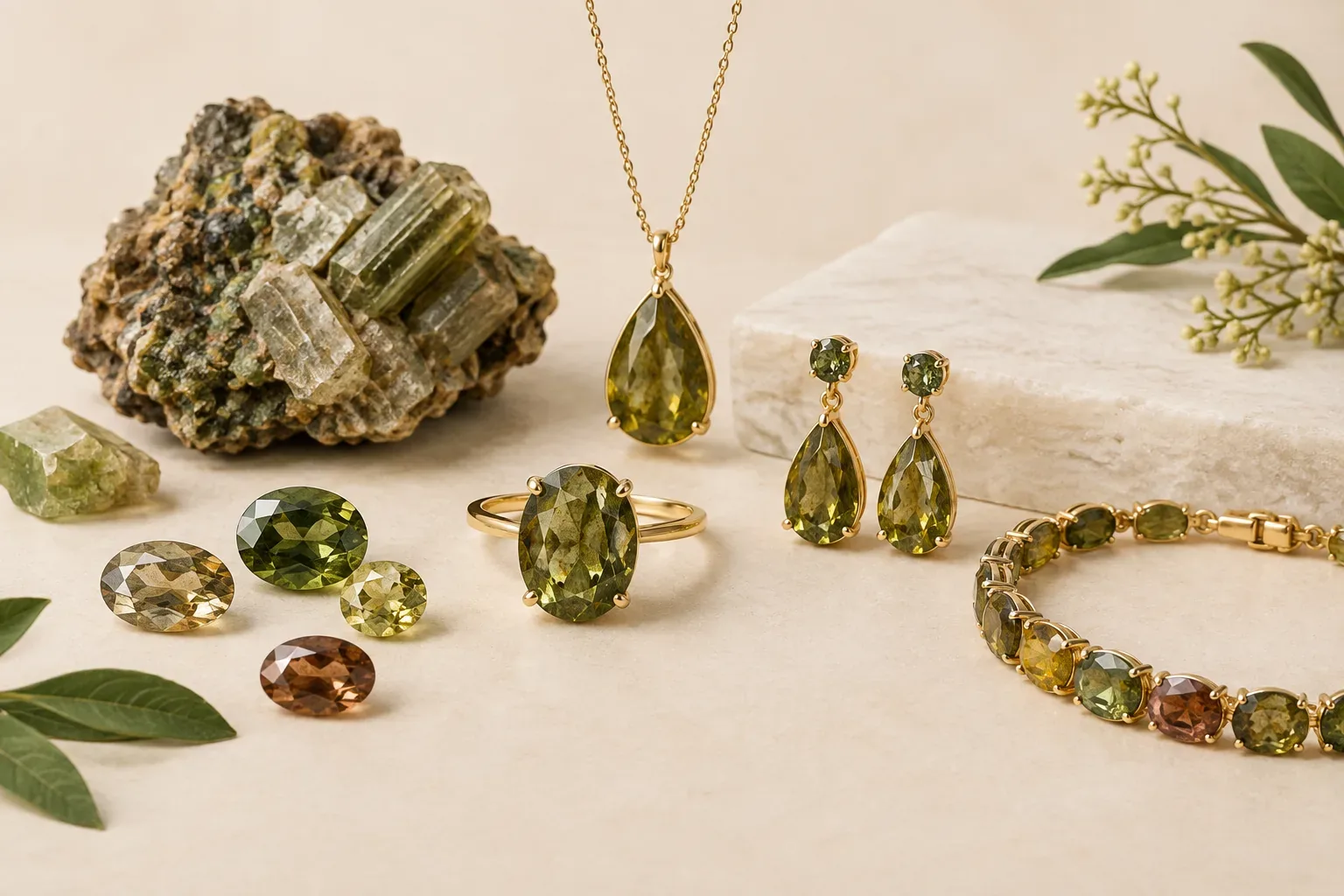
Vesuvianite is a recognized mineral species often used as a gemstone under the name idocrase. Museum and museum-education resources describe vesuvianite in the context of mineral classification and geological occurrence rather than as a longstanding cultural symbol. The mineral can be found in several colors, including green, yellow, brown, and variants in between, and gem-quality material is cut and polished for use in jewelry. For a clear overview of vesuvianite as a gem material and how it fits into broader mineral collections, see museum resources that explain gems and minerals in their geological context.
Historical evidence and cultural claims — what is documented (and what is not)
When assessing historical meanings for any gemstone it is important to separate archaeological and documentary evidence from later or modern attributions. The primary, approved reference material used here frames vesuvianite as a mineral and gem material within geological and museum contexts rather than as an item with well-documented ceremonial or symbolic use in specific ancient cultures.
Museum education resources focus on the mineralogical identity, formation environments, and collecting history of gem materials rather than on claims about long-standing cultural symbolism for vesuvianite. In short, authoritative museum documentation supports vesuvianite’s status as a recognized mineral but does not provide evidence that it carried a particular symbolic meaning in historic civilizations. Because the scientific literature emphasized by museums treats vesuvianite as a mineralogical subject, any statements that vesuvianite had a named or formal role in a specific ancient ritual or culture should be treated cautiously unless supported by archaeological or primary cultural sources.
Documented history versus modern personal interpretations
Documented history (as presented by mineralogical and museum sources) addresses vesuvianite’s physical nature, occurrence, and use as a cut gem. It does not establish universal symbolic meanings. Modern symbolic claims — for example, that vesuvianite represents courage, renewal, or emotional balance — are contemporary interpretations adopted by retailers, designers, or individuals and should be labeled as such.
If you value symbolic meaning when choosing jewelry, note that contemporary meanings can be personally meaningful and culturally resonant in present-day contexts, but they are different in kind from evidence-based historical uses. Present-day symbolism is valid as personal or cultural expression, but it should not be presented as an ancient or universally documented tradition unless primary historical sources specifically support that claim.
How vesuvianite appears in jewelry
In jewelry, vesuvianite appears as faceted gems, cabochons, and sometimes small beads. Its color range — greens, yellows, and browns — influences how designers use it: green material is often set to imitate other green gems in a mid-priced market, while yellow and brown tones are used for warm, earthy designs. Museum and gem-education resources place vesuvianite in the broader category of gem materials that are cut and polished for use in jewelry collections.
Because vesuvianite can show internal features or color zoning, cutters select pieces that balance color and clarity for specific cuts. As with many gemstones, individual stones may vary widely in appearance; photographs and in-person inspection are important. When set in rings, pendants, or earrings, the setting and protective design should reflect the stone’s physical characteristics to reduce risk of damage in everyday wear.
Identification, treatments, and vendor disclosure
Before purchase, ask whether a vesuvianite is natural, treated, assembled, or an imitation. Professional gemological bodies emphasize transparency about treatments and laboratory processes applied to gemstones, and consumer-protection guidance explains what sellers should disclose. A reputable seller should be able to state whether the stone is natural idocrase, whether it has been heat-treated or otherwise altered, and whether any enhancements affect cleaning or repair.
If you need formal verification, request a gemological report from an independent laboratory for higher-value stones. For less expensive pieces, clear labeling and a return policy are important. The same consumer-protection guidance that covers all gemstones applies to vesuvianite: sellers should not misrepresent natural, lab-grown, or imitation material and should be transparent about any treatments.
Practical selection and gifting guidance
Decide whether you want a stone chosen primarily for color and appearance or for symbolic meaning. If appearance is primary, examine the stone in similar lighting to where it will be worn and consider how it complements the recipient’s wardrobe or personal style. If symbolic meaning is central, be explicit about whether the meaning comes from personal, designer, or online sources; present-day symbolism is meaningful when chosen thoughtfully, but it is modern rather than historically documented for vesuvianite.
Respect cultural context when gifting. If you wish to attach a symbolic message, explain that the meaning is contemporary and share why you chose it. For recipients who prioritize technical details, provide whatever documentation the seller offers about origin and treatments. For budget-conscious gifts, consider the quality of the setting and metal as much as the stone: secure settings and durable metals help protect any gem in day-to-day wear.
Care and maintenance
Care depends on the stone’s physical characteristics and any treatments disclosed by the seller. Professional guidance on gem treatments highlights that some enhancements change how a gem should be cleaned and handled. When in doubt, follow conservative care: avoid harsh chemicals, strong heat, and ultrasonic cleaners unless a qualified gemological report explicitly states the stone and any treatments are safe for those processes.
Routine care for a faceted or cabochon vesuvianite set in jewelry includes gentle cleaning with mild soap and water and careful drying and storage to prevent knocks and abrasion. Remove jewelry during heavy manual activities and store pieces separately to prevent harder gems from scratching softer stones. If a seller confirms that a stone has been treated, ask how the treatment affects recommended cleaning and long-term care.
Final considerations
Vesuvianite/idocrase offers a distinctive color palette and can make attractive jewelry when properly cut and set. Use authoritative mineral resources to understand what the stone is, insist on transparent seller disclosure about treatments and origin, and treat any symbolic meaning as a modern, personal layer rather than a documented historical fact. For more reading on choosing meaningful jewelry and related care tips, see our linked guides on gemstones and jewelry care.
Frequently asked questions
What is vesuvianite (idocrase)?
Vesuvianite, also called idocrase, is a mineral species used as a gemstone in a range of colors including green, yellow, and brown. Museum mineral resources describe it in geological and gem material contexts rather than as a widely documented cultural symbol.
Does vesuvianite have historical symbolic meanings?
Authoritative museum and mineral documentation focuses on vesuvianite’s mineralogy and geology and does not present well-documented ancient symbolic uses. Modern claims about symbolic meanings are contemporary interpretations and should be presented as such.
Is vesuvianite durable enough for everyday jewelry?
Vesuvianite is commonly used in jewelry, but durability can vary with individual specimens and any treatments applied. Ask the seller about the stone’s condition and any treatments, and follow conservative care recommendations if you are unsure.
How can I tell if a vesuvianite is natural or treated?
Ask the seller for disclosure about treatments and origin. For higher-value stones, request an independent gemological report. Professional gemological guidance stresses that sellers should disclose treatments, and consumer-protection resources explain your rights when buying gemstones.
How should I clean vesuvianite jewelry?
Unless a reliable report confirms a stone and its treatments are safe for ultrasonic or steam cleaning, use mild soap, warm water, and a soft brush for gentle cleaning. Avoid harsh chemicals and sudden temperature changes, and store jewelry safely to avoid knocks and abrasion.
Sources and further reading
- Gems and Minerals: Beauties and Building Blocks — Smithsonian National Museum of Natural History
- An Introduction to Gem Treatments — Gemological Institute of America
- Buying Gemstones, Diamonds, and Pearls — Federal Trade Commission