Meaning at a glance
Distinguish stable body color from surface dyes, coatings, plating, oxidation, enamel and treatment-sensitive materials, then apply conservative storage and gentle cleaning to minimize fading, wear, and discoloration.
What the gemological evidence says
Professional gemological organizations emphasize two separate truths about color: the inherent body color of a gem and color added or changed by human intervention are different from an appearance perspective and from a durability perspective. The Gemological Institute of America (GIA) explains that hue, tone, saturation and color uniformity are core value and identification factors for colored gems, and its research discusses identification, origin, and treatments that affect those color factors. The U.S. Federal Trade Commission (FTC) requires sellers to disclose treatments, lab-grown stones, and imitations, which is relevant because treated or coated surfaces often need different care and have different longevity and value implications.
Historical practices and documented contexts
Gemological research and professional literature document that human modification of gem and metal color is longstanding and regionally varied. GIA's colored stone research traces how treatment and origin information matters for identification and valuation across major mining regions, including areas historically associated with sapphires, rubies, and other colored stones. The point for care is that many methods used historically or today—heat treatment, dyeing, diffusion, coating and plating—alter how color behaves, and modern gemological reporting is the best available record to know what was done to a stone.
For consumer protection and transparency around these practices, the FTC advises that sellers disclose treatments, whether a gem is lab-grown, and the presence of imitations or simulants. That disclosure is the practical historical record a buyer can use: the stated treatment history and lab reports are what separate natural, untreated body color from added or altered color that may be less stable.
How coatings, plating, oxidation, enamel and dyes appear in jewelry
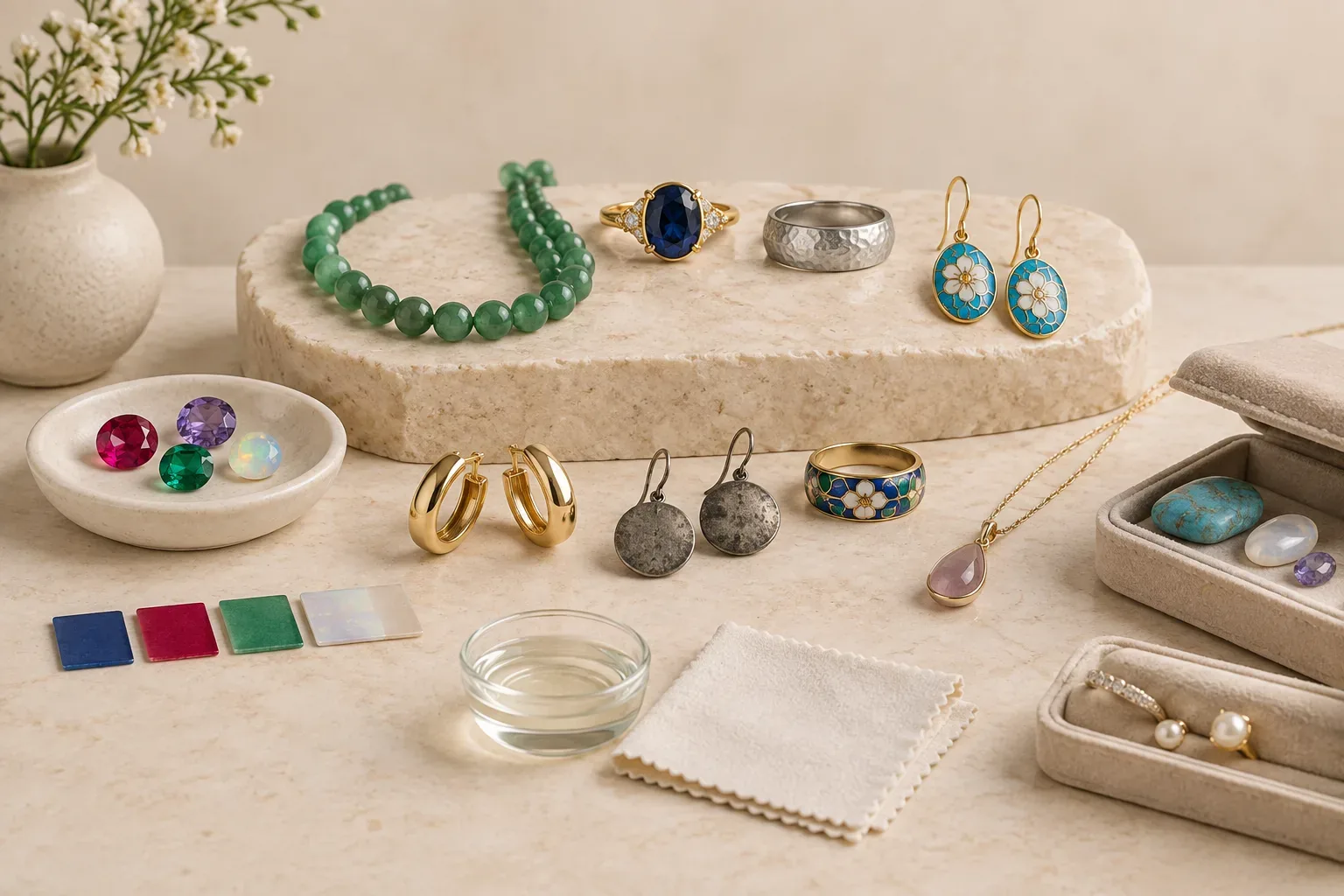
Coatings and surface treatments are thin layers applied to change color or improve appearance. They can be on metal or on gem surfaces and often show wear first along edges, high points, and where friction is greatest. Plating is a metallic coating—gold plating over base metal or vermeil over silver—that can thin with wear to reveal the metal beneath. Oxidation (a controlled or uncontrolled darkening) often appears as a patina on silver and copper alloys and can be removed or stabilized depending on preference.
Enamel is a glassy, colored surface fused to metal. High-quality fired enamels are durable but can crack or chip if struck. Dyes and impregnations are chemicals introduced into porous or fissured stones to enhance color; they can fade with exposure to solvents, heat, or prolonged light. Many treatments and coatings change how a piece photographs and looks in different lighting; the GIA's guidance on gem photography and lighting helps explain how color temperature and diffusion alter perceived color.
How to tell stable body color from vulnerable color treatments
Start with documentation. Ask for a lab report or a seller’s written disclosure. The FTC specifically supports consumer access to information about treatments, lab-grown stones and imitations. If you cannot obtain reliable disclosure, assume the piece may include vulnerable treatments and err on the side of conservative care.
Look for visual clues: inconsistent color concentrated on surface features, color pooling along fissures, flaking or rubbing where color wears off, and uneven color at bezel edges usually indicate a surface treatment or dye. Uniform color throughout a faceted stone, consistent hue under varied light, and clear statements about treatment from a reputable lab generally indicate stable body color—but only a gemological lab report confirms internal treatments or diffusion.
Practical color care: storage, wearing, and cleaning
Store pieces individually in soft pouches or lined compartments to prevent rubbing that removes plating, coatings, and fragile enamels. Keep jewelry away from direct sunlight when stored for long periods; although many modern gems are stable, dyes and some impregnations can fade with prolonged UV exposure, and heat can affect treatments.
When wearing jewelry, avoid exposing treated or plated pieces to household chemicals, chlorinated water, salt water and excessive heat. Perfumes, lotions and hairsprays deposit residues that can alter appearance or interact with coatings and platings. Remove rings, bracelets and watches for heavy manual work to prevent abrasion that abrades coatings and chips enamels.
Cleaning should be conservative. For most mixed-metal and decorated jewelry, use a soft, dry cloth or a slightly damp cloth with plain water; avoid ultrasonic cleaners, steam cleaning, solvents, and commercial ultrasonic jewelry brushes unless you know the piece is untreated and fitted for those methods. For many colored stones, the GIA notes that identification and treatment context determine which cleaning is safe; when in doubt, have a jeweler or gemologist advise on cleaning methods appropriate to that specific material.
When to seek professional testing or repair
If color loss, flaking, or unexpected discoloration appears, stop home treatments and consult a qualified jeweler or gemological lab. GIA research emphasizes the role of laboratories and professional evaluation in identifying treatments, origins and appropriate restoration or stabilization. Professionals can determine whether a faded color comes from a removable surface coating, a dye, internal changes, or simply a change in the metal’s surface patina, and then recommend targeted restoration or replacement of fragile coatings and re-plating if appropriate.
Selection and gifting guidance that respects meaning and durability
When selecting jewelry to give, match the recipient’s preferences for longevity and meaning. If the recipient values heirloom durability, choose pieces described as untreated, fully faceted gems with stable natural color or well-documented lab-grown stones where durability is confirmed. Use serviceable metals like solid gold or sterling silver with proper care instructions rather than heavily plated costume pieces if you want a long-lasting gift. Link selection to the recipient’s lifestyle: active wearers may prefer low-maintenance stones and unplated metals; those who cherish decorative surfaces may prefer enamel or plated pieces but accept more frequent maintenance.
Respect modern interpretations versus documented histories. If you give jewelry for symbolic reasons, note whether any symbolic reading is a historical association or a contemporary, personal interpretation. For broader guidance on choosing meaningful jewelry, see our related practical gift guide.
Separating documented historical meanings from modern interpretation
Documented, historically recorded meanings for specific gemstones and metal treatments are best supported by professional, archival and museum sources; gemological reports inform us about where and how stones were treated, not about universal symbolic meaning. The GIA focuses on identification, treatment, origin and valuation rather than prescribing cultural meanings, and the FTC focuses on consumer protection and disclosure. Modern personal interpretations—what a wearer believes a piece symbolizes for them—are valid but separate from technical, documented facts about treatment and durability. Make that distinction clear when you give or conserve jewelry: note what is documented about the material and share what the piece means to you as a giver or wearer.
Summary: a conservative, evidence-led approach
Treat surface color as the most vulnerable element and assume conservative care if treatment history is unknown. Rely on seller disclosure and professional gemological documentation to know whether a color is inherent or added. Store pieces separately, avoid harsh chemicals, and use gentle cleaning; consult a professional for testing, repair, or any aggressive cleaning. This conservative approach preserves both the color and the meaning a piece holds for the wearer.
Frequently asked questions
How can I tell if a gem’s color is a surface coating or the gem’s natural color?
Ask the seller for written disclosure or a lab report; the FTC recommends disclosure of treatments. Visually, surface coatings often show wear at edges, uneven color, or pooling in fissures. A reputable gemological lab report is the reliable way to confirm whether the color is intrinsic or added.
Is it safe to use ultrasonic cleaners on colored stones and plated jewelry?
Not unless you know the piece is untreated and suitable for ultrasonic cleaning. Many coatings, enamels, and dye treatments can be damaged by ultrasonic cleaners and steam. When in doubt, clean gently with a soft cloth and water or consult a jeweler.
Can I re-plate or re-coat jewelry that has lost color?
Yes, re-plating and re-coating are common repairs for worn plating, but they should be done by a qualified jeweler. Consider the recipient’s expectations and the piece’s documented treatment history before restoring because re-plating does not change a gem’s internal treatments or long-term stability.
How should I store mixed-metal or treated jewelry to prevent discoloration?
Store each item separately in a soft pouch or lined compartment to prevent rubbing. Keep jewelry away from direct sunlight, humidity and household chemicals. For long-term storage, place silica packets in a jewelry box to reduce humidity and check pieces occasionally for developing discoloration.
Does sunlight make gemstones fade?
Some dyes and impregnations can fade with prolonged UV exposure; many natural gemstones are stable under normal wear. If you do not have treatment information, store the piece out of strong direct sunlight and consult documentation or a gemologist to be sure.
Sources and further reading
- Buying Gemstones, Diamonds, and Pearls — Federal Trade Commission
- Colored Gemstone Value Factors — Gemological Institute of America
- How to Photograph Gems and Jewelry — Gemological Institute of America
- GIA Colored Stone Research — Gemological Institute of America