Meaning at a glance
Rose gold jewelry color is produced either by copper-bearing gold alloys or by rose-gold plating. Color tone depends on copper proportion, other alloying metals, and surface finish; plating and photography affect appearance. Copper can cause skin reactions for some people and plating will wear, so select, care for, and verify items with buyer disclosures and simple maintenance to keep the tone and finish you want. Don’t treat a pink or rosy surface as proof of solid gold content.
Quick answer
Rose gold jewelry color arises from copper blended into gold or from a thin rose-gold plating applied to a base metal. The pink-to-red hue varies with how much copper is present, what other metals are mixed in, and the piece’s finish or plating. Color alone is not proof of gold content; verify karat marks and seller disclosures when gold content matters. Consider possible skin sensitivity to copper, and clean and store rose tones gently to preserve color and plating.
How rose color is produced: alloys and plating
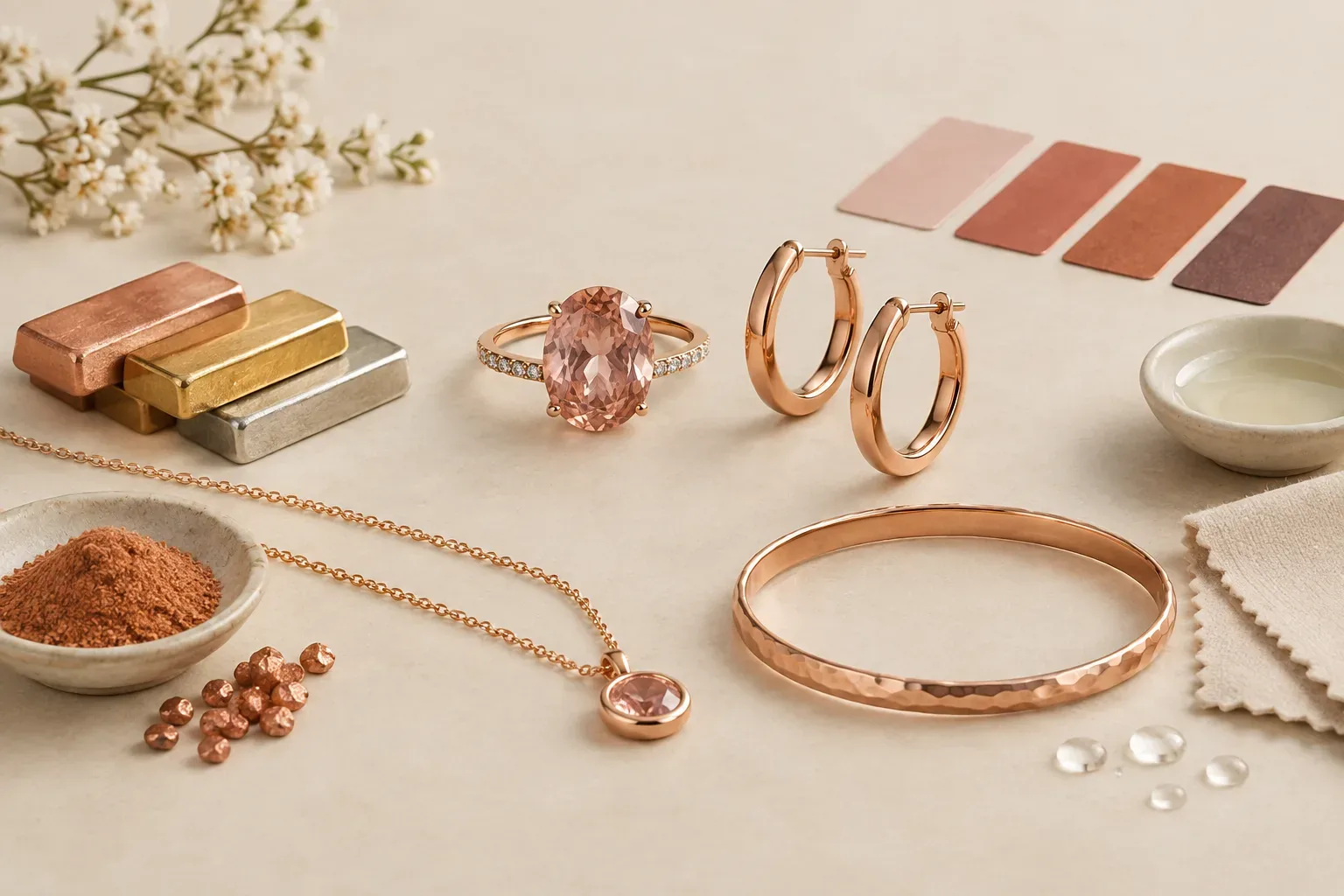
Two technical routes produce the rose gold jewelry color you see in the market. One is a copper-bearing gold alloy: pure gold (24K) is mixed with copper and sometimes silver to create 18K, 14K or 10K alloys whose visible hue shifts from warm pink to deeper red as the copper proportion rises. The second route is surface finishing: a piece of another metal—yellow gold, white gold, or a base metal—can receive a rose-gold plating or a PVD (physical vapor deposition) coating that gives the surface a rose tone without changing the metal beneath. In either case, lighting and polish affect how warm or cool the color reads.
Color variation and how we assess it
Color shows hue (the basic pink-red family), tone (lightness to darkness), and saturation (intensity). Small changes in copper content produce noticeable color shifts. High-karat rose golds with more gold and moderate copper are softer pinks; lower-karat alloys with more copper can be visibly redder and harder. Plating color depends on the plating alloy and its thickness; thin plating wears faster and may reveal the underlying metal. When buyers or sellers photograph or display rose-gold jewelry, lighting, camera white balance, and diffusion change apparent color; the Gemological Institute of America notes that photographic lighting and color temperature influence how gems and metal colors appear in images, so in-person viewing or standardized photos help assess true tone.
Historical evidence and cultural context (documented, precise, and limited)
Documented, precise historical evidence for specific cultural meanings tied to rose-colored gold is limited in the sources used here. Gemological research collections and institutional studies emphasize material variation and identification over fixed symbolic meanings. What is well documented by professional gem and jewelry research organizations is that metalwork across cultures used copper and other alloys for physical properties and color effects rather than for a single symbolic meaning. Modern historians and museum catalogues discuss regional practices and terminology for copper-bearing gold alloys, but interpretations of symbolism vary by period and culture and are best cited from specialized historical studies rather than from general gemological guides. In short: the material facts about copper in gold alloys are documented; precise historical symbolic meanings differ by culture and require dedicated historical sources for each region and era.
Documented historical meanings versus modern personal interpretation
When scholars document the material history of metals, they focus on composition, technique, and provenance. Recorded symbolic meanings tied specifically to a rose-colored alloy are seldom universal or consistent across cultures, and may not be the subject of the technical literature. Modern personal interpretation, by contrast, commonly associates rose tones with warmth, romance, femininity, or vintage style. Those contemporary meanings are cultural and individual, not material facts; they reflect how people today choose to interpret color and style. Make a clear distinction: the alloy and plating tell you how the color was made; cultural or personal meanings explain why someone might prefer the color, and those meanings are neither universal nor intrinsic to the metal.
How the rose color motif appears in jewelry
Designers use rose-gold color in many ways. Rose-toned metals are chosen for entire pieces—rings, bracelets, necklaces, and earrings—or as accents: bezels, prongs, and settings can be rose gold while bands or chains remain yellow or white gold. Jewelers often pair warm rose tones with gems that benefit from warmer surrounds: certain pink-to-red sapphires, morganite, tourmaline, and warm-toned diamonds can appear richer against a rose setting. Conversely, rose-toned metals can provide a warm contrast to cooler blue or green stones, and the metal’s softness in appearance complements filigree and vintage styles. Whether alloy or plating, the rose tone also appears as a finish choice across contemporary and period-inspired collections. The Gemological Institute of America’s guidance on color, tone, and saturation is useful when comparing how different gems and metals interact in photographs and in person.
Shopping, selection, and gifting guidance (practical and respectful)
Decide what matters most: enduring metal composition, surface color, or price. If you want a long-lasting pink tone that will age consistently, choose a solid rose gold alloy with a marked karat (for example 18K or 14K) and confirm the seller’s disclosure of gold content. If budget or color variety is more important, plated pieces can offer vivid rose tones at lower cost, but expect eventual wear and possible re-plating. Follow Federal Trade Commission guidance when shopping: ask sellers for clear disclosure about treatments, plating, karat, or base metals so you know what you’re buying. Respect the recipient by matching the type of piece to their lifestyle: a plated fashion ring may suit occasional wear, while a solid rose-gold wedding band better fits daily wear. If cultural or personal symbolism matters, ask about the recipient’s preferences rather than assuming meanings; for research into a symbol or motif, consult specialized references or our related guides on choosing meaningful jewelry and researching jewelry symbols.
Skin sensitivity, markings, and verification
Copper in rose-gold alloys can cause skin discoloration for some people or trigger contact irritation in those with metal sensitivity; this effect varies by individual and by alloy composition. Plated rose surfaces over nickel-containing base metals may cause clearer allergic reactions in people sensitive to nickel. If you have known metal allergies, request composition details from the seller and consider higher-karat alloys, gold-filled pieces, or inert metals like platinum and titanium. Markings such as karat stamps (e.g., 14K, 18K) and manufacturer's marks help verify gold content, but markings alone do not guarantee purity—reputable sellers provide clear disclosures and testing when requested. The Federal Trade Commission recommends buyers ask questions about treatments and disclosure if any claim about material could affect value or health considerations.
Care and maintenance to preserve rose color
Care depends on whether the rose color is alloy-based or plated. Solid copper-bearing alloys are durable but should avoid harsh abrasives and chlorine exposure; regular gentle cleaning with mild soap, water, and a soft cloth keeps surfaces free of oils that can dull the finish. For plated pieces, minimize friction and contact with water, perfumes, and cosmetics to slow wear; when plating thins, underlying metal may show through and re-plating is the usual restoration. For photographed or online purchases, use standardized images or request in-person inspection—GIA photography guidance shows how lighting and color temperature affect perceived hue and can help you evaluate photos critically. When in doubt about a piece’s composition or markings, request an independent appraisal or simple acid or electronic testing by a qualified professional.
Choosing a jeweler and asking the right questions
Buy from sellers who openly disclose karat, plating type and thickness, re-plating policies, and return terms. Ask whether the rose finish is an alloy color, an electroplate, or another coating and how the jeweler recommends caring for it. If color consistency across multiple pieces matters—for matching wedding sets or layered necklaces—ask to see pieces together or to have color matched under consistent lighting. For higher-value purchases, request a written description of metal content and any treatments; the Federal Trade Commission advises that clear disclosure protects both buyer and seller.
Frequently asked questions
Is rose gold a different metal than yellow gold?
No. Rose gold is a gold alloy in which copper is added to gold to produce a pinkish hue; it is still gold but not pure 24K. The exact tone varies with the karat and mixture of copper and any other alloying metals.
Does a pink surface mean the piece is solid gold?
Not necessarily. A pink or rose surface can come from solid copper-bearing gold alloys or from rose-gold plating applied over another metal. Ask the seller for karat stamps, composition details, and any plating disclosures to confirm gold content.
Can rose gold cause skin reactions?
Some people experience skin discoloration or irritation from copper in rose-gold alloys or from nickel in base metals under plating. If you have known metal sensitivities, request composition details and consider higher-karat alloys or inert metals.
How should I care for plated rose-gold jewelry?
Treat plated pieces gently: avoid frequent exposure to water, chlorine, cosmetics, and abrasive cleaning. Clean with mild soap and a soft cloth and consider re-plating when the surface color begins to show wear.
How do I choose between plated and solid rose gold for a gift?
Consider intended wear: for daily-worn items like wedding bands, choose a solid alloy with stated karat. For trend pieces or when budget is a main factor, plated jewelry gives the look but will need occasional re-plating and gentler care. Always verify disclosures and return policies before gifting.
Sources and further reading
- Buying Gemstones, Diamonds, and Pearls — Federal Trade Commission
- Colored Gemstone Value Factors — Gemological Institute of America
- How to Photograph Gems and Jewelry — Gemological Institute of America
- GIA Colored Stone Research — Gemological Institute of America