Meaning at a glance
Daisy and sweet pea are common modern April birth-flower choices; specific symbolic meanings differ between historical sources and modern personal interpretations.
What historical evidence tells us
Institutional collections and reference works show that flower symbolism has changed over time and that different periods and authors gave flowers different meanings. The Smithsonian Libraries and Archives places botanical and cultural materials in seasonal and historical context, documenting how plants and their uses appear in decorative arts, printed books, and garden histories rather than presenting a single standardized symbolism.
The Library of Congress holds a wide range of printed and reference material about flowers and their uses in culture, and its collections illustrate how multiple florilegia and popular guides assigned varying meanings to the same species. These records make clear that what one book said about a flower in one era might differ from another book's assignment in a different era or country.
Botanical and horticultural authorities such as the Royal Horticultural Society provide practical and biological context for garden plants like daisies and sweet peas, noting seasonal behavior, cultivation, and importance to pollinators. That practical botanical information is a separate kind of evidence from symbolic assignments but helps explain why certain flowers became popular in springtime gifting and jewelry motifs.
Documented historical meanings versus modern interpretation
Historical sources collected by libraries and museums record a range of assigned meanings for daisies and sweet peas, but those meanings are not consistent across time or place. As the Smithsonian and the Library of Congress collections demonstrate, florilegia and etiquette books created lists of flower meanings that reflected the tastes and priorities of specific readers and eras rather than a universal language.
Because historical assignments vary, it is important to distinguish documented pedigrees from contemporary, personal readings. A museum or library catalog may note that a 19th-century guide associated a flower with a particular sentiment; that is a documented historical association for that guide and period. It does not make the association a universal truth, nor does it require modern wearers to accept that meaning.
Modern interpreters and gift-givers typically treat flower symbolism more flexibly. Some people select daisy or sweet pea jewelry because they like the look, the seasonal association with April, or a private meaning shared between friends or family. Contemporary designers and buyers often layer botanical motifs with personal narratives: a daisy pendant can stand for childhood memories or friendship for one wearer and for resilience or simplicity for another.
How the daisy and sweet pea appear in jewelry
Botanical motifs have long been popular in jewelry, and both daisies and sweet peas appear in a range of techniques and styles. Museum collections and reference materials document decorative uses such as engraved or cast metal forms, painted or enameled floral surfaces, carved gemstones, and small naturalistic gold or silver models. The Smithsonian's holdings and catalogs illustrate the continuity of botanical ornament in decorative arts, showing how jewelers adapt plant forms to available techniques and tastes.
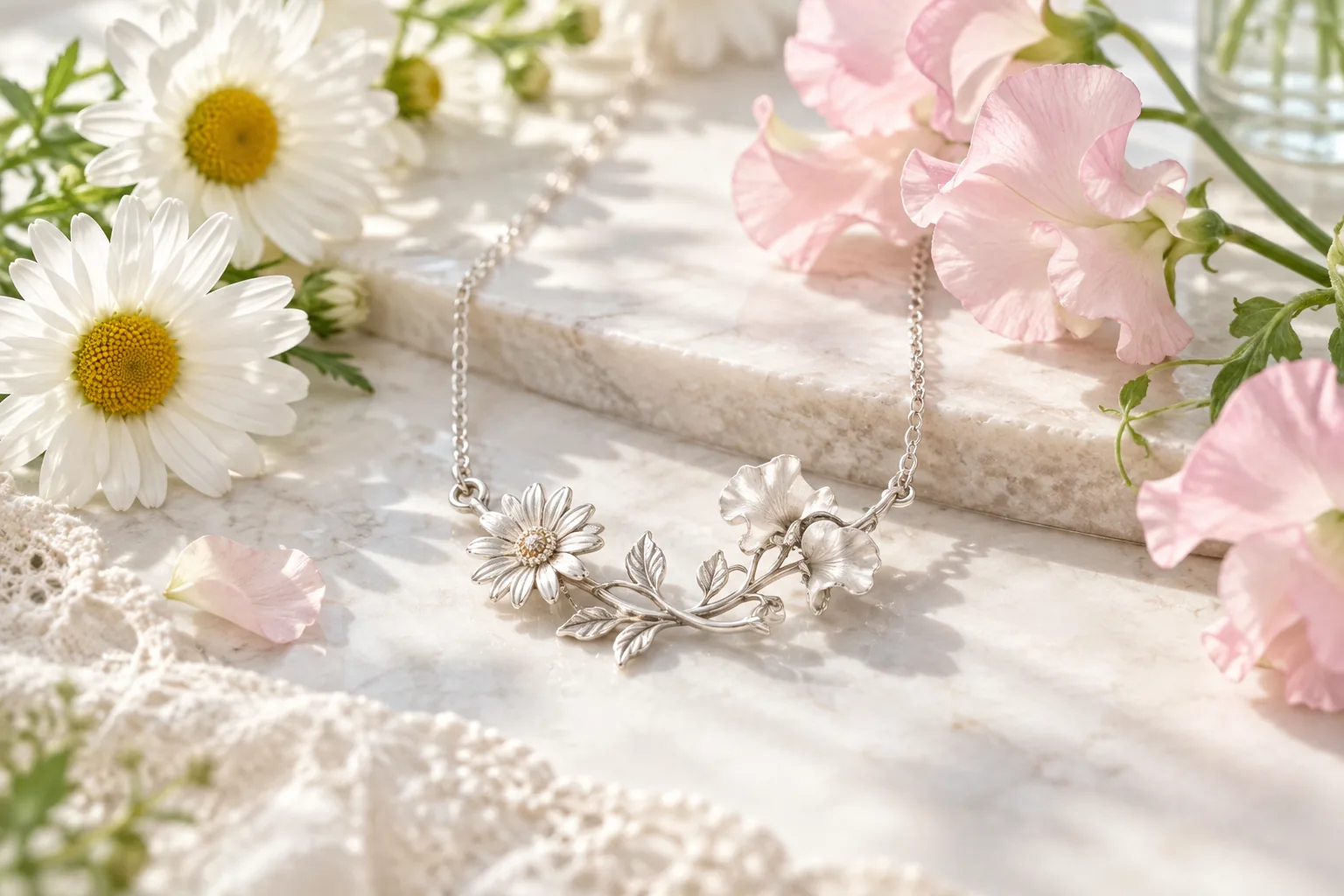
Contemporary jewelry commonly translates daisies into simple, graphic pendants where a white enamel or mother-of-pearl disk contrasts with a yellow center, or into openwork silver and gold designs that suggest petals without literal depiction. Sweet pea motifs tend to emphasize the flower’s delicate, ruffled profile and are often rendered in pastel enamels, small cabochon gemstones, or tiny sculpted metal flowers on chain necklaces and brooches.
Beyond motifs, gemstone and material choices carry their own conventional associations but are also a matter of style. Pearls, moonstone, and opal are often chosen for soft, romantic pieces that suit sweet pea aesthetics, while diamonds, citrine, or yellow enamel can highlight the bright center of a daisy motif. The Royal Horticultural Society’s botanical descriptions explain the seasonal and structural features jewelers reference when selecting shapes and colors for these motifs.
Practical guidance for selecting or gifting April flower jewelry
Start by distinguishing what you want the piece to communicate: a historically documented association, a generally understood seasonal link, or a private personal sentiment. If you are aiming to reference historical symbolism, consult reputable published sources or museum labels for the specific period you have in mind, and present the piece with that context. If your goal is a personal message—friendship, gratitude, or a memory—state that intention when you give the jewelry so the receiver understands your meaning.
Consider recipient preferences and practicalities. Ask whether the recipient prefers gold or silver, whether they have metal sensitivities, and what scale of jewelry they wear in daily life. For everyday wear choose durable settings and harder gemstones; for delicate, occasional pieces you can prioritize finely wrought details and softer stones or enamels. If allergies are a concern, choose nickel-free metals or select pieces with solid precious-metal posts and clasps.
Be mindful of cultural context and phrasing. Because symbolic meanings vary, avoid asserting a single universal meaning on the gift tag. A short note that explains your personal intention—such as 'For joyful spring mornings' or 'To celebrate your steadfast friendship'—is often more respectful and accurate than an absolute statement about the flower's meaning.
Finally, care and maintenance matter. Enamel and painted surfaces require more cautious cleaning than plain metal; many delicate floral pieces do best with occasional professional cleaning rather than frequent home polishing. Ask the seller or a trusted jeweler about recommended care for the specific materials before gifting.
Design examples and where to look
Contemporary designs make both daisy and sweet pea motifs accessible in fine and fashion jewelry. Simple daisy pendants and sweet pea necklaces are available in minimalist and naturalistic interpretations, and they frequently appear in spring collections. A well-chosen pendant can pair with everyday chains or be layered with other seasonal motifs.
For practical browsing, consider museum reference images and reputable garden or horticultural sources to confirm the botanical features you want a designer to capture. If you plan a custom piece, bring a clear reference image and an explanation of the personal or historical meaning you want the jeweler to reflect. Two recent commercial examples of contemporary designs use these motifs as modern interpretations: a daisy pendant and a sweet pea necklace available as botanical-style gifts, which illustrate how designers translate the flowers into wearable forms.
Closing note
Daisy and sweet pea are sensible and sympathetic choices for April birth-flower jewelry precisely because their meanings are flexible. Institutional collections and horticultural references—such as those held by the Smithsonian, the Library of Congress, and the Royal Horticultural Society—show both the historical variability of floral meanings and the botanical reasons these plants resonate as springtime motifs.
Choose and gift with clarity about whether you are communicating a documented historical association or a contemporary personal sentiment. That approach respects the historical record while making the jewelry meaningful for the individual who wears it.
Frequently asked questions
Are daisy and sweet pea the official April birth flowers?
They are common modern choices for April but lists vary by culture and publisher; different floras, calendars, and retailers sometimes name other April flowers or include only one of the two.
What does daisy jewelry traditionally symbolize?
Historical books and period florilegia have assigned a range of meanings to the daisy; institutional collections show those assignments varied across books and eras. Today, wearers often treat the daisy as a symbol of simplicity, freshness, or a personal memory rather than a single fixed meaning.
What does a sweet pea motif mean when given as a gift?
Sweet pea symbolism has been recorded differently in various sources. Modern givers frequently use sweet pea jewelry to convey appreciation, delicate affection, or a springtime sentiment, and the giver should clarify their intended message to avoid assumptions.
How should I care for floral-themed jewelry?
Care depends on materials. Enamel and painted surfaces should be cleaned gently with a soft cloth and kept away from harsh chemicals. Precious metals benefit from occasional professional cleaning, and softer gemstones or delicate pieces are best stored separately to avoid scratches.
Is it appropriate to explain historical symbolism when gifting floral jewelry?
Yes, explaining the historical context can enrich the gift, but do so as one interpretation among many. Citing a specific historical source or saying 'in one tradition this meant…' makes clear that the meaning is not universal.
Sources and further reading
- Blooming Flowers: A Seasonal History of Plants and People — Smithsonian Libraries and Archives
- Flowers and Their Meanings — Library of Congress
- Plants of the World — Royal Horticultural Society