Meaning at a glance
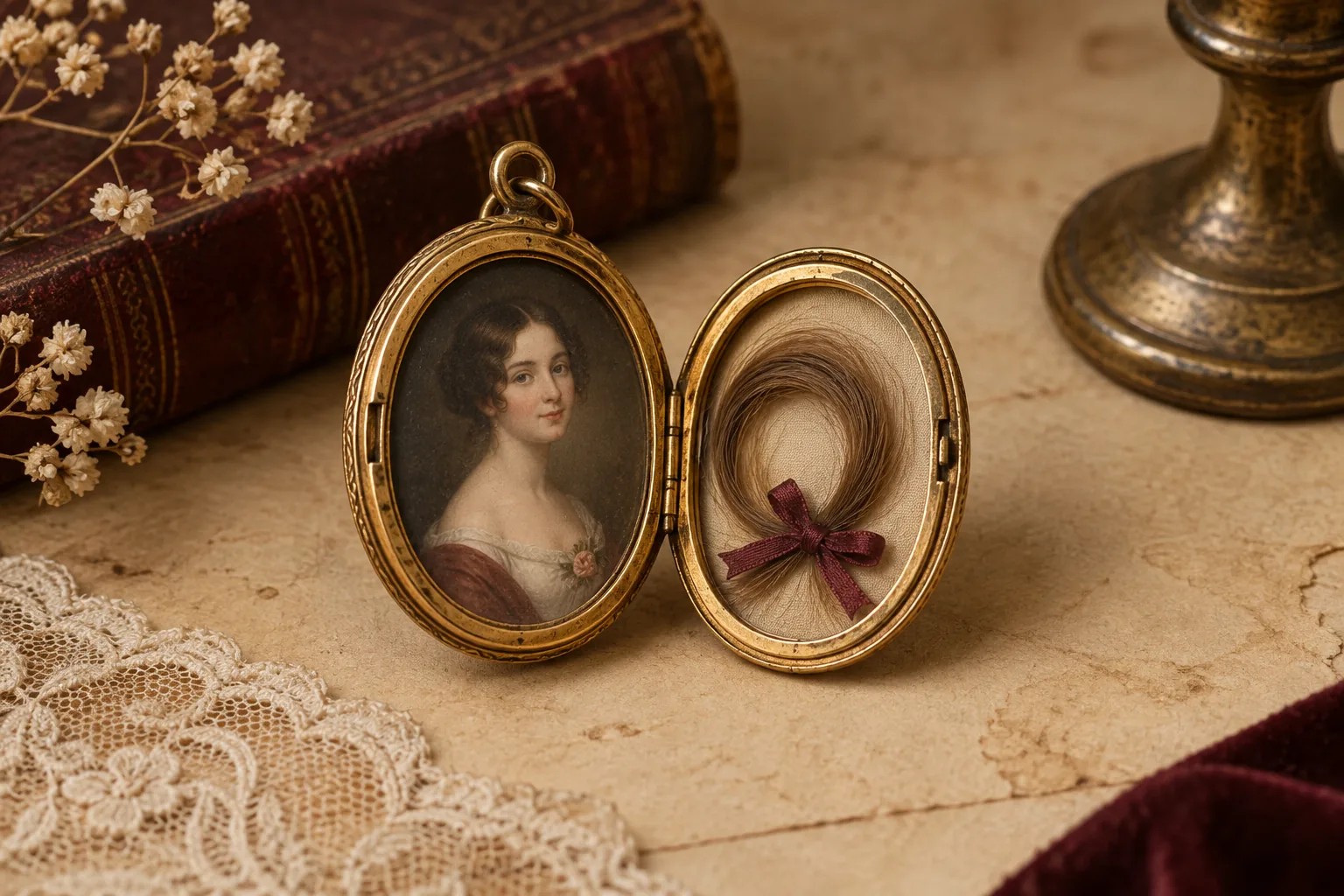
Lockets developed as private containers for portraits, hair, and other keepsakes; their meanings depend on date, contents, and ownership rather than a single universal symbolism.
Historical evidence and cultures
Surviving objects in major museum collections are the primary evidence for the history of lockets. The Metropolitan Museum of Art documents examples such as the 'Lover's Eye' locket, which typifies a style of intimate portraiture preserved in jewel form (The Metropolitan Museum of Art). The Victoria and Albert Museum’s survey of jewellery history places personal jewelled containers within a long European and American tradition of wearable keepsakes (Victoria and Albert Museum).
Both British and American museum exhibitions and collections record that lockets appear across multiple periods and social settings. In European collections the locket form is visible alongside portrait miniatures and mourning jewellery, while American museum displays highlight local manufacture and civic meanings attached to personal jewellery in the 18th and 19th centuries (The Metropolitan Museum of Art; Victoria and Albert Museum). These institutional records show material continuity — small hinged cases, glass or crystal windows, and fitted compartments — rather than a single fixed symbolic language.
Documented historical meanings (separate from modern interpretation)
Historical documentation and museum catalogues make two kinds of claims that are important to separate. First, objects and their contexts provide evidence of how lockets were used: as containers for miniatures, hair, or relics; as mourning devices; or as tokens exchanged between lovers. The Metropolitan Museum of Art’s cataloguing of specific examples illustrates these documented uses, including the distinctive 'Lover’s Eye' portrait tradition (The Metropolitan Museum of Art).
Second, museums and historians generally avoid asserting a single 'universal' meaning. The Victoria and Albert Museum’s histories note that jewellery meanings shift with period, culture, social rank, and individual intent (Victoria and Albert Museum). For example, a locket containing a child’s hair left on a gravestone or in a will can be read as a mourning object in a specific historical context. By contrast, a locket exchanged as a betrothal token may signal romantic commitment. The object itself seldom carries a single interpretation across different owners and eras; provenance and associated documents are crucial to understanding purpose.
How motifs, gemstones, and traditions appear in locket design
Motifs and materials visible in museum collections illustrate how lockets were made and decorated. Portrait miniatures were frequently set behind glass and enclosed in gold or enamel-mounted cases; some designs used a small glazed aperture to display a single painted eye, the so-called 'Lover's Eye' examples catalogued by the Metropolitan Museum (The Metropolitan Museum of Art). These design choices emphasize secrecy and intimacy in the object’s display.
Materials associated with mourning and remembrance also appear repeatedly. The Victoria and Albert Museum’s overview of jewellery history highlights that certain materials and decorative techniques were favored for mourning pieces; museums commonly display jet, black enamel, hairwork, and somber inscriptions in that context (Victoria and Albert Museum). Hair was sometimes woven into decorative patterns and set beneath glass or into a sealed compartment, and gemstones, where used, functioned primarily as ornament rather than as a single fixed message.
Traditional shapes and motifs — hearts, lock-and-key devices, obituary inscriptions, and miniature frames — are recurrent, but their meaning depends on context. For example, a heart-shaped locket might signify love in one instance and familial affection in another. The American exhibitions at the Metropolitan Museum show regional variations in style and manufacturing techniques that reflect local tastes and meanings as much as shared symbolism (The Metropolitan Museum of Art).
Interpreting provenance, contents, and inscriptions
A locket’s date, owner, and contents are the most reliable guides to its historical meaning. Museums emphasise provenance notes and associated records because identical forms can serve different functions. An inscribed date or name, a will that mentions the piece, or a portrait painted within the frame may clarify whether a locket was intended as a mourning token, a romantic gift, a domestic keepsake, or a civic memento (Victoria and Albert Museum; The Metropolitan Museum of Art).
Without provenance, modern viewers should be cautious about assigning a single symbolic meaning. Institutional catalogues demonstrate that interpretation rests on evidence: the object itself, how and where it was worn, and who commissioned or received it. The same physical locket could have been a public display of devotion or an intensely private remembrance depending on those factors.
Selecting and gifting a locket: practical and respectful guidance
Choose a locket with attention to the recipient’s preferences and the intended content. If you are gifting a wearable container for a living person, consider whether they would prefer a visible portrait window, a concealed compartment, or a design that references family tradition. Materials and size affect wearability: lighter metals and modest dimensions suit everyday wear, while heavier pieces and detailed enamel work are more ceremonial.
Be mindful when gifting a locket intended to hold human remains such as hair. Historical lockets commonly contained hair, but modern ethical practice calls for explicit consent from living relatives and sensitivity to cultural mourning practices. If the plan is to include a lock of hair or a similar memento, ask permission and discuss preservation methods; glass-fronted lockets protect hair visually but may need conservation considerations to avoid damage over time.
Consider personalization that respects the object’s history. Engraved initials, discreet inscriptions, or commissioning a small portrait or photograph-sized miniature can make a locket meaningful without assuming a single symbolic claim. If the locket is presented as a commemorative or mourning gift, accompany it with context—an explanatory note or provenance record—so future owners understand its intended meaning.
When buying antique lockets, consult provenance and condition reports from reputable dealers or institutions. Museums such as the Victoria and Albert Museum and the Metropolitan Museum of Art offer examples of how condition and historical records affect both value and interpretation; similar scrutiny is prudent for private purchases (Victoria and Albert Museum; The Metropolitan Museum of Art).
Conclusion: what lockets tell us about memory and jewelry
The history of lockets is a history of private memory made wearable. Museum collections show a continuity of form and function: small hinged cases designed to keep portraits, hair, or other keepsakes close to the body. However, those institutions also demonstrate that meanings shift with time, place, and individual intention (The Metropolitan Museum of Art; Victoria and Albert Museum).
Reading a locket responsibly means prioritising evidence — contents, inscriptions, provenance — over broad assumptions. Whether worn as a token of love, a mark of mourning, or a familial heirloom, the significance of any locket rests with the historical and personal context that surrounds it.
Frequently asked questions
When did people start wearing lockets?
Surviving museum examples show that lockets have a long history as wearable containers for miniatures, hair, and other keepsakes. Institutional records at museums such as the Victoria and Albert Museum and the Metropolitan Museum of Art demonstrate use across several centuries and in both European and American contexts, but the precise emergence of the form varies by region and the available written and material evidence (Victoria and Albert Museum; The Metropolitan Museum of Art).
What is a 'Lover’s Eye' locket?
A 'Lover’s Eye' locket is a small jewel in which a painted miniature of a single eye is displayed behind glass. The Metropolitan Museum of Art catalogs examples of this intimate portrait style, which emphasizes secrecy and private display and is documented in museum collections (The Metropolitan Museum of Art).
Did lockets always mean mourning?
No. Museum catalogues and historical surveys show that lockets served multiple purposes. Some were used as mourning jewellery and incorporated materials and motifs associated with remembrance, while others served as romantic tokens, family keepsakes, or patriotic mementos. Context — including inscriptions, contents, and provenance — determines the historical meaning (Victoria and Albert Museum; The Metropolitan Museum of Art).
Is it appropriate to put hair or other personal mementos in a new locket?
Including hair or a similar personal memento is a long-standing practice, but modern etiquette and ethics recommend obtaining consent from living relatives and considering cultural mourning practices. If the item is of human origin, discuss preservation and future inheritance with the recipient to ensure the gesture is respectful.
How can I tell if an antique locket is authentic or historically significant?
Check provenance and condition reports from reputable dealers or institutions, and consult museum documentation where available. Museums such as the Victoria and Albert Museum and the Metropolitan Museum of Art show how provenance and material study inform significance; similar scrutiny is advisable for private acquisitions (Victoria and Albert Museum; The Metropolitan Museum of Art).
What should I consider when gifting a locket today?
Consider the recipient’s style and intentions for the locket, whether they would prefer a visible or concealed compartment, and any necessary permissions if the locket will contain human remains. Personalization like engraving or commissioning a small portrait can add meaning without assuming universal symbolism.
Sources and further reading
- Lover's Eye locket — The Metropolitan Museum of Art
- A history of jewellery — Victoria and Albert Museum
- Jewelry for America — The Metropolitan Museum of Art