Meaning at a glance
Choose a pendant style that suits daily wear and the wearer’s style, pick a chain and metal for durability and skin sensitivity, insist on clear disclosure about treatments and origin, and prefer necklaces for lower everyday impact than rings.
What the historical record shows
Documented evidence about birthstones comes largely from gemological and museum scholarship that traces how month‑and‑stone lists and meanings changed over time. The Gemological Institute of America (GIA) explains that people in different periods and cultures used groups of gems for protection, identification, or prestige and that modern standardized month lists are the product of evolving traditions rather than a single ancient system.
The GIA’s museum and educational materials show that the idea of linking specific gems to months and zodiac signs shifted across regions and centuries, producing several competing lists before modern commercial and organizational committees produced the lists familiar today. That history means many associations people expect now are relatively recent or represent particular geographic traditions.
Separate documented historical meanings from modern personal interpretation
Historical meanings recorded by institutions such as the GIA are best treated as documentary statements about how people in a given place and time used gemstones, not as universal or fixed properties of a gem. For example, written records may show a gem associated with healing or protection in a particular culture, but that does not prove the gem has inherent powers.
Modern personal interpretations—what a family member feels when choosing a birthstone necklace—are valid as individual meaning but distinct from the documented record. Use the historical background as context and let contemporary sentiment guide gifting and design choices when meaningful symbolism matters more than historical accuracy.
How birthstone motifs and traditions appear in necklace design
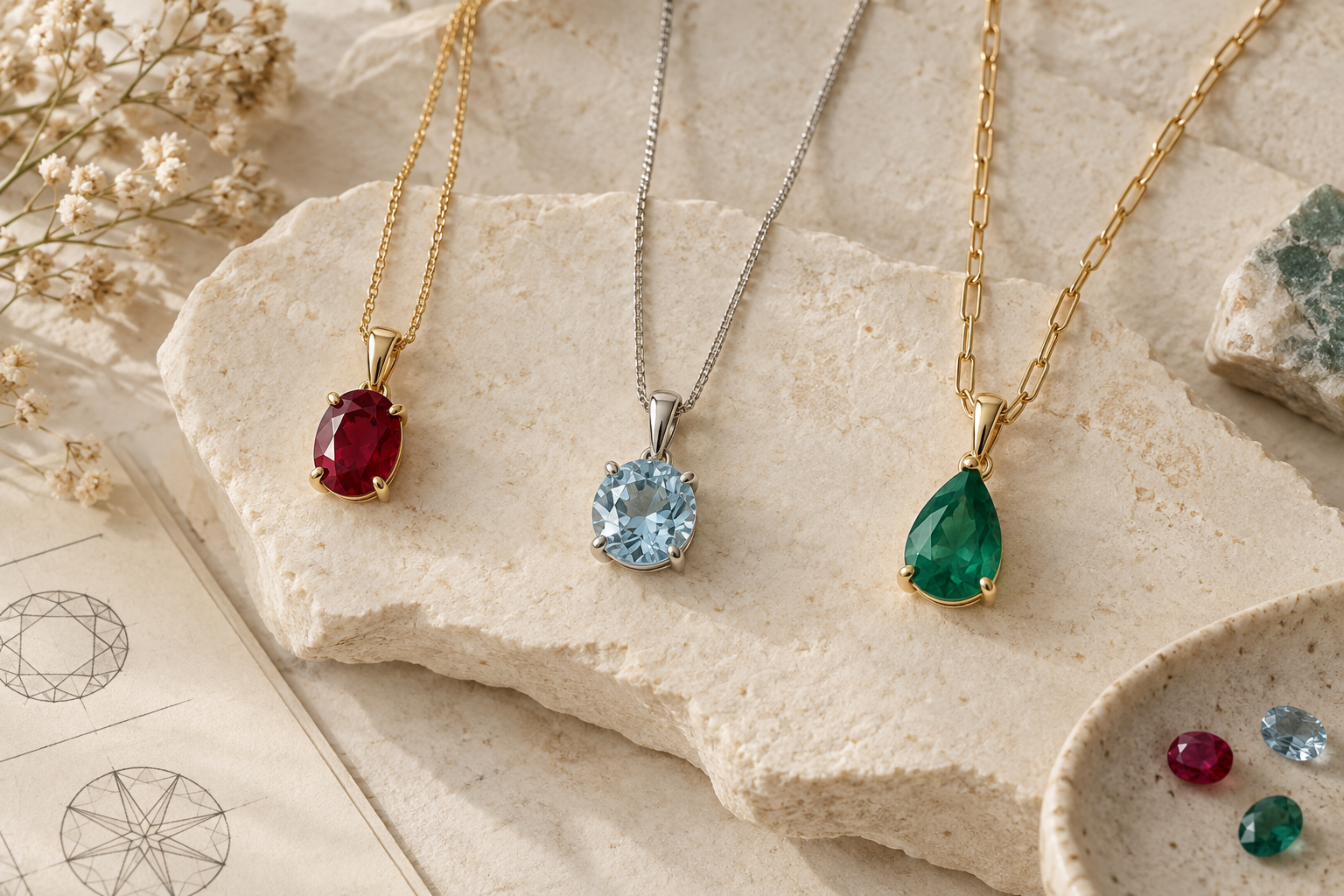
Pendant formats translate the idea of a birthstone into a wearable form. Solitaire pendants feature a single central stone set in prong, bezel, or tension settings for clarity and emphasis. Halo and cluster pendants surround a central stone with smaller accents to increase sparkle and apparent size. Bezels and closed settings protect softer stones and suit active wearers.
Lockets and charm‑style pendants attach a gem to a movable frame or enclosure, which is a common way to pair a birthstone with a photograph, initial, or engraving. Birthstone‑and‑initial combos place a small faceted gem next to or inside a monogram setting. Designers often use colored enamel, metal motifs, or gem cuts that reflect cultural motifs—such as floral or zodiac-inspired settings—while keeping the stone itself central to the meaning.
Pendant format choices and their practical implications
Solitaire and halo designs highlight a single birthstone and suit formal or everyday wear, but the choice of setting matters. Prong settings maximize light and brilliance but expose the stone to knocks; bezel settings protect the gem’s edge and are practical for softer or smaller stones. Cluster settings can simulate a larger center stone at lower cost and are forgiving of modestly included gems.
Lockets and small charms are excellent for sentimental gifts and for layering. For children or people who work with their hands, a low‑profile bezel pendant or an integrated cabochon reduces snagging and protects fragile stones. Consider the wearer’s routine, hobbies, and whether the piece will be worn constantly or only on special occasions.
Chain and metal decisions
Choosing the chain metal and style ties into durability, cost, and skin sensitivity. Trade guidance from Jewelers of America covers common choices: yellow gold, white gold, rose gold, sterling silver, and platinum each have different hardness, color stability, and price points. Higher karat gold is softer; platinum is more durable but costlier; sterling silver tarnishes and may require more care.
Chain thickness, link type, and clasp quality affect longevity. Thinner chains show wear faster and can break under strain; box and cable chains offer different balances of flexibility and strength. Select a length that suits necklines and comfort. If allergies or sensitive skin are an issue, choose nickel‑free metals or ask about plating and base metals.
Disclosure, treatments, and what to ask the seller
Federal Trade Commission guidance for consumers emphasizes clear disclosure about treatments, lab‑grown stones, and imitations. The FTC advises sellers must not misrepresent a stone’s origin or treatment and should provide accurate information about whether a gemstone is natural, treated, lab‑grown, or synthetic.
When buying a birthstone necklace, ask whether the stone has undergone common treatments such as heating, fracture filling, diffusion, or irradiation, and whether the seller provides documentation or a certificate for higher‑value stones. If you care about origin or whether the stone is lab‑grown or natural, request confirmation in writing and check return and warranty policies before purchase.
Layering, wear, and the lower impact exposure of necklaces
Necklaces are often layered for a fashionable, personal look. Mix pendant sizes, chain lengths, and metal tones deliberately so heavier pieces sit lower and smaller pendants stay nearer the collarbone. Keep pendant shapes and chain widths proportionate to avoid tangling. For consistent layering, choose at least one chain with a secure spring ring or lobster clasp.
Compared with rings, necklaces usually experience less direct contact with hard surfaces and fewer forceful impacts, so a pendant generally faces lower risk of daily damage. That relative protective advantage makes birthstone necklaces a practical option when the wearer wants to display a gem without the maintenance burden of a ring that is exposed to knocks, chemicals, and constant abrasion.
Selection and gifting guidance — practical and respectful
Start with the wearer’s style and daily activities. Select protective settings like bezels for active wearers and softer gems, choose prongs or open settings for maximum sparkle if the piece will be treated carefully, and match metal color to other jewelry the recipient commonly wears. Consider engraving, a locket insert, or combining multiple birthstones for family pieces.
Budget and transparency matter. Decide whether you prefer a natural gem, a lab‑grown stone, or a carefully disclosed treated stone; ask the seller for written acknowledgement of treatments and any certificates. For children, prioritize secure bails and safety clasps and choose stones and settings that minimize choking and snagging risks. Respect cultural preferences by asking about symbolic meanings if you plan to gift a specific motif tied to beliefs or identity.
Care, maintenance, and practical longevity
Care depends on the stone and metal selected. Harder stones such as sapphires and diamonds tolerate more wear; softer stones like opal, pearl, and turquoise need protection from chemicals, heat, and abrasive contact. Store necklaces flat and separately to avoid tangling and scratching. Regularly inspect prongs and bails for looseness and have a jeweler tighten settings when needed.
Ask the seller about cleaning recommendations and warranty or repair policies. Jewelers of America and consumer protection guidance suggest confirming maintenance options before purchase so the necklace remains safe and meaningful for years.
Final considerations and quick checklist
To recap: choose a pendant format matched to the wearer’s lifestyle, pick a chain and metal for strength and comfort, require transparent disclosure about treatments and origin, plan layering and clasp security, and favor necklaces when you want a lower‑impact way to wear a personal gemstone. Use historical context from museum and gemological sources as background but let contemporary meaning and clear product information guide the purchase.
For further reading on birthstone lists, cultural change, and gemological context consult the Gemological Institute of America’s materials, and for buyer protections and disclosure rules consult Federal Trade Commission guidance. If you want design and setting help, the Jewelers of America buying guides offer practical details about formats and metals.
Frequently asked questions
Are birthstone month lists the same everywhere?
No. The Gemological Institute of America documents that lists and associations have changed over time and between cultures; modern month lists are not a single ancient standard but the product of evolving traditions.
Should I worry about treatments or lab‑grown stones when buying a birthstone necklace?
Yes. The Federal Trade Commission advises that sellers must disclose treatments, lab‑grown status, and imitations. Ask the seller to confirm in writing whether a stone is natural, treated, lab‑grown, or synthetic and request any available certificates.
Which pendant setting is best for everyday wear?
A low‑profile bezel setting tends to be most protective for everyday wear, especially for softer stones, while prong settings maximize brilliance but expose the stone to potential knocks.
Is it safer to wear a birthstone on a necklace than as a ring?
Typically yes. Necklaces usually experience less direct impact and abrasion than rings, making pendants a lower‑risk way to display a gemstone for everyday use.
How do I choose the right metal for a chain?
Consider durability, color preference, and skin sensitivity. Platinum is durable and hypoallergenic but more expensive; higher karat gold is softer; sterling silver requires more care and may tarnish. Jewelers of America offers guidance on metal tradeoffs.
Can I mix multiple birthstones in one necklace?
Yes. Multi‑stone family or memorial pieces are common. Decide on setting style and metal that protect the softer stones, and confirm disclosure for each gem if origin or treatment is important to you.
What should I ask the seller before I buy?
Ask about stone treatments, whether the gem is natural or lab‑grown, return and repair policies, any available certification, the metal’s composition, chain length and clasp security, and recommended care.
Sources and further reading
- Birthstones — Gemrological Institute of America
- Birthstones: Gems Through the Ages — Gemological Institute of America
- Buying Gemstones, Diamonds, and Pearls — Federal Trade Commission
- Jewelry Guides — Federal Trade Commission
- Jewelry Buying Guides — Jewelers of America