Meaning at a glance
Match ring settings and wear expectations to gem durability by weighing scratch resistance, toughness, cleavage, and treatment sensitivity when choosing birthstone rings; select protective settings for softer or cleavage-prone gems and insist on clear disclosure of treatments and laboratory origin when buying.
Durability terms that matter for birthstone rings
When choosing a birthstone ring, four gemological properties determine how a stone will wear over time and what setting will best protect it. Scratch resistance tells you whether a stone will mark or dull from contact with other surfaces. Toughness describes how likely a gem is to chip, cleave, or break if struck. Cleavage refers to natural planes of weakness in a crystal that make it easier to split along specific directions. Treatment sensitivity means that some gems are altered by heating, filling, or other processes that change how they should be cleaned and handled.
According to the Gemological Institute of America (GIA), these separate but related properties are essential to match to ring design and wearer habits. For example, a gem with high scratch resistance but poor cleavage needs a setting that guards against knocks to the vulnerable plane, while a treatment-sensitive gem requires disclosure of treatments and specific care recommendations.
How those properties influence settings and wear expectations
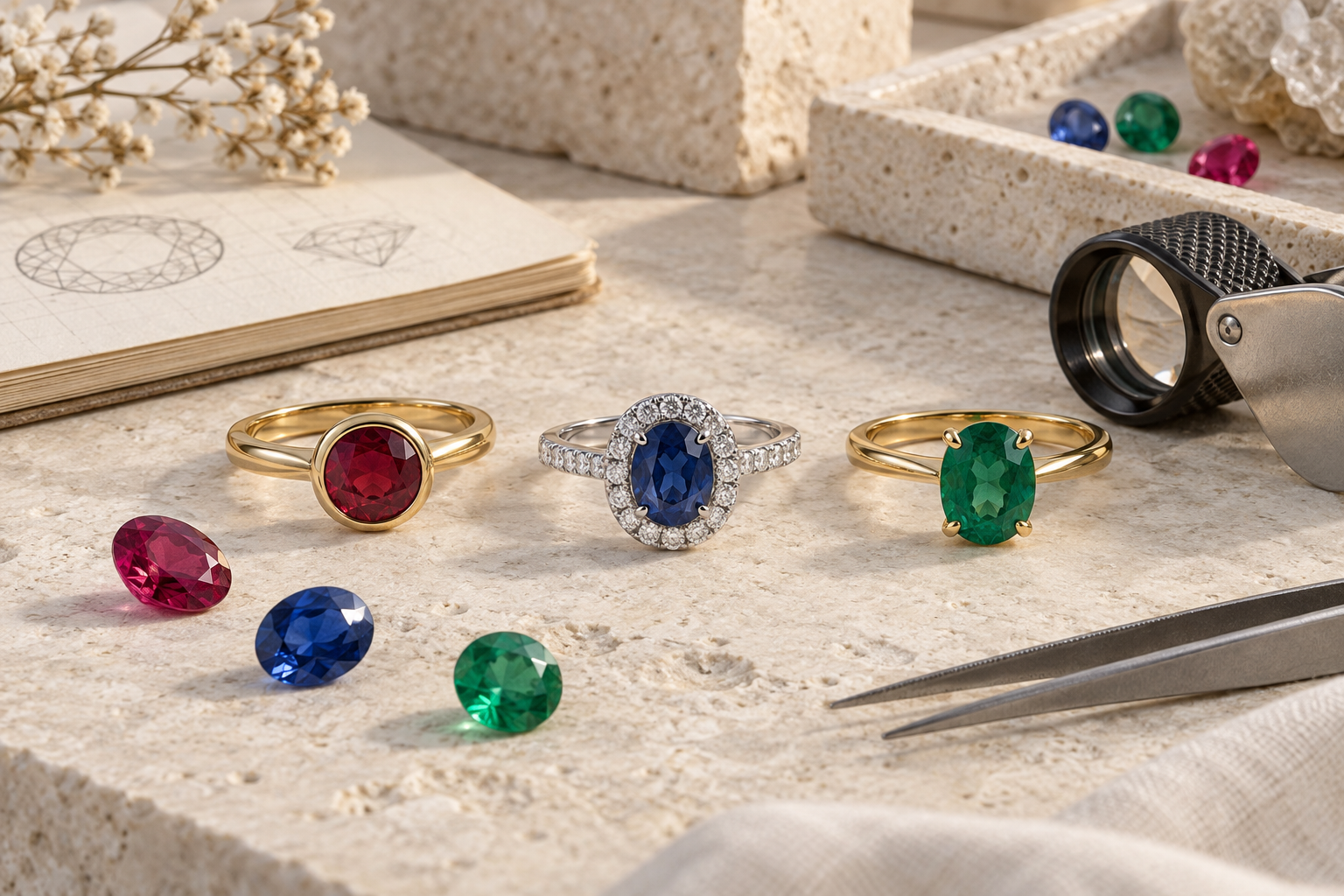
Rings meant for everyday wear usually fare best when set with stones that have strong scratch resistance and good toughness. When an everyday ring must use a softer birthstone for sentimental reasons, choose protective settings such as bezels, low-profile halos, or channel settings that reduce the chance of impact and abrasion. Prongs present a more open look and can be excellent for hard, tough stones, but they leave the girdle and pavilion more exposed.
For fragile or cleavage-prone stones, avoid high settings and exposed table-to-girdle prong mounts that can catch on objects. Consider guards like metal rims or protective shoulders in the ring design. When a gem has known treatment sensitivity, rely on the seller’s care instructions because ultrasonic cleaning or steam can damage certain enhancements; the Federal Trade Commission (FTC) recommends that sellers disclose treatments and any special care requirements at the point of sale.
Documented history: birthstones through time and place
The practice of associating specific gems with months or zodiac signs has evolved over many cultures and historical periods. The Gemological Institute of America (GIA) traces several historical strands that contributed to modern birthstone lists, including ancient Near Eastern and Mediterranean jewel traditions that linked certain gems to healing or protective virtues, Jewish priestly breastplate traditions that listed twelve stones, and later European devotional and folk practices that aligned gems with months and saints.
GIA’s museum and historical summaries show that the list of stones and their calendar positions shifted frequently. In the 18th and 19th centuries, gem lists were not standardized; local customs in Europe and the Americas produced differing month assignments. The modern standardized birthstone lists commonly used in the United States and promoted by trade groups and jewelers were formalized in the 20th century, but GIA documents the earlier, regionally varied histories that led to those lists.
Historical meanings versus modern personal interpretations
Documented historical meanings typically come from textual and archaeological records that link stones to religious, medicinal, or social functions. GIA notes that in specific historical contexts a stone might have been valued for its perceived protective power or its role in ritual clothing, such as the twelve-stone breastplate in Jewish tradition. These are concrete cultural practices recorded in material and written heritage.
Modern personal interpretations are subjective and often layer new meanings on top of older ones. Today, people choose birthstone rings for many reasons, including aesthetic preference, family tradition, or personal symbolism. Those personal meanings are valid for the wearer but are distinct from the documented historical uses. Avoid assuming a historical meaning is universal; instead, recognize that modern significance is frequently individualized and shaped by contemporary marketing and personal stories.
How birthstone motifs, gems, and traditions appear in ring design
Birthstone themes appear in rings both as literal single-gem signifiers and as broader motifs. Single-stone birthstone rings highlight the month’s gem in solitaire, halo, or cluster settings. Multi-gem family rings combine several birthstones to represent relationships or generations. Jewelry designers also use symbolic metalwork, engraving, or motifs such as zodiac emblems and floral patterns paired with a birthstone to reinforce the association.
The choice of setting communicates both style and protection. Open prong settings emphasize sparkle but expose the gem, while bezels and halos can add visual scale and shield vulnerable girdles and edges. Designers sometimes compensate for a softer but desirable gem by placing it in a low-profile bezel or by pairing it with harder accent stones to reduce the optical need for a large exposed surface.
Practical buying and gifting guidance
Decide how the recipient will wear the ring. For a ring meant to be worn daily, prioritize stones and settings suited to regular contact with hands and surfaces. If the ring is for occasional wear, you have more freedom to choose more delicate gems and open settings. Jewelers of America recommends matching format and metal choice to lifestyle; for active wearers, harder metals and protective settings reduce the need for repair.
Ask specific questions at purchase. Request written disclosure of any treatments, whether a stone is natural, lab-grown, or an imitation, and any recommended cleaning methods. The FTC requires truthful disclosure about treatments and origin, and it advises consumers to get clear information before buying. Ask whether the stone has been fracture-filled, dyed, heat-treated, or otherwise altered, since these processes change both appearance and care requirements.
Confirm realistic maintenance expectations. Some birthstones with common inclusions or treatments may need periodic professional checks and special cleaning. Choose a reputable jeweler who documents treatments and return policies. When gifting, if you’re uncertain of ring size or the recipient’s daily habits, consider sizing allowances, exchange policies, or choosing a design that accommodates resizing without compromising the stone’s protection.
Consider insurance and warranty. For sentimental birthstone rings, especially those that will be worn often, insuring the piece against loss, theft, and damage is a practical step. Jewelers of America provides general buying-context guidance that a warranty or certified appraisal can be useful, and the FTC suggests retaining receipts and any gemological reports that document treatments and origin for future claims.
Care and maintenance by broad gem categories
Hard, tough gems that resist scratching and chipping are most forgiving and need standard jewelry care and periodic professional cleaning. Gems known for cleavage or brittleness require caution to avoid side impacts and should be set in protective mountings when possible. Gems that commonly receive enhancements such as fracture-filling or oiling may be sensitive to heat, chemicals, and ultrasonic cleaning, so follow the seller’s care instructions and avoid aggressive at-home treatments if the stone’s treatment status is unclear. For organic and porous materials sometimes used as birthstones, such as pearls or amber, chemical exposure and prolonged moisture should be avoided and soft storage materials used.
When in doubt about the proper cleaning method, ask for the jeweler’s written care sheet or consult the seller’s documentation. If a stone is of substantial value or sentimental importance, consider obtaining a gemological report from a recognized laboratory and keep that documentation with the purchase records for insurance or resale.
Final selection checklist
Before you buy a birthstone ring, confirm the intended frequency of wear and choose a setting that provides appropriate protection. Verify the gem’s natural or lab-grown status and request full disclosure of treatments. Ask for recommended cleaning methods and follow-up care. Check the vendor’s return, resizing, and warranty policies, and get receipts and any gemological reports for future reference. These steps help align the symbolic value of a birthstone with realistic durability and care so the ring can be enjoyed for years.
Frequently asked questions
What setting is best for an everyday birthstone ring?
For everyday wear, choose a setting that protects the stone from knocks and abrasion, such as a bezel, low-profile halo, or channel setting. Reserve exposed prongs for very hard and tough stones and for occasions rather than continuous wear.
How do I know if my birthstone has been treated or filled?
Ask the seller for written disclosure or a lab report. The Federal Trade Commission requires sellers to disclose treatments and whether a gem is natural, lab-grown, or an imitation. If the seller cannot provide clear information, consider seeking a purchase elsewhere.
Can I wear a soft or porous birthstone every day?
You can, but expect more careful handling. Choose protective settings, avoid exposure to chemicals and high heat, and follow the jeweler’s recommended cleaning methods. For daily wear, consider selecting a harder alternative or a design that reduces exposure.
Should I insure a birthstone ring?
Insuring a sentimental or valuable birthstone ring is a practical step for protection against loss, theft, or damage. Keep purchase receipts and any appraisal or lab reports to support an insurance claim.
What maintenance does a treated stone need?
Maintenance depends on the treatment. Some enhancements can be damaged by heat, ultrasonic cleaning, or chemicals. Request the seller’s care instructions and avoid aggressive at-home cleaning methods until you know the treatment status.
Is a lab-grown birthstone as durable as a natural one?
Durability varies by material and production method. Lab-grown stones can have similar physical properties to natural counterparts, but always confirm the material and any post-growth treatments and ask about recommended care before assuming equal durability.
Sources and further reading
- Birthstones — Gemological Institute of America
- Birthstones: Gems Through the Ages — Gemological Institute of America
- Buying Gemstones, Diamonds, and Pearls — Federal Trade Commission
- Jewelry Guides — Federal Trade Commission
- Jewelry Buying Guides — Jewelers of America