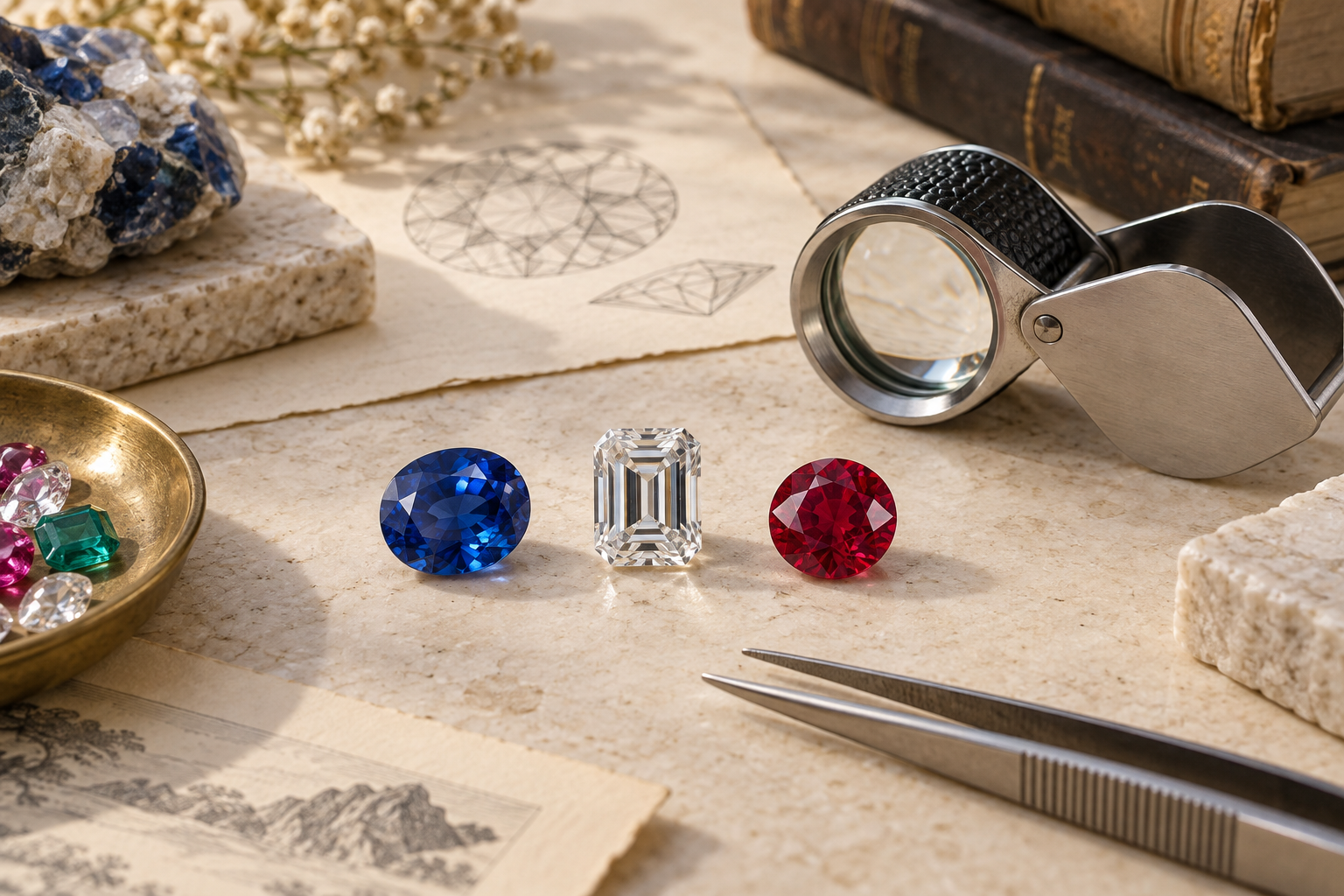
Meaning at a glance
Natural, lab-grown, and imitation are three distinct material categories: natural gems come from the earth, lab-grown gems are real mineral crystals made in controlled settings, and imitations only mimic appearance. U.S. rules require sellers to disclose which category applies and to avoid misleading language so shoppers do not confuse origin with look.
Direct answer: what each category means and why disclosure matters
Natural, lab-grown, and imitation describe how a gem was made, not simply how it looks. Natural stones formed in the earth. Lab-grown stones are chemically and physically the same species of mineral but were created in a laboratory. Imitations are materials—glass, plastics, or other gems—made to resemble a particular stone without being the same mineral. U.S. consumer-protection guidance requires sellers to identify whether a stone is natural, lab-grown, or an imitation and to disclose significant treatments so buyers do not confuse origin with appearance.
Clear definitions: natural, lab-grown, and imitation
A natural birthstone is a mineral that formed through geological processes and was recovered by mining. Natural stones can be untreated or treated; treatments alter appearance or durability and should be disclosed to buyers.
A lab-grown birthstone is a genuine gem material produced by human-controlled processes. It has the same chemical composition and crystal structure as its natural counterpart and may be called lab-grown, lab-created, synthetic, or created, but it should never be advertised in a way that implies it came from the earth.
An imitation birthstone is any material made to look like another gem while not being the same species. Common imitation materials include colored glass, assembled composites, and inexpensive stones cut and dyed to resemble a more valuable gem. An imitation may look similar at first glance but is not the same mineral as the stone it imitates.
Historical evidence and changing traditions
Documented evidence shows that the idea of wearing particular gems by month or association evolved over time rather than starting as a single universal system. The Gemological Institute of America (GIA) traces the transformation of birthstone traditions through history, noting links to ancient lists and religious objects and later European and commercial lists that shifted meanings and selections. GIA documents that the list of gems associated with months has changed over centuries and that modern month lists reflect many historical influences brought into commercial use.
Historically specific cultures associated particular stones with religious, healing, or talismanic purposes. GIA's museum and interpretive material describe such practices as part of a long, changing tradition rather than a single origin story. Where a culture assigned spiritual or protective power to a particular gem, those meanings were rooted in the beliefs and contexts of that culture and era, and GIA presents those connections as historical documentation rather than universal claims.
Documented historical meanings versus modern personal interpretations
Recorded or documented meanings are the associations that historical sources and museum scholarship attribute to stones in particular times and places. For example, historical lists and artifacts cataloged by GIA show that certain gems were prized for religious or status reasons in specific historical contexts. Those are documented associations tied to the culture and period that produced them.
Modern personal interpretations are how individuals or groups today choose to understand or use birthstones. People may give stones meanings related to personal milestones, family stories, or contemporary symbolism. These personal meanings are valid for the wearer but are different in kind from historically documented associations; they are not historical evidence and should not be presented as such.
How birthstone materials appear in jewelry
Whether natural, lab-grown, or imitation, a gem’s role in jewelry depends on its appearance, durability, and the design intent. Jewelers set birthstones into rings, pendants, earrings, and bracelets using a variety of settings and formats. The trade guidance collected by Jewelers of America explains the common settings such as bezel, prong, pavé, and channel, and how metal choices and mounting styles interact with a stone’s size and durability.
Natural and lab-grown stones are often cut and finished in the same ways: faceted for brilliance or left as cabochons for softer color. Imitations may also be faceted or molded and can be set into the same styles, but their durability and how they respond to wear and cleaning can differ. The way a piece is marketed and priced should make clear what material category the stone belongs to so a buyer knows what to expect for longevity and care.
Consumer rules and seller disclosure you should expect
U.S. consumer-protection guidance makes clear that sellers must not mislead consumers about a gem’s identity or origin. The Federal Trade Commission (FTC) provides specific advice on advertising and labeling: sellers should disclose whether a stone is natural, lab-grown, synthetic, or an imitation, and they should describe any treatments or enhancements that materially affect value or care.
In practice this means the words on a price tag, certificate, or product page should match the stone’s category. Terms like “genuine” or “real” without further clarification can be ambiguous; the FTC recommends precise language so shoppers can compare items by origin, treatment, and price. Ask the seller directly and look for written confirmation if the material origin matters to you.
Practical selection and respectful gifting guidance
Decide what matters most to the recipient: geological origin, environmental considerations, price, durability, or symbolic meaning. If the geological origin is important, request documented evidence and disclose that preference to the seller. If budget or ethical concerns make lab-grown gems attractive, ask for clear labeling and a discussion of any certificates or warranties.
Respect cultural and personal meanings when gifting. If you are choosing a stone with a cultural or religious history, learn whether the recipient prefers historical authenticity or modern reinterpretation. A simple question—“Would you prefer a naturally mined stone or a lab-grown gem?”—avoids assumptions and shows respect for the recipient’s values.
For long-wearing pieces such as rings, prioritize durability and secure settings. For pieces meant more for occasional wear, an imitation can offer a beautiful appearance at a lower price, provided it is honestly disclosed. Always confirm return policies and any certificates so the gift can be exchanged if the recipient prefers a different material or style.
Buying tips and what to ask a jeweler
Ask the jeweler to state plainly whether the stone is natural, lab-grown, or an imitation and whether it has been treated. Request any available paperwork or certificates that confirm the material and treatments. If the seller offers a grading report for color, clarity, or origin, examine it for wording that clarifies whether a stone is created in a lab or mined.
Check the return policy and the jeweler’s stance on repairs and cleaning. Different materials sometimes require different care, and sellers should be able to tell you whether a setting or finish affects care instructions. If you are purchasing online, confirm shipping insurance and inspection rights when the item arrives so you can verify the stone matches the description.
A short checklist before you buy or gift
Confirm whether the stone is natural, lab-grown, or an imitation and that the seller’s description matches the item. Ask about treatments and request any certificates or documentation. Consider the recipient’s preferences for origin, cost, and durability, and pick a setting that protects the stone for the intended use. Verify return and repair policies, and keep records of the purchase in case questions about disclosure arise later.
Closing thought
The look of a birthstone can be beautiful whether it is natural, lab-grown, or an imitation, but clarity about origin and treatment matters for value, care, and respectful gifting. Use the precise terms described here, check seller disclosures, and align your purchase with the recipient’s priorities so the jewelry you choose carries both beauty and honesty.
Frequently asked questions
Is a lab-grown birthstone the same as a natural one?
A lab-grown stone is the same mineral species as a natural stone in chemistry and crystal structure, but it was produced in a controlled setting rather than formed geologically. Both require accurate disclosure so buyers understand origin and value, per Federal Trade Commission guidance.
Does imitation mean lab-grown?
No. Imitation means a different material made to resemble a gem, such as colored glass or a composite. Lab-grown stones are the same mineral as their natural counterparts and should be labeled as such rather than called imitations.
How can I tell if a birthstone is natural, lab-grown, or an imitation?
Ask the seller for a clear written description and any certificates. Sellers should state the origin and any treatments. If documentation is unavailable, consider an independent appraisal or ask for a return option to inspect the piece in person.
Are sellers legally required to disclose treatments and origin?
U.S. consumer-protection guidance from the Federal Trade Commission advises that sellers clearly disclose whether gems are natural, created in a lab, or imitations, and to describe any treatments that affect value or care. Precise language and written confirmation help avoid misunderstandings.
Which type is best for gifting?
There is no universal best. Choose based on the recipient’s values: natural stones for geological origin, lab-grown for a potentially lower price and identical gem chemistry, or imitations for affordability and visual effect—always with honest disclosure and a suitable setting for the intended wear.
Sources and further reading
- Birthstones — Gemological Institute of America
- Birthstones: Gems Through the Ages — Gemological Institute of America
- Buying Gemstones, Diamonds, and Pearls — Federal Trade Commission
- Jewelry Guides — Federal Trade Commission
- Jewelry Buying Guides — Jewelers of America