Meaning at a glance
A material-focused, conservative care plan organized by gemstone and setting: use mild soap and a soft brush for most hard gems, avoid ultrasonics and heat for porous or treated stones such as opal, turquoise, and emerald, and always confirm treatments and setting security with your jeweler.
Historical evidence and where birthstone lists come from
The idea of associating gems with months and personal identity has layered histories rather than a single origin. The Gemological Institute of America’s museum exhibit on birthstones traces a shifting tradition: ancient and early historic cultures attached meaning and protective associations to specific stones, medieval Europe and later popular culture reworked lists, and the modern, standardized month lists used by jewelers were consolidated during the 19th and 20th centuries and remain fluid into the present. The GIA documents how the concept evolved over time and how modern lists developed rather than originating in a single culture.
Because the tradition changed across periods and places, references to ancient protective powers or medicinal uses belong to particular historical contexts and should be cited as such rather than presented as universal. The GIA's material explains that the modern birthstone roster most consumers recognize is a product of changing customs and commercial standardization.
Documented historical meanings versus modern personal interpretations
Documented historical meanings appear in period sources and museum collections and concern how particular cultures used gems. For example, GIA notes that historic lists and attributions shifted across eras and regions. Those historical meanings—protective amulets, status symbols, or religious associations—are specific to their cultures and historical moments.
Modern personal interpretations are different: today many people choose birthstone jewelry for sentimental reasons, color preference, or personal symbolism rather than following historic beliefs. Those modern uses are valid personal meanings but should be distinguished from documented cultural practices. In short, historical evidence tells us how societies used gems; contemporary wearers create their own meanings when they choose birthstones now.
How birthstones and related motifs appear in jewelry
Birthstones are commonly set as single-stone rings, pendants, and earrings, or grouped in cluster pieces and charm bracelets. Jewelers use a range of settings—prongs for visibility, bezels for protection, and pavé or channel settings when small stones are involved. The Jewelers of America buying guides explain how format and setting influence both the look and the durability of a piece.
Motifs connected with birth months appear alongside stones: floral motifs for spring months, celestial symbols for winter months, and engraved personalization such as initials and birthdates. The setting choice interacts with care needs: a bezel reduces edge exposure for a softer stone, while an open prong setting makes cleaning easier for hard gems but leaves vulnerable edges more exposed to impact.
Why one cleaning method cannot safely serve every birthstone
Gems differ in key physical characteristics: hardness (resistance to scratching), toughness (resistance to fracture), and porosity (absorption of liquids). They also differ in common treatments: oils, resins, dyes, and coatings can enhance a gem’s appearance but are often sensitive to heat, solvents, or mechanical agitation. The Federal Trade Commission’s guidance on gemstones and treatments emphasizes that treatments and imitation stones are common in the market and sellers should disclose them, which matters for care.
Because of these differences, ultrasonic cleaners and steam cleaners—effective for many hard, stable gems—can safely damage porous or filled stones, strip coatings, or force liquids into microfractures. Heat or chemical cleaners can also affect dyed or oiled gems. Therefore a conservative approach that respects the material and any known treatments is essential to avoid unintended harm.
Month-by-month conservative cleaning guide
January — Garnet: Most garnets are reasonably hard and durable. Clean garnet with warm water, mild dish soap, and a soft brush. Avoid prolonged exposure to heat and household chemicals; garnet is not usually treated but always confirm with the seller.
February — Amethyst: Amethyst responds well to mild soapy water and a soft brush. Avoid prolonged heat or strong light that can fade some amethysts, and avoid harsh chemicals.
March — Aquamarine: Aquamarine is relatively hard and cleans well in warm, soapy water. Avoid sudden temperature shocks and check for fracture lines before using ultrasonic cleaners; when in doubt, stick to hand cleaning.
April — Diamond: Diamonds are the hardest natural gem and tolerate warm, soapy water and soft brushes; they are the most likely birthstone to withstand ultrasonic and steam cleaning, but settings, inclusions, and any attached fillers can change that assessment. Have settings checked periodically.
May — Emerald: Emeralds are often oiled or resin-filled to improve clarity. Because of those treatments and common internal fractures, avoid ultrasonic and steam cleaning; clean emeralds with a soft cloth and mild soap, and ask the seller about treatment history before attempting deeper cleaning.
June — Pearl (and alexandrite option): Pearls are organic and very sensitive to acids, cosmetics, and ultrasonic cleaners; wipe pearls with a soft damp cloth after wear and store them away from chemicals. Alexandrite, if used, is harder and tolerates mild soapy-water cleaning but avoid thermal shock.
July — Ruby: Ruby is very hard and durable; warm, soapy water and a soft brush are appropriate. Heat can affect some ruby treatments, so verify whether the stone has heat-treatment or filling before using ultrasonics.
August — Peridot (and spinel historically): Peridot is moderately hard but can be brittle and sensitive to heat; clean with mild soap and a soft brush and avoid steam or ultrasonic cleaning. Spinel, if present, is more durable and tolerates soapy-water cleaning.
September — Sapphire: Like ruby, sapphire is very hard and generally tolerates warm soapy water and, in many cases, ultrasonic cleaning. Confirm the presence of fillings or coatings before using aggressive cleaners.
October — Opal (and tourmaline option): Opals are porous and sensitive to sudden temperature changes and chemicals; clean opals with a soft, damp cloth and never use ultrasonics or steam. Tourmaline is harder and usually safe with soapy water, but some varieties are treated—check before using strong cleaners.
November — Citrine or Topaz: Citrine and natural topaz clean well with warm, soapy water. Be cautious with treated topaz (irradiated or coated) and avoid high heat or harsh chemicals that can alter color treatments.
December — Turquoise, blue topaz, or tanzanite: Turquoise is porous and often stabilized or dyed; avoid soaking, use a soft cloth, and keep away from chemicals. Blue topaz is generally durable and safe with soapy water. Tanzanite is softer and brittle relative to many birthstones; clean with mild soap and a soft cloth and avoid ultrasonic cleaning.
Practical steps to protect settings, treatments, and appearance
Inspect settings regularly for loose prongs or wear. A secure setting protects the stone from impact and reduces the need for risky deeper cleaning. Jewelers of America recommends checking mountings and having a professional periodically assess prongs and solder joints.
Avoid wearing birthstone jewelry during heavy manual work, swimming in chlorinated pools, or when using solvents and household cleaners. Cosmetics, hairspray, and perspiration can build up on stones and settings; removing jewelry before applying these products reduces the need for frequent cleaning.
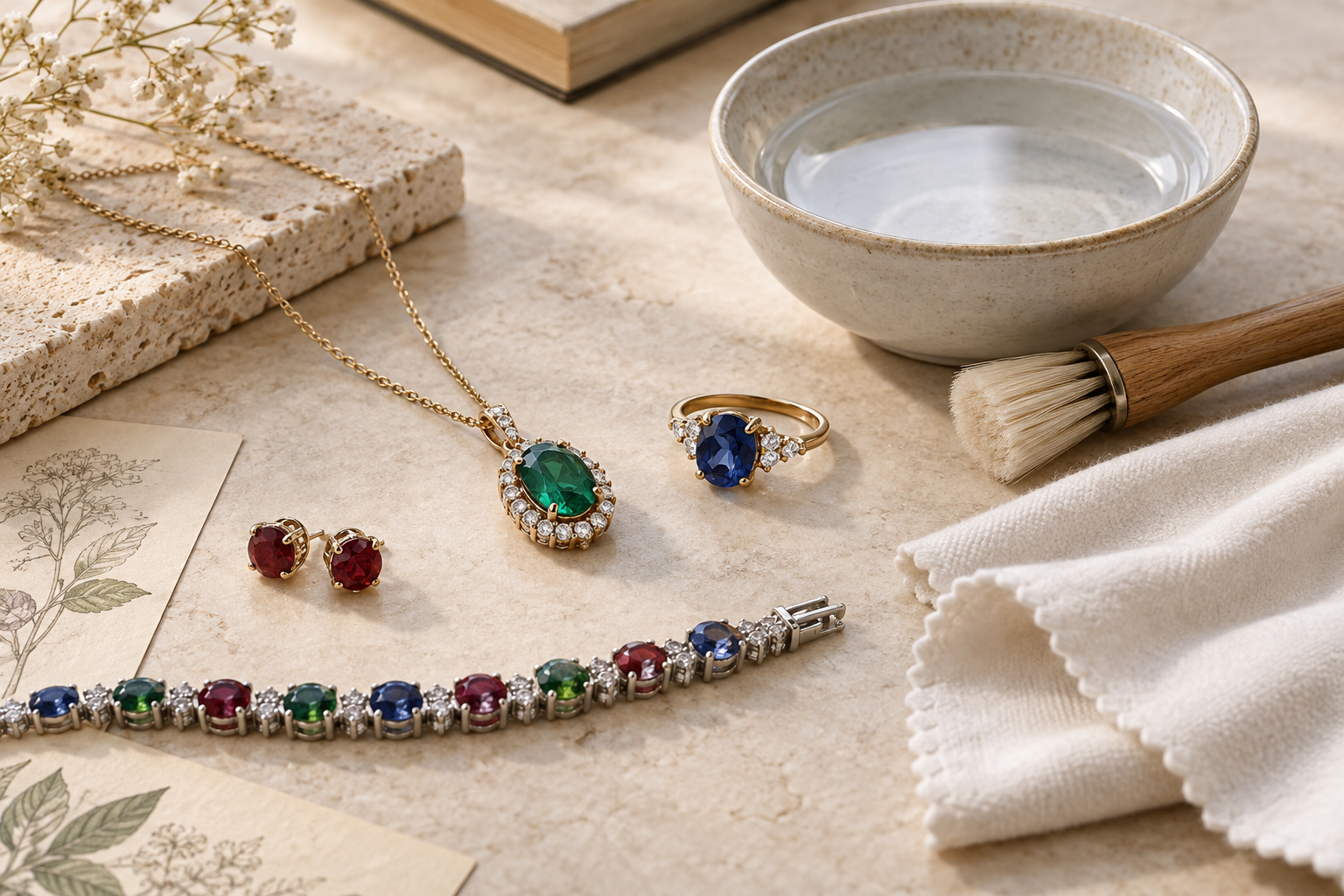
When you do clean at home, use a bowl of warm water with a drop of mild dish soap, a soft toothbrush, and a lint-free cloth for drying unless you have documentation that a different method is required. For porous, treated, or organic gems, choose the gentlest option: a soft, slightly damp cloth and air-dry. When in doubt, consult the seller or a trusted jeweler.
Selection and gifting guidance
When buying or gifting birthstone jewelry, ask the seller for specific information about the gem: its identity, whether it has been treated or stabilized, whether it is natural, lab-grown, or an imitation, and for recommended care instructions. The Federal Trade Commission advises that sellers should disclose treatments, lab-grown origins, and imitations; these disclosures affect both value and care.
Consider the recipient’s lifestyle when selecting a setting: a bezel or lower-profile mount protects softer stones for everyday wear, while prong settings suit hard stones that benefit from light exposure. Include a brief care note with the gift that names the cleaning method you recommend and any treatment disclosures you were given. If the piece will see heavy everyday wear, prioritize durable stones or protective settings.
When to seek professional help
If a stone appears loose, shows visible damage, or if you are unsure about a gem’s identity or treatment, stop home cleaning and consult a professional jeweler. Jewelers can test stones, confirm treatments, safely clean delicate items, and re-secure or re-set gemstones. Regular professional inspections reduce the risk of loss and help preserve the gem and setting over time.
Keep purchase documentation, treatment disclosures, and any professional cleaning history with the jewelry to guide future care and to ensure you can give accurate instructions if you later resell or insure the piece.
Frequently asked questions
Can I clean all birthstone jewelry in an ultrasonic cleaner?
No. Ultrasonic cleaners are safe for many hard, durable gems but can damage porous, treated, or fracture-prone stones such as pearls, opals, turquoise, and many emeralds. Confirm a stone’s identity and treatment history before considering ultrasonic cleaning and when in doubt use mild soap, a soft brush, or consult a professional jeweler.
How often should I clean my birthstone jewelry?
Light cleaning after heavy wear keeps jewelry looking its best; for most hard stones, a monthly home cleaning with warm water, mild soap, and a soft brush is reasonable. Softer or treated gems may need only an occasional gentle wipe. Annual professional inspections are recommended to check settings and treatments.
Does being lab-grown change cleaning instructions?
Lab-grown gems can have similar physical properties to natural counterparts, but treatments and manufacturing processes may differ. Ask the seller about specific care recommendations. The FTC advises sellers to disclose whether gems are lab-grown or treated, and you should follow any care guidance given.
Can I wear my birthstone jewelry in the shower or pool?
Avoid wearing birthstone jewelry in chlorinated pools, hot tubs, or during cleaning with solvents. Chlorine, household cleaners, and sudden temperature changes can damage metals, treatments, and some stones. Removing jewelry before swimming or bathing is the safest choice.
What should I do if my birthstone looks dull or scratched?
For dullness caused by surface grime, a gentle cleaning with mild soap and a soft brush can help. Scratches on harder gems like diamonds or sapphires sometimes can be polished by a professional; softer stones may be permanently scratched. Consult a reputable jeweler for assessment before attempting any aggressive cleaning.
Sources and further reading
- Birthstones — Gemological Institute of America
- Birthstones: Gems Through the Ages — Gemological Institute of America
- Buying Gemstones, Diamonds, and Pearls — Federal Trade Commission
- Jewelry Guides — Federal Trade Commission
- Jewelry Buying Guides — Jewelers of America